Editor’s note: We asked Executive Director Shawn Kelly to educate us on the importance of safeguarding the last major coastal river system in Southern California and it native riparian habitat. We applaud the efforts of the non-profit Santa Clara River Conservancy (SCRC)..
By Shawn Kelly
The Santa Clara River Conservancy’s primary objective is safeguarding crucial native riparian habitat through restoration and conservation in collaboration with partners, public outreach and education. It includes all the natural resources within the Santa Clara River Watershed.
It’s crucial because the river stands as the last major coastal river system that retains much of its original hydrology. Being located adjacent to industrial agriculture and an ever-expanding urban sprawl, the river has been exposed to several anthropogenic threats including habitat loss, pollution, fire, and the introduction of invasive species.
SCRC addresses these threats and impacts by implementing habitat restoration, raising awareness of river related environmental issues by educating the local community, getting youth from disadvantaged backgrounds involved in stewardship, and facilitating public access to the river.
The Conservancy has a broad community both in terms of partnerships and a target community for education, outreach, volunteer, and stewardship initiatives. A primary goal in the process of conducting habitat restoration while connecting local, disadvantaged communities to the river that flows through their backyards.
Over the last couple of years, the Conservancy has successfully established connections with, and implemented river visits with, local schools, youth groups from local disadvantaged communities: the Big Brothers Big Sisters, the Boys and Girls Club, Fillmore Youth Conservation Corps, and Santa Paula High School.
Too, the Conservancy is appreciative of the Ventura Sierra Club and the Friends of the Santa Clara River for their efforts in the watershed.
SCRC works closely with UC-Santa Barbara, extensively on project identification, grant writing, project planning, and project implementation. It also collaborates with The Nature Conservancy, CA Dept. of Fish and Wildlife, the Wildlife Conservation Board, Santa Clara Valley Water and the cities of Fillmore and Santa Clarita.
The Conservancy seeks collaboration with the agricultural community to further common goals and create an integrated working landscape for permanent protection and conservation of irreplaceable lands.
Membership in numerous agencies help the Conservancy in it work, including SCR Watershed Committee, those dealing with weed management and Arundo abatement and Steelhead Coalition.
Cienega Springs
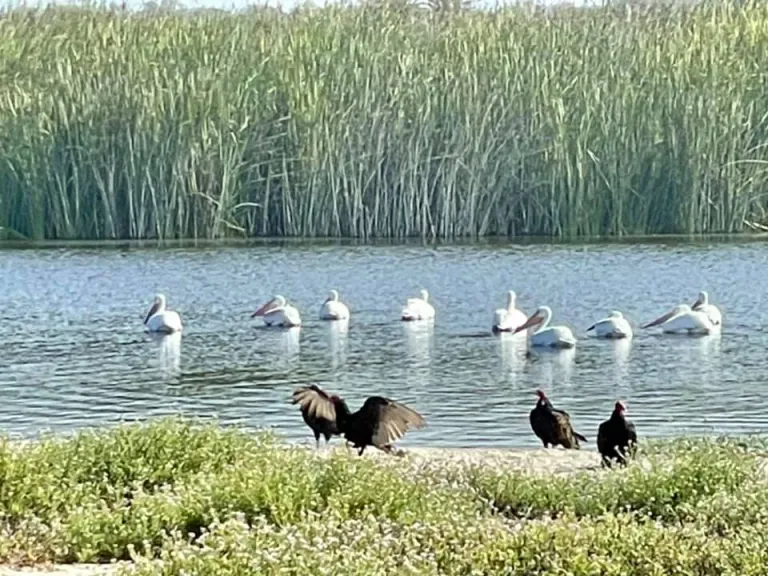
A task over the last few years continues with the Cienega Springs Ecological Reserve project, in partnership with UCSB. The project is actively restoring 234 acres of degraded river channel and floodplain within the Cienega Springs Ecological Reserve to a mosaic of wetland and riparian habitat types. It seeks to improve the site’s hydrology for surface water retention and groundwater recharge, and provide a wildlife-oriented recreational opportunity for the surrounding disadvantaged communities.
The project will have multiple benefits, including restoring habitat diversity and complexity, expanding floodplain connectivity, improving water resources, and providing climate change resiliency and recreation and educational opportunities.
Too, a trail network will provide the public access to the river once the Reserve opens.
SCRC has recently begun the Santa Clara River Artesian Site Habitat Restoration Project in Santa Paula on conservation property owned by The Nature Conservancy; project actions include reversing legacy impacts from agricultural operations, invasive species removal, habitat restoration, and hydrological restoration in emergent wetland habitat.
The Conservancy welcomes support in executing the organization’s mission, whether you are able to contribute funding, a vehicle or equipment, or able to help in other ways. A donation to support SCRC’s efforts to ensure a sustainable future for the river is tax-deductible. Visit the website for more information: www.santaclarariver.org