By Katie Davis
The process of phasing out oil production in Santa Barbara County started May 13, 2025 when County Supervisors voted 3:1 to begin a move that, when implemented, will save lives, reduce air pollution and help meet our climate goals.
They will meet again in October to review the plan and give further direction to County sustainability staff.
Recent developments at the state and federal level have given urgency to the effort.
First, the Trump administration announced plans to open 400,000 acres of federal land to new oil leases in Santa Barbara, Ventura, San Luis Obispo, Fresno, Kern, Kings, Madera, and Tulare counties. On June 23 the Bureau of Land Management (BLM) announced they would be conducting environmental review to facilitate resuming its oil and gas leasing program in California.
In addition, in July Gov. Newsom released draft bill language to streamline new oil drilling. This represents a major backslide at the state level on climate action. It comes at a time when Gov. Newsom is beginning to acknowledge his presidential ambitions.
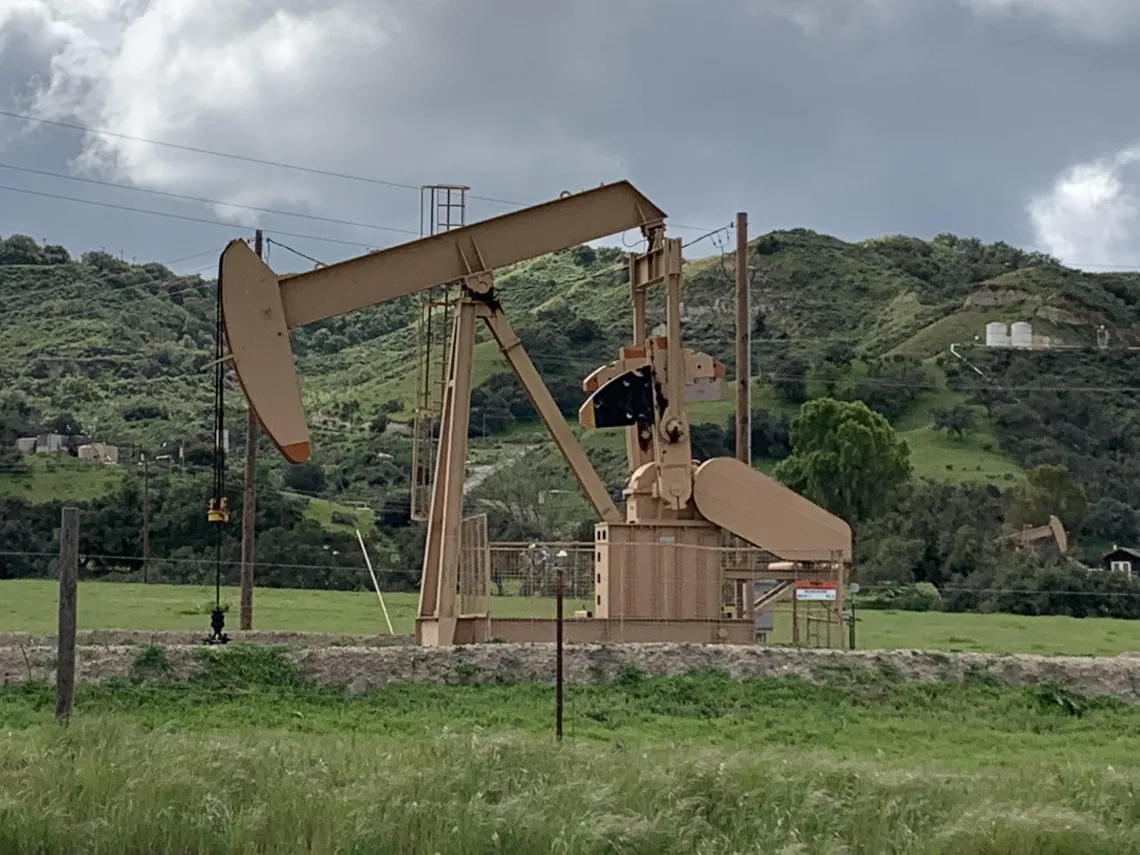
This push for more oil drilling comes at a bad time for Santa Barbara County as unconventional oil left in the County is particularly harmful. Oil projects that have been proposed in the County over the past decade have been cyclic steam or steam flooding proposals, which are the most energy-intensive forms of oil production.
The carbon intensity (which measures the full carbon cost including production, transportation and refining) is higher than the average oil imported from around the globe. In general, the carbon intensity of California-sourced oil is growing at three times the rate of oils produced outside of California.
In addition, the closure of the Phillips 66 refinery means more oil produced in Santa Barbara must be trucked to market, rather than using pipelines.
The remaining hard-to-extract oil also threatens our drinking water supplies. For instance, oil companies are seeking exemption from federal drinking water protections in Cat Canyon to inject toxic wastewater below the Santa Maria Groundwater Basin, which provides drinking water to 190,000 people.
A state study identified 291 existing wells that may serve as pathways for the migration of toxic substances in that field. In addition, there have been documented oil spills into creeks, rivers and watersheds, and a superfund site. Page 50 of that EPA plan notes that, “Cleanup of groundwater in this area is technically impracticable and would likely require several thousand years.”

The effort to plan for a phase out of oil in Santa Barbara County originally stems from the County Climate Action Plan passed in August 2024. At that time, the Sierra Club took issue with the omission of oil and gas facilities, a major source of emissions. County Supervisors asked staff to return with options for including oil and gas facilities.
Supervisors finally considered those options on May 13, 2025, and the majority of Supervisors, Joan Hartmann, Laura Capps and Roy Lee, voted to ask staff to begin the process of developing an ordinance to phase out oil drilling.
They heard from dozens of people and organizations, the vast majority of whom supported an oil phase-out. Over 500 postcards signed during Earth Day at Sierra Club and other booths were delivered by Sigrid Wright, the Executive Director of the Community Environmental Council.
The Supervisors cited the devastating costs of climate disasters, such as the wildfires and Montecito mudslide that killed twenty-three people, the backsliding and climate denial under the Trump administration that makes local action more urgent, and the health savings of phasing out oil pollution near people’s homes and in proximity to drinking water supplies.
The majority of Supervisors recognized that the only way to reduce emissions in this sector is not to allow new oil and gas projects, and to begin the process of phasing out oil and gas facilities once they have been fully amortized and their investments have been recouped.
Just as setting 100% renewable energy goals and joining Central Coast Community Energy has allowed Santa Barbara County to participate in a planned and affordable transition to renewable energy, setting a goal to phase out fossil fuel production will help the County plan an orderly transition away from oil and gas, provide landowners and industry with certainty, and head off costly project proposals that conflict with County efforts to protect our air, water, health, and climate.
Other jurisdictions including the city and county of Los Angeles have already passed oil phase-out ordinances. Such policies have been further facilitated by the passage of AB 3233 that took effect in January 2025 clarifying the right of local jurisdictions to regulate oil. Health and safety regulation has long been the responsibility of local governments. The City of Santa Barbara has prohibited oil drilling for at least 60 years.
An oil phase-out will improve air quality and protect us from disease. Diesel trucks and gas-burning steam generators not only produce greenhouse gases, but they also emit health-damaging air pollution that causes cancer, asthma, heart disease, and other conditions.
For instance, according to the California Air Resources Board, oil production was the largest facility source of PM2.5, Benzene, Formaldehyde, VOCs, Nitrogen Oxide and Sulfur Oxide in Santa Barbara County in recent years.
Oil production kills and harms endangered and sensitive plants and animal species. The Central Coast’s Mediterranean biome is a hotspot of biodiversity. The region contains numerous endemic, federally listed, and sensitive species which require protection.
Oil projects are located in high fire hazard zones and increase wildfire risks. Additionally, wastewater injections can trigger earthquakes. Phasing out oil will help prevent future natural disasters from wreaking havoc.
Lastly, there would be economic benefits to pursuing a clean energy economy and alternate uses for land now dedicated to oil production. A recent UCSB report on the benefits of an oil phase-out calculates that it could prevent an estimated $54 to $81 million in mortality related costs by 2045.
The County Auditor found that revenues to the County from local oil production are just $1.7 million in property taxes or approximately 0.1% of county revenues. This is very low relative to some other land uses while costs to the County (accounting, legal, road repair, emergency services, etc.) are higher than other industries.
Sierra Club helped lead a large and growing coalition of more than 50 organizations in urging Supervisors to direct staff to research and draft an oil and gas phase out plan and ordinance.
Let Santa Barbara County Supervisors know you support swift action on phasing out oil. In the face of federal and state backsliding, strong climate action and environmental protection at the local level are more important. Email Supervisors at: sbcob@countyofsb.org