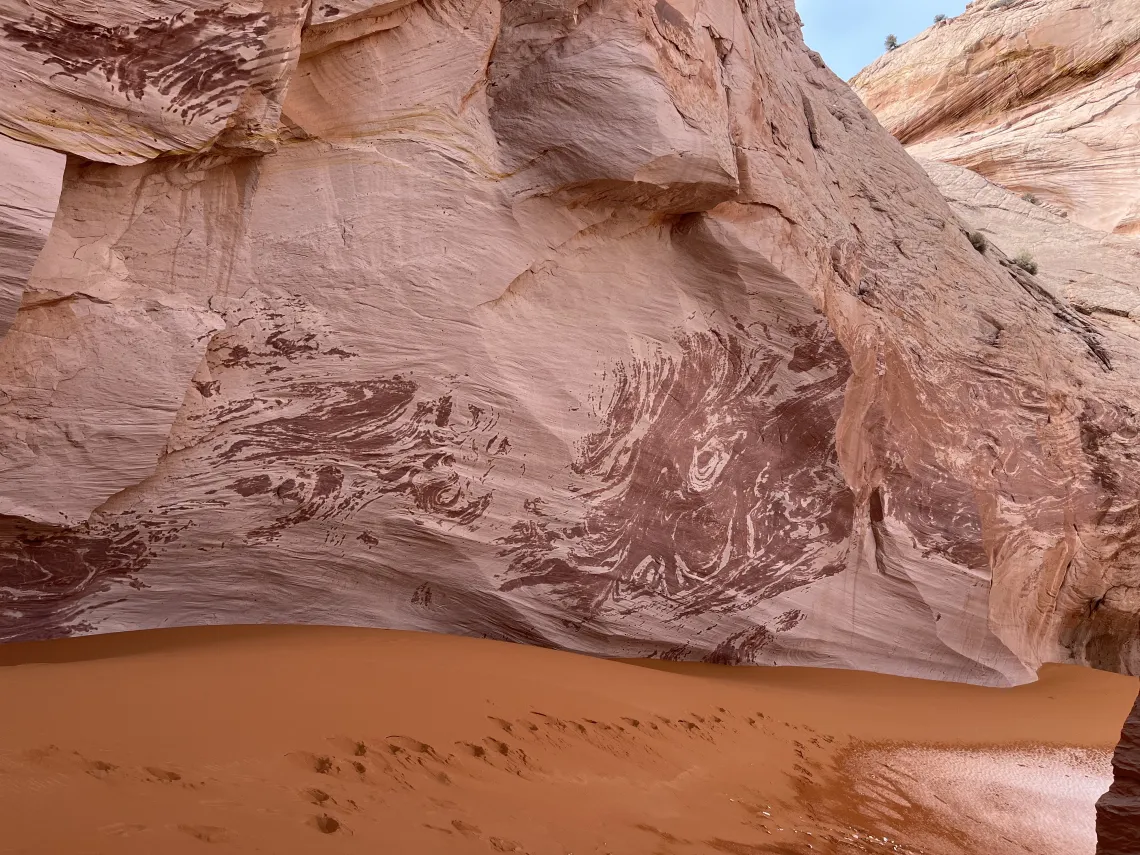
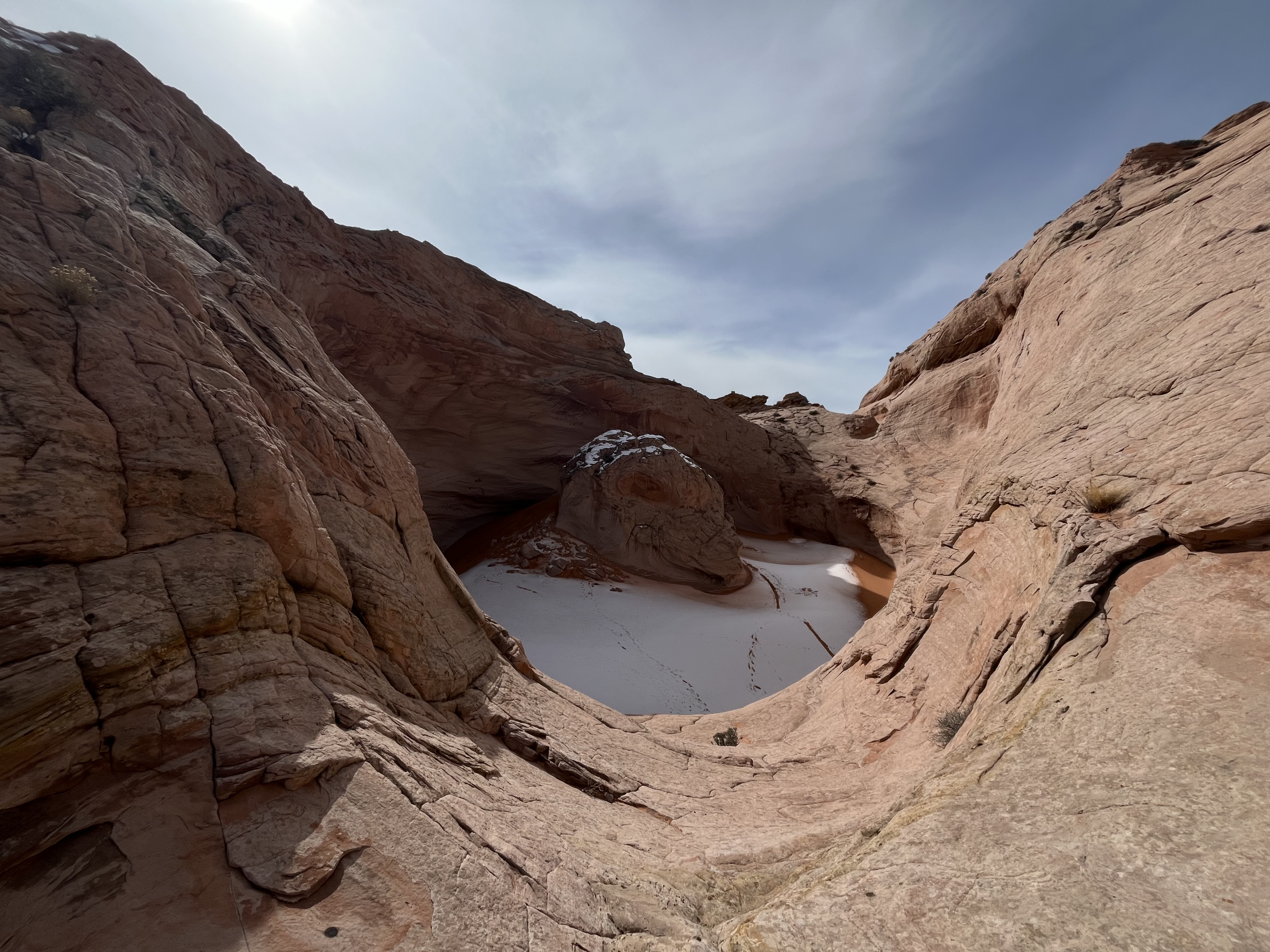
Learning of a strange geological formation called the Cosmic Ashtray, something about the place’s mystery compelled me and my family to fly down from Seattle and walk six miles out to look at some rocks over a long weekend. Standing at the rim of the formation, looking into the pit of sand and the sandstone pinnacle that protrudes within it, it was more sublime than I could have imagined; it was something more than a beautiful sight.
How exactly this part of the Grand Staircase-Escalante National Monument transformed me is ineffable. I found the land, its silence, and its effect on the visitor were impossible to capture. What value there is in the land, that value is in its being here, present for all of us.
Thirty years ago, President Clinton established the Grand Staircase Escalante National Monument. Its boundaries remained until 2017 when the Trump administration attempted to reduce it to half its original size, only for it to be restored to its original boundaries in 2021 under the Biden administration. On March 4th of this year, Utah senator Mike Lee and representative Celeste Maloy resolved to undo the 2025 Grand Staircase-Escalante National Monument Management Plan using the Congressional Review Act (CRA), a law meant for Congress to disapprove of federal agency “rules”. This use of the CRA in the context of a national monument’s management is unprecedented. If their resolution is successful, it will prevent the Bureau of Land Management from issuing any plan that is “substantially the same” as the current one, threatening certainty for all who use and enjoy these public lands.
The case for change
Utahns, especially in the southern part of the state, are advocating for what they believe will create stable jobs and better places to live. Their concerns are real and deserve to be taken seriously. It’s important to note that national monument designation has largely strengthened local economies, not stifled them as some choose to argue. The area around Grand Staircase-Escalante has seen growth in tourism, small business development, and outdoor recreation economies. Though perhaps modest, this development is concerned with and dependent on the persistence of the land’s long-term value—and its legal stability.
This issue is often framed as a tradeoff between preservation and economic opportunity, with the argument being that federal management blocks job creation. That framing is misleading. Monument status already contributes to economic growth and stability, creating a reliable path for local development. Where frictions do arise, solutions need not involve undoing the management plan and the stability of national monuments across the US. But conservation and economic well-being are largely aligned; they are not naturally in opposition.
Polling in 2026 found majorities across parties in Utah support the president’s ability to protect public lands as national monuments. A coalition of the Hopi Tribe, Kaibab Band of Paiute Indians, Navajo Nation, Paiute Indian Tribe of Utah, Ute Mountain Ute Tribe, and the Zuni Tribe has entreated resistance to the proposal to undo the monument’s management plan. Across Utah, the resolution has received immense pushback from business owners to scientists.
What we stand to lose
Recently, the Congressional Review Act was invoked to end a moratorium on mining near the Boundary Waters Canoe Area Wilderness in Minnesota after a 50-49 Senate vote and a similar vote in the House. Although it has not successfully been used to undo a National Monument’s land management plan, doing so would not only leave uncertainty for Grand Staircase Escalante National Monument in its wake, it would also create more uncertainty around the future of other national monuments.
In being silent, voiceless, the land itself is often left out of politics and economics. We designate National Monuments to cherish our nation’s land for its own sake. We understand that we ought to restrain economic impulses because they can become myopic and detached at scale.
We do not know what Lee and Maloy’s resolution would entail for Grand Staircase Escalante National Monument or national monuments more broadly, other than uncertainty.
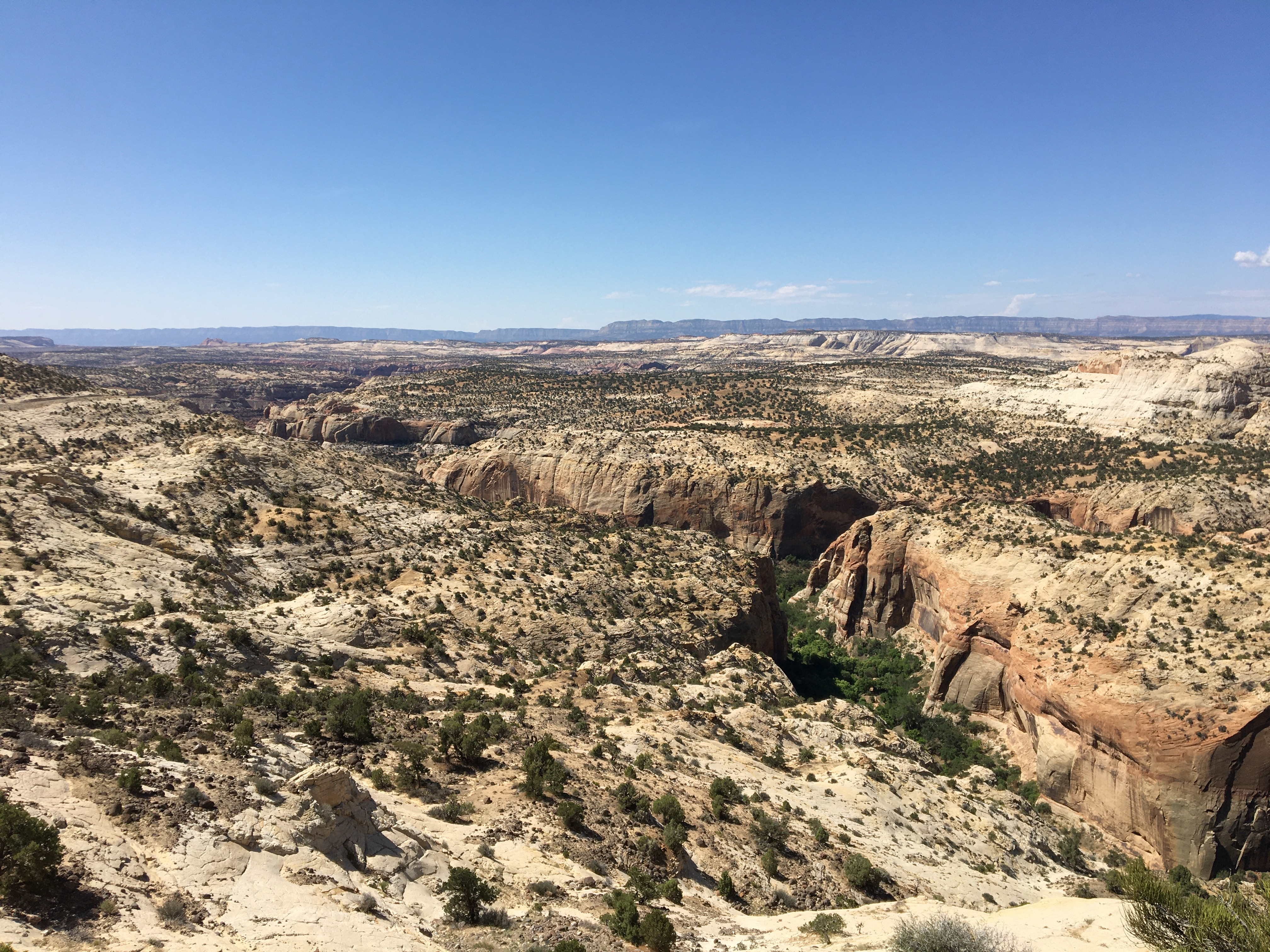
Although easy to overlook in a state with such a density of incredible natural beauty, rare is Grand Staircase Escalante National Monument. It offers some of the more fun and accessible slot canyons in Utah (Zebra, Peek-a-Boo, and Spooky, for instance). The gradual descent of the land, which gives the monument its name, protects one of the richest bee faunas in the Western US and a diversity of ecosystems. Visitors to Lower Calf Creek Falls find granaries, ancient pictographs, beaver dams, and a 126-foot waterfall.
What can’t be replaced
And in addition to the quiet, Grand Staircase Escalante National Monument offers dark skies. Both light and noise pollution are externalities of human activity. Both light pollution and noise pollution have come into existence in the last few minutes on a geological timescale, and yet that has been enough time for us to forget the eternity before—almost. We forget until we visit somewhere like Grand Staircase Escalante and see the Milky Way, the same sky seen by our ancestors, and hear the same silence that preceded everything. Those dark skies and quiet are fleeting, increasingly rare as our lives become busier, more indoors, and more distracted.
The value in our National Monuments cannot be captured. Its value is its being here and now; one finds refuge in knowing it exists.
To defend this treasured landscape, we have to ensure that Congress votes to strengthen protections for the Grand Staircase Escalante National Monument. Overturning the current management plan threatens the refuge, silence, dark skies, and unique experiences this piece of Southern Utah offers, and invites uncertainty for National Monuments across the country.
To sign the petition asking Congress to protect the Grand Staircase-Escalante National Monument, click here.