By Condor John
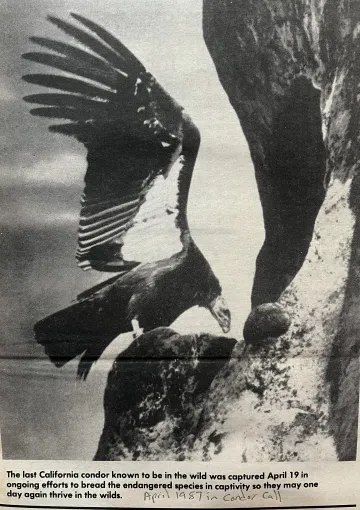
In one of the most fascinating and controversial endangered species stories, the last 22 wild California Condors were literally plucked from the Santa Barbara-Ventura wilds in 1987 and sent to zoos for breeding.
And now look at them, literally 600 or more, from their home at Fillmore’s Hopper Mountain or the Bitter Creek National Wildlife Refuge and elsewhere where they’ve been released, like Arizona, Oregon and the Grand Canyon.
“The idea that a bird once declared functionally extinct in the wild is now gliding again over the canyons of California feels almost unreal. For years, the California condor existed more as a cautionary tale than a living creature, a symbol of how badly humans could damage the natural world,” noted the Animals Around the Globe website.
“ Yet today, this giant scavenger . . . is reshaping how conservationists think about saving other species on the brink,” it concluded.
Enter Debbie Parisi and Friends of the Condor Wild and Free (since 2009), all volunteers. Parisi gave a stimulating, illustrative talk to the Sierra Club’s Ventura Network monthly event, which features speakers about our environment.
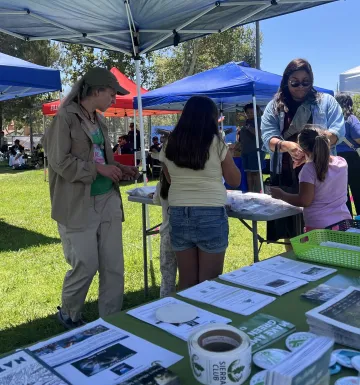
The Friends also conducted an environmental event on June 13 at Fillmore’s Sheills Park, which featured their booth along with the Hopper Mountain National Wildlife System, our own Sierra Club and even Bat Rescue!
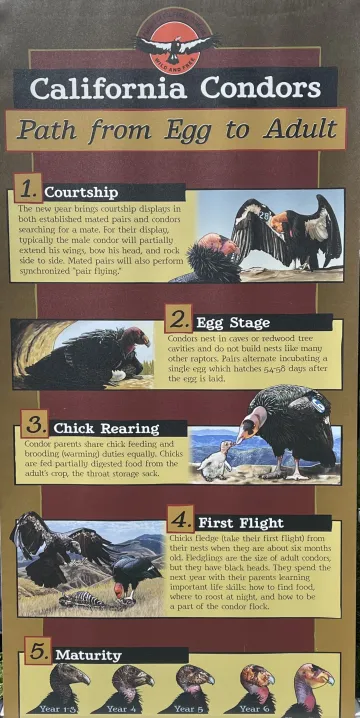
Parisi’s been with the condors since 2009, and she told the Sierra Club audience that “They are so cool. They are such great parents, taking care of their chicks,” with both the male and female sitting on the eggs.
She got involved when a friend at the L.A. Zoo told her about condors. “ I thought, how could we make such a majestic bird go extinct? So, I had to do something about it.”
The first successful breeding pair was in 1988, and the female is still alive in the breeding program. “We’re dependent on the capture breeding program. We’re losing more birds than we can raise them in the wild.”
Despite its success, “There are more birds and fewer people, unfortunately,” Parisi said. “Since 2008 we’ve doubled how many birds we have in the wild, but Fish and Wildlife staff was cut by half.”
The California Condor stands 3 to 3.5 feet, has a wingspan of 9 to 9.5 feet, weighs between 17 and 25 pounds, and has a lifespan of 60 years.
They have been around for 40,000 years. A condor skeleton 35,000 years old was found in La Brea Tar Pits and beyond the West Coast.
One bird named Topa Topa from Ojai has fathered 39 birds, and there are over 300 in his family. “So, he’s really important to us, and he celebrated his 60th birthday this year,” Parisi said.
They nest in caves and tree hollows. They can fly up to 15,000 feet and reach a speed of 55 mph. Males dance for the females.
They only eat carrion, and they wash up afterward, Parisi said. “In the Grand Canyon, search and rescue found a missing hiker because they followed the condors. So yeah, if it’s dead they will eat it.”
If you see a condor and can make out its tag, a website will describe the bird and where it came from, and your information about where and when will be logged in:
https://condorspotter.com/
To learn more, sign up for a tour and/or help out, go to:
https://www.friendsofcondors.org/