Glacier National Park’s Tumultuous Transit Makeover
Two mountainous parks offer different takes on how to move millions of visitors
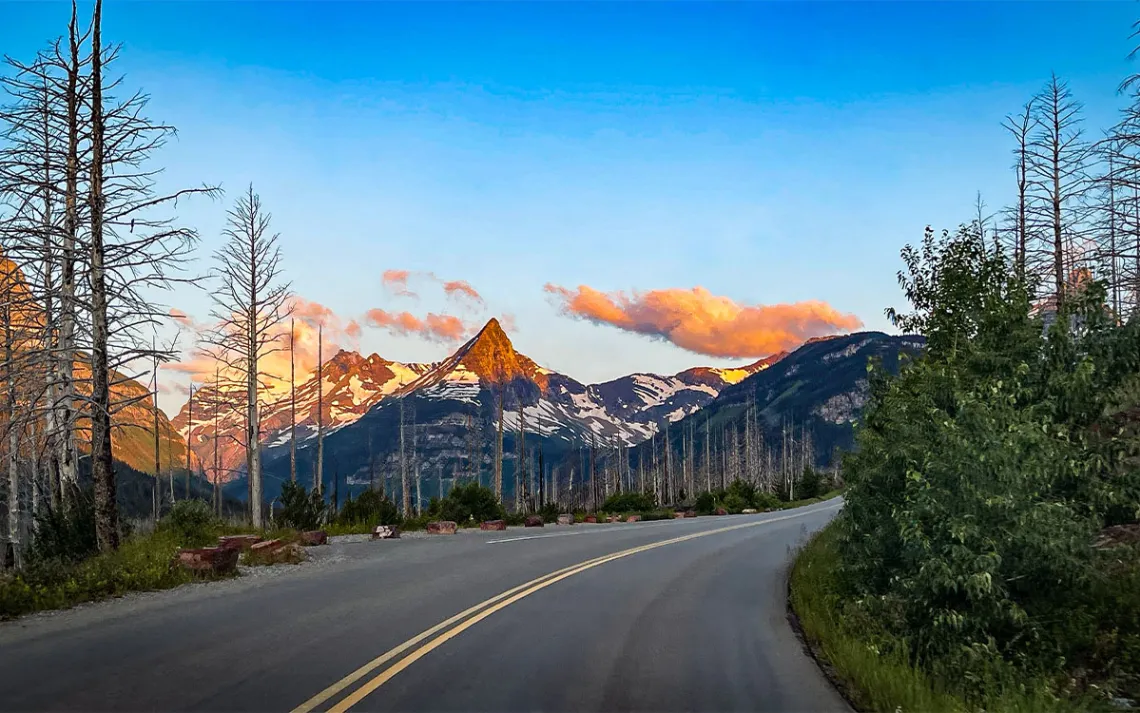
Golden hour in Glacier National Park, Montana, along the Going-to-the-Sun Road. | Photo by Debora Vandor/Getty Images
National parks are designed to bring people into the outdoors, but moving millions of visitors through remote landscapes can strain the roads, parking lots, and transportation systems built to serve them. A case in point is the road to Logan Pass, the highest drivable destination in Glacier National Park.
The Going-to-the-Sun Road, which leads to the pass, climbs through the heart of Glacier National Park, winding past steep cliffs, alpine lakes, and some of the park’s most recognizable scenery. Logan Pass is a hub for the park’s amenities, including a visitor center and restrooms, and is the starting point for popular hiking trails. It’s one of the most visited attractions in the park, which receives well over 3 million visitors annually. Yet Logan Pass has only 235 parking spaces, and they can fill by early morning during peak visitation.
Last summer, Glacier managers tried a new approach for managing the throng of visitors. They introduced a reservation-based shuttle service to Logan Pass, replacing the previous first-come, first-served system. From July 1 through September 7, most shuttle tickets were released at 7 p.m. each evening for travel the following day, and seats often sold out within minutes.
These changes are part of a larger challenge facing popular national parks: how to move growing numbers of visitors through landscapes with limited roads, parking, and infrastructure. As visitation puts pressure on roads and trailheads, parks are looking for ways to move more people without expanding the footprint of cars and parking lots.
Some have begun investing in extensive transit networks that connect visitors with popular destinations and surrounding communities, while others remain highly car-centric. For managers at Glacier, the question is whether small changes to existing services can keep pace with demand or if improved access will require a much larger investment.
One of those changes is eliminating several stops along the previous route. By doing so, the new service takes visitors directly to Logan Pass rather than pausing at trailheads along the way. The park also did away with timed vehicle reservations for entering the park and introduced a new three-hour parking limit at Logan Pass.
“The new shuttle model is designed to help visitors plan ahead while ensuring seats are available when they arrive,” said Jessica Gardetto, division manager of public affairs for the National Park Service’s Intermountain Region.
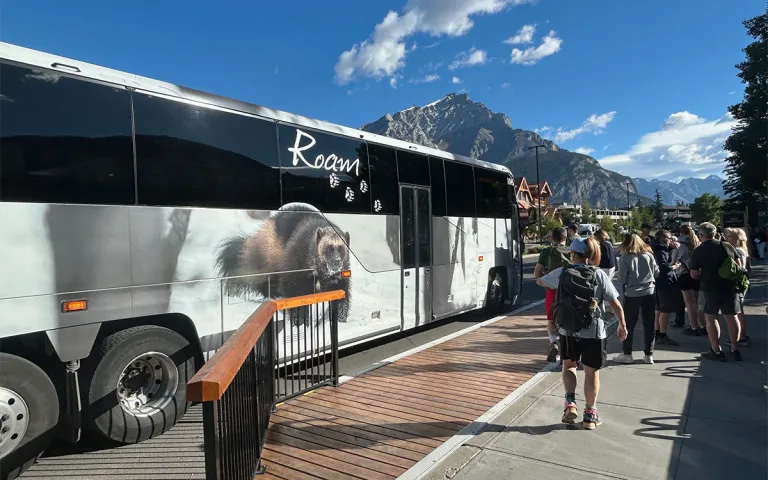
Canada's Banff National Park, north of Glacier, offers a parallel to how parks can help visitors move across vast areas. | Photo April Eling
For some visitors, however, the changes made planning a trip to Glacier more difficult. Anna Martinez, who was visiting from Seattle, drove into town from her campsite the night before her visit to secure shuttle tickets. She managed to get a reservation but watched as the remaining seats disappeared in less than two minutes.
Erica Barrett, visiting Montana from Kentucky, had less luck. Despite trying to book a ticket right at 7 p.m., she couldn’t secure a seat. “They sold out before I could even refresh the page,” she said. Worried she wouldn’t find parking and would lose a day of her trip, Barrett decided to forgo her visit to the park.
Glacier’s original shuttle program began in 2007 with the goal of reducing traffic on the Going-to-the-Sun Road. Former park superintendent Jeff Mow said the system never fully achieved that goal, although it did become a popular alternative for visitors who wanted to leave their cars behind. During Mow’s tenure, the park discussed expanding the service and sought additional funding, but the effort failed to result in the larger system he had hoped to see.
Expanding service, however, would require more than adding buses. Sarah Lundstrum, Glacier field representative for the National Parks Conservation Association, estimated that a larger system could cost $35 million to $40 million, including vehicles, parking facilities, maintenance, and other infrastructure. The investment would also need to account for the ongoing costs of operating and maintaining the system.
The price tag raises a larger question for Glacier: What would it take to build a transit system capable of serving more than one destination? While the park has struggled to expand its existing shuttle service, a neighboring Canadian park has spent years developing a network that connects visitors with destinations and surrounding communities.
Banff National Park offers one example of what that kind of investment can look like. Given the Canadian park’s proximity to Glacier and its similar terrain and visitation, it offers a comparison of what a more extensive transit network can look like. The park received about 4.5 million visitors in 2025, and its surrounding communities and destinations are served by a combination of regional transit and Parks Canada shuttles. At Moraine Lake, one of the region’s most popular destinations, the road has been closed to personal vehicles since 2023, making shuttle services and other permitted transportation options central to visitor access.
Roam Transit, which serves Banff and the surrounding region, has grown considerably since launching in 2008. Its fleet now includes more than 40 buses, up from eight. In 2025, Roam recorded about 2.3 million passenger trips within Banff National Park, while Parks Canada shuttles recorded another 1 million.
Martin Bean, Roam Transit’s CEO, said the network’s growth has depended on a combination of government investment, taxpayer funding, fares, and paid parking revenue. To ease travel, shuttle stops are placed at parking lots, called Park and Ride facilities, and there are ample connections between routes. This allows visitors to leave their cars behind and reach destinations by public transit. The result is a regional network connecting communities, parking areas, and visitor attractions, rather than a single shuttle route focused on one location.
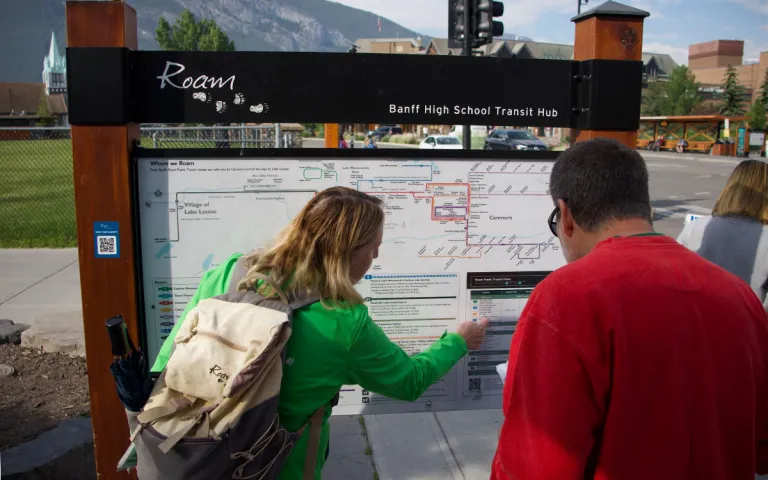
Roam employee helps visitors understand a map at a bus stop in Banff National Park. | Photo by April Eling
Across the park, Roam staff are stationed at bus stops, visitor centers, and other frequented spots to help visitors navigate routes, reservations, and connections. Their presence is another part of the transit infrastructure, helping visitors make sense of a regional network that might otherwise feel overwhelming.
When Stefan Morin, visiting Banff from Quebec, struggled with the online shuttle reservation system, a Roam employee noticed he was having trouble and came over to help him.
“Without that assistance,” Morin said, “I would not be on the bus today.”
Even with a more extensive network, Banff has trouble keeping up with demands. Bean said the region’s transit system has grown quickly, creating pressure to expand the facilities and services that support it. “The biggest issue for us is growing too quickly,” he said. “And then having to catch up with the infrastructure.”
Yet, while Banff offers a useful parallel to Glacier, it does not offer a simple copy-and-paste blueprint. The parks operate under different conditions, and building a larger shuttle network requires substantial funding, time, and ongoing maintenance. Banff’s system has grown through a combination of government investment, taxpayer funding, fares, and paid parking revenue, raising questions about how similar investments might be funded in Glacier. Those questions are further complicated by the Trump administration’s efforts to reduce National Park Service funding, highlighting the political and financial challenges of investing in expanded transit.
For Glacier, the next steps remain uncertain. The 2026 shuttle changes were introduced as a pilot intended to improve access to Logan Pass, and the National Park Service said visitor feedback and other information would help guide future decisions. Expanding the fleet or restoring service to more trailheads would require the park to address the costs and infrastructure needs of a larger system.
Jeff Mow, Glacier National Park’s former superintendent, said he hopes the park can eventually offer visitors more flexibility in how they get around. “We’d love to have enough shuttles so that people who don’t want to deal with a reservation system can get on a shuttle anytime they want,” he said.