Save the Roadless Rule to Protect Our Forests
Save the Roadless Rule to Protect Our Forests
Hailed as one of America's most successful conservation measures, the Roadless Area Conservation Rule protects drinking water sources, wildlife habitat, and world-class recreation opportunities across 58.5 million acres of national forests.
The Roadless Rule is Being Threatened
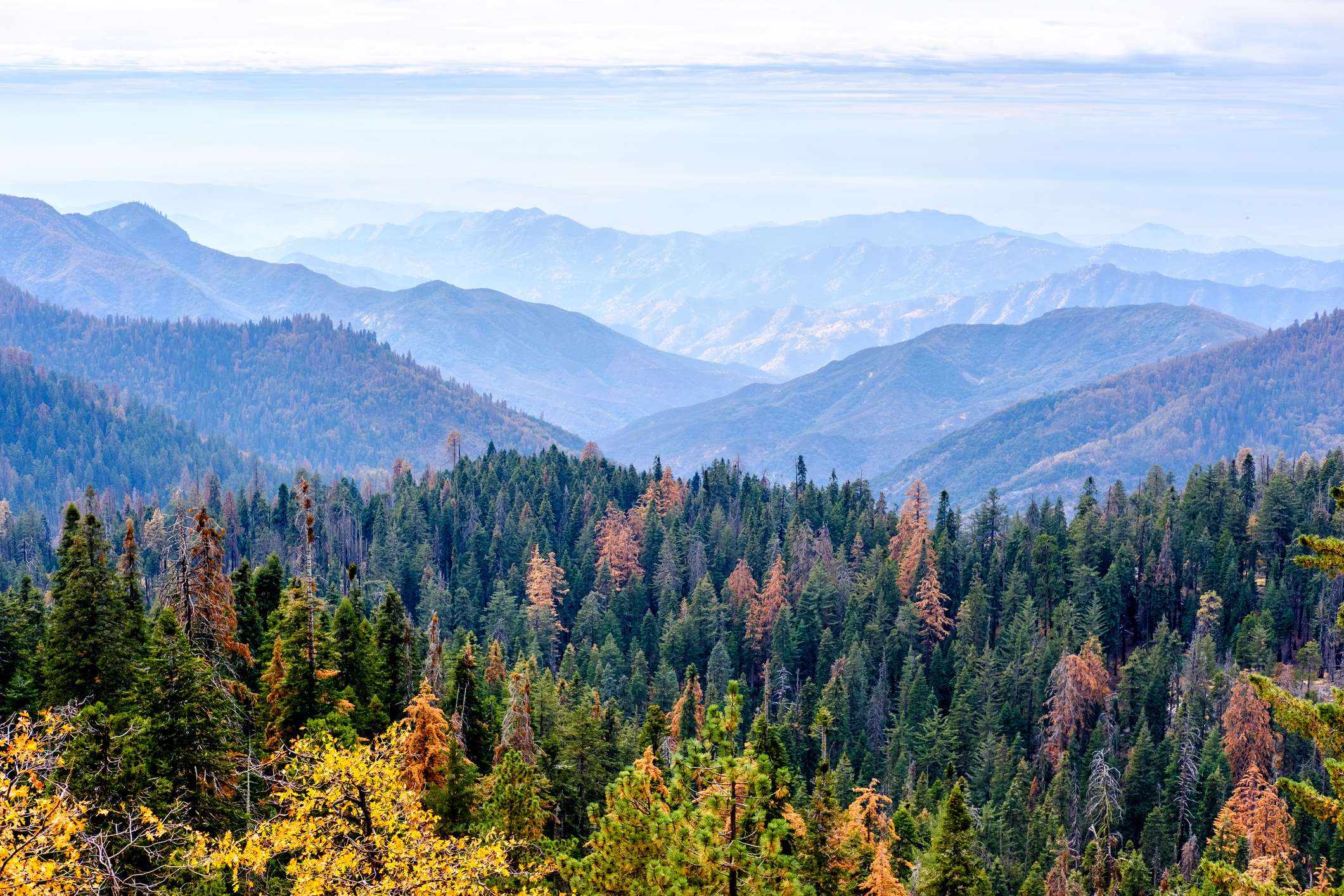
The Roadless Rule was established as a policy in 2001, and protects the wildest forests across 39 states in the U.S.
In August 2026, the U.S. Forest Service proposed rescinding the Roadless Rule, and opened up a comment period on a Draft Environmental Impact Statement. During this short comment period, over one million comments were submitted and 99.1% were in favor of keeping the Roadless Rule intact.What Is the Roadless Rule?
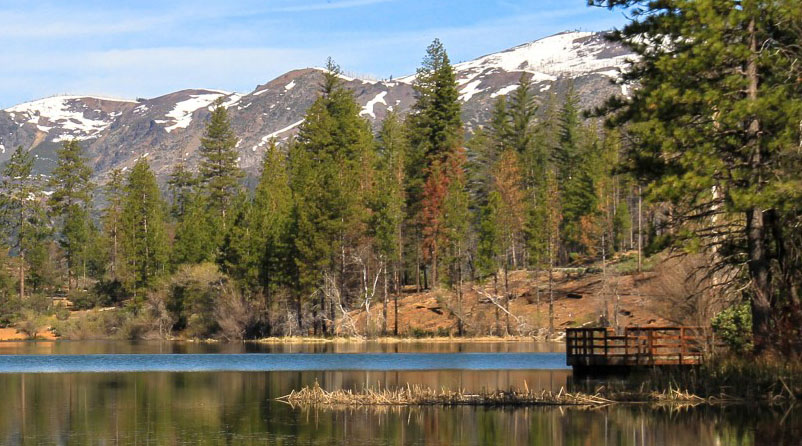
Established in 2001, the Roadless Rule protects 58+ million acres of national forest from new road construction, reconstruction, and most timber harvesting. Created after 600+ public meetings and 1.8 million public comments, the original rulemaking is one of the most heavily supported in Forest Service history. It covers roadless areas in 39 states, including:
- 9 million acres of coastal rainforest in Alaska's Tongass National Forest
- Nearly a quarter of New Mexico's Gila National Forest
- 80,000 acres in Vermont's Green Mountain National Forest
Why Is the Roadless Rule Important?
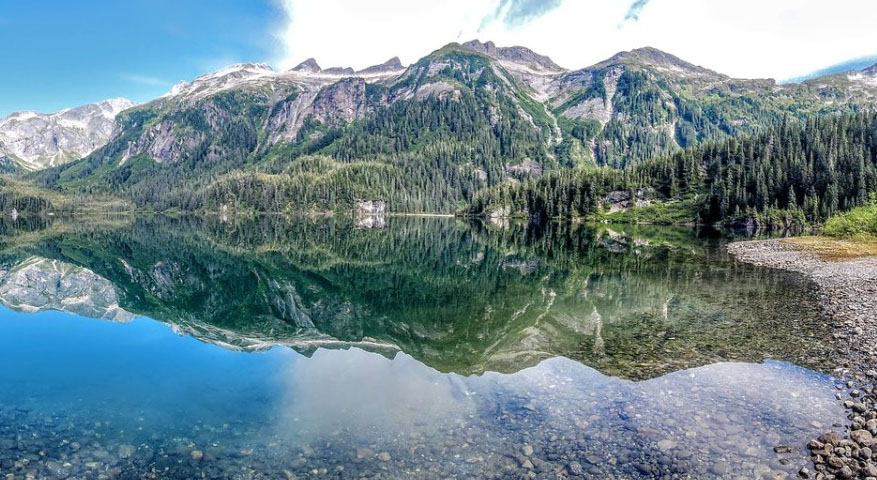
Drinking water: 60 million Americans rely on national forests for drinking water; intact forests filter water naturally
Wildlife habitat: habitat for salmon, trout, elk, and other species that depend on undammed, unlogged streams and connected landscapes
Wildfire risk: wildfires are 4x more likely to start near roads; roughly 90% of wildfires start within half a mile of a road — directly rebuts the administration's stated rationale
Old growth & carbon storage: contains vast swaths of the country's remaining old-growth forest and significant carbon storage
Fiscal responsibility: the existing road network already carries an $8.5+ billion maintenance backlog; building more roads adds to it
What Happens If the Roadless Rule Is Rescinded?
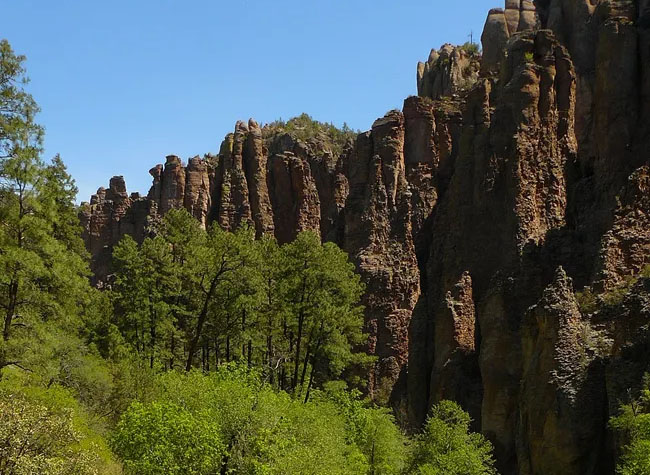
Recinding the Roadless Rule would reverse years of progress in protecting the nation’s wild spaces.
If the Roadless rule is rescinded, roadless areas would become eligible for new road construction, commercial logging, and mining.
Rescission requires a full rulemaking process (including Endangered Species Act, National Environmental Policy Act, and National Historic Preservation Act consultation); it's not instant, and that process is where public comments carry legal weight.
Find Your Forests
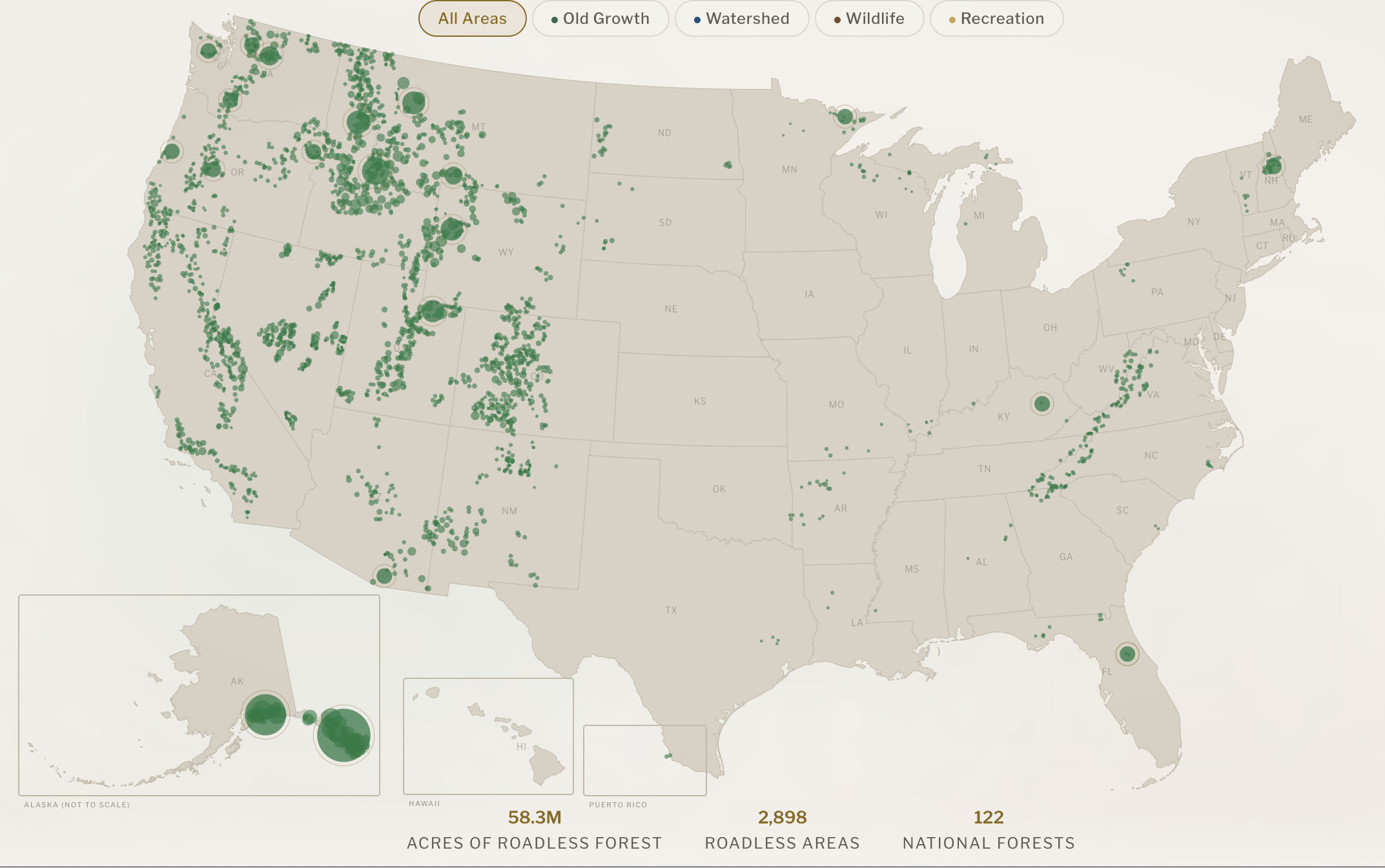
The Forest Service has filed its plan to open 44.7 million acres of wild national forest to road building and logging. Every green dot is a roadless area, and most stand to lose their only protection.
Frequently asked questions
Hailed as one of America's most successful conservation measures, the Roadless Area Conservation Rule protects drinking water sources, wildlife habitat, and world-class recreation opportunities across 58.5 million acres of national forests.
September 21st is when the USDA Roadless Rule Draft EIS Comment Period closes.
Submit a comment here and make your voice heard. Remember to personalize it to make the most impact. You can write about why you want to protect forests, how the topic is important to you, or what forest areas near you would be threatened.
Some argue that weakening the Roadless Rule will reduce wildfires, but the facts say otherwise.
- New research from The Wilderness Society (now in peer review) shows that from 1992-2024, wildfires were four times more likely to start in roaded areas than in roadless forest tracts.
- Another study by the Pacific Biodiversity Institute showed that over 90% of wildfires started within half a mile of a road.
In June 2025, Trump moved to revoke the Roadless Rule, a decision that would threaten critical wildlife habitat, clean drinking water, old forests, and the outdoor spaces that millions of people rely on. The Sierra Club is fighting to retain these invaluable forests - and the policies that protect them - across the country. Along with our coalition partners, we gathered over 620,000 comments to protect our wildest forests. And we’re not stopping now – we’re getting the word out so that people like you can submit a comment, and share on social media.