A Night of Music, Storytelling, and Climate Action
Village Studios | West Los Angeles, CA
1616 Butler Ave, Los Angeles, CA 90025
This event is being filmed & will be streamed nationwide on Earth Day April 22 at 6 PM ET.
Find Your Local Viewing Party
April 22, 2026

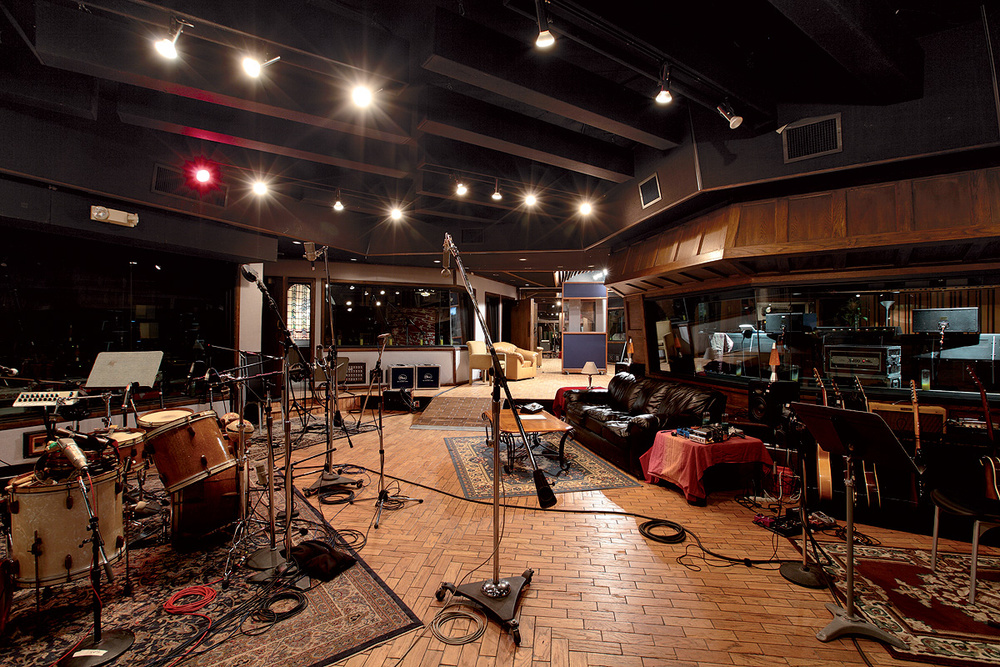
Sierra Sessions is a streamed Earth Day concert that will spotlight singer/songwriters. Participating artists will perform a 2-4 song set, sharing the inspiration and stories behind their songs and their reflections on nature and life on Earth. The concert will be streamed and hosted by Sierra Club Chapters and the Sierra Student Coalition hosting viewing parties across the country.
Sierra Sessions seeks to do more than entertain - it is a call to action for the environmental movement and a reimagining of music’s role in the fight for a livable planet. This event aims to inspire a creative and cultural response to the climate and extinction crises, one song at a time.
Sign Up to Participate in Sierra Sessions >>
Become a Sponsor >>

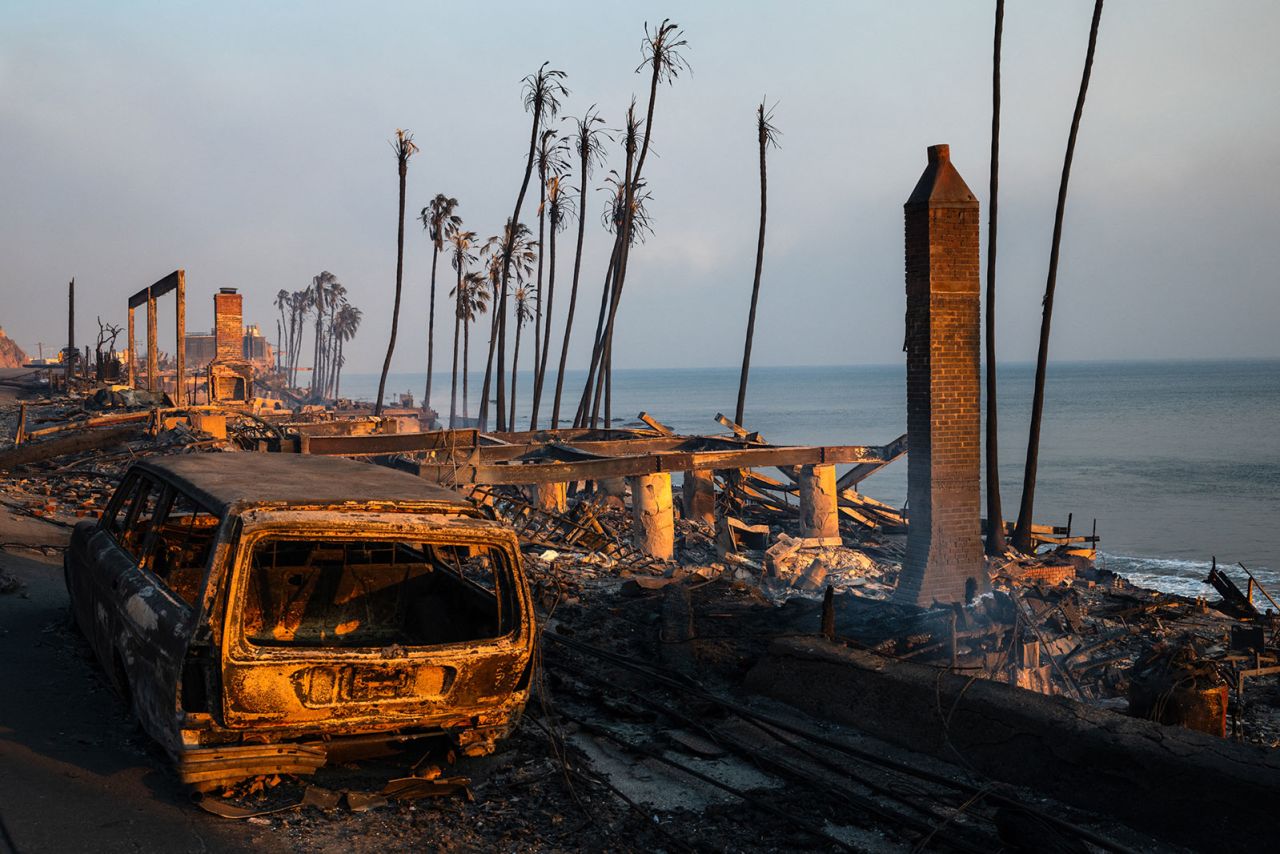
Why? The environmental crisis is causing historic hurricanes, tornadoes, droughts, fires and floods – destroying human and wildlife habitat.
Without immediate action and intervention, this impact will accelerate the 6th Mass Extinction and negatively affect life on earth for generations.
Now more than ever, we need to raise awareness and act.
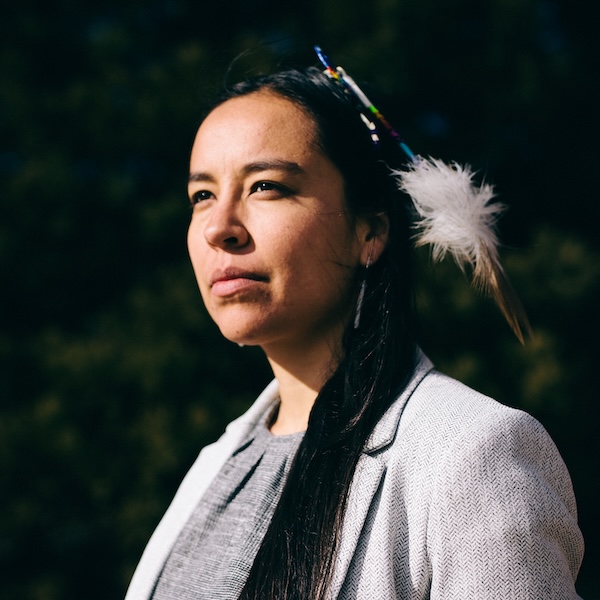
Dr. Lyla June Johnston has studied and championed the art of Indigenous Regenerative Ecosystem Design (IRED), which Native Peoples have expertly practiced for thousands of years. Her research debunks the myths of "the primitive Indian" and of "pristine wilderness," illuminating how North America was once a vast and productive garden, influenced by Indigenous Peoples on landscape scales through a variety of regenerative land management methods. Through her survey of hundreds of successful Indigenous food systems, both past and present, she has defined a set of best practices for creating viable food economies while simultaneously improving biodiversity and ecosystems health, as her ancestors once achieved.
She has traveled nationally and internationally lecturing on humanity's beautiful potential to catalyze environmental balance, re-framing Homo sapiens from a "hopeless ecological pest" to an indispensable piece of the ecological puzzle, when guided by key values and practices.
Dr. Johnston graduated with honors from Stanford University with a degree in environmental anthropology. Her PhD at the University of Alaska focused on the ways in which pre-colonial Indigenous Nations shaped large regions of Turtle Island (aka the Americas) to produce abundant food systems for humans and non-humans. Dr. Johnston also integrates the traditional teachings she grew up with to inform her perspectives and solutions.
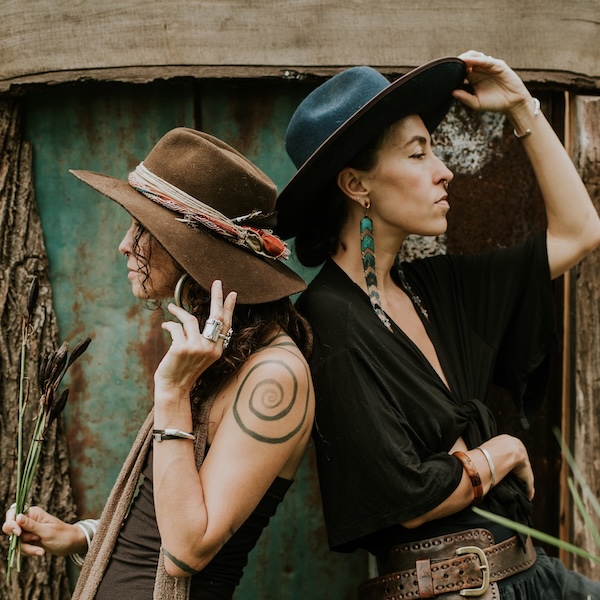
In Appalachia, farmers still practice the ancestral tradition of companion planting. Corn grows tall as a trellis, beans climb the corn, and squash provides the ground cover. Rising Appalachia cultivates a similar symbiosis in their music, where Southern folk traditions, New Orleans swamp culture, and Atlanta’s street spirit strengthen each other. Known for their seamless harmonies, songcatching and storytelling, the band has released ten albums and toured throughout North America, South America, Europe, the Celtic Isles, Australia and beyond — performing everywhere from the Telluride Bluegrass Festival and Red Rocks to NPR’s Tiny Desk. All the while, the band has cultivated a devoted grassroots following traveling to communities big and small by train, horseback, bio-diesel bus and sailboat.
Sisters Leah Song and Chloe Smith were raised in Atlanta in a blue collar bohemian family. Their mom was a fiddler, their dad a sculptor. They went to contra dances, wandered the neighborhood forests and had a childhood filled with banjos, harmony singing and other folkways. In her early twenties, while studying art and Indigenous activism in Chiapas, Mexico, Leah returned to her love of folk music. The two sisters then began a wildly creative and successful career that has included busking in New Orleans, traveling with a circus from Southern Italy to Northern Sweden, and collecting songs in Ireland, Bulgaria and Colombia. Rising Appalachia also features the creative musicianship of Duncan Wickel (fiddle, cello), David Brown (upright bass, baritone guitar) and Biko Casini (drums, percussion) — each tradition keepers in their own right.
The band has released ten eclectic albums. Leylines (named after the earth energies that connect sacred sites) was produced by Joe Henry and features special guests Ani DiFranco and Trevor Hall. Live from New Orleans at Preservation Hall is a homecoming for the sisters, who lived in New Orleans for seven years and cut their teeth playing on the street in the French Quarter. The album is a pilgrimage to the homeplace of jazz and features eminent local musicians Aurora Nealand and Branden Lewis from the Preservation Hall Jazz Band. Folk and Anchor is a curated collection of cover songs by everyone from Bob Dylan to James Blake, Erykah Badu to Beyoncé. Their highly improvised and hypnotic album, The Lost Mystique of Being in the Know, was recorded a single day and features occasional bandmate Arouna Diarra from Burkina Faso on ngoni who amplifies the African roots of American folk traditions.
Rising Appalachia’s forthcoming album, Trade Your Troubles, is a soft light glowing from a quieter, more introspective time. It features songs that celebrate rest, restoring your spirit after burnout, and replenishing yourself in the wilds and in tradition. The generous 16-song record is bookended by a traditional Irish traveller song and an Appalachian fiddle tune, both nods to their ancestral lineages. In between, there are songs about motherhood, moonlight, heartbreak and birdsong. “The album tilts towards our inner experiences,” Chloe reflects. “I wanted to write about love and how it expanded and broke open in new ways after I became a mother.” Due out in October 2026, Trade Your Troubles features special guests Aoife O’Donovan, Ayla Nereo, Bonnie Paine, and Brittany Haas.
Sisters Leah and Chloe have long been involved in movement building, direct action, and advocacy work. They've partnered with national organizations like the Prison Yoga Project and Honor the Earth, been invited to perform at the Hopi Reservation and Standing Rock, and have used their music and platform to make the world a better place. Rising Appalachia pioneered the “Slow Music Movement,” an effort to create sustainable touring practices that included making handmade merch and welcoming local nonprofits, herbalists, farmers and poets to their shows. When Hurricane Helene hit their home in Western NC, they volunteered for months — helping with supply drops, rescue efforts, and water deliveries. Some days, they’d gather under a lean-to and plug their banjos and fiddles into a generator to share their songs and uplift everyone’s spirits.
Rising Appalachia bring their full humanity to the stage. Audiences are entranced by their honey-hued voices and moved by the deep yearnings, fierce questions, and unshakable hope that courses through their music. Their shows are communal gatherings where people remember their connection to the earth, each other, and the old songs that have carried us through every season of being human.
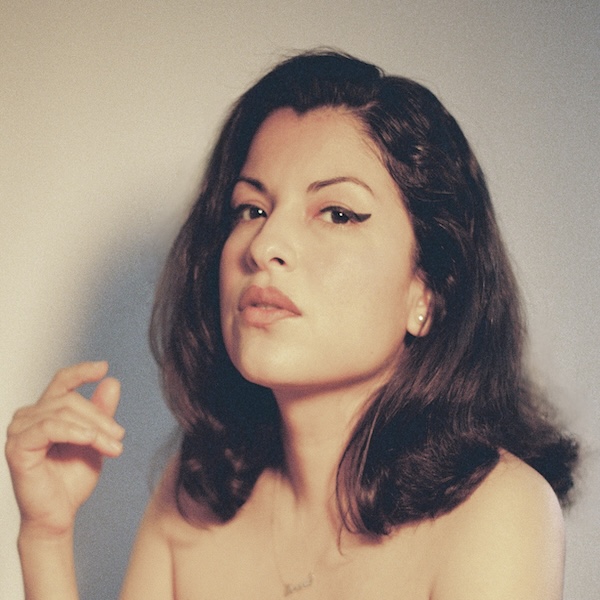
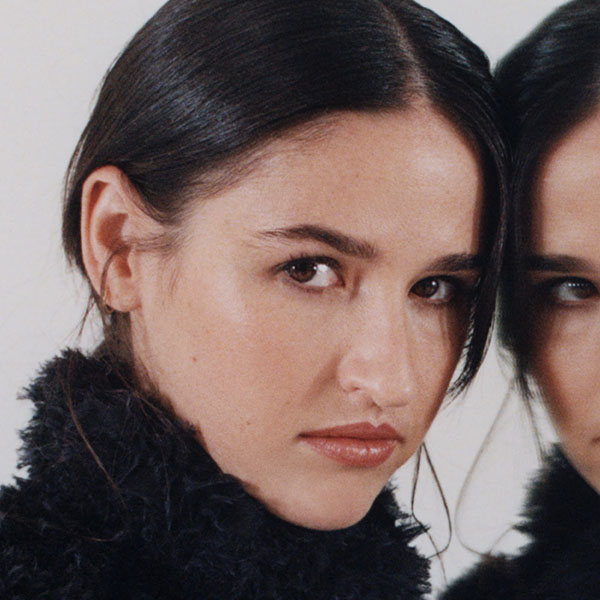
Los Angeles native Irene Diaz launched her career in 2010, quickly establishing herself as a modern torch singer. Her sound, built on soulful ballads with bare-bones instrumentals—often just a piano, guitar, or ukulele—is a powerful tribute to influences like Sade, Nina Simone, Hope Sandoval, and Ritchie Valens,a minimal approach that focuses on the rich range and captivating emotion of her voice.
Her standout talent and stunning live performances quickly earned her swift media recognition. NPR has repeatedly praised her over the years, featuring Diaz in their renowned “Tiny Desk Concerts” series. Critics have taken notice, with OC Weekly lauding her music as being “from the Nina Simone school of songwriting.” Further recognition has been published by De Los LA Times, Rolling Stone Magazine, Grimy Goods, and more. Diaz’s 2013 single, “Crazy Love,” is an international hit with over 4 million plays on Spotify. The song made Bride.com’s list of top 10 wedding songs alongside music by John Legend and Lana Del Rey, and its popularity has led to Diaz being frequently booked to perform it personally at exclusive private events all over the world.
The Mexican American artist is a veteran of the L.A. music scene and has shared the stage with notable acts such as Carla Morrison, Gaby Moreno, Las Cafeteras, The Maria’s, Ozomatli, and countless others. Diaz has toured major U.S. cities including New York, Miami, Austin, Seattle, Philadelphia and performed internationally in Japan, Mexico, and Ibiza. With her evocative lyrics and dynamic stage presence, whether playing an intimate venue like LA’s Hotel Cafe or commanding a crowd of over 13,000 for a Selena Tribute Concert in Chicago, Irene Diaz continues to captivate audiences, establishing herself as a prominent and unmistakable voice in the contemporary music landscape.
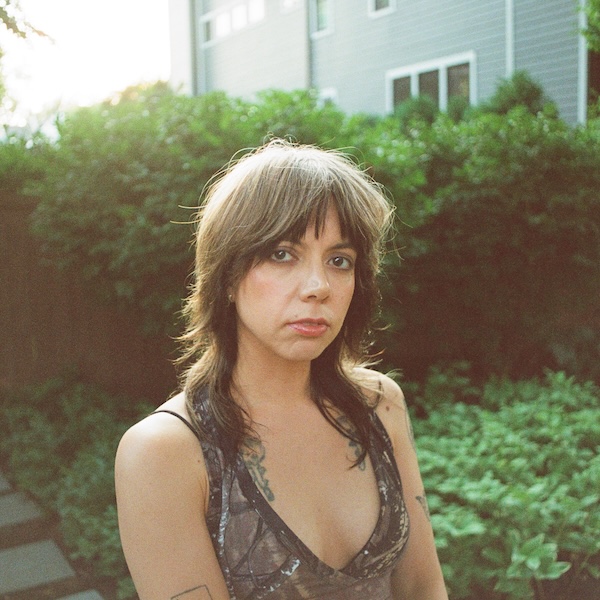
Alynda Segarra is 36, or a little less than halfway through the average American lifespan. In that comparatively brief time, though, the Hurray for the Riff Raff founder has been something of a modern Huck Finn, an itinerant traveler whose adventures prompt art that reminds us there are always other ways to live.
Born in the Bronx and of Puerto Rican heritage, Segarra was raised there by a blue-collar aunt and uncle, as their father navigated Vietnam trauma and their mother neglected them to work for the likes of Rudy Giuliani. They were radicalized before they were a teenager, baptized in the anti-war movement and galvanized in New York’s punk haunts and queer spaces. At 17, Segarra split, becoming the kid in a communal squat before shuttling to California, where they began crisscrossing the country by hopping trains. They eventually found home—spiritual, emotional, physical—in New Orleans, forming a hobo band and realizing that music was not only a way to share what they’d learned and seen but to learn and see more. Hurray for the Riff Raff steadily rose from house shows to a major label, where Segarra became a pan-everything fixture of the modern folk movement. But that yoke became a burden, prompting Segarra to make the probing and poignant electronic opus, 2022’s Life on Earth, their Nonesuch debut. Catch your breath, OK? We’re back to 36, back to now.
During the last dozen years, these manifold tales of Segarra’s voyages have shaped an oral folklore of sorts, with the teenage vagabonding or subsequent trainhopping becoming what some may hear about Hurray for the Riff Raff before hearing the music itself. Segarra has dropped tidbits in songs, too, but they always worried that their experiences were too radical, that memories of dumpster diving or riding through New Orleans with a dildo dangling on an antenna were too much. But on The Past Is Still Alive, Segarra finally tells the story themselves, speckling stirring reflections on love, loss, and the end or evolution of the United States with foundational scenes from their own life. “It felt like a trust fall, or a letting go of this idea of proving something to the music industry—how I can be more digestible, modifiable, sellable,” Segarra says. “I feel like I’m closer to what I actually have to share.”
There is, for instance, sex and communal musicmaking on an island of San Francisco trash during “Snake Plant (The Past Is Still Alive),” a charged attempt to reckon the erosion of our childhood innocence with a belief that a worthwhile future is still possible. Or there are the cops and the trains and the long walks down empty Nebraska highways to escape said cops during “Ogalla,” the cathartic closer that tries to maintain the spirit of the past while actually surviving in the now. The Past Is Still Alive is the record of Segarra’s life so far, not only because it chronicles the past to understand the present but also because it is the most singular and magnetic thing Hurray for the Riff Raff have yet made. A master work of modern folk-rock, The Past Is Still Alive resets the terms of that tired term.
In March 2023, when Segarra returned to the North Carolina studio of producer Brad Cook to cut The Past Is Still Alive, they weren’t so sure about the session, if they could even handle it. Only a month before, their father, Jose Enrico (Quico) Segarra, had died. A musician himself, he had long been fundamental to Segarra’s songs, a point of inspiration and encouragement. What’s more, Segarra had made Life on Earth with Cook, and drummer Yan Westerlund had long toured in Hurray for the Riff Raff. But much of the band they’d assembled for these sessions—guitarist Meg Duffy, fiddler Libby Rodenbough, saxophonist Matt Douglas, multi-instrumentalist Phil Cook—were unknown quantities. At the edge of catastrophe and in the headlock of grief, could Segarra share these bone-deep songs among strangers? “The songwriting is what drove me. I didn’t feel the need to try to transform,” Segarra reckons. “It felt like the truth of where I was at in my life—very vulnerable, very fair, very raw.”
Segarra simply let those complex feelings lead the way, hurling themselves into these excavations of memory and blueprints for what’s to come. Witness, for instance, the tensile resolve in opener “Alibi,” a yearning reflection on addicted childhood friends that pleads with them to join the land of the living while they still can. As the pedal steel moans beneath the snappy country shuffle, their voice frays, a testament to the way they’re bearing difficult witness. That call to survival returns in “Snake Plant,” a song so stuffed with specific childhood memories—scenes from family road trips to Florida, snapshots from discovering oneself on the edge of the world—that Segarra feels like an actual tour guide. “Test your drugs/remember Narcan,” they sing toward the end. “There’s a war on the people/What don’t you understand?” The demand is graceful and winning, not pedantic, lived-in advice from someone who has managed to live when so many friends have not.
This quest to live in spite of outside attempts to kill us off animates “Colossus of Roads,” at once the most devastating and uplifting entry in the entire Hurray for the Riff Raff catalogue. Written like an urgent dispatch after the Club Q shooting in Colorado, it is a paean to the outsiders, a love song for the vulnerable—the queer, the homeless, the radical. Their voice taut as a piece of barbed wire, Segarra deploys poet Eileen Myles and boxcar artist BuZ blurr (the Colossus of Roads himself) to suggest a sanctuary of solidarity for the dispossessed. The United States as we know it can and probably should dissolve, they seethe; as it all comes down, though, Segarra asks to “wrap you up in the bomb shelter of my feather bed.” Brilliantly written and rendered, it is an anthem for a dawning age of collective liberation. “I’ve only had this experience a couple of times, where a song falls on me—it’s all there, and I don’t do anything,” Segarra admits. “It felt like creating a space where all us outsiders can be safe together. That doesn’t exist, but it exists in our minds, and it exists in this song.”
Throughout The Past Is Still Alive, Segarra suggests the profound ability to navigate all this pain, chaos, and trauma, or at least to meet it with senses of wonder and want. To wit, the delightful “Buffalo” uses the iconic American mammal that Americans almost drove to extinction as a metaphor for a new love; can it survive the pressures of society? A duet with Conor Oberst, “The World Is Dangerous” is a heartbroken waltz that still offers to hold someone close, if and when they’re ready.
And even as Segarra tells the tale of the first trans women they ever met, Miss Jonathan in New Orleans, and the beatings they took during “Hawkmoon,” they seem to beam, advocating for a better world yet to come. “I’m becoming the kind of girl that they warned me about,” Segarra sings at the end with devilish aplomb, proud to be carrying on Miss Jonathan’s work of upending norms, whether by sharing Miss Jonathan’s story or simply taking up space for themselves and their own multitudes.
It is especially fraught these days to speak of art in terms of national identity, to flirt with a jingoism that has led to new autocrats and rekindled old wars. But in the best ways possible, The Past Is Still Alive is a distinctly American record, built on twin pillars of peril and promise that have forever been foundational to this country.
The wanderlust that leads to piñon fires near the pueblos of New Mexico’s high desert and all-night escapades in New Orleans. The independence that shapes communities of like-minded outcasts, looking after one another. The inequality that makes such enclaves essential, that makes one of us eat out of garbage and the other with a silver spoon: It is all tragically and beautifully bound inside The Past Is Still Alive. Just as Louise Erdrich has done of late with Native Americans, Lonnie Holley with African-Americans, and Julie Otsuka with Asian-Americans, Segarra expands the scope of American stories here, stretching a long-safeguarded circle to encompass outsiders forever on the fringes. “The past is still alive/The root of me lives in the ballast by the mainline,” Segarra sings at one point, sweeping their days of riding rails directly into whatever success they have found now. Hurray for the riff raff, indeed.
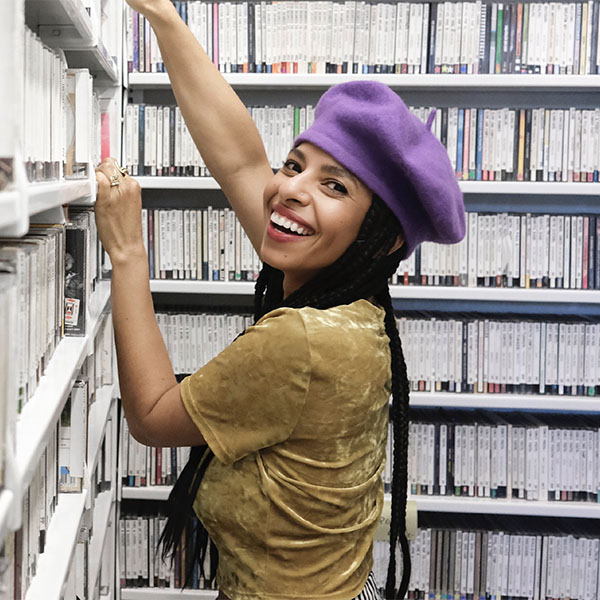
Novena Carmel, based in Los Angeles CA, is the Host of KCRW's flagship music show, Morning Becomes Eclectic. She also lends her voice to a choir and voiceover projects, and DJs and hosts events regularly. Novena's work is anchored in her global perspective, joyful presence, and passion for sharing the music she loves and the stories behind the sounds.
LA based singer/songwriter Rozzi is redefining what it means to be a modern soul-pop artist, melding emotional depth, bold storytelling, and cultural consciousness into every facet of her work. A recipient of a Cannes Lions award for her poignant track “Orange Skies - Chapter 2” (feat. NATURE), Rozzi has collaborated with icons like Nile Rodgers, PJ Morton, Billie Eilish, Kendrick Lamar, John Taylor (Duran Duran), Sheryl Crow, and Jacob Collier. She’s toured with acts including Maroon 5, Kelly Clarkson, and Joss Stone and has appeared on Jimmy Kimmel Live, The Talk, The Today Show, Apple's The Morning Show, and even played herself on Hulu's original series Dollface. Her original music “Best Friend Song" was the title track for Netflix's Me Time. Gearing up for the release of her album Fig Tree, Rozzi called on artists from around the world to create works inspired by tracks on the album. She held a collaborative group show and residency at New York’s Ki Smith Gallery, and will bring this show in a new form to Los Angeles this May.
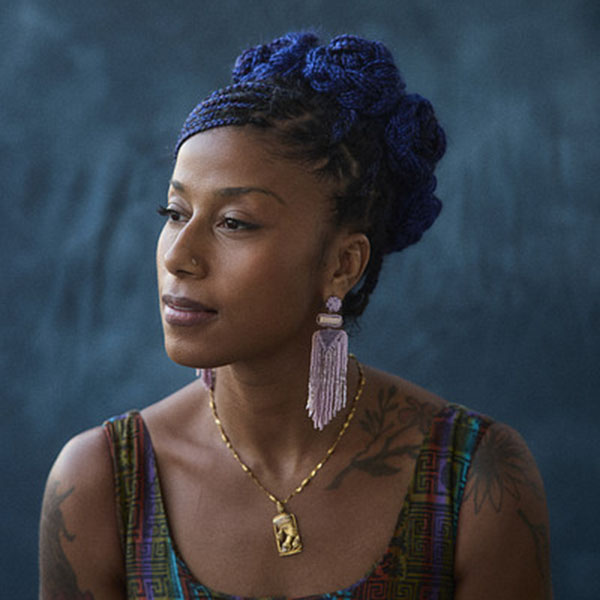
aja monet is a Surrealist Blues Poet in the business of goosebumps and heart-gut-telling truths. Her poems are harmolodic, vulnerable, and insurgent. As the youngest recipient of the Nuyorican Grand Slam Poetry title, she first cut her teeth in New York City’s Lower East Side poetry clubs and bars, honing her voice and craft on the storied stages of a burgeoning grassroots poetry movement. She follows in the long legacy and tradition of poets organizing in social movements for change. Her collaborative spirit has seen her shape and shift culture alongside internationally renowned artists, scholars, activists, and organizers. aja’s first full collection of poems, my mother was a freedom fighter (2017), is a powerful tribute to women who embody freedom, earning a nomination for a NAACP Image Award for Poetry. Her debut poetry album, when the poems do what they do , was nominated for a Grammy Best Spoken Word Poetry Album in 2024. The album explores themes of resistance, love, and the inexhaustible quest for joy. As a poet and touring bandleader, she has performed at festivals, concert halls, and theaters across the globe including but not limited to, the Guggenheim, Lincoln Center, Newport Jazz Festival, Montreal Jazz Festival, North Sea Jazz Festival and the Fremantle Biennale to name a few. As the 2025 Artist in Residence at the EFG London Jazz Festival, she was invited to give a headline performance at the Barbican Centre. aja monet’s awards include the Marjory Stoneman Douglas Award for Poetry (2019), the Nelson Mandela Changemaker Award (2024), The Harry Belafonte Voices for Social Justice Award (2024), the EBONY 100 Artist In Residence Award, and the Malcolm X & Dr. Betty Shabazz Vanguard Award (2025). She also serves as the Artistic Creative Director for V-Day, a global movement to end violence against women and girls. In 2022, she created "VOICES," an audio play amplifying the stories of Black women across the diaspora and the African continent. aja monet’s most recent book of poems inspired by several years living and organizing in South Florida is called, florida water on Haymarket Books. Her sophomore studio album the color of rain, is set to be released in May 2026 with drink sum wtr.
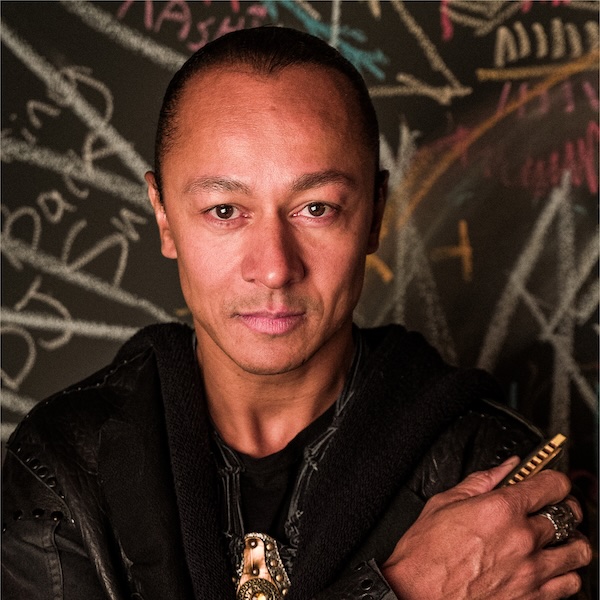
Using an instrument many have owned but few have mastered, urban jazz harmonicist Frédéric Yonnet’s musical skills and stage performance crush every preconceived notion that you’ve ever had about the harmonica. Yonnet presents the harmonica in a refreshing and modern context – as a lead instrument in urban jazz and hip-hop. In his hands the harmonica is stylish, it’s cool, and it’s brilliant.
Yonnet’s impressive manner landed him a tour with the late Prince and he can frequently be seen dueling on-stage with music legend Stevie Wonder. He is the music director for Dave Chappelle’s Juke Joint – the best party you’ve never been to, and he’s performed with award-winning songwriter David Foster, and Grammy award winners Ed Sheeran, Erykah Badu, John Legend and the National Symphony Orchestra. He’s determined to expand the way the music industry and enthusiasts regard the "pocket" instrument… reinforcing that limitations are in the mind… not the instrument. Ladies and Gentleman, Frederic Yonnet (Yo-Nay).