 The Magazine of The Sierra Club
Behold the Luna Moth
This insect is so cool, it was featured on a postage stamp
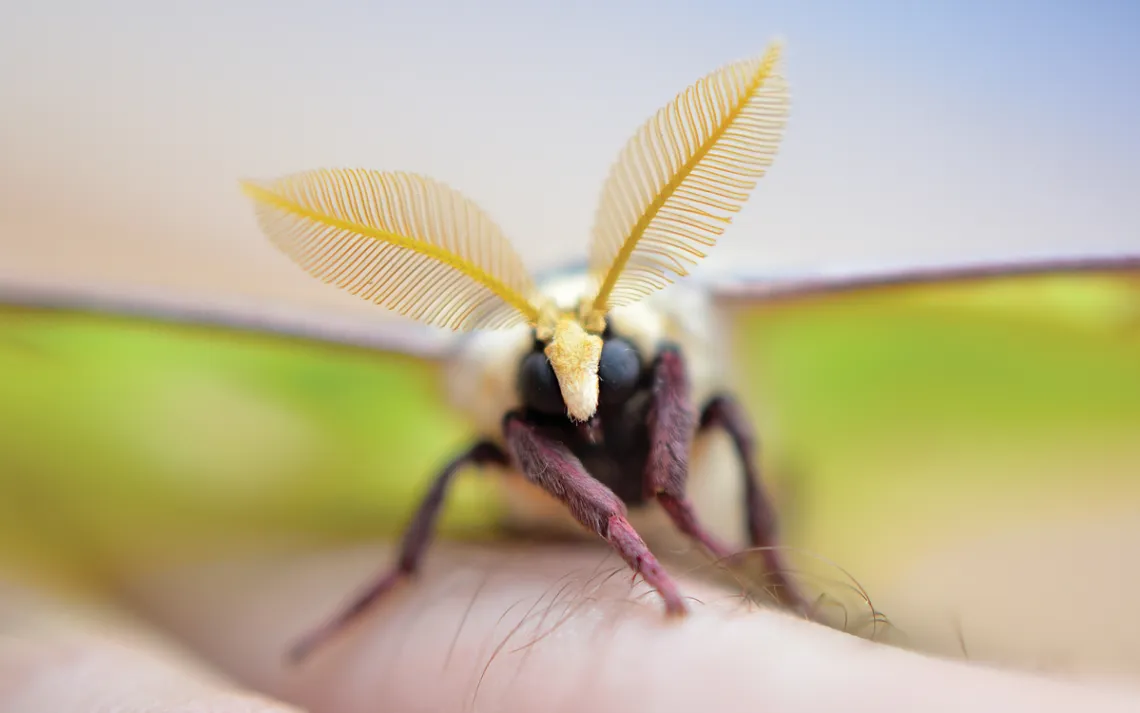
Scientists think that male luna moths use their large, feathery yellow antennae to detect a chemical substance that females emit. They can find their mates from far away. | Photo by Samuel Torres/iStock
What’s green, as big as your hand, and might help you mail a letter? The luna moth! Its name comes from the moon-like spots on its giant wings—luna is the Latin word for moon—which can stretch across 4.5 inches. This silk moth (officially Actias luna) is the only moth that has been featured on a postage stamp, back in 1987. Luna moths are common throughout the eastern half of North America, but they can be hard to spot. Why? Because these ghostly beauties come out mostly at night.
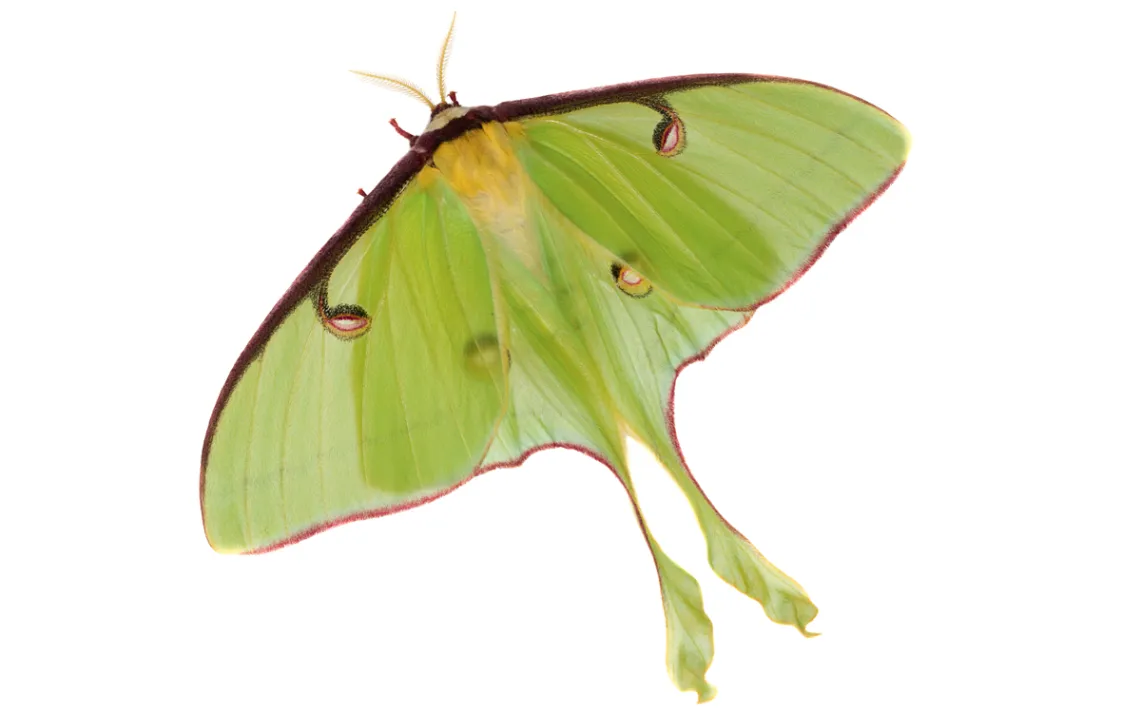
The round markings on a luna moth’s wings are called eyespots. They help the moth survive by confusing predators. | Photo by MYN/JP Lawrence/NPL
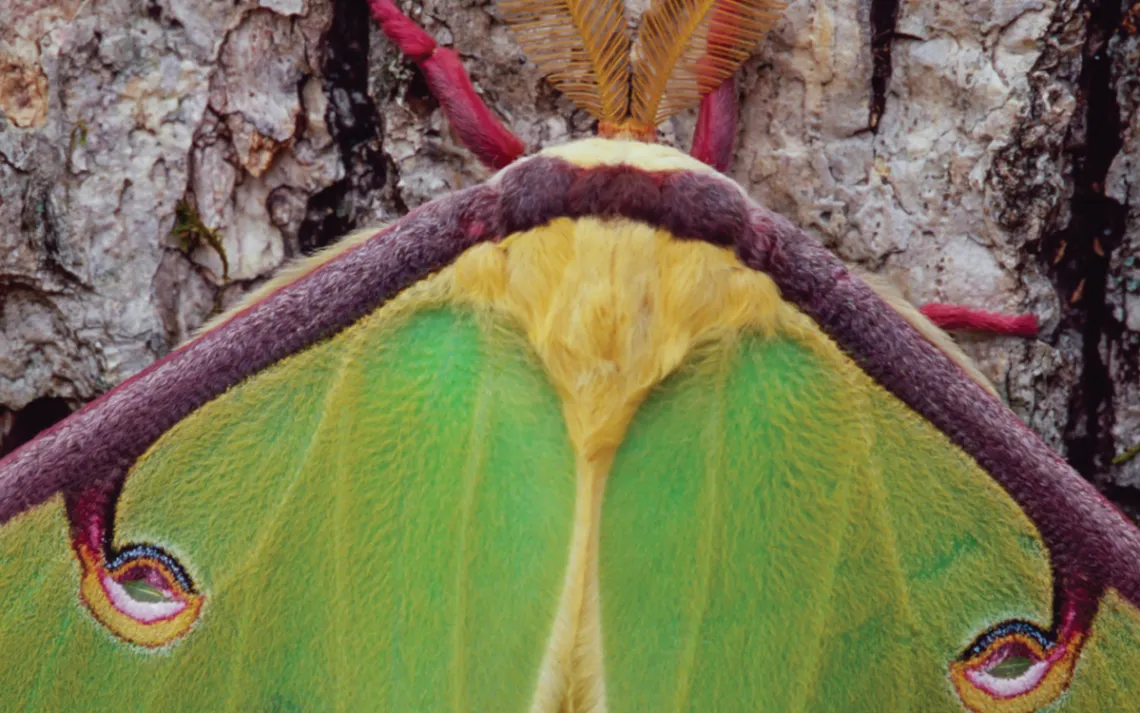
Photo by GracedByTheLight/iStock
Moths are often considered “ecological indicators,” meaning their health tells us a lot about the health of the environment as a whole.
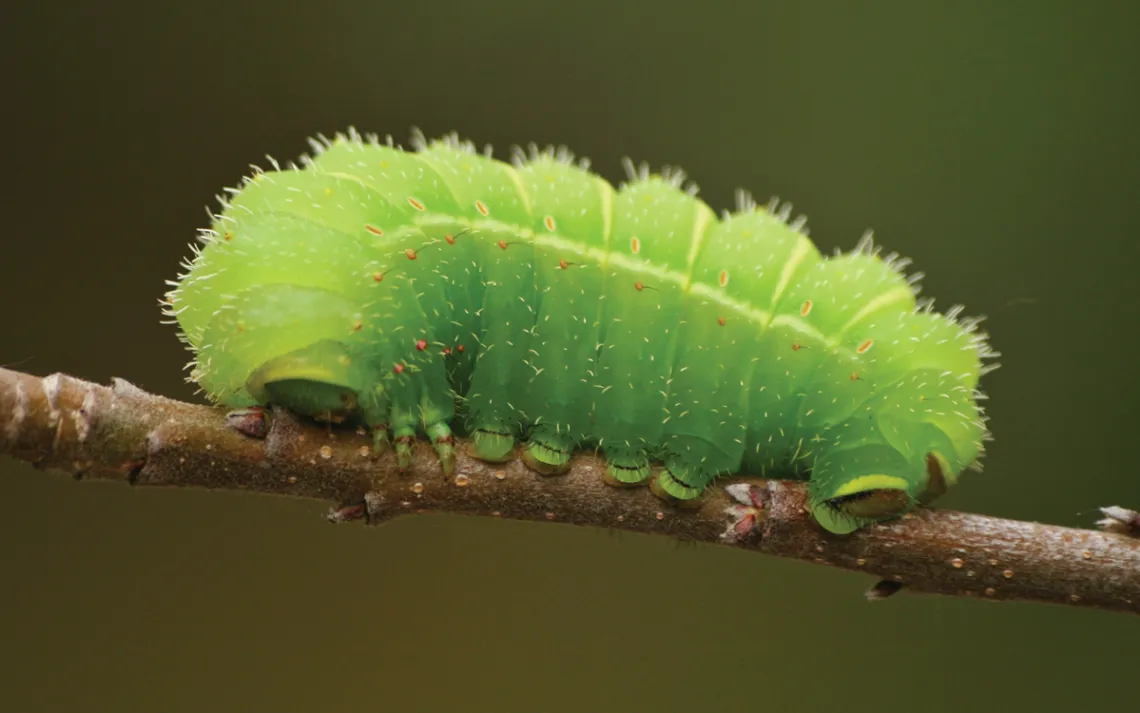
Photo by Marti157900/iStock
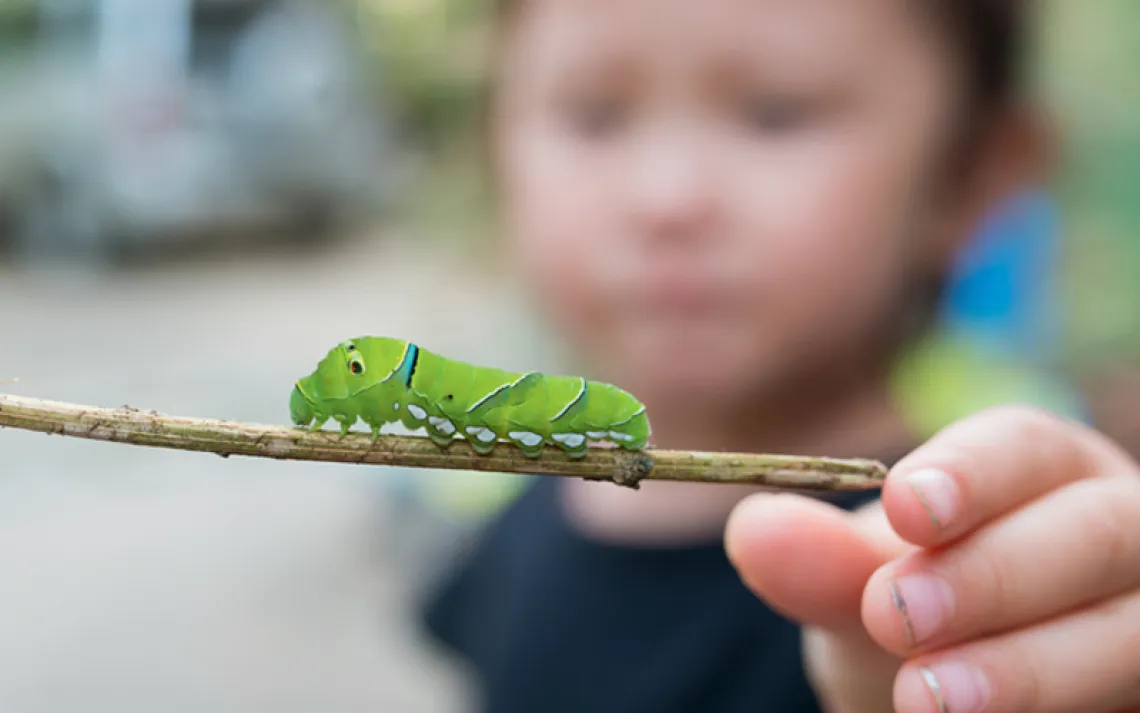
When threatened, a luna moth caterpillar might rear up in a “sphinx” pose. It makes a clicking noise with its mandibles and spits out a yucky fluid to deter predators.
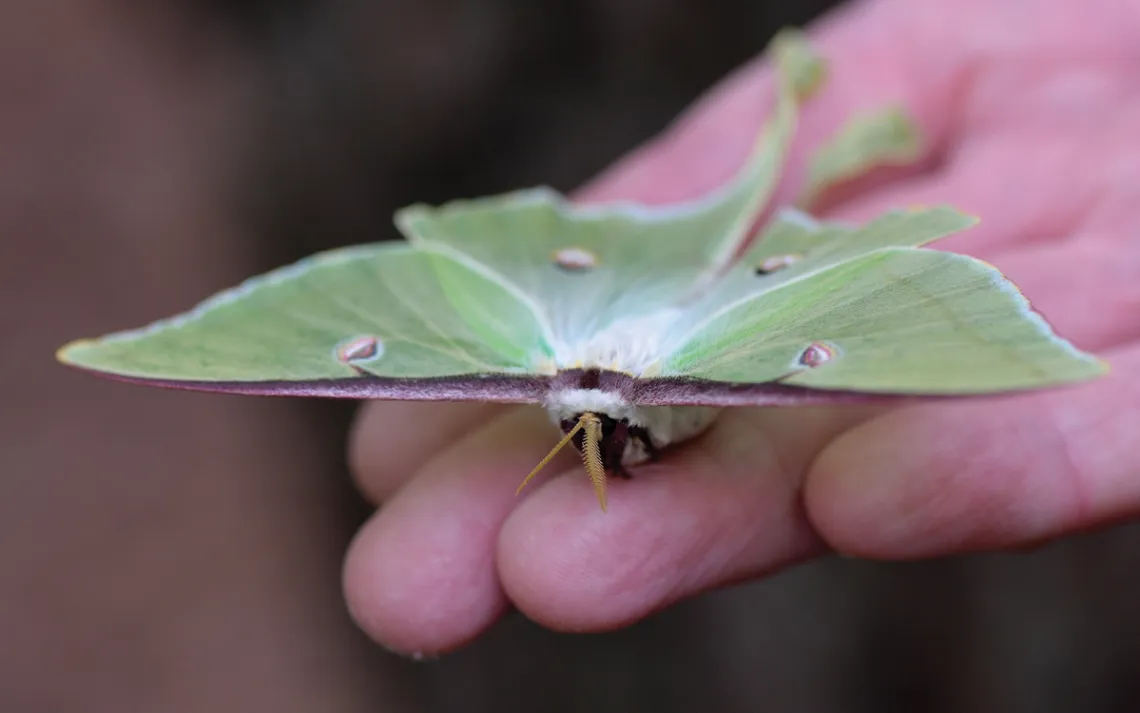
Photo by Joesboy/iStock
Luna moths and their caterpillars are very sensitive to some of the chemicals people use on their lawns and gardens to get rid of bugs and weeds.
Adult luna moths don’t eat—they don’t even have mouths or digestive systems. Instead, they seek mates and the females lay eggs during their short lives of a week or so.
The luna moth has two long, streaming tails for one key function: They trick bats, which hunt at night using sonar The way the tails flutter and twist confuses attacking bats.