 The Magazine of The Sierra Club
Energizing America
Fossil fuels burned brightly in their day, but now it's time to make the leap to safer, cleaner, climate-friendly alternatives
EXPLORERS USED TO AMUSE their European audiences by telling of heathen tribesmen who would panic when an eclipse rubbed out the noonday sun. The natives would scream or pray or make ritual sacrifices to appease the god on whom they had always depended, a god now acting so irrationally. Our chief deity--the cheap energy that has made our lives rich and easy--is about to be eclipsed as well, and the sounds you hear (motorists moaning about the price of gas, politicians loudly insisting that sacrificing wilderness in the Far North will save the day) are no different. Except that solar eclipses pass quickly. This change is forever; fossil fuel was a onetime gift--and the sooner we understand that, the sooner we can go about the realistic task of doing without it.
Much of what passes for discussion about our energy woes is spent imagining some magic fuel that will save us. Solar power! Fusion power! Hydrogen power! But such wishful thinking hides the basic fact of our moment in time: We've already had our magic source of energy. Fossil fuel was as good as it gets: compact, abundant, and easy to handle and transport. All you had to do was stick a drill bit in the ground or scrape off a few feet of soil above a vein of black rock and you were set. Learning to use coal, gas, and oil kicked off the Industrial Revolution and, in subsequent centuries, underwrote the chemical revolution, transportation revolution, agricultural revolution, and electronics revolution. (Right now, even as you read this, fossil fuel is producing hundreds of billions of revolutions per minute.) Pretty much every action of modern life involves burning hydrocarbons, and it's modern life that we've come to like.
So it's no wonder that we start to get a little jittery when we contemplate the coming end of the fossil-fuel age. The growing recognition that we're approaching a peak in oil production is the most obvious sign, of course--our supply of petroleum is now measured in decades, and as each decade passes, that supply will become harder to find and more expensive to pump. The world's four biggest oil fields are in decline. We're using oil five times as fast as we're discovering new reserves. And just as those of us already in on modernity would like to start hoarding the remaining supply, the Chinese and Indians and lots of others are discovering that they'd enjoy taking their cars out for a spin as well.
If all we were faced with was peak oil, we might be able to keep the circus going. We could figure out ways to replace many uses of gasoline with coal, which is abundant as long as we don't mind removing all the remaining mountaintops in the southern Appalachians (a sacrifice, I predict, we would bring ourselves to make--or rather, we would bring ourselves to call upon Kentuckians and West Virginians to make). But we've got a far deeper problem than that, one coal can only make worse. Global warming, as we've come to understand in the past few years, is not a speculative, distant, or easily managed threat. It's not one more item on the list of problems, somewhere between global terrorism and failing inner-city schools. It's the first civilization-scale challenge humans have managed to create (the second, if you count nuclear weapons, but so far we've managed to keep that one under some kind of tenuous control). And global warming has pushed us into a corner: Everything frozen on Earth is melting, huge storms are growing steadily huger, seasons are shifting, forests are dying. Since the 1950s, we've more than tripled emissions of the gas most responsible for global warming: carbon dioxide. The latest estimates conclude that the catastrophic tipping point that might commit us to huge sea-level increases may be reached at atmospheric concentrations of CO2 as low as 450 parts per million. And since we're already at 380 ppm, and increasing faster than 2 ppm annually--well, you can do the math. NASA's top climate scientist, James Hansen, said in 2006 that his modeling showed we had ten years to start putting less carbon dioxide into the atmosphere or we'd create "a very different planet." And he's an optimist. British scientist James Lovelock says that by his calculations, we have already waited too long and that billions will die as a result before the century is over. Lovelock has company among those peak-oil theorists who forecast a future of angry residents of crumbling suburbs searching for scarce gasoline and fighting over the bones of our past affluence.
Energy has become, in short order, the central environmental question, the central foreign policy question, and the central economic question. Everything hinges on our ability to somehow gracefully make the jump from fossil fuel to ... something else. But we're paralyzed. At the moment, energy companies are making money ($36 billion in 2005 for Exxon), their politician friends are winning votes, and most of us are living our daily lives on one side of this energy gap, so it's hard to steel ourselves for the leap. We'll see if the new Democratic Congress has more stomach for this kind of effort. The obscurantism about global warming is likely to disappear, but it's far from certain that the Democrats will muster the courage for more than token change.
The United States' current energy plan, assembled by Vice President Dick Cheney with the help of leading fossil-fuel executives, calls for postponing the future: more drilling, more refining, more combusting, more carbon. It's the policy equivalent of sticking your fingers in your ears and shouting, "I can't hear you!" over and over again. And so with every year that passes, the gap grows wider, the leap more daunting, the paralysis more profound. Last spring, when gas prices started to soar once more, the Republican Congress mulled it over and hit on a solution: mail every American $100. It's hard to imagine a much better symbol of our bankruptcy, in every sense of the word.
And so it's time to take a deep breath. We've got to make that leap from fossil fuels to whatever comes next--but it will be easier if we can narrow the gap first, so that it's more like a hop than a pole vault.
THE FIRST PIECE OF POSITIVE NEWS, oddly, is that Americans waste so much energy. Our biggest undiscovered pools of oil and gas are in our car engines and industrial motors and electric lights, in the walls of our houses and the heating coils of our hot-water tanks. As energy expert Amory Lovins has remarked, if you want to find oil, drill under Detroit.
For three decades, Lovins has been the guru of energy efficiency. Originally a protégé of the Sierra Club's former executive director David Brower, he has become to insulation what Brower was to canyons. From his redoubt at the Rocky Mountain Institute in Snowmass, Colorado, Lovins has worked with firms such as IBM, British Telecom, Alcan, NorskeCanada, and Bayer--which collectively managed to cut their carbon dioxide emissions 60 percent in the past decade, saving $2 billion in the process. There's plenty left to be done, since, to use a couple of Lovins's favorite examples, converting coal at the power plant into incandescent light in homes is only 3 percent efficient, and about 5 percent of U.S. household electricity is lost to energizing computers, televisions, and other appliances that are turned off. Lovins built his own house with so much insulation that, even high in the Rockies, he calculates that he can offset heat lost through the walls and windows by playing with a dog ("A dog can generate about 50 watts of heat, adjustable to 100 watts if you throw a ball to it"). His nonprofit's 4,000-square-foot headquarters consumes "barely more electricity than a single 100-watt lightbulb." And all of it, he insists, is cost-effective. His team has redesigned everything from a chemical plant to a supermarket to a luxury yacht to save half or more of the energy they would ordinarily use.
If this sounds too good to be true, consider one fairly minor piece of technology, the hybrid-electric automobile engine introduced in recent years by Toyota and Honda. I drove my old Civic to the dealership four years ago, bought a new Civic hybrid for less than $20,000, and drove it home. Everything about the two trips was the same, except that my gas mileage went from just 38 or 39 miles a gallon to 53 or 54. I was going to the same place at the same speed with the same radio station at the same volume, but I was using a third less energy. Just like that. "Hybrids are where the action is," says Sierra Club energy expert Dan Becker, who's been badgering Detroit to produce more-efficient cars for many years. "The hybrid solves a lot of the problems of the internal combustion engine and provides a technology that can be improved to solve even more. And it avoids some of the pitfalls of alternative fuels that aren't universally available--or anywhere available, like hydrogen. The biggest advantage is that you can go out and buy one now, instead of waiting several decades for a fuel-cell vehicle."
But hybrids also illustrate just how resistant to change the status quo has become. "General Motors tried every trick in the book to slow them down," says Becker. "They had whisper campaigns. They made all kinds of ridiculous arguments about how if you're in an accident, the paramedics will stand there and watch you burn because they're afraid of messing with your car. But Toyota is not dumb--it gave training manuals to every emergency-medical-service operation in the entire country." Even the new federal tax code designed to help spur hybrid sales shows Detroit's fingerprints. Each manufacturer can offer a full tax credit for only 60,000 vehicles, which means the small, fuel-efficient Japanese models will be competing with GM's first hybrid passenger car, which--this fall, nine years behind the competition--will be ... an SUV.
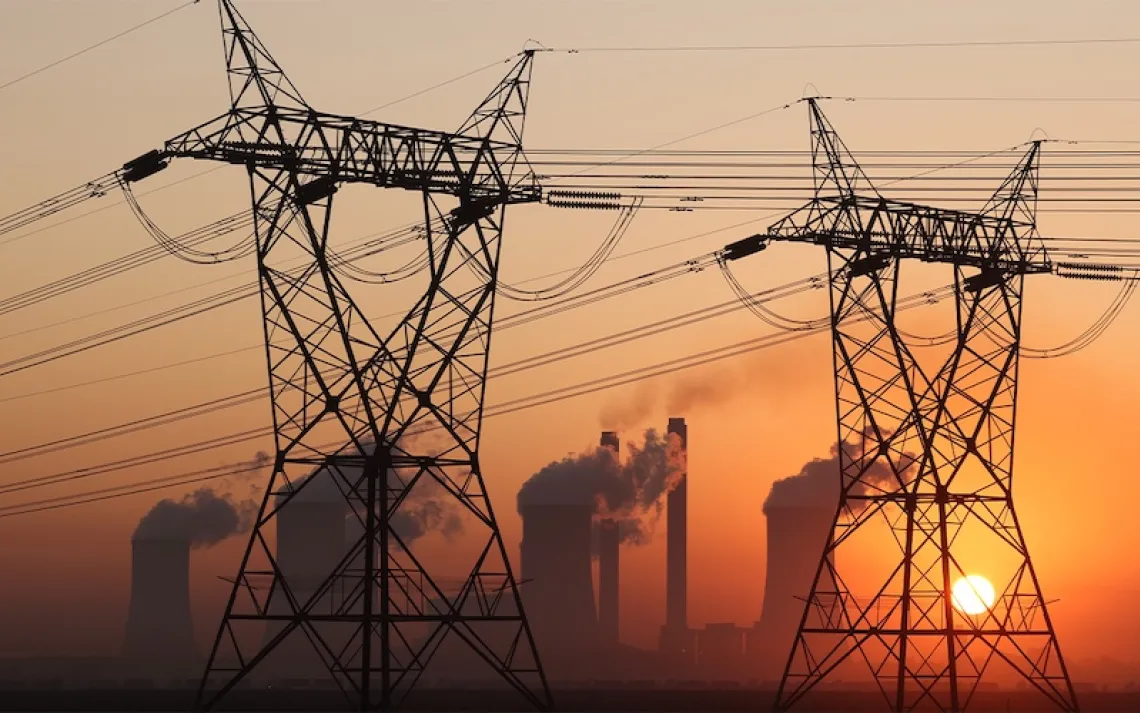
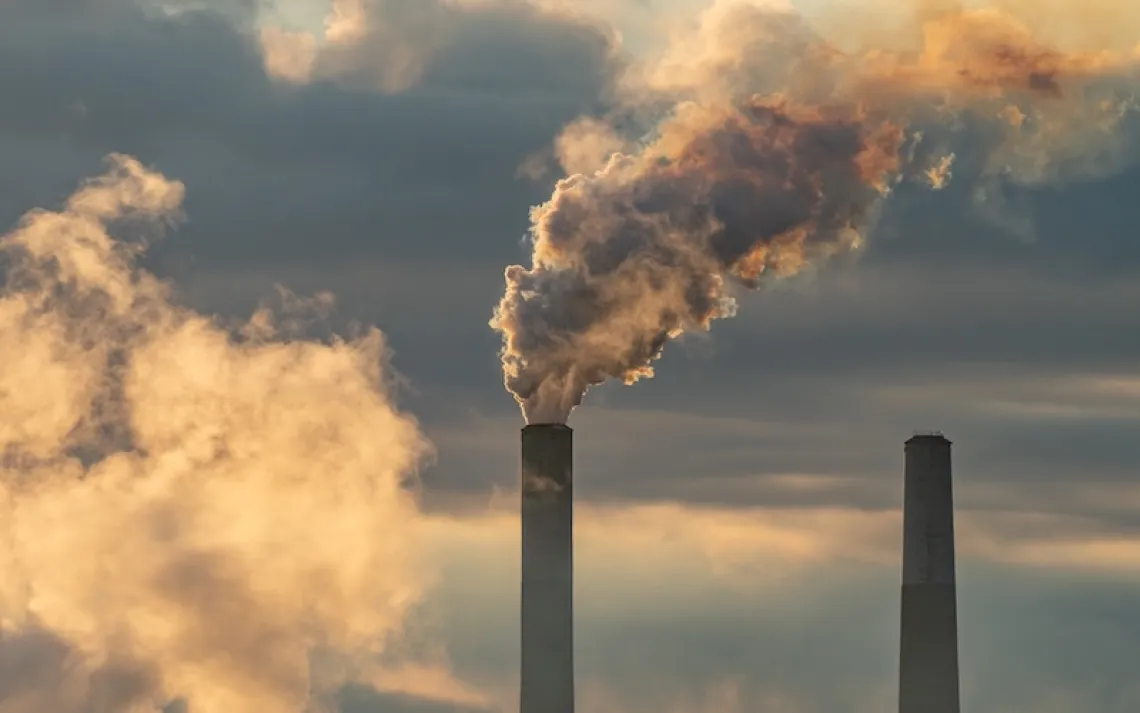
Even if we do much of what Becker and Lovins recommend, however, it's not going to solve all the problems we face. We still need to generate energy more cleanly than we do now. All the forces of economic gravity--especially the run-up in the price of natural gas--keep pushing us to use more coal. More than 150 new coal-fired power plants have been proposed in the United States. "They're racing to get them built before there's any carbon regulation," says Dave Hamilton, who directs the Club's Global Warming and Energy Program. And though local opposition has slowed some proposals for plants, others pop up constantly: 6 in Wyoming, 16 in Illinois, 17 in Texas. Even those numbers are dwarfed by plans in China and India. Together with the United States, they could add 850 new coal-fired facilities by 2012. If they do, those plants alone will emit up to five times more carbon than the Kyoto treaty will scrub from the atmosphere, according to a comprehensive analysis in the Christian Science Monitor. This is not simply a theoretical prospect--if you visit China, you'll see endless new strings of high-tension lines rippling across the mountains like modern versions of the Great Wall. They carry the juice from all the nation's new coal-fired generators, which have added more power than the equivalent of California's electric supply each of the past two years.
In the face of such momentum, some environmentalists, led by David Hawkins of the Natural Resources Defense Council (NRDC), have argued for massive government investment in carbon-capture-and-storage technology, which in theory would allow coal plants to separate the carbon dioxide from their exhaust streams and then inject it safely into deep seabeds or underground mines. "If China, India, the United States, and the handful of other countries building all these power plants developed a strategy for carbon sequestration," Hawkins says, "it would represent a huge step toward cutting global warming." John Holdren, former Clinton energy advisor and current president of the American Association for the Advancement of Science (AAAS), says that the lifetime emissions from coal-fired power plants projected to be built in the next 25 years will equal all the carbon produced by all the coal we've burned in the past 250 years.
Other advocates, such as Becker and Hamilton, are skeptical about further investments in coal. They point out that carbon-sequestration technology doesn't really exist yet and will always be incredibly complicated and expensive. Hamilton says he's talked with utility executives who promise to outfit their new coal plants with expensive carbon-capture gear "if it becomes cost-effective. But if they're competing with old coal plants--well, it's never going to be cost-effective."
The argument is less about technology than about politics. Hawkins (whose NRDC does more work overseas, where the push toward coal seems even harder to resist) thinks the time may be right for some kind of grand deal between coal producers, utilities, miners unions, and environmentalists. Becker, chastened by many years of watching auto companies coerce Congress, thinks Big Coal will always be able to push regulators around. Both of them know the other may be right (in the it's-a-small-world department: Hawkins was Becker's high school teacher; they often ride the subway to work together), and both of them know the stakes are enormously high.
Meanwhile, some environmentalists have started beating the drum for more nuclear power. James Lovelock (who famously hypothesized in the 1970s that Earth, or "Gaia," functions as a single organism) has argued that environmentalists who opposed reactors in the 1970s and '80s bear some responsibility for today's global-warming woes. Indeed, every state-size chunk of ice that breaks off from Antarctica is a reminder that coal-fired power plants are as dangerous as nuclear ones in at least one respect: Each generates waste we have no idea how to safely dispose of.
But the debate over nuclear power is different from the clash over coal, because--all the other pitfalls aside--the economics don't favor atomic energy. "Enviros are often given the credit--or the blame--for killing off nukes, but it was Wall Street that really did it," says Becker. Most analyses show that atomic energy remains the equivalent of burning $20 bills to generate power. By Becker's estimate, you'd get seven times as much carbon reduction if you spent the $1 billion it takes to build a nuclear plant on efficiency programs. You could give the money in the form of tax credits to factories that buy cleaner motors or to homeowners who purchase better lightbulbs.
Everyone's sentimental favorites--solar and wind, the renewable twins--are in the mix too. Indeed, they're in the mix more all the time. Wind is already about as cheap as coal (the up-front costs are higher, but once the turbine is spinning, the wind itself is free), and solar panels have sprouted in places like Germany, where government subsidies have worked their magic--melting consumer resistance, building volume, and reducing prices so dramatically that the subsidies are no longer necessary. These technologies also give pause to some enviros (the fights over windmills off Cape Cod or along New England's ridgelines are transforming semi-noble NIMBYs into semi-ridiculous NIVMYDs, or not in view of my deck), but they will continue to grow. The question is, will we push them as hard as we can? That would be smart, but it would mean stepping on a lot of vested interests, especially since the best use of renewables may be to transform the energy system itself, from a model of highly centralized stations producing power to something more like the Internet, where your home or factory becomes both a consumer and producer of power. When the sun shines, the panels on my roof make my electric meter spin merrily backward. Until night falls, I'm a little utility all my own. Which is a neat idea, but one that will need different finance schemes and regulatory policies to expand significantly.
In fact, it's pretty clear that what we need most at this point is not just some new technology, but also--maybe even more--a planning system that takes full advantage of the ideas already on the table. The policy debate in Washington has grown so stylized and stalemated--it's a kind of Kabuki dance, in which one side says, "CAFE standards" and the other shouts, "ANWR!" and all recoil in horror--that nothing new ever happens, at least not on a scale that might make a difference. It's considered a deep breakthrough when President Bush announces in his State of the Union speech that we're "addicted to oil," even if his solution is to find us some new dealers. In the absence of real leadership from the top (Jimmy Carter was the last guy who tried, and politicians have not forgotten what happened to him), the best chance may be some leadership from the bottom.
An interesting, not to mention unlikely, experiment along these lines began in 2005 when a Parisian investment banker named Jerome Guillet began posting comments on dailykos.com, one of the world's most active political Web sites, where Democratic and liberal activists trade rumors, launch campaigns, and keep track of what Bill O'Reilly is saying. It's not a home for fringe radicals (Nevada senator Harry Reid [D] posts comments regularly), and indeed Guillet first got noticed with a series of posts debunking conspiracy theories that the U.S. invasion of Afghanistan was actually aimed at building oil pipelines across the region. "Then I started with the bug of writing there," he explains in Gallic-accented English.
Since Guillet's day job involves analyzing the economics of energy projects, he soon expanded his sphere to explaining the basics of the energy crisis. Before long, others on the site interested in the same issues found themselves working with Guillet to produce, revise, and then revise again a detailed 20-point plan they call "Energize America," a remarkably comprehensive energy strategy that pays full attention to political reality. Currently in version 5.0, the plan proposes ideas ranging from the Passenger Vehicle Fuel Efficiency Act and the Wind Energy Production Tax Credit Act to measures designed to boost telecommuting, experiment with state renewable energy efforts, and put solar panels on 20 million roofs. It's precisely the kind of full-blown proposal that, if adopted, might fundamentally reorient our energy future.
"All of us have our pet projects," says Guillet. "Some of us are fighting for ethanol, some for solar panels. But as a group we're trying to push the idea that there is not a single solution. We need to push everything. And we need to make fossil fuel more expensive and then let people make their choices. Wind in some places. And maybe in some places nuclear can be made to work--it works not so badly in France."
Left to its own devices, the market will give us more coal power plants. "Something that has a high up-front investment and low operating cost--wind--is more expensive for the market to build than something that has high running costs, like coal," says Guillet. (It's the same reason the guy building new homes in suburban subdivisions doesn't put the more efficient--and more expensive--refrigerator in the kitchen.) Energy, he adds, is "a market that needs government intervention, regulation, and interference. And these are all dirty words in America these days. But governments are in the best position to internalize externalities. Governments can say, 'Our society suffers from pollution. If I tax your use of coal, that use will drop, and I'll have more money to build the trains that will cut pollution and to pay for the nurses to treat your asthma.'"
Indeed, though he might not phrase it quite this way, Guillet is describing what could be the most useful technology of all, the one Americans have all but forgotten: the technology of community. If climatologists are right that we need to bring the world's carbon dioxide emissions at least 80 percent below 1990 levels by 2050 to stabilize the climate, we're unlikely to succeed with new equipment alone. We need new attitudes and behaviors, not new lightbulbs and reactors.
And it's when you start thinking about those kinds of shifts that you understand what fossil fuel, with all its magic, has really produced. Not just wealth and global warming--but also a redefined human being, one far more individualistic than before. One, in the extreme American version, who lives in a big house (twice as big as in 1950) on the far edge of a distant suburb and drives everywhere (usually alone). One who depends very little on neighbors. In fact, one survey found that three-quarters of Americans don't even know their next-door neighbors, a novel condition for any human being at any time in history. (A novel condition, for that matter, for any primate.)
These basic shifts in our economies, habits, and ideas about who we are make it very difficult to deal with our newfound realities. Our food, for instance, doesn't come from our neighbors anymore, but travels on average nearly 2,000 miles before it reaches our lips. The average Atlantan releases more than 17,600 pounds of carbon dioxide every year just moving around. In fact, the ten cities with the highest per-capita CO2 production worldwide are all in the United States. That's partly because our sprawl makes public transit hard, partly because even when it's available, we scorn it, preferring instead the solipsistic convenience of our cars.
To get a sense of what happens when you think a little differently about who you are, consider western Europe. There, because people believe somewhat more in community and somewhat less in individualism, they've been more willing to pay taxes to support thriving cities, rapid rail lines, and all the other things that draw people together instead of flinging them apart. And the result? The average European uses 50 percent less energy than the average American. Fifty is a big number. It doesn't stop global warming, and it doesn't end worries about peak oil--but that's before anyone has done a lick of engineering, a speck of mechanical innovation.
It's not an easy answer; there are no easy answers. But there are signs Americans have begun to notice: Farmers' markets, for instance, are one of the fastest-growing parts of our food system, doubling in number every few years as they build community and reduce energy use. It's hard to think about peak oil and rapid climate change and then say, "Let's start a farmers' market." It seems too feeble a gesture. But it's a start. And if you drive there in your hybrid Honda--or, better yet, bike or take the bus--well, who knows where it all might end.