What the Midterm “Bluenami” Means for Climate Action and Environmental Protection
Democrats can act on affordability and corruption through congressional oversight and state legislative action, climate advocates say
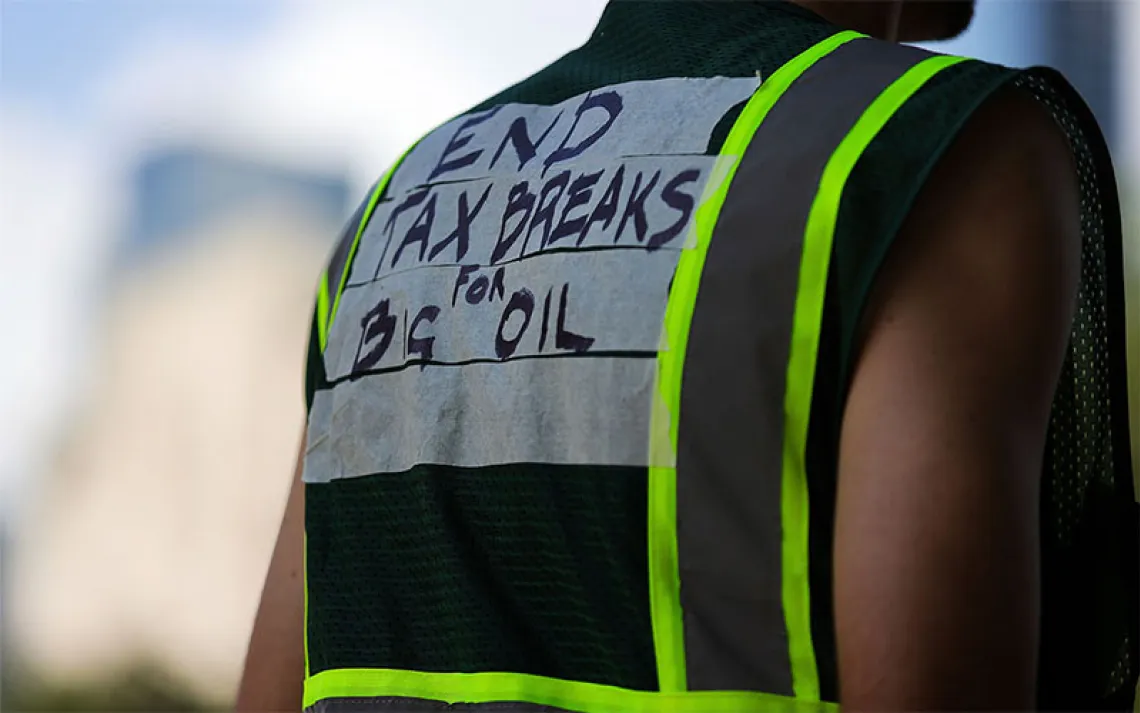
Protesters outside the Texas State Capitol in Austin. | Photo by Reginald Mathalone/NurPhoto via AP
Two years into President Donald Trump’s second term, millions of Americans who voted in the midterm elections delivered a clear message, returning Democrats to lead both chambers of Congress, with victories in races up and down the ballot. This “blue tsunami” was, according to the Sierra Club, “a resounding rejection of Trump and congressional Republicans' politics of corruption and corporate greed.”
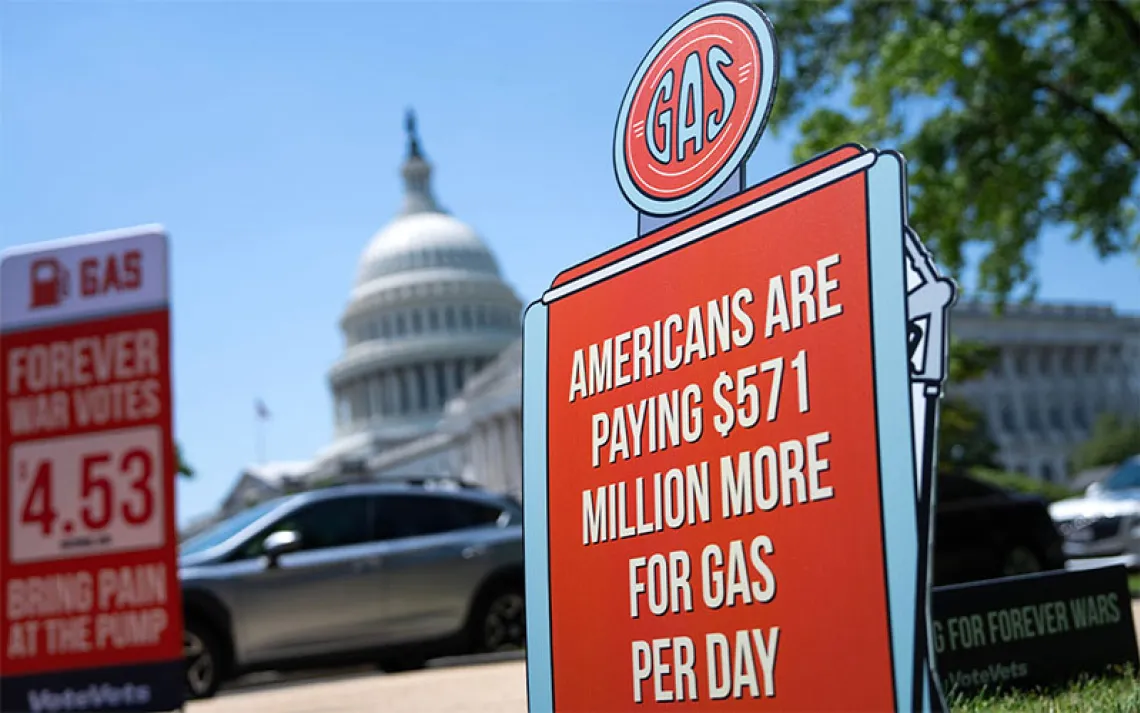
The historic Democratic electoral gains come as Americans reel from a worsening affordability crisis that Trump critics contend is the consequence of the president’s own policies and actions, from tariffs and starting a war with Iran to hamstringing cheaper clean energy in pursuit of fossil fuel “energy dominance.” Surging costs and unprecedented government corruption were top concerns for voters as average Americans faced mounting financial pressures from high fuel, food, and electric bills. At the same time, Big Oil raked in record windfall profits, and Trump callously boasted about making a fortune.
Throughout it all, the climate crisis is accelerating, and federal policies under Trump intended to address it are largely paralyzed. After a recent UN report indicated that the US retreat from climate action is hampering the global effort to curb dangerous heating, climate scientist Bill Hare told the Associated Press that the United States is “looking at the fire, denying there is a fire, and then pouring more petrol on it.”
Climate action is inextricably linked to affordability, climate campaigners say, and the midterms made that clear.
“Climate change may not have dominated the election, but the consequences of our dependence on fossil fuels certainly did,” said Cassidy DiPaola, spokesperson for the Make Polluters Pay campaign.
“Across the country, people are struggling with the cost of living, rising energy bills, and the impacts of a climate crisis they did little to create. They want leaders who will make their lives better, deliver affordable clean energy, and hold polluters accountable,” Candice Fortin, campaigns manager at 350 Action, said in a statement.
The sweeping victories of Democratic candidates across the nation, including in states that were considered Republican strongholds, signal a repudiation of Trump’s agenda, his attacks on clean energy, and of the corrupting influence of fossil fuel billionaires and Big Tech, climate advocates argued.
“This election was nothing short of a referendum on Trump and Republicans in Congress, and their disastrous energy agenda,” said Evergreen Action executive director Lena Moffitt.
Elizabeth Bast, executive director of Oil Change Action, said, “Voters sent a clear message: They’re fed up with Trump’s agenda of fossil fuel giveaways, illegal and immoral wars, and unchecked data center expansion that makes their lives more expensive while lining the pockets of Big Oil and Big Tech.”
Americans seem more united than ever in their opposition to data centers, according to the election results. Candidates who ran on opposing data centers, like Sunrise Movement cofounder Will Lawrence in Michigan, triumphed in their races, while voters overwhelmingly backed ballot measures restricting data center development.
“Voters across the country have emphatically rejected the push for AI data centers,” said Mitch Jones, deputy director of Food & Water Action. “Not only in Washington, but in state capitols and village halls across the country, newly elected leaders are poised to stand up to the unregulated, reckless buildout of hyperscale data centers wherever they are proposed.”
Environmental activists are eager for their newly elected leaders to now get to work delivering on their demands, from halting the data center blitz to checking the Trump administration’s fossil fuel frenzy.
“Sierra Club members and supporters across the country organized, phonebanked, and knocked on doors for these candidates up and down the ticket, and now we will work to make sure they seize on this opportunity to take ambitious action for the climate and our democracy,” Sierra Club executive director Loren Blackford said in a statement.
On the day after the November 3 election, the Sierra Club released a legislative policy blueprint for the incoming Congress focused on addressing the affordability crisis, preserving public lands, and holding polluters accountable. “This blueprint guides the way to lower costs, stronger infrastructure, and healthier communities—all wildly popular goals that the new Congress must get serious in pursuing right away,” said Sierra Club legislative director Melinda Pierce.
Congressional oversight
A Democrat-controlled Congress, looking to enact legislation that reprioritizes environmental protections and clean energy, will face headwinds with Trump still in office. The president has signaled he intends to wield his veto power. “But Democrats will have oversight,” Pete Wyckoff, vice president of policy at Evergreen Action, told Sierra. “And they will be able to affect appropriations.” And they can also challenge Trump to veto good legislation that delivers on what voters want.
Those two areas are probably where Democrats will have “the strongest tools” to put a check on Trump, Illinois Representative Sean Casten, a vice-chair of the House Sustainable Energy and Environment Coalition, told reporters during a post-election press call.
Democrats will have significant investigative power and can use subpoenas and hearings to shine a light on corruption or other actions that have harmed environmental protections. Those harms include extensive environmental rollbacks benefiting polluters at the expense of public health, illegal withholding of clean energy funds, deals to pay offshore wind developers to cancel leases, and widespread firing of government civil servants and attacks on science.
“Now is the time for oversight. Now is the time for accountability,” Gretchen Goldman, president of the Union of Concerned Scientists, said during the November 4 press call. She said she hopes Democrats will “ensure that the administration is made to answer for the choices that they've made, like the firing of federal climate scientists, like the canceling of climate and clean energy research and infrastructure projects across the nation, like the gutting of the US Global Change Research Program and threats to the National Center for Atmospheric Research.”
A network of former Environmental Protection Agency officials is urging the new Congress to hold the EPA accountable and make public health a key part of its oversight—including by investigating the Trump EPA’s pro-polluter actions.
“The incoming Congress has an opportunity and a responsibility to hold EPA and the rest of the federal government accountable and make sure they’re doing their jobs to protect public health and leave families safer, not sicker,” Marc Boom, the Environmental Protection Network’s senior director of public affairs, said in a statement.
DiPaola suggested that any Democrat-led probes should include fossil fuel executives as a target. “For newly elected leaders looking to establish themselves as champions of the working class, taking on Big Oil is an obvious place to start,” she said. “We want to see oil executives hauled before Congress to answer for their profiteering and political influence.”
State action
Beyond Congress, perhaps the most promising area for advancement of climate action and clean energy is at the state level, where Democrats also made “historic gains” in the midterm election and now control a majority of state legislative chambers across the country. Democrats secured new “trifectas” (control of the governorship and both legislative chambers) in at least six states including Wisconsin, Michigan, Minnesota, Arizona, Nevada, and Pennsylvania.
“We don’t even have to wait for Congress,” former Washington governor Jay Inslee told reporters. He noted that “virtually every policy that you can think of” for decarbonization can be done at a state level. “You’re going to see progress on a fairly rapid basis, starting in January,” Inslee said.
In states that had ballot questions pertaining to energy and environmental issues, voters signaled support for conservation and environmental protection and opposition to corporate and dark-money-backed positions. In California, voters rejected a measure amending the California Environmental Quality Act to expedite environmental review of certain projects. Voters in Massachusetts approved an initiative creating a “Nature for All” fund from certain sales tax revenue to support environmental and nature conservation projects. Colorado voters rejected a proposed constitutional amendment establishing a right to sell and purchase natural gas, an initiative spearheaded by a dark-money group called Advance Colorado. And Michigan voters approved a proposition restricting political campaign spending from regulated utilities and government contractors.
In Georgia, where voters elected the country’s first Black female governor, Keisha Lance Bottoms, Democrats also gained control of the state’s House and its Public Service Commission, which regulates electric and gas utilities, for the first time in decades.
“For the first time in a generation, we have a legislature that will work to pass strong environmental policy, a governor who will sign those bills, and even an attorney general who will defend those new laws from bad-faith efforts to stop our progress in court. And we finally have a Public Service Commission who will work to rein in Georgia Power’s excesses,” Sierra Club Georgia Chapter director Adrien Webber said in a statement.
One of the biggest shockwaves to the political status quo came in Texas, where Democrats flipped the House and ousted its Republican governor. Voters chose a Democrat for a US Senate seat, James Talarico, for the first time in over 30 years.
“Texans were loud and clear on election night: Our air, our water, our land, and our lives are not for sale,” Dave Cortez, director of the Sierra Club Lone Star Chapter, told Sierra. “Organized people delivered this victory despite billionaires like Elon Musk’s attempts to buy this election. Texas families deserve lower utility bills, clean water, and a future they can afford—and we aren’t backing down now. We’re ready to work with our new leadership to meet these expectations and bring home real results.”
Cortez said the state’s newly elected Democratic governor, Gina Hinojosa, should “act on day one” to extend Texas’s data center moratorium and should also work to “hold state environmental and grid regulation agencies accountable to the needs of Texans—not Big Industry and Big Tech.”
“Texans are tired of inaction,” he added. “This is an opportunity to deliver real change.”