 The Magazine of The Sierra Club
Liberating the Klamath
An agreement to remove fish-blocking dams signals new hope for Pacific salmon
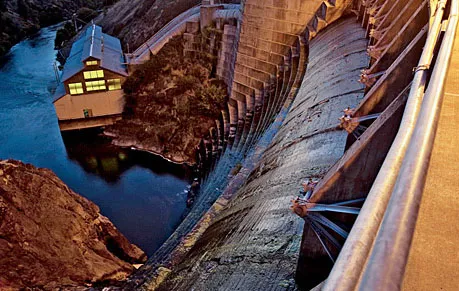
One of four dams on the Klamath River scheduled to come down by 2020.
For centuries, the salmon run along the Klamath River in Oregon and California was so bountiful that the Karuk, Klamath, Hoopa Valley, and Yurok tribes could harvest the fish almost year-round. Starting in 1911, four dams went up, cutting off some 300 miles of prime spawning ground. The Karuk fishery is now limited to three weeks a year, while the Klamath tribes, despite treaty rights to the fish, haven't seen a salmon on their stretch of the river in 90 years.
In what may be the biggest river-restoration agreement in history, PacifiCorp, the utility that owns the dams, says it will remove them by 2020. The decision follows years of negotiation between native tribes, utilities, environmentalists, fishing groups, farmers, and government regulators. The agreement was expected to be signed in December.
Eight years ago, 33,000 mature chinook and endangered coho salmon died along the river when the Bush administration ignored federal biologists' warnings and diverted flows for irrigation. This so diminished salmon runs that commercial fishing has been shut down along the Oregon-California coast since 2006. In 2007 and 2008, tribal leaders showed up at the shareholder meeting of PacifiCorp's parent company, Berkshire Hathaway, to confront CEO Warren Buffett. And as the dams' licenses came up for renewal, federal regulators started piling on conditions, demanding $320 million for fish screens and fish ladders. The dams began looking like a poor investment.
"At the end of the day, this is a business decision by PacifiCorp," explains Steve Rothert, director of the California office of American Rivers, which helped make the case for the dam removal.
While unfettered flows are still a decade away, a companion agreement will raise water levels in the interim and commit PacifiCorp to spending $500,000 a year on habitat restoration along the Klamath's tributaries. This is an enormous change; for decades, salmon have been last in line for water and have been given only what was necessary to prevent extinction—if that. "Our goal is a harvestable surplus of fish," says Craig Tucker, spokesman for the Karuk tribes. "We don't want these fish on the endangered species list. We want them in the smokehouses."