
Ocean Soundscapes Are Real. Are We Ready to Listen?
Amorina Kingdon's book "Sing Like a Fish" shatters the illusion of underwater silence
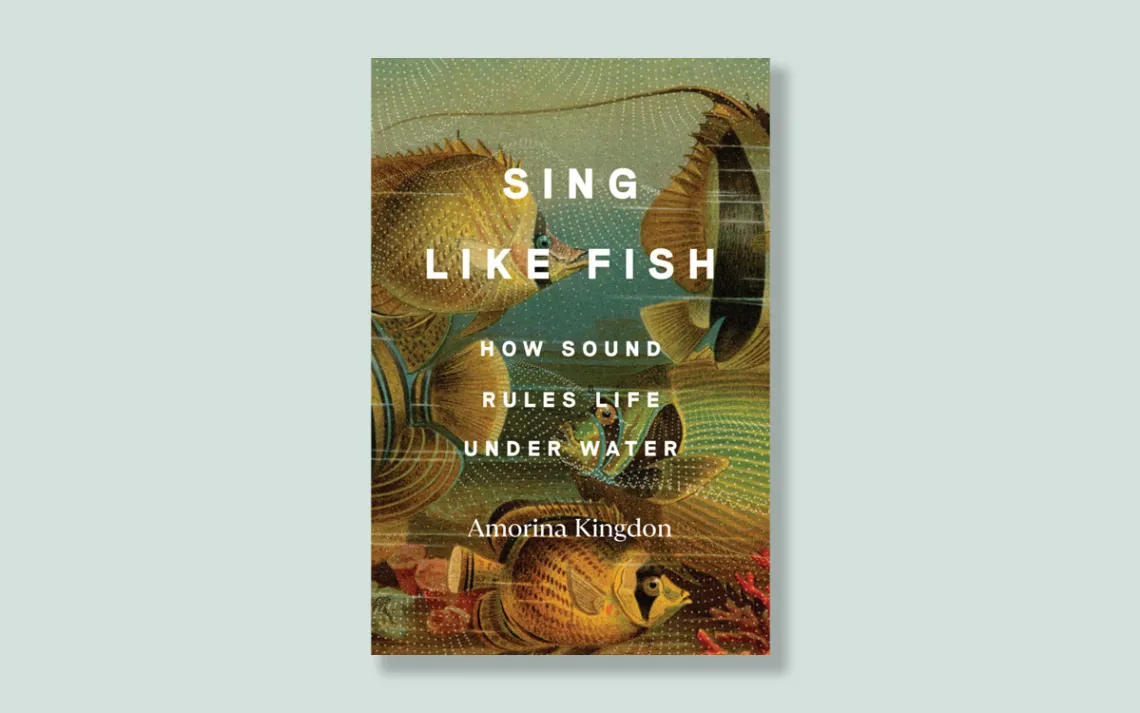
In popular media, animal science often focuses on this question: How are animals like us? But when it comes to life underwater, biologist Volker Deecke tells author Amorina Kingdon, “by comparing to our own frames of reference, we are missing the interesting questions.”
Deecke’s words guide Sing Like Fish: How Sound Rules Life Under Water (Crown, 2024). Human ears weren’t engineered to receive messages through liquid. And until recently, many assumed that water was as silent as we perceived it to be. “Where we can’t sense a world, it’s difficult to imagine one exists,” Kingdon writes.
She shatters the illusion of underwater silence with vivid accounts of ocean soundscapes. From the drone of midshipman fish to the trills of the ringed seal, our waters are home to a never-ending cacophony. Because sound travels differently through water than through air, underwater acoustic landscapes are unique: Humpbacks sing to one another across thousands of miles of ocean; a fin whale in British Columbia can hear an earthquake in Alaska. We humans are also noisy, and Kingdon does not hesitate to remind readers of the threat we pose to these delicate soundscapes. “We cannot bemoan the noisy ocean and order all our household goods online,” she writes, referencing the cargo ships required for those purchases.
Through her tales of humming fish and singing whales, Kingdon inspires readers to think more about the lives of the creatures we impact. As she returns to a lake where she spent much of her childhood, this time with a hydrophone, Kingdon finally experiences the underwater world that had surrounded her. “I dip the hydrophone gently into a weed bed and hear crunches, loud and clear, sounds I have never heard before,” she writes. Insect larvae, chewing on leaves—invisible unless you’re listening.