 The Magazine of The Sierra Club
We Mindlessly Interact With Plants Every Day. Here’s How to Do It Intentionally.
Ben Goulet-Scott and Jacob S. Suissa offer 101 ways to rediscover the familiar with “Let’s Botanize!”

Eastern redbud (cercis canadensis). | Photo courtesy of Jacob S. Suissa
I haven’t always appreciated the maple in front of my childhood home. Growing up, I saw this tree every day—except for when I was away at college—and it didn’t seem to change that much. But during the 10 minutes we spent together recently, I noticed the length of its roots and that its bark looked like the stretch marks on my skin—proof that we both have grown.
The notion that I spend 10 minutes with a single tree came from prompt 81 in Let’s Botanize! 101 Ways to Connect With Plants by Ben Goulet-Scott and Jacob S. Suissa. The book is packed with tips for how to connect with the plant life around us. The first section is dedicated to prompts for how to observe plant structures, such as comparing the contents of different fruits or flower symmetries. The following two sections invite readers to explore the more developmental and evolutionary aspects of plants, and to interact with and appreciate plants as living organisms.
Goulet-Scott and Suissa are cofounders of the nonprofit Let’s Botanize, which aims to spread plant appreciation through the hobby of botanizing. The two met in graduate school at Harvard University and quickly became friends, bonding through their lunchtime walks through Arnold Arboretum, where they would observe plants and chat about what they found interesting about them.
“We started to realize that we were having so much fun doing this, wouldn't it be great if we could share our passion for plants with people?” Suissa told Sierra. “And we thought the best way to do that would be to record our experiences and put them on social media, because that was sort of the way to just get things out into the world, and that's how [Let’s Botanize] started.”
The pair practice what they call “optimistic natural history,” where they approach every plant as if it’s the most interesting in the world. That ethos is at the heart of their new book and a series of videos that convey strategies for how to implement it. While they are both enthusiastic about providing bite-size botanical lessons, Goulet-Scott said that his role as the videographer and Suissa’s as the educator came naturally to both of them.
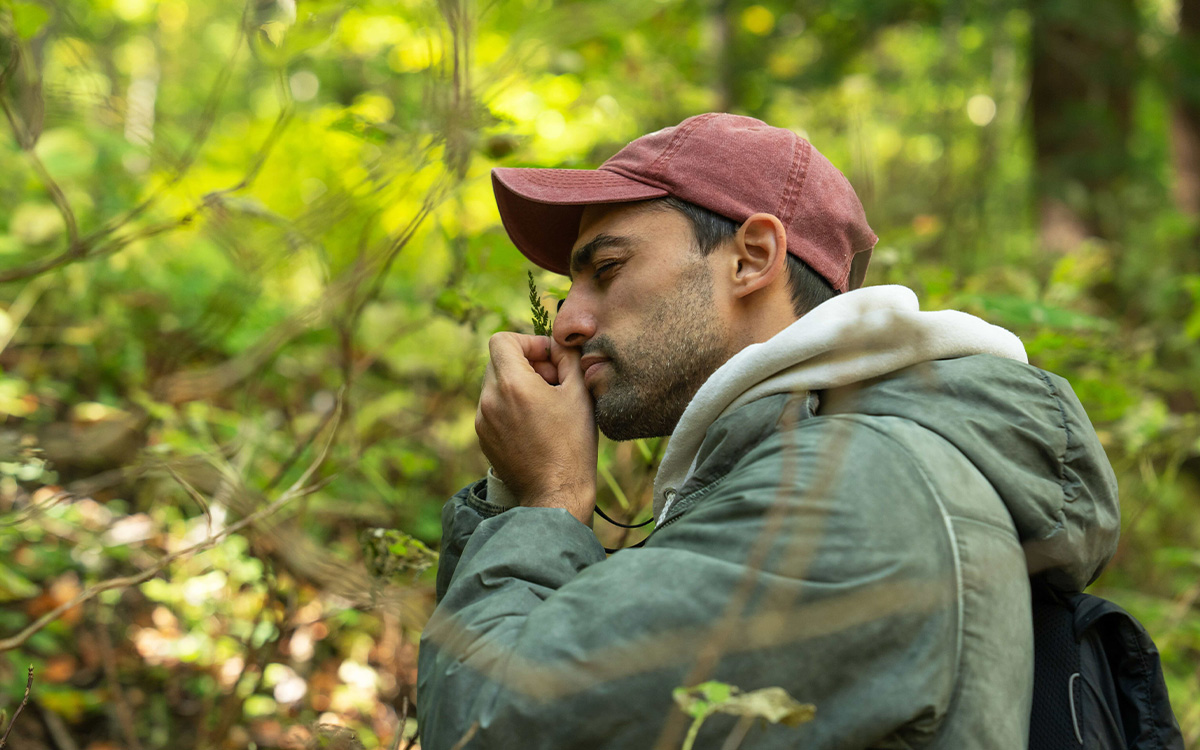
Jacob Suissa botanizing. | Photo courtesy of Ben Goulet-Scott
“Part of our mission is to make learning about botany and getting into plants feel as accessible as possible,” Goulet-Scott said. “And to try to lower the barrier and welcome as many people as possible into it. Making it not feel like school or a textbook is something we are very cognizant of. So making it feel more like a game, more like an activity, more like an exercise that you can do and do at your own pace was really important.”
Both men grew up with an interest in the outdoors and credited their respective spark plants for welcoming them into the world of botany. A dawn redwood tree (Metasequoia glyptostroboides) that stands on the University of Vermont campus is Suissa’s power plant. For Goulet-Scott, it’s touch-me-nots (Impatiens capensis).
“My brother and I would learn the technique of how to identify the right ones that are really going to pop well,” Goulet-Scott said. “And then how to touch them in the right way to get them to explode. But I remember at that point, having the thought of what an intricate, incredible structure that this plant has built that will throw its seeds when something brushes against it.”
Let’s Botanize! is all about getting people to engage with the natural world, and to learn and connect through that process. The book’s 101 prompts encourage readers to make their own plant observations and to do it anywhere, even with the plant life growing right around where they live. For example, prompt 74 asks, “How many different flowers can you find that have five petals?” The prompt’s pages include photos of various five-petaled flowers and three short paragraphs about this robust group of plants. Earlier in the book, prompt 30 asks botanizers to “explore the detail of a moss leaf” and educates readers about the moss clade.
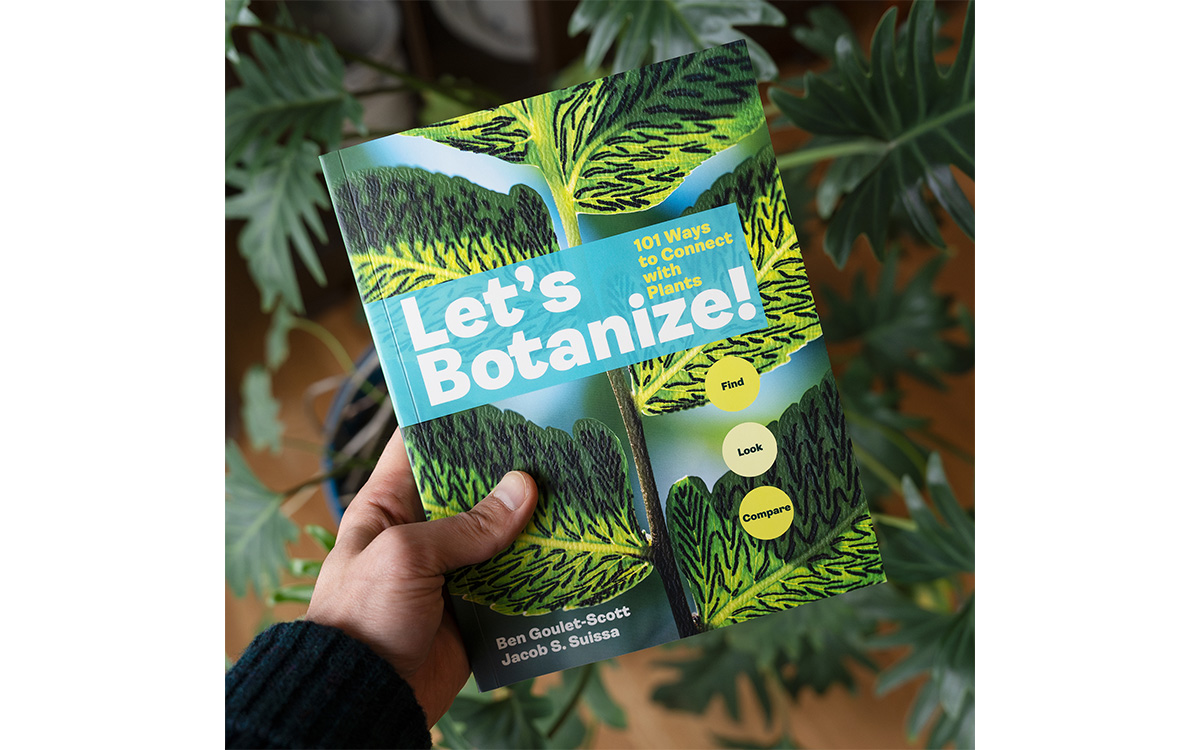
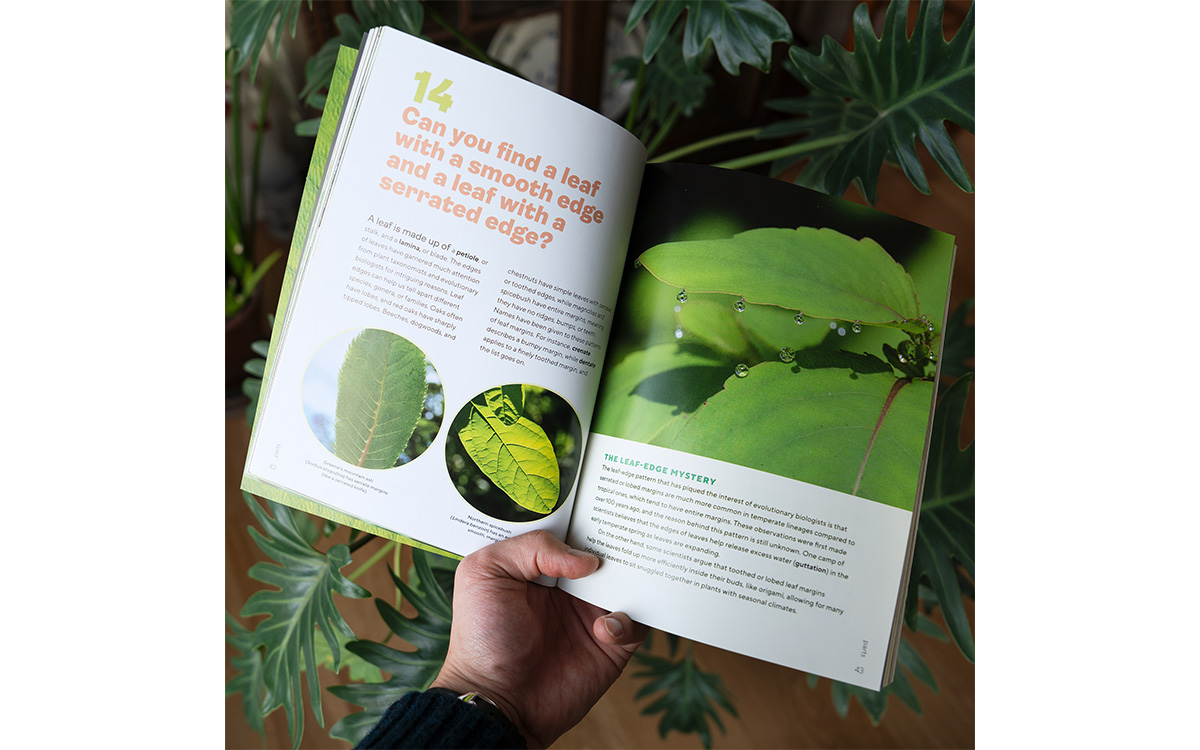
Photos courtesy of Ben Goulet-Scott
“Because they do not produce true vascular tissues like ferns, lycophytes, or seed plants, the bryophytes are often diminutive in comparison,” the authors write. “Not worse, not less adapted, not more primitive—simply small. We have to work harder with our poor human eyes to appreciate their beautiful and minute structures.”
The botanists hope that Let’s Botanize! diversifies the way in which people interact with plants, and that it will grow their curiosity and appreciation for the wild living things among us, regardless of their geographic location. They also hope that by bringing the word botanize back into the modern lexicon, people will have a name for their new hobby.
“The simplest thing we're trying to do is just to bring that word back as a label and something people can identify with and hopefully start to form a community around,” Goulet-Scott said.
The pair is also hoping to raise awareness about climate change and the biodiversity crisis through their work. Let’s Botanize! makes a powerful case for how a passion for plants can be a first step to living in a more mindful and harmonious relationship to the surrounding biosphere on which all life depends.
After reading Let’s Botanize!, you will find a new appreciation for everything from ornamental plants to the fruits and vegetables in your kitchen. As the book makes clear, they’re still plants and therefore worthy of our gratitude.