What's in Store for American Deserts?
Kyle Paoletta's book "American Oasis" charts the shifting sands of the US
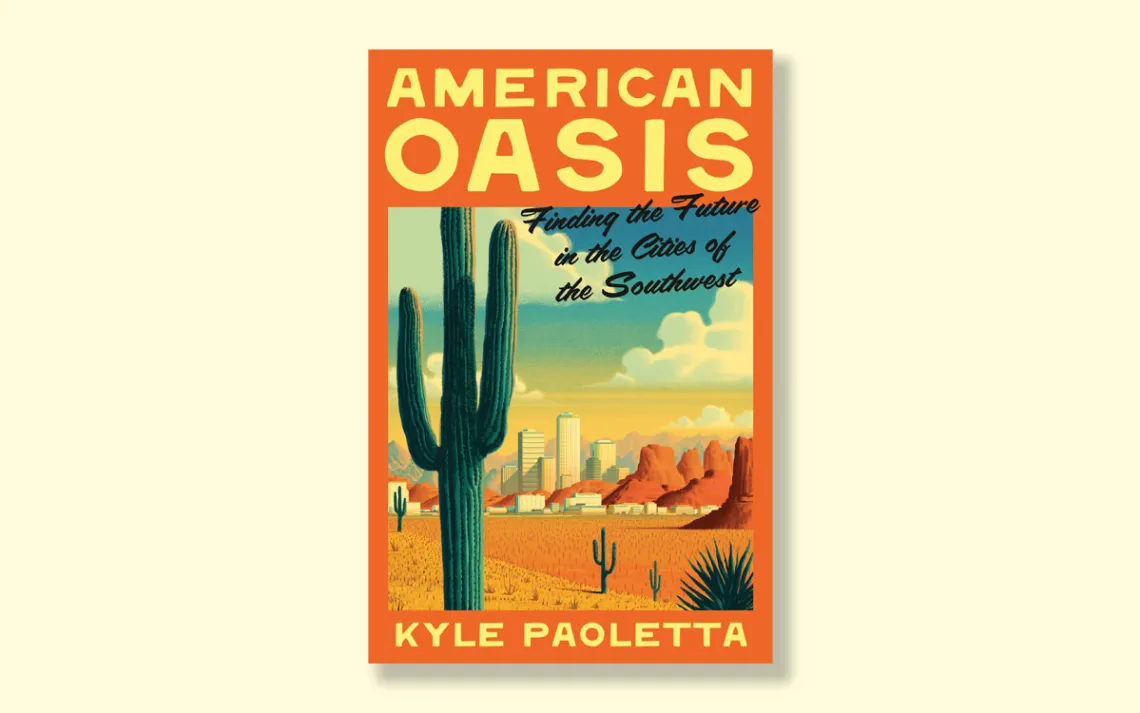
In every chapter of American Oasis: Finding the Future in the Cities of the Southwest (Pantheon, 2025), Kyle Paoletta tracks a region shaped by colonization, migration, and urban development. With stories of cities and settlements built in deserts that “give little, no matter how much we ask,” he charts a path that crisscrosses the American Southwest, from Albuquerque to Las Vegas.
The desert is not antithetical to life—far from it. In Tucson, Paoletta looks across the city to “the tips of saguaros poking out of the paloverdes in the foreground, the Tucson Mountains a silhouette of roughened lapis in the distance.” Las Vegas, despite all its cultural baggage, “stands as an assertion of selfhood in a place given to abnegation, a monument to willfulness in the face of droughty indifference.” He writes about the Southwest with care, holding its histories of both violence and resilience.
Paoletta also looks toward the Southwest’s future. Conquering the desert with massive dams and huge structures has allowed the region’s largest cities to thrive, but this growth, he argues, is not sustainable. Climate change and human development are straining the Colorado River, and the region is only getting hotter and drier. The answers to these challenges lie in the region’s past. The Southwest should look to the traditions of its earliest residents, who “understood that only through banding together would it become possible to thrive in the desert.”
American Oasis is a deeply reported account of the people and places that make up a complex American landscape. It’s also a road map to a resilient future, one where we choose to adapt instead of conquer, to conserve instead of exploit, and where we are willing “to attend to the inherent logic of our home.”