People-Powered Change in North Carolina
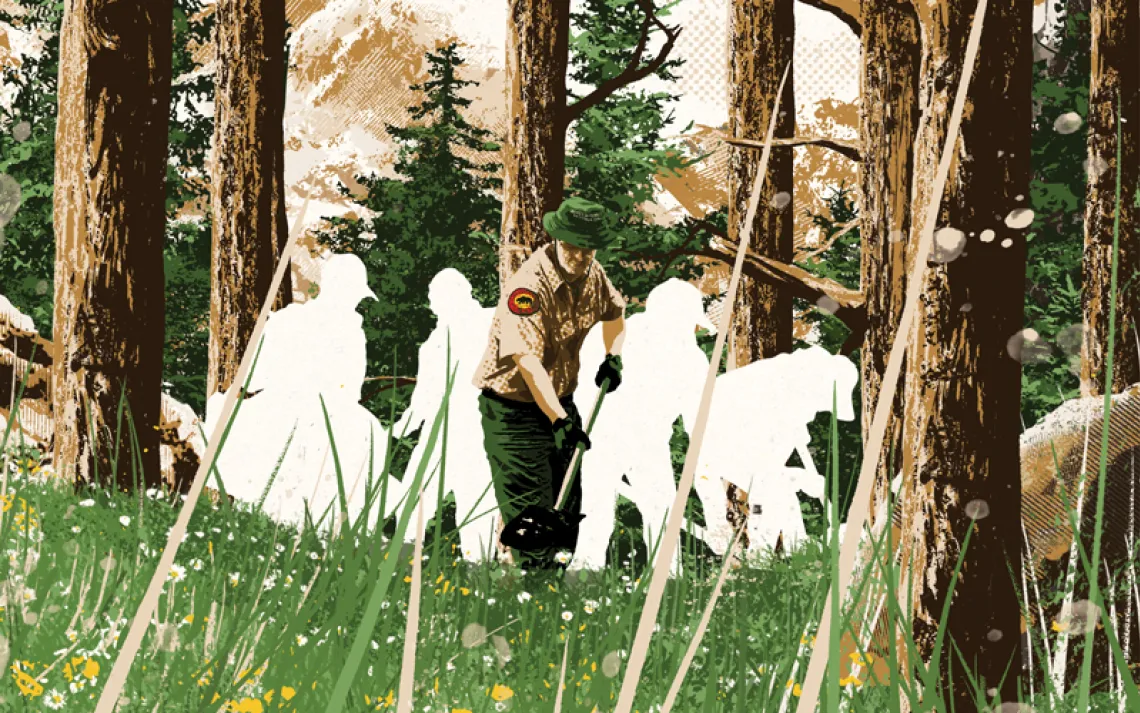
A team of forest guardians came together to protect the Pisgah and Nantahala National Forests
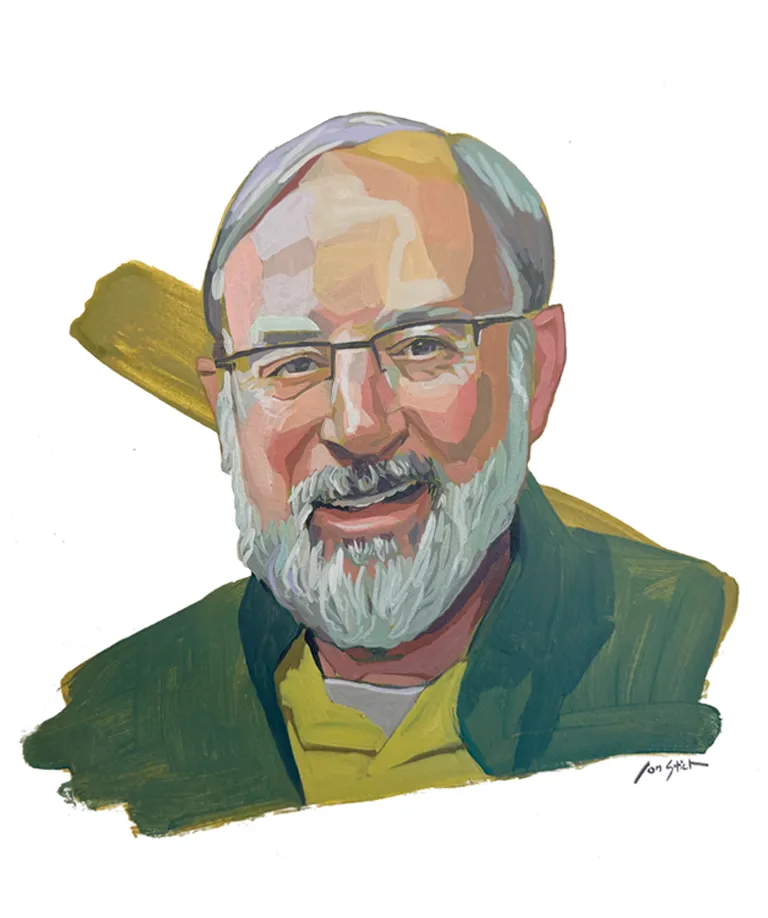
David Reid, national forest issues chair, Sierra Club North Carolina Chapter
When I was a teen in Jacksonville, Florida, a minister taught my youth group how to rock climb. First he took us to West Virginia and then to Linville Gorge in North Carolina. That’s when I fell in love with the mountains.
I moved to the Asheville area after graduating college in 1984, the same year I started volunteering with the Sierra Club. We’re very lucky in western North Carolina. The Pisgah and Nantahala National Forests are managed as one unit, covering 1.1 million acres. Within them are natural heritage areas, which the state recognizes as essential to conserving Appalachian ecosystems. However, the NHA designation provides no regulatory protection for federal forests.
In 2012, the US Forest Service announced it was updating its plan for the Pisgah and Nantahala. A group of loggers, wildlife advocates, recreationists, and conservation organizations formed the Nantahala-Pisgah Forest Partnership to help the agency develop a forest plan that didn’t step on anyone’s toes. I went from being a part-time volunteer at the Sierra Club to national forest issues chair and joined the partnership in 2015, after retiring from a career in IT. We met for eight years, sometimes twice a month for hours, to come up with a vision of compromise.
When the Forest Service released the draft plan in early 2020, it was apparent that the agency had ignored our input. As the Sierra Club’s North Carolina Chapter pointed out, the forest plan allowed logging in the state’s natural heritage areas, the agency had used a flawed methodology to predict future forest conditions, and it had conducted an inadequate analysis of areas that might qualify for wilderness protection.
I knew I had to educate folks about how bad this plan was, how disappointed chapter leaders were, and what it might mean for the forests. I worked with the chapter communications coordinator on a call to action. I was featured in a documentary encouraging the public to send comments. At chapter meetings, I asked folks to tell the agency how they felt.
When the final forest plan was released in 2022, several representatives from the partnership filed an objection with the regional forester. Months later, the Forest Service denied it. The chapter’s only real course of action was to sue. I asked our legal representation at the Southern Environmental Law Center if a lawsuit would even be viable. Once the attorneys gave me the OK, I went back to the chapter to see if members were on board to take the agency to court. No one objected. To sue, we had to prove that we had standing, which meant someone from the chapter would be personally injured if logging occurred. I volunteered to be the person.
In January 2024, the chapter sued the Forest Service for failing to protect one of the natural heritage areas by approving logging there as part of the Southside Project. In the deposition, our attorney honed in on my relationship with the forest as a local Sierra Club Outings chair. Logging would have been terrible for my trips. It would take this area off the table for people on outings to enjoy the beauty and diversity of the forests.
In the summer, the Forest Service contacted us with a proposal: If we settled out of court, it would cancel one of the logging projects in the Southside area. I think the agency knew it didn’t have a case. Chapter members were relieved that we didn’t have to go to court, because that demands time and energy. But it shouldn’t have taken a lawsuit to get the Forest Service to do the right thing.