
As Lake Powell has dwindled, new sights have emerged. This includes Gregory Arch, which has been mostly submerged for the last 50 years.
Colorado River Run
A photographer embarks on a journey to rediscover the river that helped make the West
In 2006, veteran photographer and filmmaker Pete McBride embarked on a two-decade journey, starting in his home state of Colorado, to document the effects of a disappearing Colorado River. His friends Nick Paumgarten, a staff writer at The New Yorker, and Kevin Fedarko, a freelance writer who joined him on a portion of his journey, helped write the text for The Colorado River: Chasing Water (Rizzoli New York, 2024). Below is an excerpt that combines their inspiring reflections and a warning about the beloved river that has defined the West.

No river in the Western Hemisphere is more rigorously controlled, more stringently regulated, or more heavily litigated than the Colorado. And none has been exploited so ruthlessly that, according to the Bureau of Reclamation, every drop of water is used and reused up to 17 times before the river dries up and dies in the Sonoran Desert south of the border. Even in the very wettest years, not so much as a teaspoon of the Colorado reaches the sea.
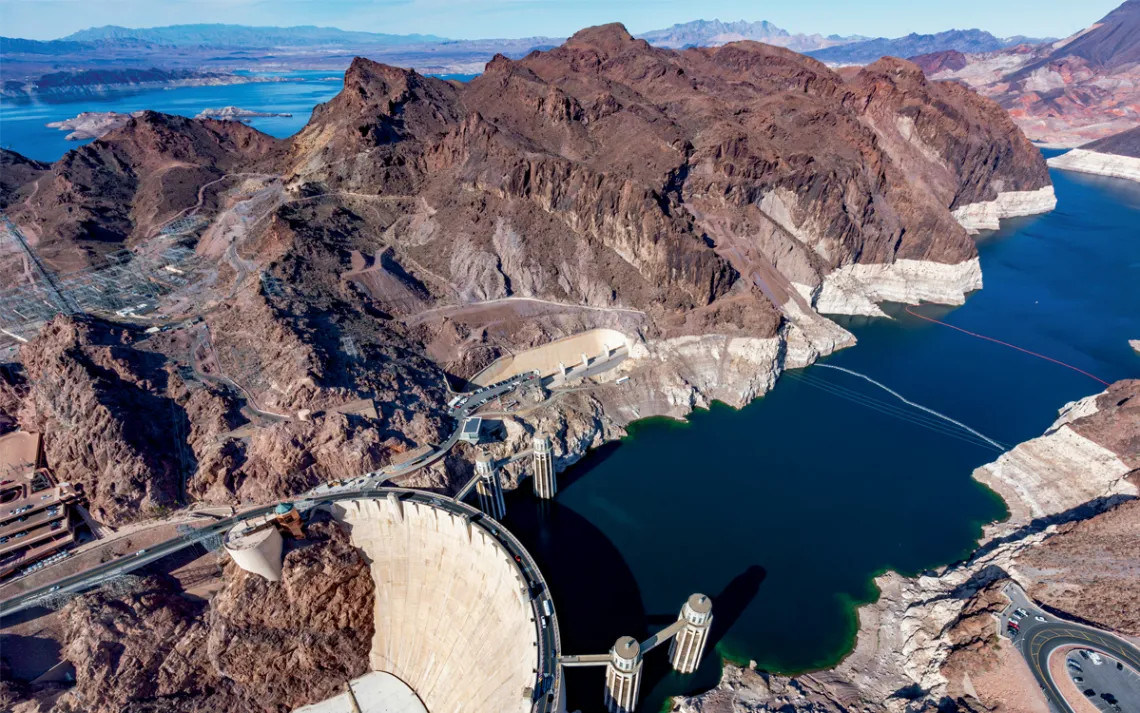
The 726-foot-high Hoover Dam was completed in 1936. At the time, it was the largest dam in the world.
In the thousand miles downstream from its headwaters, the river and its tributaries excavated 17 major chasms, the last of which, the Grand Canyon, now stands as the most magnificent of them all: a roofless tabernacle featuring mile-high walls and a dozen layers of rock extending more than 1.7 billion years into the past, a stretch of deep time encompassing a third of the life span of our planet and roughly a tenth of the age of the universe itself.
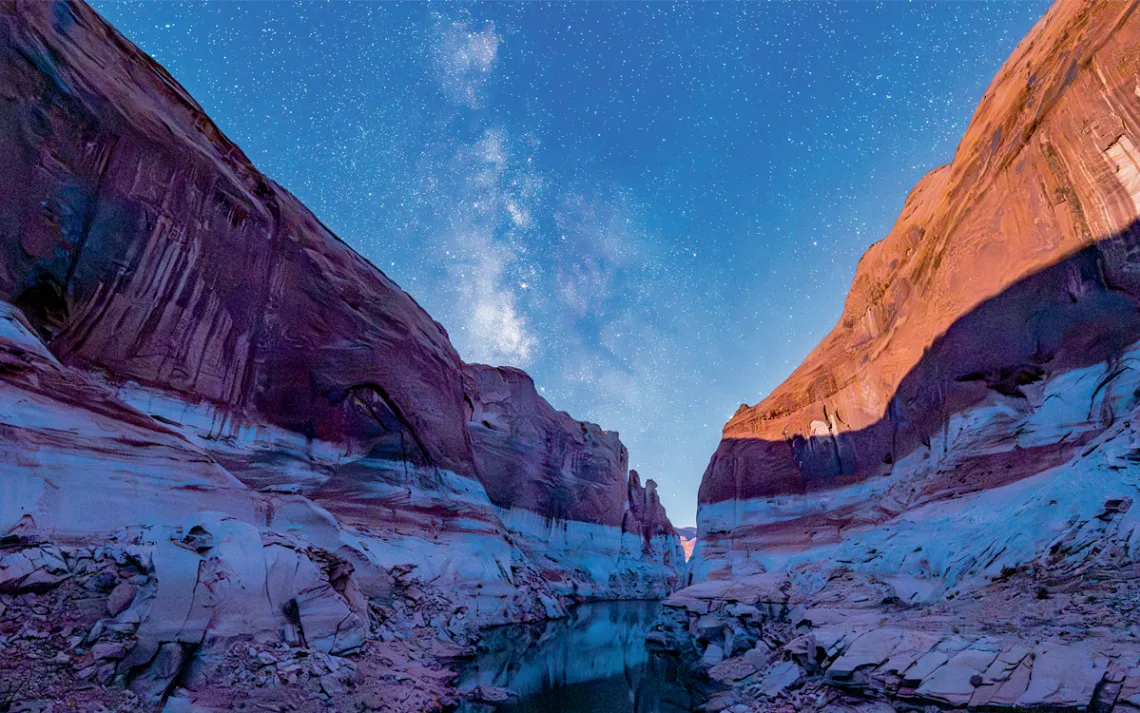
The Milky Way and its river of stars sweep over Lake Powell and its bathtub rings, composed of calcium carbonate and other mineral compounds. The former waterlines remind observers of wetter times. Recent studies have shown that evaporation from reservoirs removes 10 percent of the river’s flow.
All of that is remarkable enough on its own. But there’s another quality that distinguishes the Colorado, which has to do with what we did to our waterways in the 20th century. Starting in 1931, with the construction of Hoover Dam, we raised 19 large dams along the Colorado and its tributaries, transforming the wildest river in the West into what it is today: something more closely resembling a municipal waterworks system.
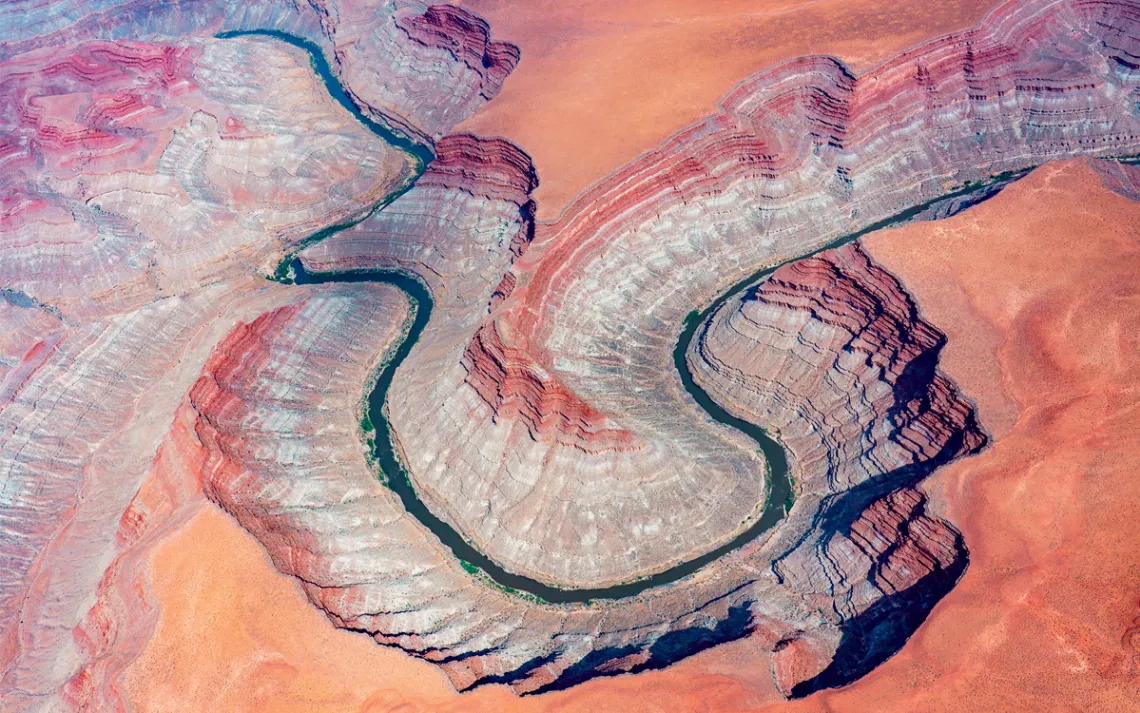
The San Juan River is a major tributary that flows 383 miles from southern Colorado to Utah.
During our end-to-end Grand Canyon traverse in 2016—a journey that took more than a year to complete—the difficulty of creating a visual profile of a landscape as hostile as it was beautiful often turned an immense challenge into a nightmare. We were moving without trails, between river and rim, and water was always on our mind. We had to find enough each day, roughly two gallons total, to survive. We could see the Colorado River rumbling away in the basement of the canyon, a constant beacon of life cutting through more than 20 layers of rock, like pages of the earth’s history book.

Freshwater orchids, which serve as a bioindicator of habitat resilience, have appeared as Lake Powell has shrunk.
Jack Schmidt, director of the Center for Colorado River Studies at Utah State University, said that the river is also “a scenic bedrock ditch transporting water from one reservoir to the next—from upper basin users to lower basin users—a spectacularly beautiful plumbing system.” That system, the silvery line of water we gazed down upon during our trek, amazingly fills the plumbing lines of millions of American homes as far downstream as Phoenix and Los Angeles, where each household consumes between 140 and 300 gallons a day.
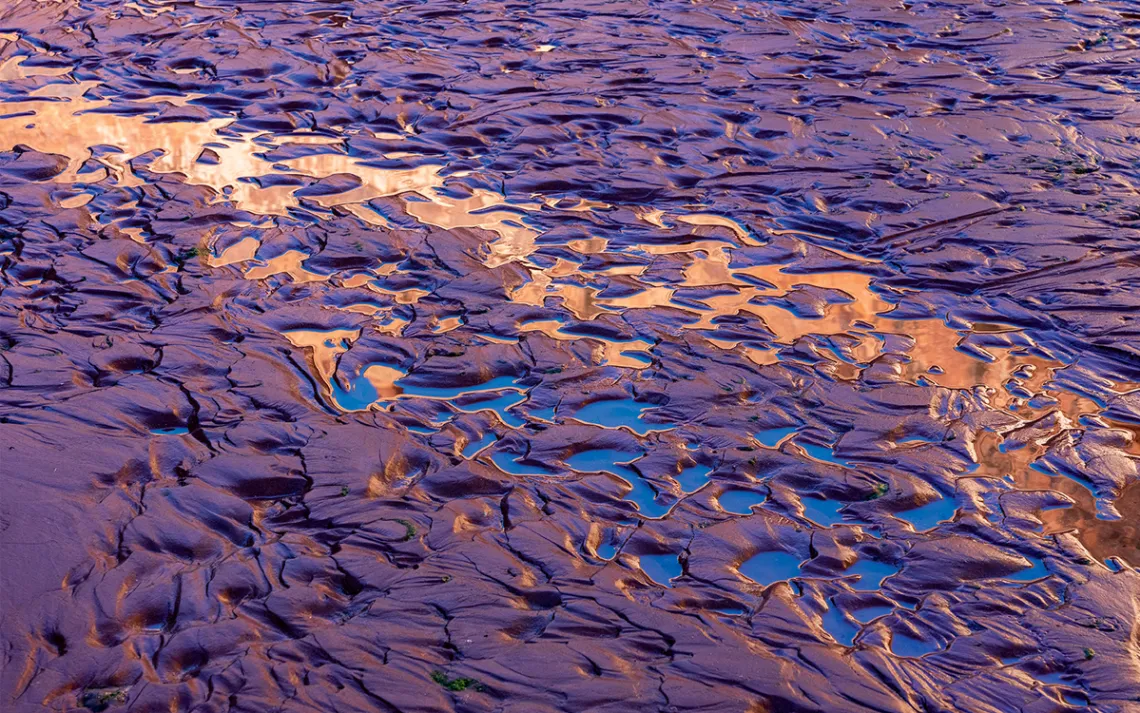
Silt and sediment, what many call the lifeblood of the river, have settled throughout much of Glen Canyon, reducing its water storage by 6 percent, according to a 2022 Bureau of Reclamation data report.
Now, as the river strains under drought and our plumbing demands for agriculture and desert cities, drawing down the water banks of Lake Powell and Lake Mead, it reveals white bathtub rings and layers of silty sediment. But it also reveals the arches, whispering springs, and ancient human history that we flooded with our tenacious desire to tame the river, to make the desert bloom under the old adage that “rain follows the plow,” no matter how inaccurate that has proven.
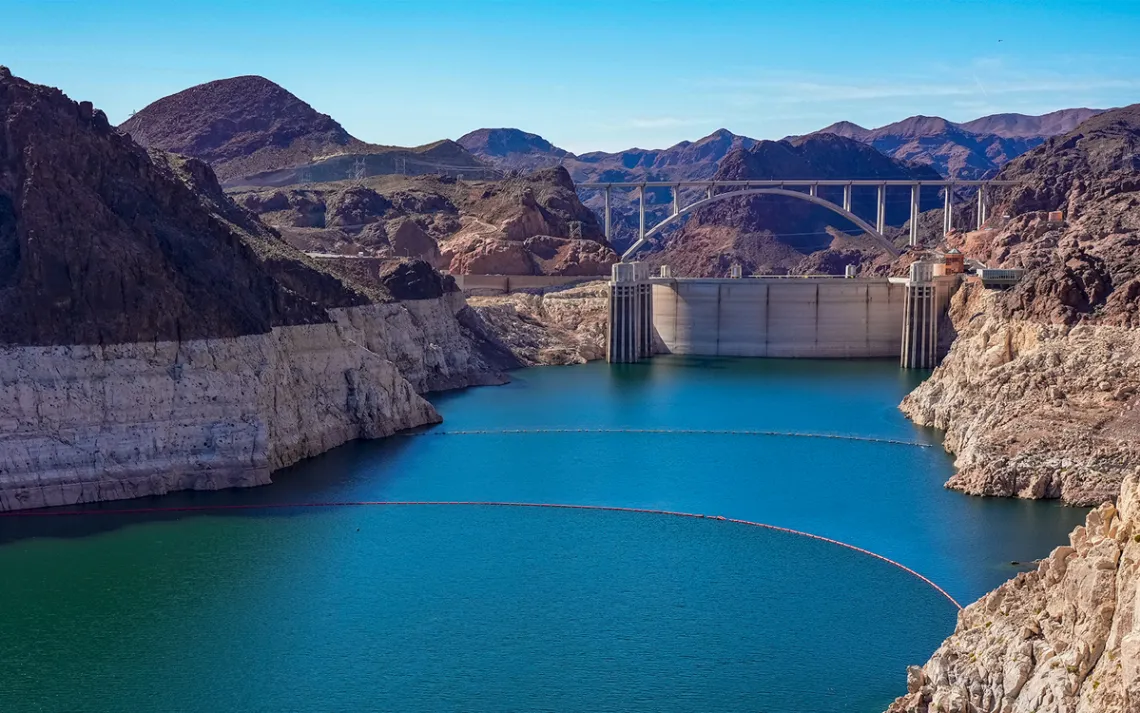
The lake level behind Hoover Dam has fluctuated from its high in 1983 to its record low in March 2023. If the ongoing drought drops the reservoir another 40 feet below that record low, it will affect the dam’s ability to operate its hydropower turbines.
Clearly, the river is trying to tell us something. It might serve us well to listen. As Lake Powell has dwindled, new sights have emerged. These include freshwater orchids, which serve as a bioindicator of habitat resilience, and Gregory Arch, which has been mostly submerged for the last 50 years. Forests of giant cottonwoods that shaded side canyons of Glen Canyon were flooded and fully submerged for decades. Remarkably, the trees are still standing and surrounded by feet of silt and sediment. The Cathedral in the Desert and its echoing spring reemerged in 2022 after sitting underwater for five decades. Many Native communities believe the spring to be spiritual and, when possible, collect its water for ceremonies.
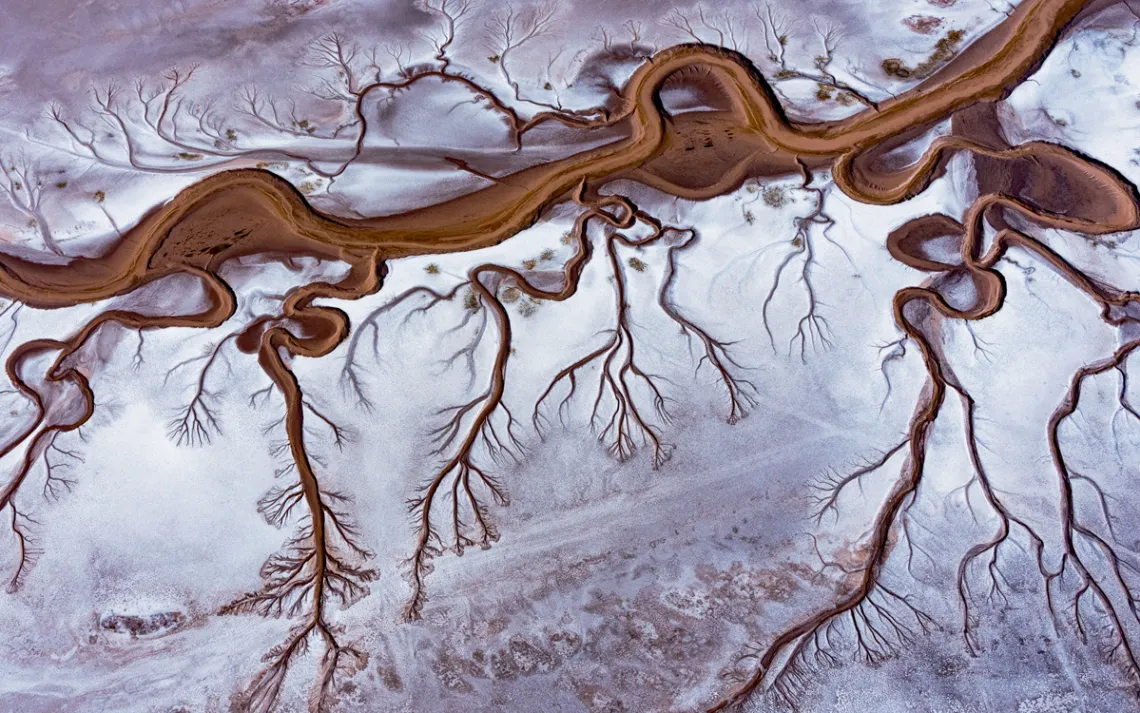
Like fingers reaching for an old friend, tendriled patterns extend into the dry, salt-encrusted Colorado River delta, looking for a lost, but not forgotten, Río Colorado.
As the Colorado River, symbolic of so many water systems worldwide, continues to dwindle and fray, the value of its most precious resource—water—will only increase. So too should our respect and reverence for it. By showcasing our abuses of this marvel, perhaps we can push back on apathy—one of the greatest threats to the river—which can seep into the system and erode it even more. If we can do that, maybe we can find the will to cherish and protect the river in more than just a few iconic pockets.