 The Magazine of The Sierra Club
The Best Affordable Long-Range Electric Vehicles of 2026
EVs’ lower prices and longer ranges are making it easier to curb emissions
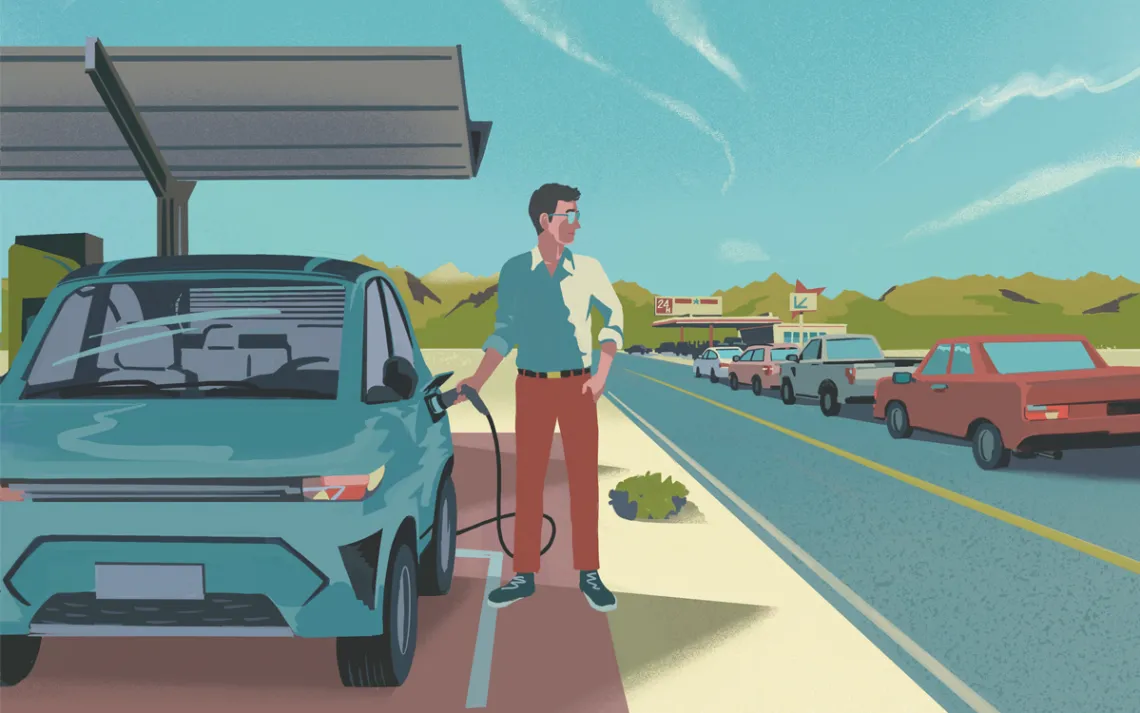
Illustration by Stefano Grassi
One of the best ways you can act on climate is by switching to an electric vehicle. Yes, there are many other ways we can all do our part—like recycling, avoiding plastic, and eating less red meat. But few personal choices reduce emissions as much as ditching the tailpipe. According to David Reichmuth, a senior scientist in the Union of Concerned Scientists’ Clean Transportation program, “EVs overall have less than half the emissions of the average gas vehicle, and that remains true when factors such as manufacturing and charging are factored in.”
With EV prices continuing to fall, gas prices spiking, and driving ranges expanding across all models, there’s never been a better time to go electric.
Why should I switch?
According to the Environmental Protection Agency, transportation is responsible for approximately 28 percent of US greenhouse gas emissions, making it the nation’s single largest contributor to climate change. What’s more, between 1990 and 2022, emissions from the transportation sector increased more than those from any other sector.
You might be thinking, “Yes, but doesn’t the manufacturing process for EVs also pollute?” It does, but the industry has gotten cleaner and more efficient. A study by the International Council on Clean Transportation found that the lifetime emissions of a midsize US battery-electric car, including those from its production, are 66 to 69 percent lower than those of a comparable gas-powered vehicle. And EVs will continue to get cleaner over time, as will the US electrical grid.
Can I afford an EV?
Affordability has long been one of the biggest concerns about electric vehicles. But prices are coming down rapidly, in part because batteries—by far the most expensive component—are getting cheaper. In a recent study, the International Energy Agency reported that lithium-ion battery pack costs fell by 20 percent in 2024 alone.
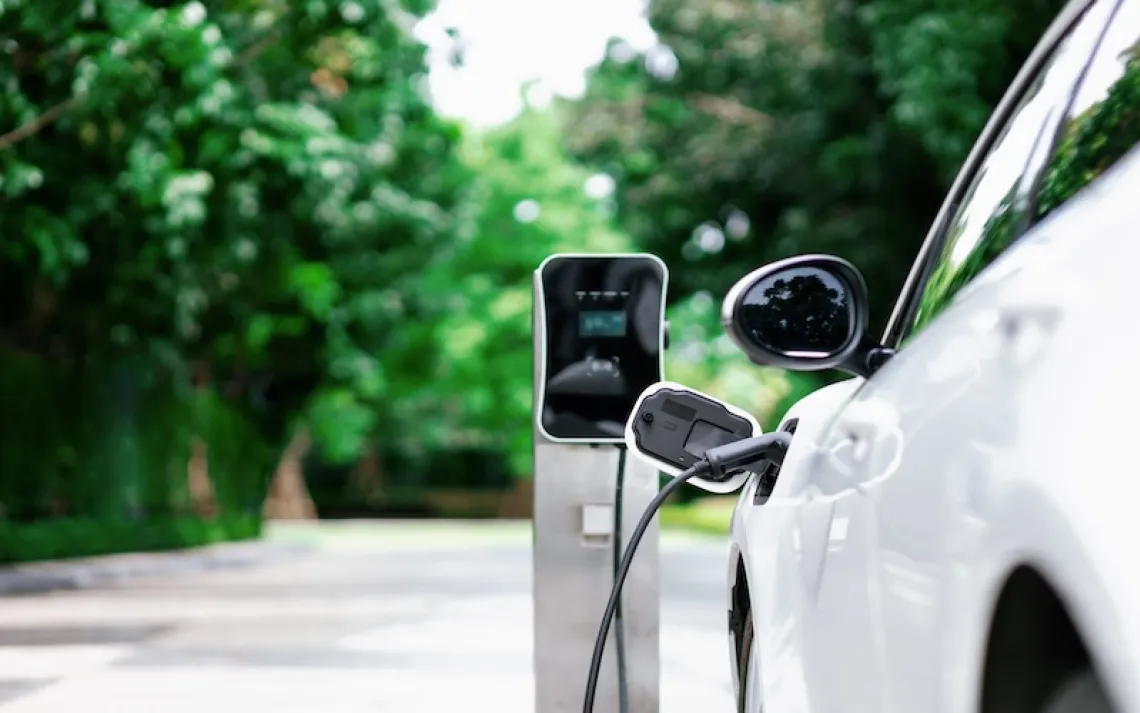
Most new EVs come equipped with a North American Charging Standard plug, giving drivers access to Tesla’s exceptionally robust US charging network.
EVs would be more affordable if the Trump administration hadn’t taken away the $7,500 federal tax credit. Even without it, a growing number of EVs now hit the magic number: a price under $40,000 (well below the average cost for all new cars, which is about $50,000).
Hyundai, for instance, just lowered the price for its single-motor 2026 Ioniq 5 SE from $46,650 to $37,500. The rear-wheel-drive version of the car can go as far as 318 miles between charges. The 2026 Chevrolet Equinox EV (starting price $35,000) offers a range of 319 miles. And the cheapest EV on the US market is the venerable and recently redesigned 2026 Nissan Leaf, which starts at just $30,000, with a range of up to 303 miles.
Where will I charge it?
The other big concern is range anxiety and whether charging will be a problem, especially for drivers who don’t own a Tesla. But that’s changing. Most new EVs come equipped with a North American Charging Standard (NACS) plug, giving drivers access to Tesla’s exceptionally robust US charging network of 7,685 stations and over 48,000 individual ports, according to the Department of Energy. Many older EVs can tap in with an inexpensive adapter. Tesla owners have been driving coast-to-coast for years—now other EV drivers can too.
What’s new?
This year will see the return of the Chevy Bolt, with more range than the previous model’s 259 miles and an approximately $30,000 price tag. The 2027 Bolt will come with a NACS port.
Kia will bring its compact SUV EV3 to the US in 2026 for around $35,000, offering more than 300 miles between charges. The automaker is planning a future rollout of the larger EV4 compact sedan, with a range of up to 330 miles and a price likely starting below $40,000.
Europe is seeing a flood of well-built, low-priced Chinese EVs, many equipped with innovative and relatively cheap lithium iron phosphate batteries. But high tariffs mean we’re unlikely to see Chinese cars in the US anytime soon.
Keep an eye out for the bare-bones single-motor Slate pickup. Just about everything on this truck is optional and will cost extra, including infotainment, but the starting price is expected to be around $25,000. You will pay for range—the base 52.7-kilowatt-hour battery delivers 150 miles, while the optional 84.3-kilowatt-hour pack extends that to 240 miles. The Slate’s intriguing design enables it to be converted to an enclosed SUV and other configurations.
What’s best?
While the environmental benefits of switching to an EV are not in dispute, of course the most effective way to reduce your carbon footprint from transportation is to drive less overall. “The best emissions reduction,” Reichmuth offered, “is avoiding driving altogether in favor of walking, biking, or mass transit.”

The Slate truck, easily converted to an SUV, is due in late 2026, with a likely starting price of about $25,000.
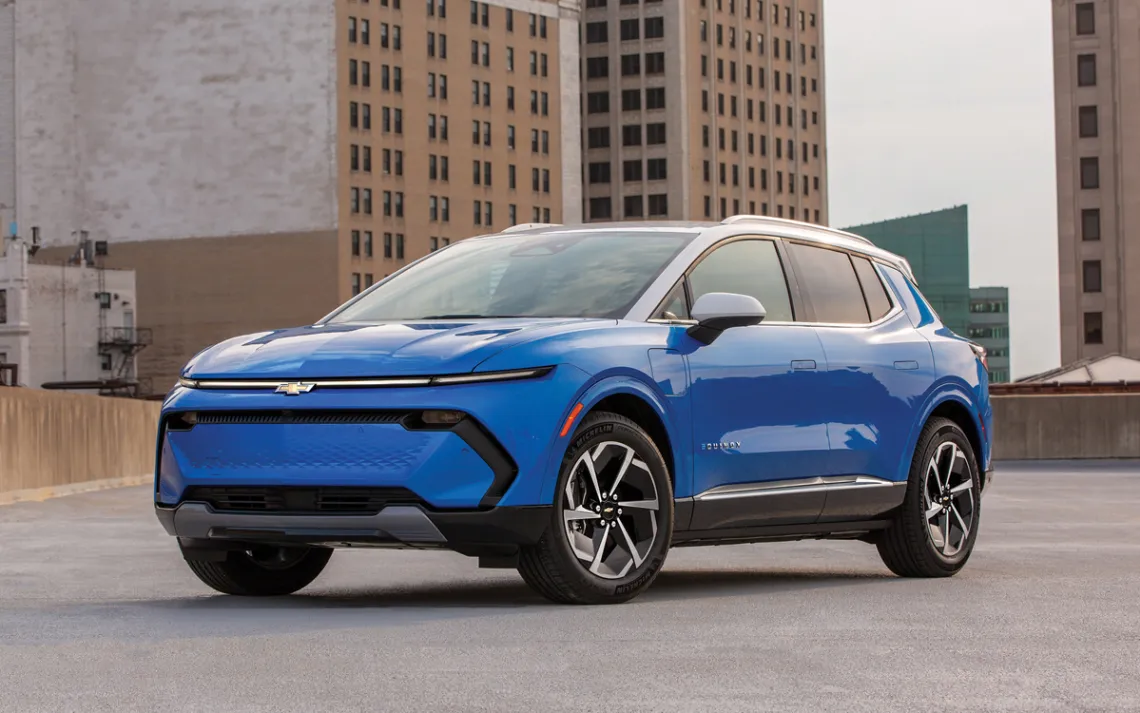
The Chevrolet Equinox EV (3LT trim pictured) has 319 miles of range and starts at $35,000.

The Kia EV4 is coming soon, likely priced below $40,000 and with a range of up to 330 miles.
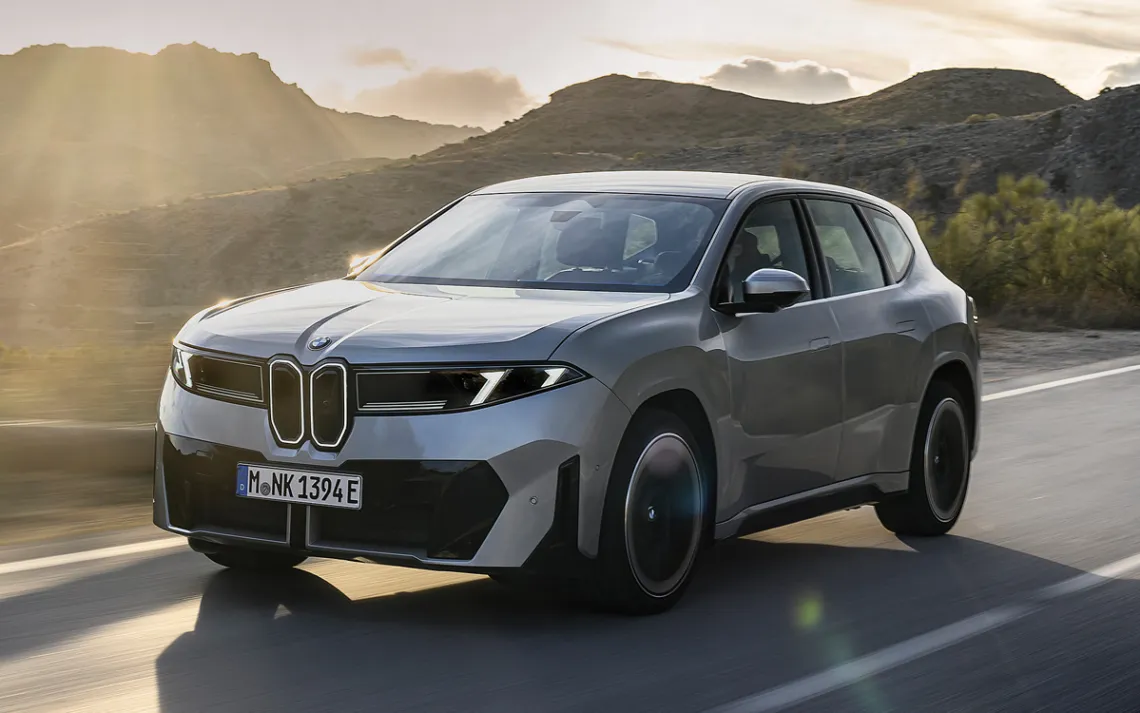
The BMW iX3 xDrive is due in 2027. The first versions will be expensive, with more affordable models to follow.