Rocks, Glaciers, and Trees Offer Clues to the Planet’s Past
What we can learn from Earth's time capsules
Illustrations by Ellen Weinstein
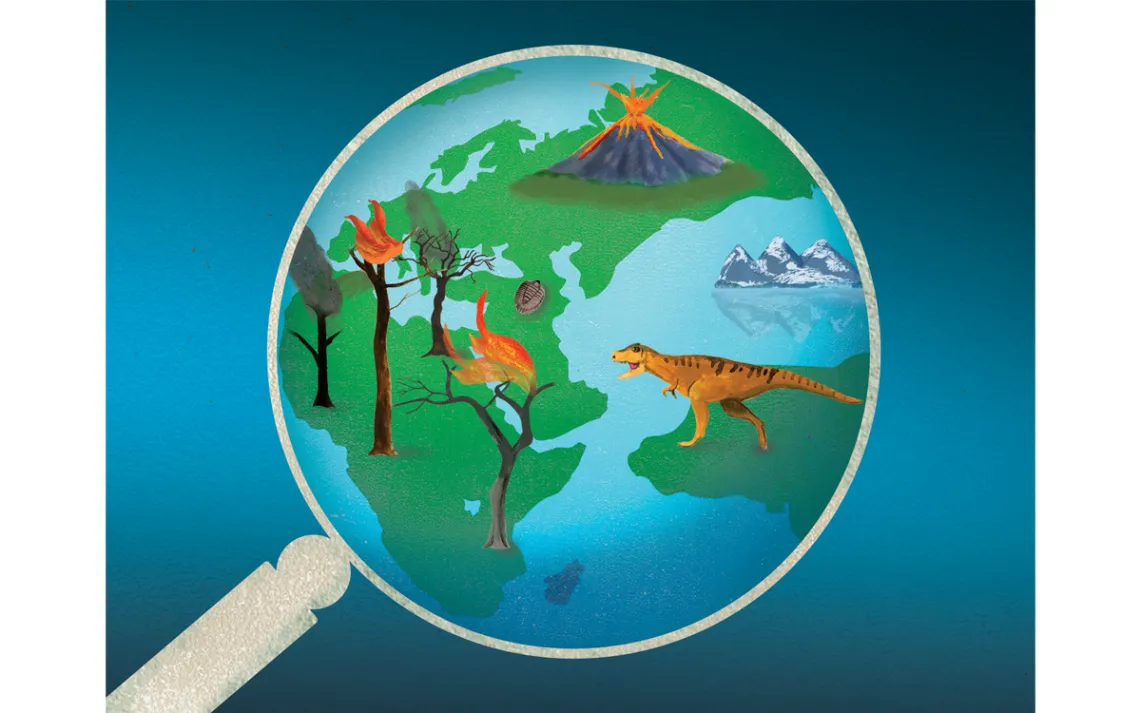
Earth has been around for a very, very long time—more than 4.5 billion years, in fact. Of course, the planet didn’t come with a birth certificate telling us when it formed. So how do we know? Scientists turn to nature for clues about Earth’s history. Ancient rock layers reveal when Tyrannosaurus rex roamed and when volcanoes erupted. Ice that has formed over thousands of years acts like a time capsule, preserving information about the planet’s climate. And tree rings keep records of past events like wildfires. Here’s how scientists read these natural features to better understand our world.
Rocks go way back
Geochronologists are scientists who study “deep time” and how the planet has changed over billions of years. Their main tools are rocks. Some rocks contain radioactive elements that help researchers figure out their age.
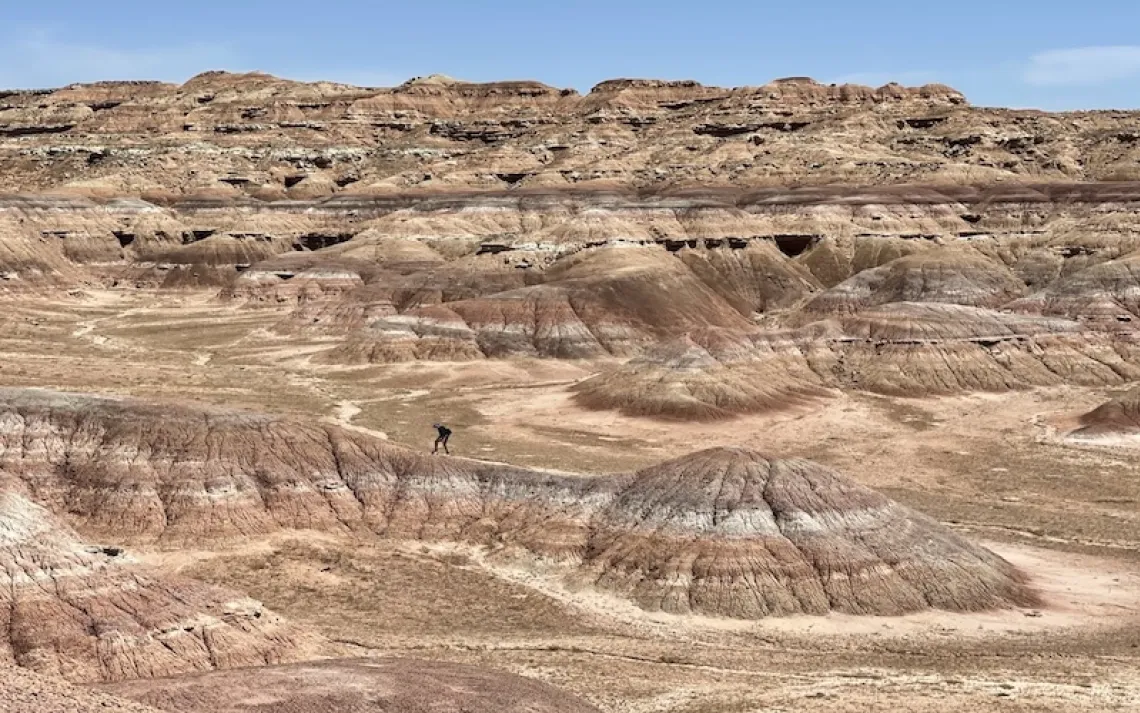
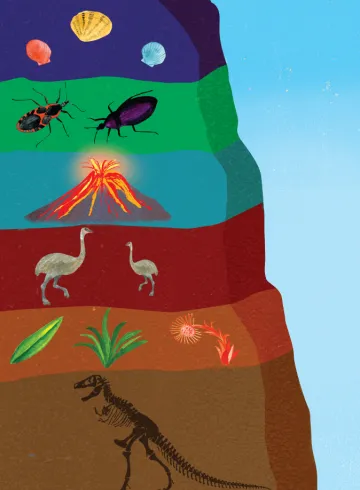
If you look at the side of a canyon in the desert, you will often see stripes, like layers of a cake. The bottom layer is usually the oldest. Over many years, sand, mud, and sediment settled and hardened. Seas dried up, and rock layers were exposed as mountains were pushed up. Fossils in a rock layer reveal what plants and animals lived during the period when it formed.
By studying fossils, minerals, and sediment characteristics, geochronologists can tell how landscapes and climates have changed over time.
Glaciers hold icy secrets
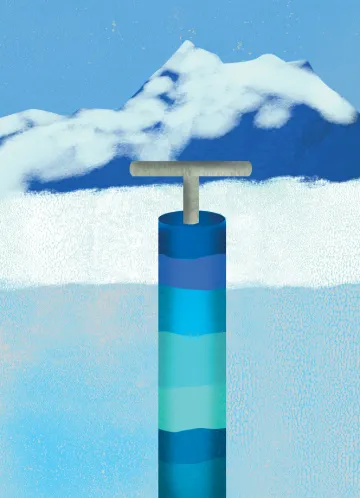
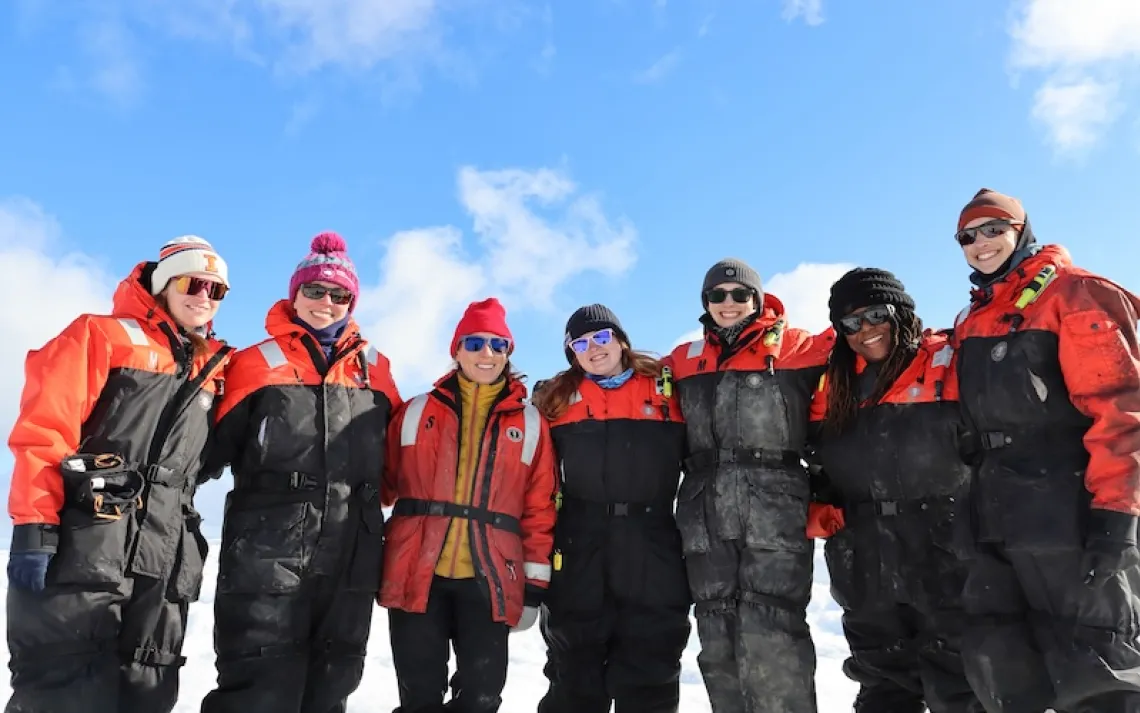
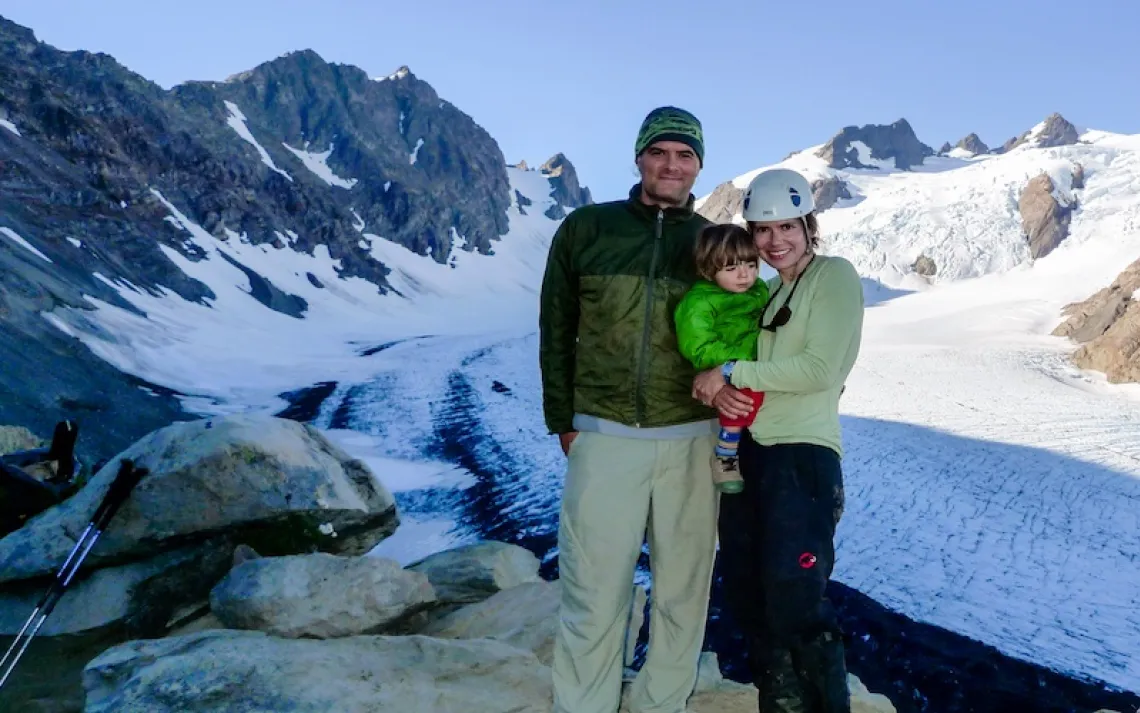
Many glaciers formed over millennia—one in Antarctica is thought to be a million years old. Snow falls each year and creates a new layer of ice. Dust particles—including ash from volcanic eruptions—settle on the ice, and organisms are frozen in place. So scientists, including glaciologists, study these layers to learn how the environment and atmosphere have changed.
But scientists can’t get at these cold clues right on the surface. They have to drill deep down and collect long cylinders called ice cores that can then be studied in a lab.
Glaciers are extremely important for studying climate change. Air bubbles trapped in the ice preserve gases from Earth’s atmosphere. Scientists can compare how much carbon dioxide, methane, and other heat-trapping gases were in the air long ago with what’s in the atmosphere now. Chemicals and other clues in the ice also reveal past weather conditions, helping scientists link rising gas levels to how the climate is changing. Meanwhile, the rapid melting of glaciers today is a clear sign that the planet is heating up.
Trees remember
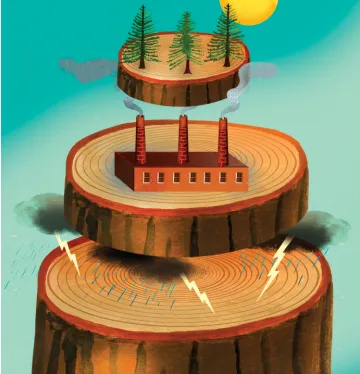
Besides their natural beauty and all their environmental benefits, trees are also amazing time preservers. Some, like bristlecone pines, have been around for thousands of years. When they get plenty of water, sunlight, and nutrients, trees grow quicker. During harsher conditions, their growth slows. Every year, each tree creates a new ring inside—these rings are records of all the tree’s growing seasons.
People who study trees, called dendrologists, count rings to find out how old a tree is. They also look more closely to learn what was happening in the tree’s environment over time. For example, very thin rings can show periods of drought, while burn scars may indicate a major fire that year. Chemicals absorbed by the tree offer information too, like when air pollution was high. Dendrologists can read the rings of a dead tree by looking at its cut trunk. (Some schools use slices called “tree cookies” to teach students about rings.) To study a living tree, they drill in horizontally and pull out a thin cylinder—similar to a glacier ice core.