Decades of Drought Are Changing How Paleontologists Search for Fossils
As the planet gets hotter, relics of history are receding from view
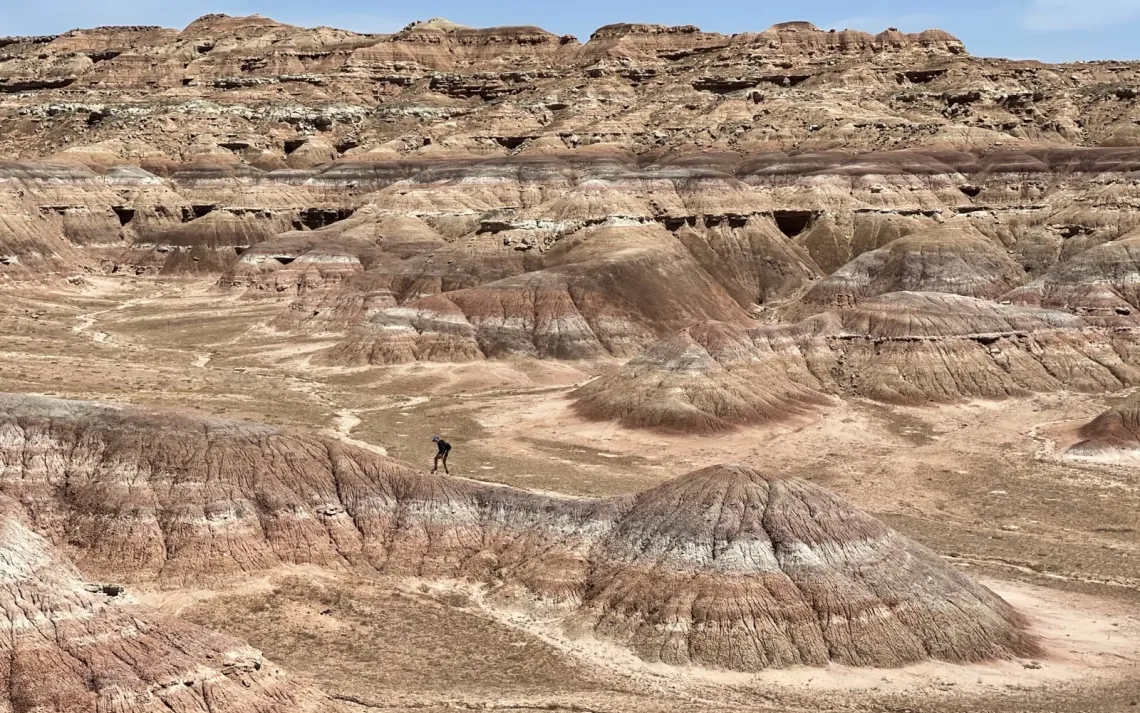
The Uinta Basin. | Photo by Riley Black
Erosion is a paleontologist’s best friend. Pounding rain and the expansion of frozen water scrape away at the surface of stony layers to reveal bones, teeth, and other traces of prehistoric life hidden just below the surface. But after decades of drought across the Intermountain West, paleontologists haven’t been able to count on water ferrying new fossils to the surface.
“We used to be able to go to some of the same sites year after year and keep finding new things eroding out, but now we have to wait many years, if not decades, to make it worth revisiting old localities to find new fossils,” says paleontologist Anthony Friscia, from the University of California, Los Angeles.
Friscia is part of a long-running, multi-institution team searching eastern Utah’s Uinta Basin for fossils from the Middle Eocene Climatic Optimum—another era of rapid climate change. During this time, dinosaurs like T. rex were long gone and mammals were flourishing in wet, lush environments. Scientists are interested in the Middle Eocene because it featured a warm spike before a rapid cooldown—a natural point of comparison to what humans are doing to the climate today.
Researchers have searched the basin’s 40-million-year-old rocks since 1994. Friscia and colleagues haven’t been looking for just charismatic animals, such as rhino-like horned mammals called brontotheres and hoofed, wolf-like carnivores called mesonychids, but also small rodents and primates that act as indicators of habitat and climate.
The problem is that Utah has been in a persistent drought for the duration of the 21st century. The lack of rain, snowmelt, and water that can freeze to break open rock (a phenomenon called frost wedging) has made it harder to get the information the team needs to study climate change over time.
The picture is much the same a little farther to the east, among the ancient outcrops of western Colorado. “The lack of spring and monsoonal rainfall has definitely decreased erosion’s work revealing new fossils,” says Dinosaur Journey Museum paleontologist Julia McHugh. In the past, museum crews found so many fossils they’d often take members of the public out to help make new discoveries. “Now we go out for days without much more than a fragment or two,” McHugh says.
The drought's hold on the West also makes conditions more dangerous for fossil hunters Dried-out swaths of desert covered in parched cheatgrass create tinderbox conditions where wildfires can easily catch, sometimes right where paleontologists search for clues about ancient life.
McHugh and her museum have had to contend with the unexpected blazes as they return to the 150-million-year-old Mygatt-Moore quarry near Fruita, Colorado, during the summer field season. “We’ve had a few fires within less than a mile of the quarry in the last few years,” McHugh says, caused by sparks from chains dragging on the roads and lightning strikes. While no one has been harmed, McHugh notes, “we are not always alerted to immediate danger when not on-site, and we’ve arrived in the morning to fresh fire retardant on the hills and [Bureau of Land Management] fire trucks a few times.”
McHugh has since made contacts with BLM firefighters with an interest in paleo, she says, to get notice when a fire is too close to the site.
There has been one unexpected advantage of the drought: hints of what may be found if Lake Powell were to be drained. The water level of the reservoir is 154 feet below full, dropping bit by bit with each hot year. Among these receding waters, paleontologists from the St. George Dinosaur Discovery Site have been searching the sandstone formations the lake previously obscured for Jurassic dinosaur tracks and other fossils. In 2023, the team announced the discovery of a bone bed of rarely seen protomammals called tritylodonids along the shores of the lake. The trick is to find such fossils before they’re further damaged. Once exposed, fossils face the oven-like heat that is parching the region. Bones and even tracks can become friable and more likely to break.
While the loss of an individual fossil might not seem like much, they offer a lens into our human story that is well worth protecting. Even the most unassuming fragments and isolated teeth open a portal to ancient communities and species, and experts are still striving to understand that story. “Paleontology is in some ways a numbers game,” Friscia says, “and the fewer fossils we have, the harder it is to address the science we want to do.”