 The Magazine of The Sierra Club
Vermejo’s Private Paradise
A sprawling New Mexico bison sanctuary shows the promise—and uncertainty—of private conservation
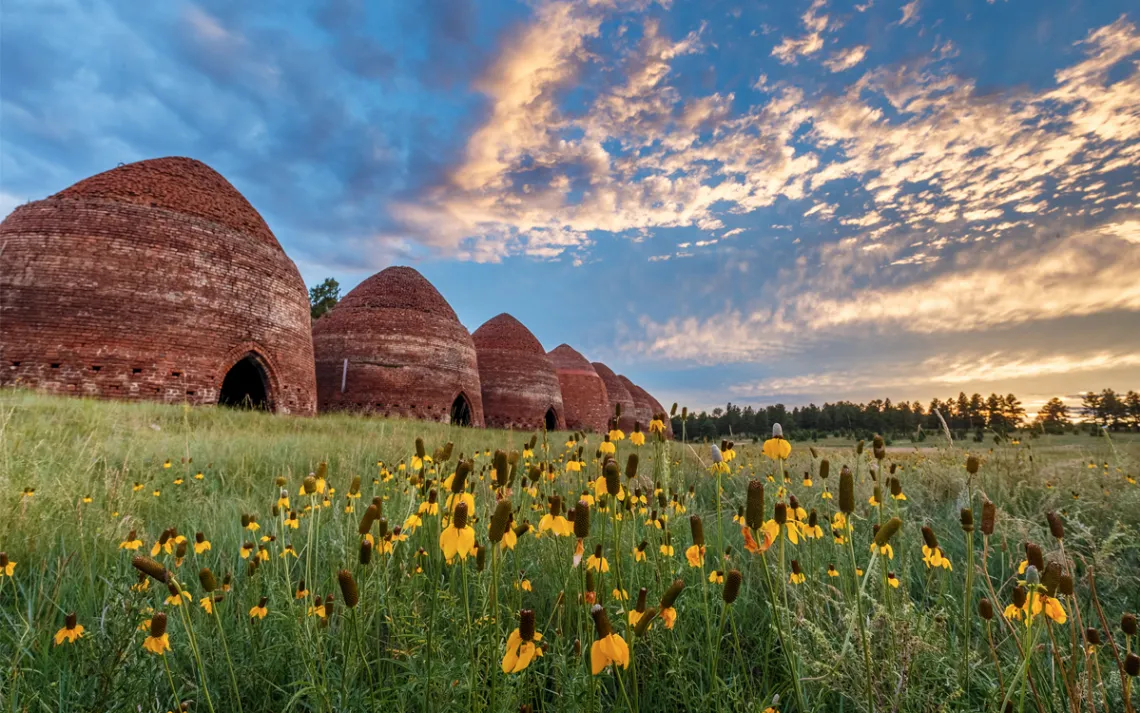
Charcoal kilns from a former logging town remain on the Vermejo reserve in New Mexico. | Photo courtesy of Vermejo, a Ted Turner Reserve
Fat-bellied clouds swelled overhead as wildlife biologist Lance Bernal steered his truck along one of the many lonely dirt roads that crisscross Vermejo, a private reserve in northern New Mexico. The Sangre de Cristo Mountains rose in the distance. At over 558,000 acres, Vermejo is slightly bigger than Great Smoky Mountains National Park. There wasn’t a soul in sight as we drove toward the reserve’s southern prairie, in search of spring’s first baby bison.
“It’s a lot of acres and not many people,” said Bernal, his crow-black braid falling straight down his back. He’s spent the past decade exploring the property, where he oversees wildlife and natural resources. Bernal conducts aerial surveys of Vermejo’s 7,000-strong elk herd and racks up hiking miles on hunts. Getting to know the entire property could take a lifetime. “I’ve seen plenty from the air,” Bernal said. “But to put a foot on it?” He acknowledged there’s still much more to see.
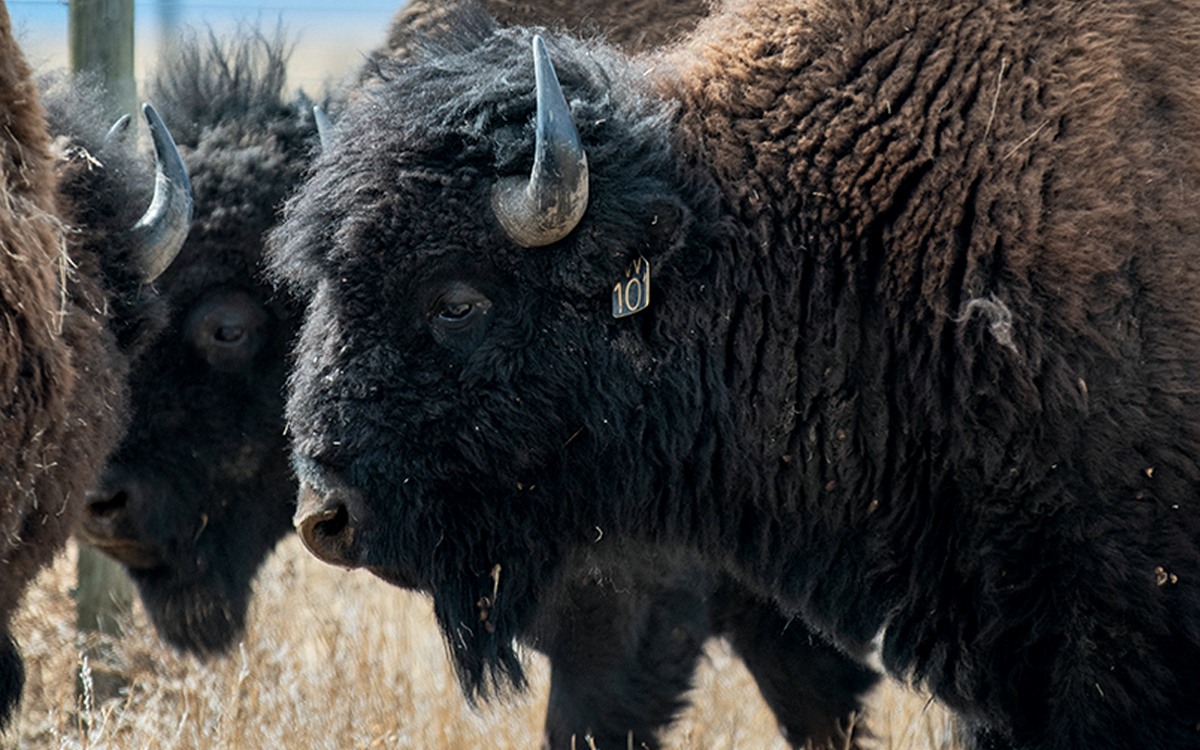
More than 1,400 bison roam the property. | Photo courtesy of Vermejo, a Ted Turner Reserve
Vermejo is the brainchild of CNN founder Ted Turner, who purchased the land—part of Ted Turner Reserves and the biggest in his constellation of properties totaling some 2 million acres—in 1996. Vehicles at Vermejo bear dandelion-yellow stickers with Turner’s motto, “Save Everything,” which is only somewhat tongue-in-cheek. I visited the preserve in early May, just a few weeks after Turner received the Sierra Club’s Vanguard Award, recognizing his work to protect wild landscapes and animals in the United States.
I’d traveled to New Mexico in hopes of seeing baby bison, admittedly, but also to understand a conservation bellwether. Vermejo is among the largest pieces of privately conserved land in the country. It’s an example of what researchers call a privately protected area (PPA), a designation for land protected by any entity that’s not a state, community, or Indigenous group. Though 60 percent of land in the United States is privately held, PPAs account for just 3 percent of the country’s protected land.
In peak-bracketed meadows once overgrazed by cows, resident bison now spend summers munching native Arizona fescue and blue grama.
That proportion is growing, which is good: Many experts believe that PPAs are critical for reaching the global conservation goal of 30x30 (preserving 30 percent of nature by 2030). Across the world, they increase connectivity among protected areas and preserve wildlife corridors. In a 2020 paper published in the journal Scientific Reports, a team of researchers found that without swelling private conservation, the US is unlikely to meet its goals for endangered species protection. Yet these areas are far less understood than other kinds of conserved land.
Bernal, steering us through river valleys hemmed by piñon–juniper forest, emphasized that what Turner bought in 1996 wasn’t untouched wilderness. “When I got here, I saw overgrazed fringe sage habitat,” he said. Previous landholders had ranched cattle, mined coal and gold, and intensively suppressed periodic fires, which the forest needs to thrive. In this respect, Vermejo is illustrative. When compared with state-protected areas worldwide, PPAs are twice as likely to encompass lands previously disturbed by human activities like mining and agriculture.
“Given enough time, the land can recover,” Bernal said, which is true but also undersells the intensive and ongoing restoration efforts he helps oversee. Crews at Vermejo have carved mosaic-like clearings into congested forest understories, mimicking natural patterns. In peak-bracketed meadows once overgrazed by cows, resident bison now spend summers munching native Arizona fescue and blue grama.
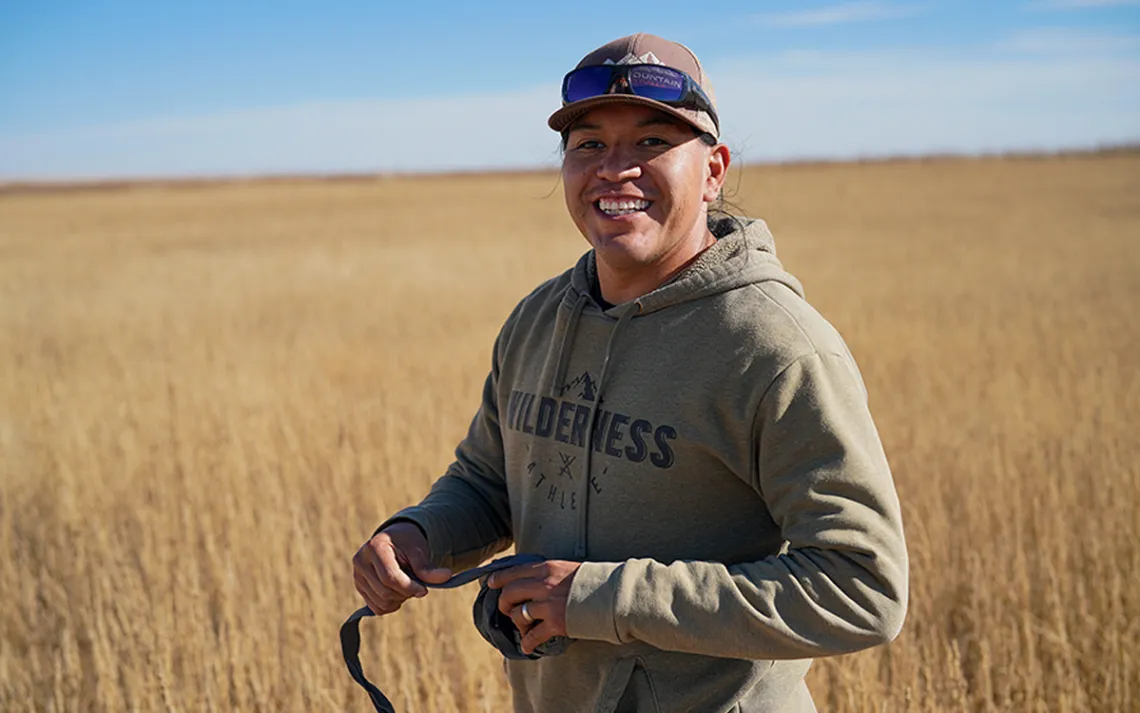
Wildlife biologist Lance Bernal is the reserve’s natural resources manager. | Photo by Ben Clark/Preserved
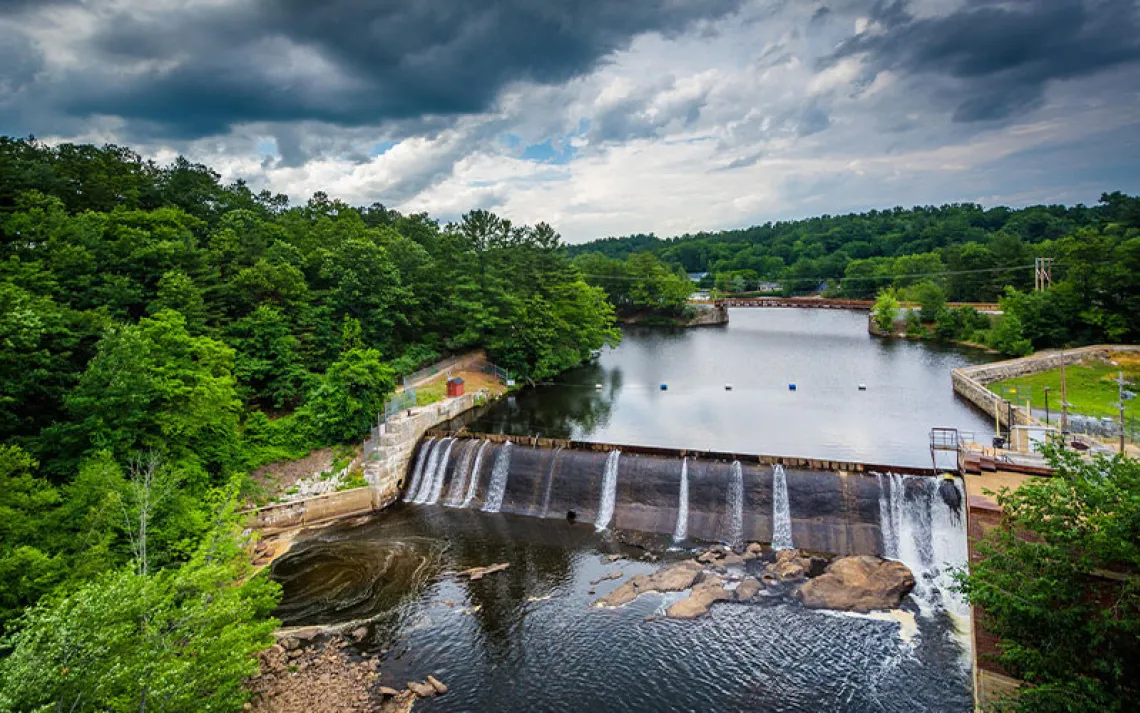
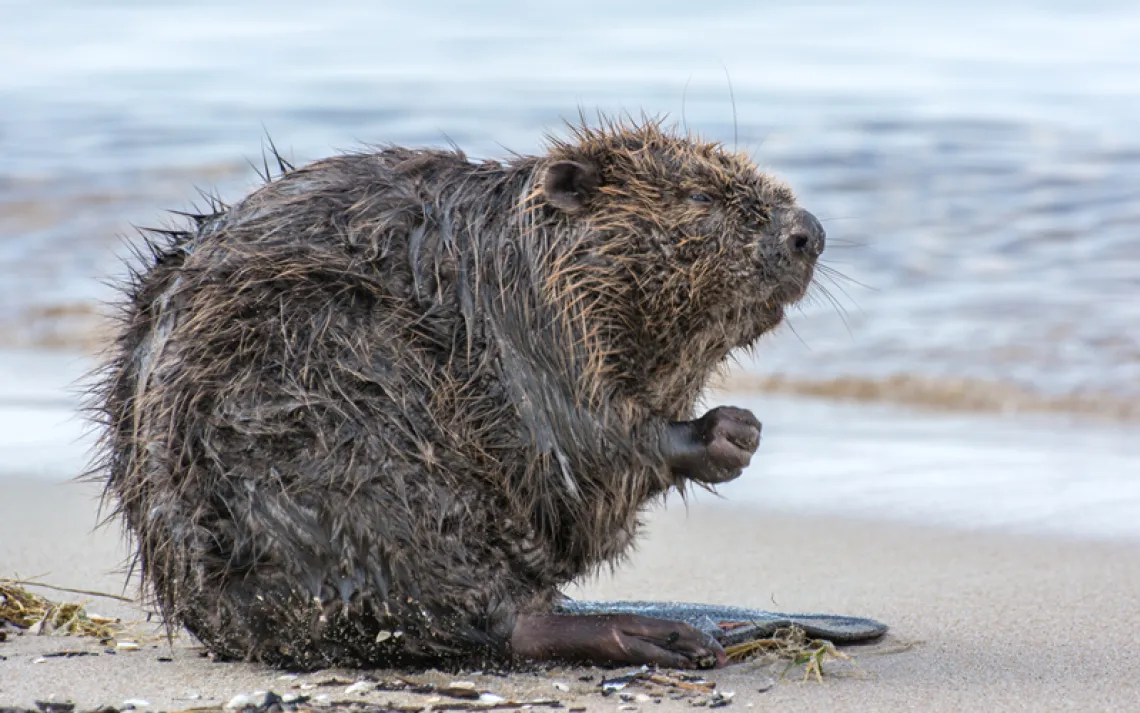
Along the Vermejo River, I saw the cascading impacts of a long-term riparian restoration project. After soil-preserving willows took root, artificially straightened watercourses arced into oxbows; beavers moved back. Resurgent Rio Grande cutthroat trout—a native species once under consideration for endangered status—now use the pools above water-filtering dams as a cool retreat in the heat of summer.
Such experimentation reflects the freedom of working at a well-funded PPA, in Bernal’s view. “On federal land, there would be more hoops to jump through,” he said. He also noted his flexibility to plan and pivot. “Grants tend to be tied to certain projects,” he said. “Here we’re able to look at the problem and manage it for the long term.”
Yet there are critiques of PPAs too. Researchers have raised concerns about economic inefficiency and effectiveness. They worry that private lands not enshrined by legislation might eventually be lost. And while national parks and forests welcome the public, access to Vermejo is more limited. A stay at the property’s collection of historic lodges and cabins starts at some $1,600, and the number of visitors allowed on the sweeping property is capped at around 65 per day. (Tourism revenue covers about half of Vermejo’s operating costs.)
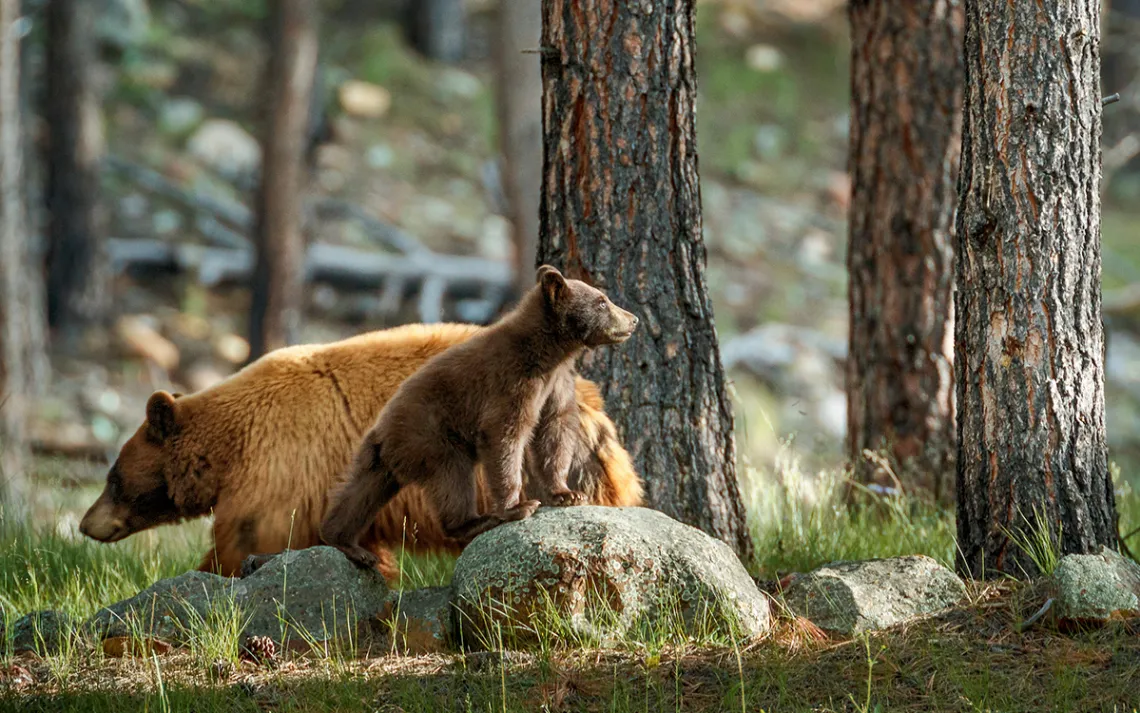
Predators like American black bears keep the ecosystem in balance. | Photo courtesy of Vermejo, a Ted Turner Reserve
Just past a “No Trespassing” sign, I spotted a trio of male bison, beards brushing knobbed knees. We’d left the main lodge right after breakfast and were on a long, slow drive south in search of the main bison herd, which numbers around 1,400. Only when we reached their prairie did we slip back into cell coverage. Next to me, Bernal’s phone dinged.
“Ted’s passed away,” he said, as more messages poured in. “It’s my wife,” Bernal said, quietly. “She says that Ted Turner died this morning.”
An often-repeated story goes that, as a child, Turner read a National Geographic article explaining the plight of American bison at a time when just a few thousand animals remained, survivors of frenzied 19th-century hunting. The 10-year-old Turner vowed to get rich and save them.
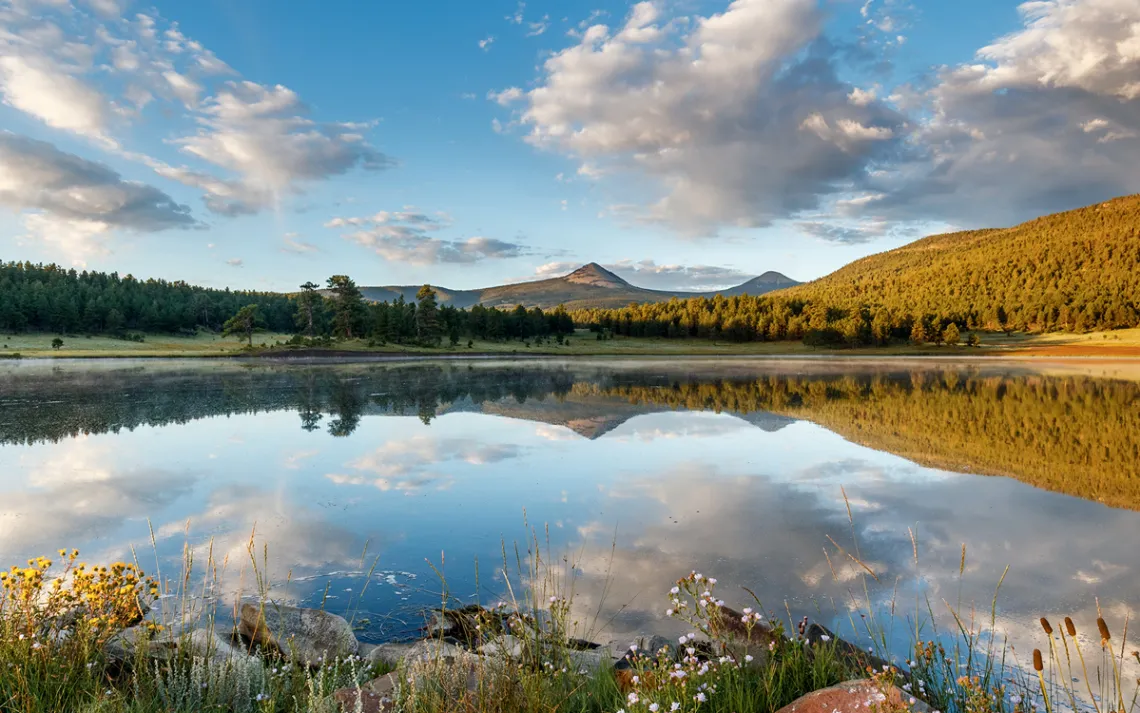
Visitors can fish for trout in Munn Lake and streams on the Vermejo reserve, a privately protected area. Together, PPAs account for 3 percent of the country’s protected land.
Today, roughly half a million American bison roam the United States, a recovery that many attribute in large part to Turner’s work, according to The Nature Conservancy. (“Ted made bison cool,” said one visiting scientist I met in the lodge.)
His passing, at 87, was not a surprise. Turner had publicly shared his diagnosis of Lewy body dementia in 2018, and he sought to ensure that his conservation work would outlive him. At dinner a few nights before, I’d learned from Ted Turner Reserves president Jade McBride that Vermejo—and other Turner lands—would be protected by a research-and-land-stewardship nonprofit, the Turner Institute of Ecoagriculture, founded in 2021.
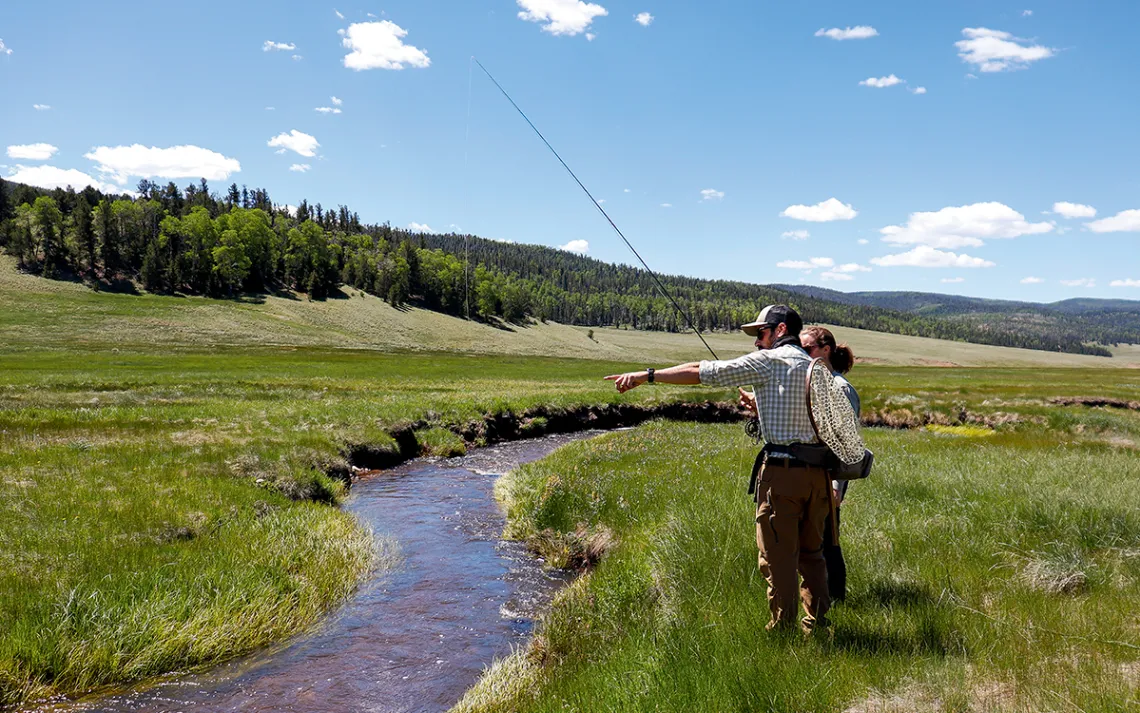
Visitors can fish for trout in Munn Lake and streams on the Vermejo reserve, a privately protected area. Together, PPAs account for 3 percent of the country’s protected land. | Photo courtesy of Vermejo, a Ted Turner Reserve
Bernal put down his phone and stopped the truck. On a golden hump to the left of the dirt track, a cluster of bison stood like hairy mountains.
“Look! There’s a calf,” Bernal said, steering my binoculars to a runty, cowish creature covered in ruddy curls. About five days old, it was the first baby bison he’d seen that season.
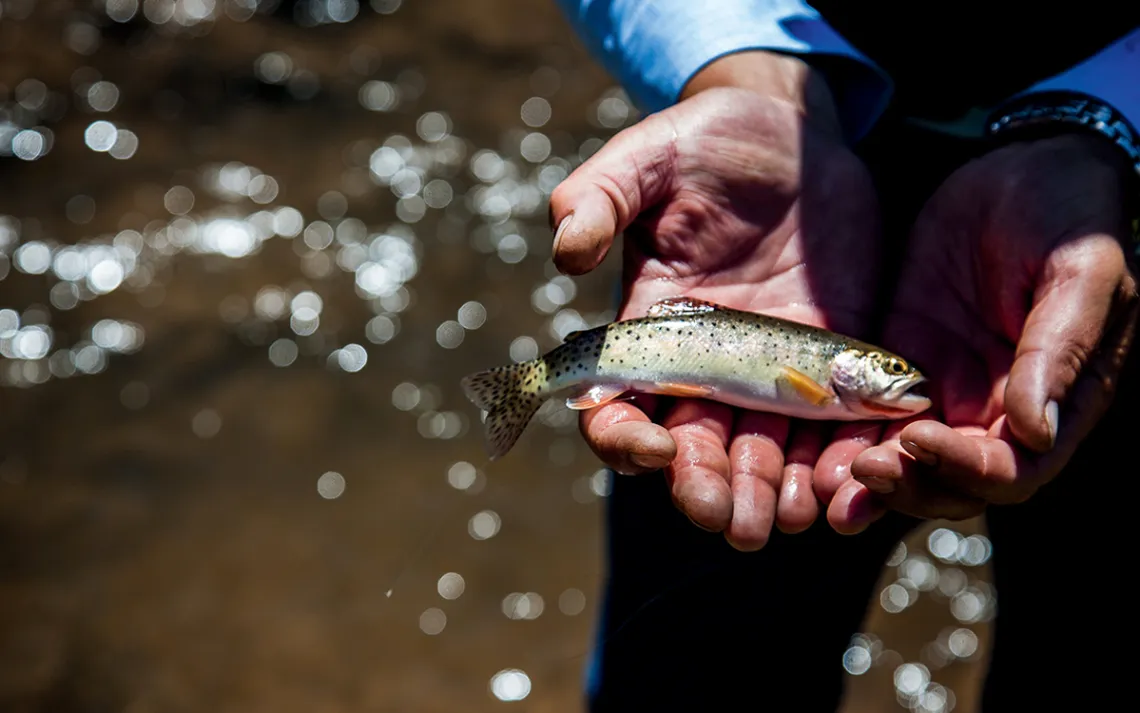
Photo courtesy of Vermejo, a Ted Turner Reserve
Then he pointed to another. And another. Swaying shyly against their parents’ knees, six big-eyed baby bison were picking their way through the grass. Behind them, the prairie swept away to the southern horizon.
As we headed back north under a sinking sky, the animals dwindled behind us. When we neared the lodge, flurries were tucking a white blanket across the Sangre de Cristos. By midafternoon, visibility stretched only as far as the lodge’s broad front lawn, where an American flag flew at half-staff, flicking sideways in the late-spring squall.