 The Magazine of The Sierra Club
Can Agrivoltaics Bridge the Urban-Rural Solar Divide?
Sometimes the best of both worlds is the easiest solution
Illustration and animation by MSJONESNYC
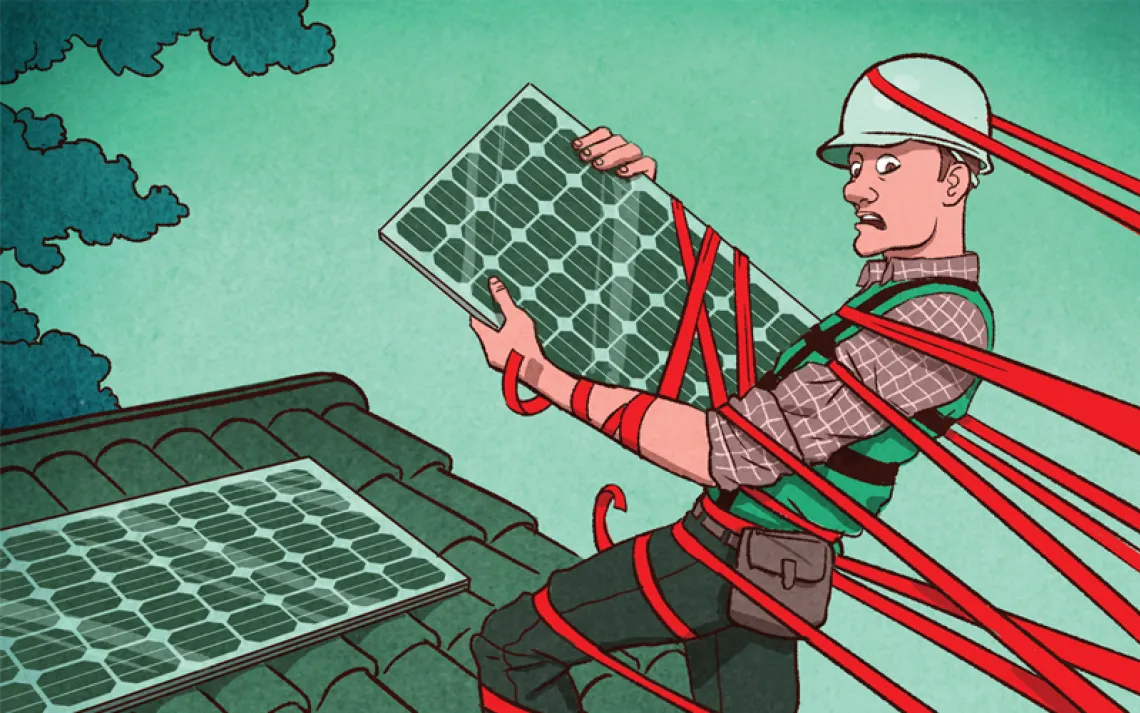
For the past few decades, farmers have faced a series of tough climate and financial challenges—from worsening heat and drought to competition from big agricultural corporations. These issues have forced many mom-and-pop operations to make hard decisions to stay afloat. In 2025 alone, roughly 15,000 farms either consolidated or closed up shop completely. Some farmers have tried leasing portions of their land for large-scale renewable energy projects, but this has led to conflicts with neighbors who fear that farmland and their way of life are being traded for energy development.
What if there was another way to help farmers make ends meet while producing both food and green energy? Enter agrivoltaics.
The claim
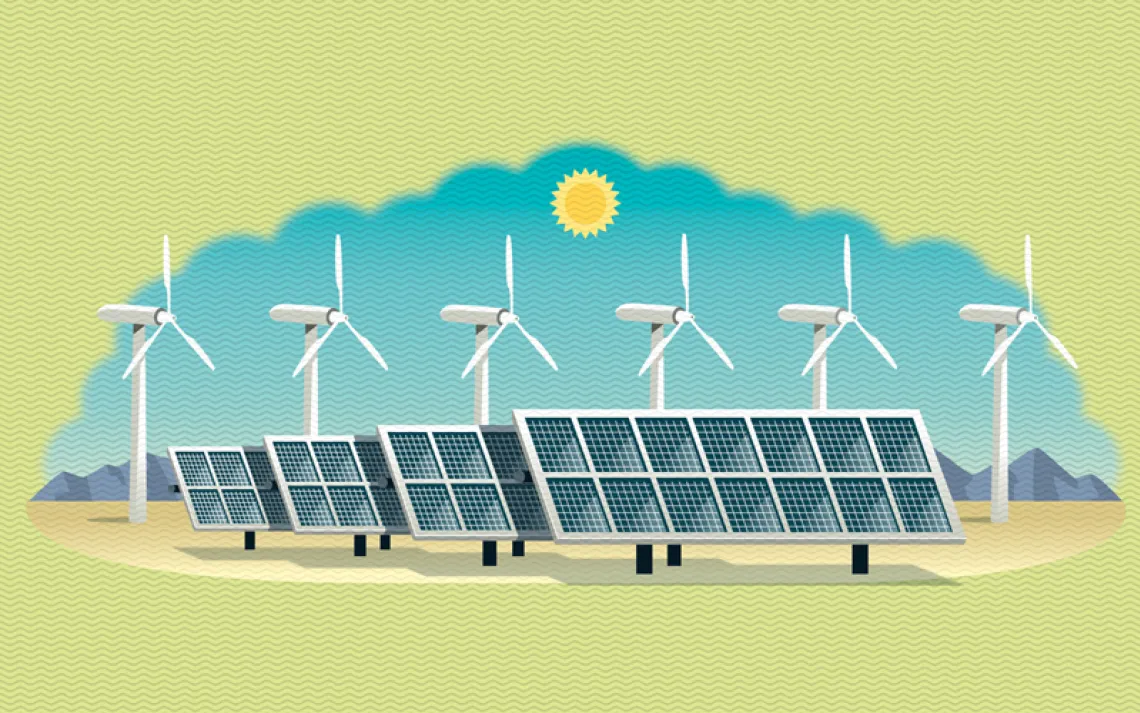
Farmland is often vast and flat, the kind of terrain that’s perfect for solar panels. In the United States, agrivoltaics is a relatively new practice of combining solar energy and agriculture on the same land. Solar panels are strategically placed above and between crops or livestock pastures. The photovoltaic arrays vary in size, from several dozen to thousands of panels. Depending on the scale, they can power a single home or even a small town.
But there’s another benefit to agrivoltaics: its potential to reduce rural opposition to solar. In one survey, conducted by Michigan Technological University’s Department of Social Sciences, more than 80 percent of respondents said they would be more open to solar development if it was combined with traditional farming.
The limitations
While agrivoltaics may help win over some rural residents, not everyone is convinced. One estimate from Columbia University’s Sabin Center for Climate Change Law found that roughly a third of solar and wind projects, including some agrivoltaics, were canceled because of local opposition. In 2023, one report found that over 200 towns had banned or severely limited solar in agricultural areas. And tax incentives from the Inflation Reduction Act for utility-scale solar are expected to expire in 2027, which could dampen interest in building out large solar projects.
The upshot
Still, interest in agrivoltaics is growing, according to the Center for Rural Affairs. As of 2025, about 600 agrivoltaics operations across the US were generating over 10 gigawatts of power—that’s enough to supply electricity to at least 7.5 million homes.
Proponents say that agrivoltaics can increase crop yields, decrease irrigation costs, and reduce erosion. Some plants, such as spinach, seem to thrive in the partial shade. Research suggests that farm animals benefit from agrivoltaics too. In one study, sheep grazing on an agrivoltaics plot produced higher-quality wool than those grazing on a nearby traditional pasture.
Do agrivoltaics live up to the hype? The answer so far seems to be a qualified yes. Agrivoltaics can offer a win-win for farmers and communities that value both agriculture and clean energy. One industry survey found that some farmers were offered annual solar lease payments of $1,000 or more per acre. Not bad for a side gig that helps the planet.