Why You Should Leave the Leaves This Fall
Leaf litter nourishes soil, protects ecosystems, and houses small creatures
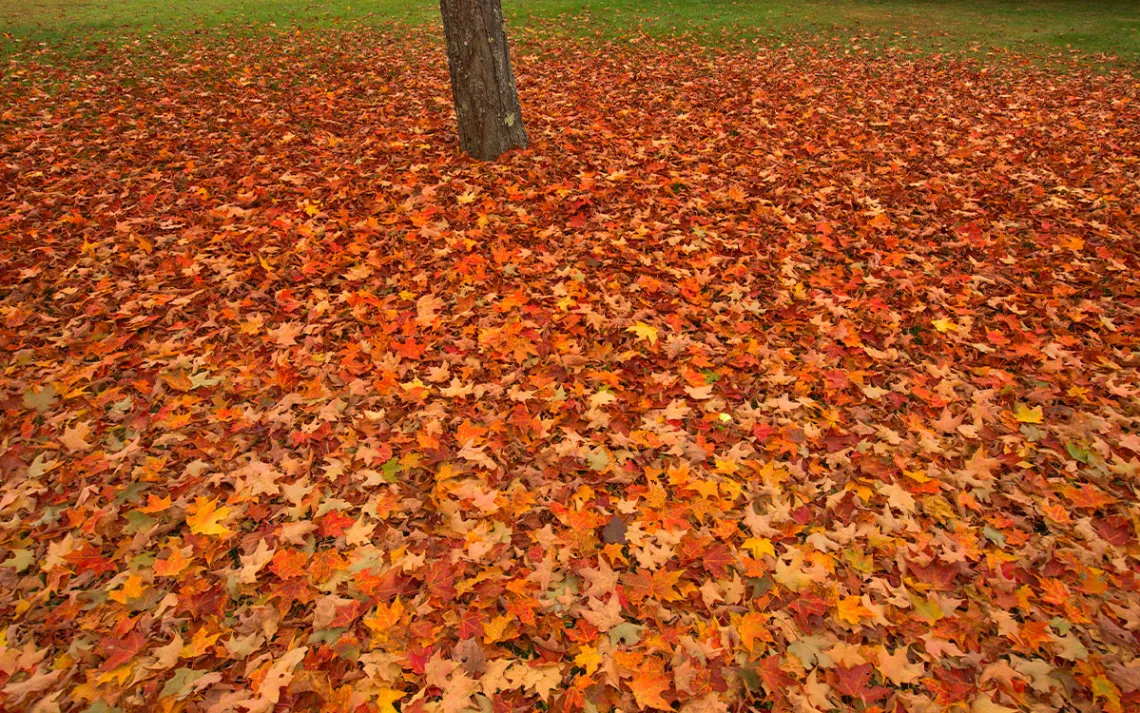
Photo by Mint Images/Getty Images
You may already be seeing the first signs of it: A touch of yellow in huddled ginkgo leaves or a crisp oak leaf tumbling by on a breeze that feels like autumn announcing its presence. More will follow. Trees pull the chlorophyll from their leaves in incredible, uncountable numbers as the days grow shorter and dip toward cooler in the Northern Hemisphere, the remainder of the year’s growth settling to the ground in piles of moist, decaying leaf litter.
Unfortunately, the sound of leaf blowers soon follows the quiet hiss of falling leaves. The rinds of overlapping leaves are often deemed unsightly and undesirable, raked up, mowed, blown around, and otherwise prevented from taking up the function that they’ve evolved to do since the Paleozoic.
Leaf litter is an ecological gift that trees leave behind during their dormant months. It’s not as easy to see as shade in the summer or food for caterpillars. Dead leaves protect and reinvigorate the ground their home trees are rooted in, and can undo some of the pollution we’ve allowed to seep into the soil.
Trees have been doing their thing for millennia
Deciduous trees shed their leaves for a time, in between periods of new growth. They have lived according to this cycle for more than 260 million years. Among the oldest were ancient seed-producing trees called Glossopteris.
Broad stands of these Glossopteris, branches covered with lance-shaped leaves, spread across ancient Antarctica back when the landmass was still bound up in Pangaea. Many of the Glossopteris trees were evergreen, maintaining their foliage even through the shorter days of high-latitude winters, but others shed every year—some of the earliest deciduous trees yet known.
The fact that Glossopteris could both keep and shed leaves provided a crucial insight. When University of Wisconsin–Milwaukee paleobotanist Erik Gulbranson and colleagues studied these fossil trees, they found that photoperiod was not the critical factor in why some of the trees dropped their leaves. Instead, Glossopteris that grew in areas frequently jostled by floods, erosion, and fire dropped their leaves, while those in more ecologically stable habitats did not. Deciduous trees that could effectively pause themselves during the times when stretches of the forest were stressed were able to hang on, setting such trees up to cope with seasonal swings in temperature, precipitation, and other inarguable variables.
Today’s trees are not direct descendants of Glossopteris. Deciduous trees evolved many, many times over hundreds of millions of years among vastly different lineages. But one common trait is that deciduous trees make a great deal of litter, perhaps starting with entire mats of fossil Glossopteris leaves that would look familiar to anyone who’s walked through a park at the peak of autumn.
The co-benefits of cast-off
Other living things quickly came to take advantage of the sheer biomass of what trees cast off.
In modern times, for example, about two acres of forest can create up to five tons of leaves, twigs, and related debris each year. Globally, just the leaves account for over 38 billion tons of leaf litter annually. The microorganisms, bacteria, and fungi in the soil and on the forest floor break down the leaves, bringing nutrients back into the soil and boosting biodiversity. Plenty of small creatures depend on leaf litter to survive through one of the most challenging seasons of the year: winter.
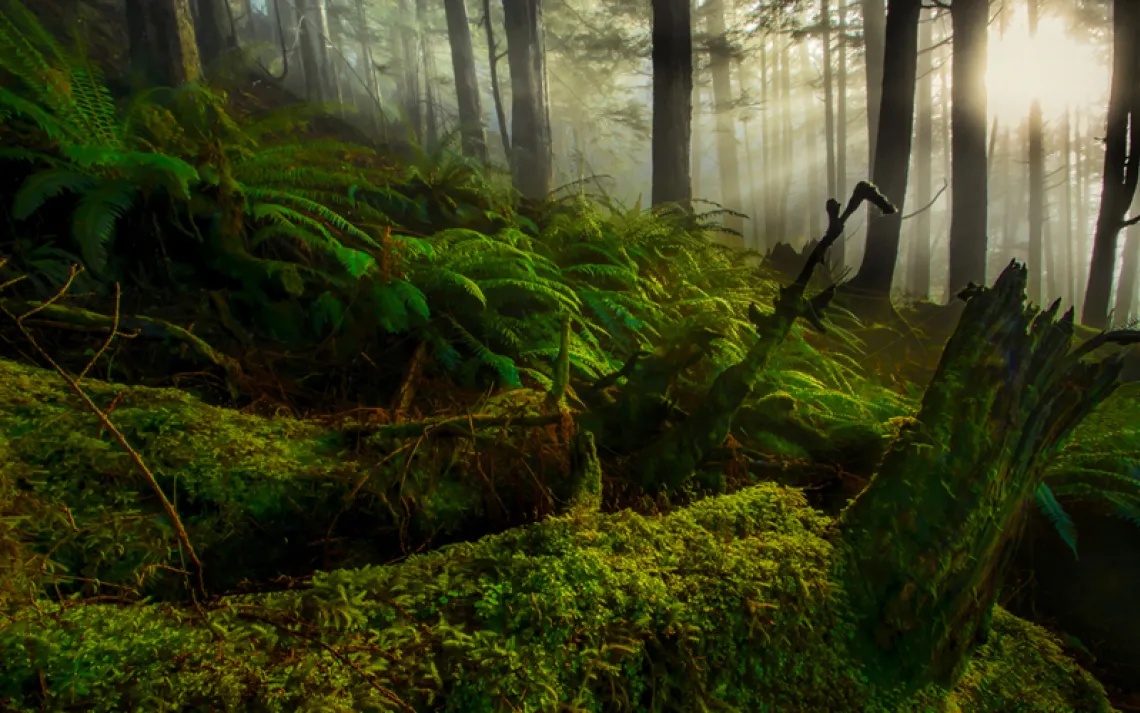
Ecologists Elizabeth Johnson and Kefyn Catley, through the American Museum of Natural History, put together a handy guide to Life in the Leaf Litter. Worms, slugs, and snails rely on the moisture trapped within the leaf layers to squirm, slime, and graze their way through. The rotting leaves create a protective layer that helps prevent the ground beneath from quickly freezing.
Springtails adore leaf litter as well, feeding on the fungi that break down the leaves and in turn serving as food for small spiders, pseudoscorpions, and other little hunters. Larval stages of mourning cloak and luna moths rely on fallen leaves, as well as young bumblebee queens waiting for the warmth of May.
Not that invertebrates are the only animals that benefit from the leaf litter’s shelter. Salamanders take advantage of the moisture and relative warmth, just as snails do—the amphibian feeding on its invertebrate neighbors—and overwintering bats take to torpor beneath the leaves when temperatures get too chilly in their tree hole roosts.
Leaf litter has been present so many millions of years that it’s a stunning ecological phenomenon all its own—a temporary gathering, as if cold creatures all got together for an all-winter lock-in under a roof of dead leaves. Spring would not be able to burst forth the way it does without the benefits of what the leaves keep safe.
And as if this were not reason enough to leave the leaves, life in the litter can eat away at some of our pollution. Smoke from the stove fires that can keep a living room warm can contain polycyclic aromatic hydrocarbons, or PAHs. Exposure to high amounts of these compounds can lead to cancer, recognized from the chimney sweeps of the 18th century to the present. PAHs spread into the air and settle into the surrounding soil, where they are very difficult to get out. But leaf litter can do it.
The richness of life that leaf litter supports is capable of breaking down PAHs. In a new review of the possibilities, environmental engineers Olanrewaju Roland Akinseye and Charles Knapp, from the University of Strathclyde, Glasgow, studied the specific habitat that leaf litter creates, called the phyllosphere, and how it supports microbes with enzymes capable of breaking down the carcinogens. According to the study, fast-decomposing deciduous leaves are better in some places, resilient pine needles in others—but the specific microbial world the leaves assemble can provide plenty of nutrition to break down the pollutants.
Leaf litter seems so temporary. For some, it’s a nuisance to be swept or blown away. But it feeds so much life. Trees, in their efforts to survive, invented an entirely new form of habitat that has been accumulating on this planet since long before the dinosaurs. A wet span of leaves or even a pile of them nudged into the corner of a yard isn’t trash. It’s an entire world that’s at its peak for just a few months, sheltering and feeding so many lives as we simmer our soup and bake our bread inside.
Walk through the leaf litter and hear that specific swish of the leaves and you are hearing the sound of ecological abundance.