The Magazine of The Sierra Club
Can Killing Wolves Save the Beef Industry?
Experts warn that a new executive order meant to help ranchers won't actually work
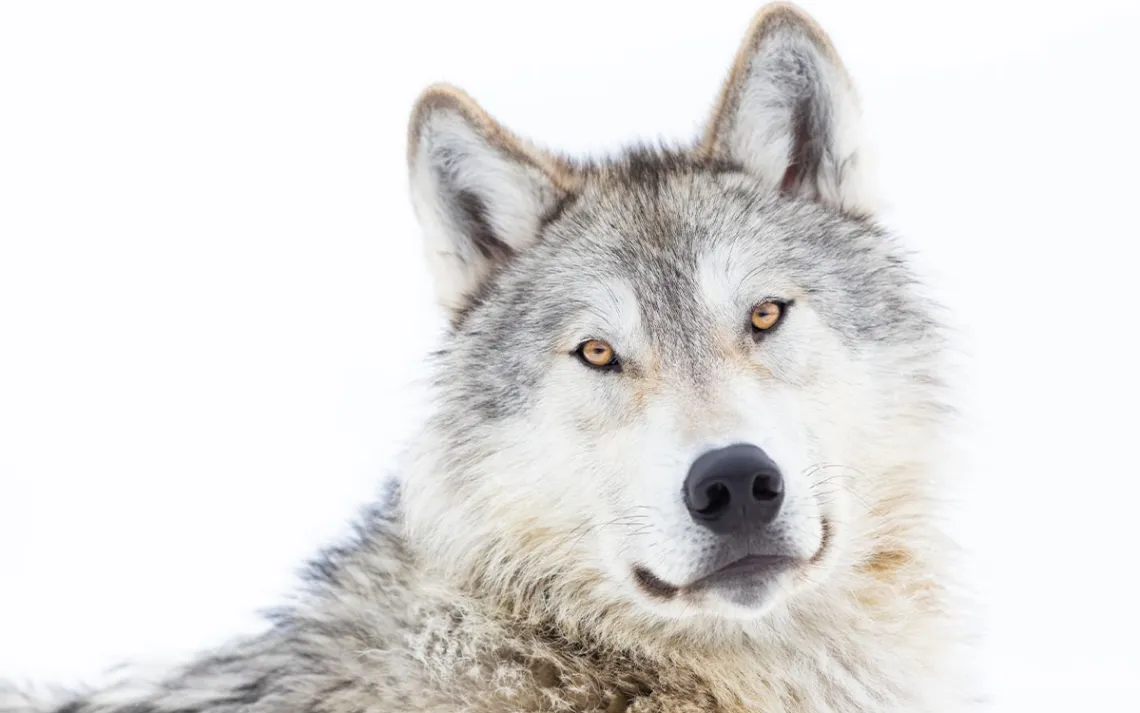
Photo by KenCanning/Getty Images
Earlier this month, President Donald Trump brought a group of ranchers into the Oval Office to trade wolf tales. One member shared a story about a pack that chased a girl up a tree. Trump, for his part, told a gaggle of reporters that the animals’ reintroduction had cost the country billions of dollars.
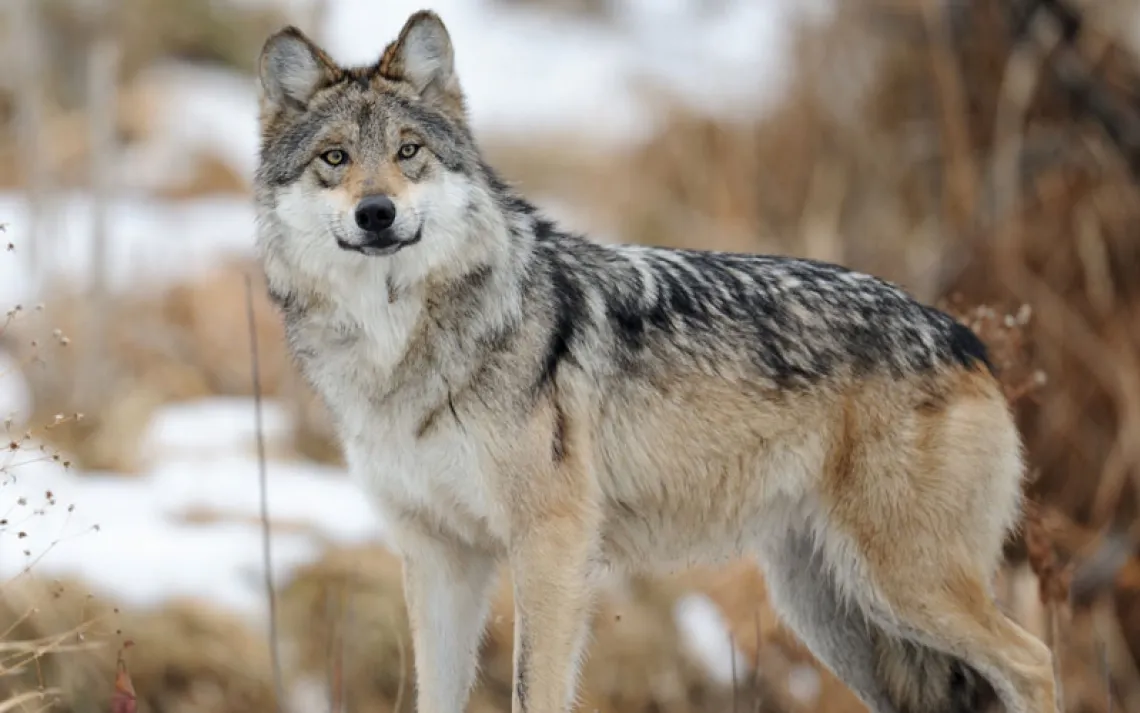
All of it was part of the rollout of the administration’s newest executive order, “Supporting America’s Ranchers.” Tucked alongside a series of industry-friendly measures was a call for the secretary of the interior to either remove or limit Endangered Species Act (ESA) protections for two subspecies, the gray wolf and the Mexican gray wolf.
“You can shoot them as of today,” said Trump, framing it more as a question than a statement. His secretary of agriculture, Brooke Rollins, corrected him. The Department of the Interior first needed 90 days to conduct a review. That its recommendation would be in line with his order was implied.
Under the ESA, species are supposed to be downlisted or delisted once they’ve exceeded set population and habitat health targets. In its announcement, the administration did not cite those benchmarks. Instead, its timing seemed tied to the price of beef, which had risen 9.6 percent in the preceding year, nearly three times the rate of inflation. Some of that increase was the result of Trump’s own policies: tariffs on steel used for cattle fencing and water tanks, pricier diesel due to the war in Iran.
When the administration attempted to lower the price by importing cheaper, tariff-free beef from Argentina and Brazil, it enraged many American ranchers. Now, Trump had come to the Oval Office, looking to make nice.
By including delisting with other measures meant to boost domestic cattle production, Trump’s message was clear: Americans could blame at least some of their grocery-aisle anxieties on wolves. Never mind that wolf predation accounts for less than one in a thousand cattle fatalities nationwide, according to the government’s own data.
“Being able to shoot wolves might provide some temporary emotional relief, but practically it will do nothing to help ranchers better survive the challenges that this administration is creating for them,” said Craig Miller, a senior representative for Defenders of Wildlife in Arizona.
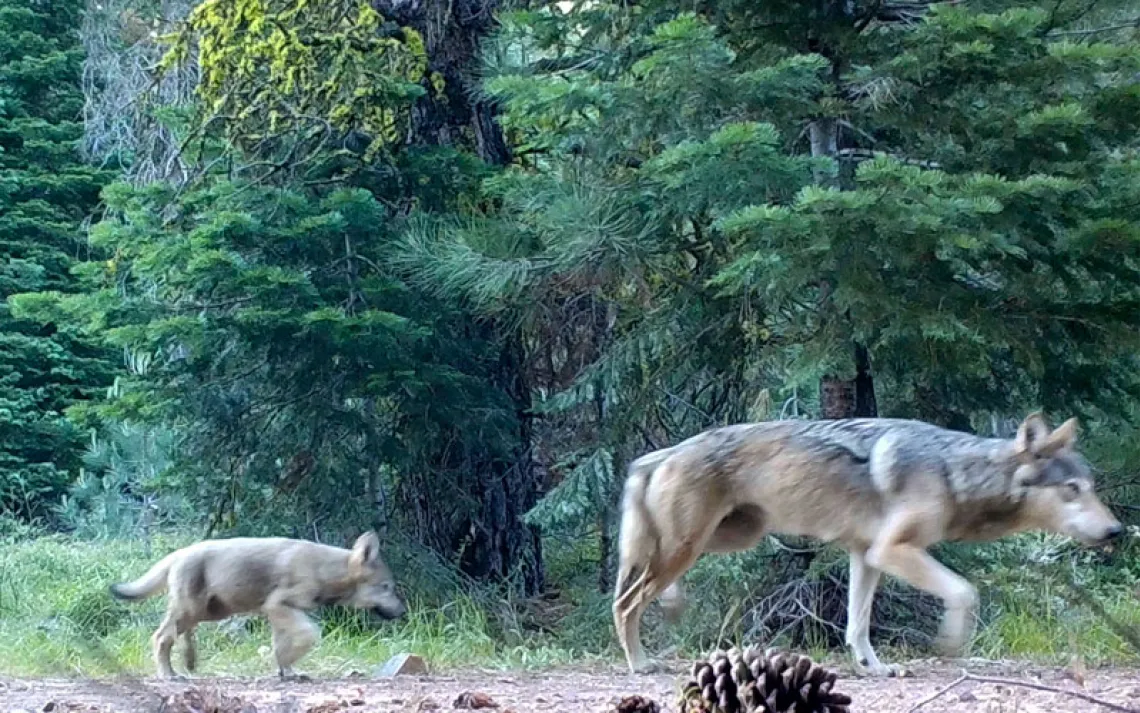
As part of his work, Miller meets with ranchers living in the range of the Mexican gray wolf, one of the rarest mammals in the United States. Just 319 of the wolves reside in the highlands straddling Arizona and New Mexico. When Miller began working on wolf recovery in the late 1980s, there were none. Since their reintroduction, he’s watched as ranchers whose ancestors may have helped eradicate wolves learned to coexist with them. Supported by nonprofits like his, as well as state, tribal, and federal agencies, many of them erected lines of brightly colored plastic, called fladry, which take advantage of wolves’ fear of unfamiliar colors. They also relocated potential attractants, including carcasses, and worked with range riders—horse-riding wildlife professionals who know how to safely haze predators.
Implementation took time and remains imperfect. But Miller said the case for using nonlethal deterrents grew easier with time, even as the wolf count rose. Ranchers saw their neighbors having success with the protocols, and more of them bought in.
Now, Miller worries that delisting, plus the administration’s efforts to rewrite key provisions of the ESA, could set those efforts back permanently.
“Creating the specter that the Endangered Species Act will go away or [the federal government] simply won't enforce wildlife protection laws is not conducive to long-term solutions,” says Miller.
A history of delisting
Wolves are what scientists call a keystone species: an animal whose mere presence rewires ecosystems. By chasing deer and elk across the landscape, they prevent those ungulates from overgrazing. Trees and grasses flourish in their wake, spreading roots and limiting erosion.
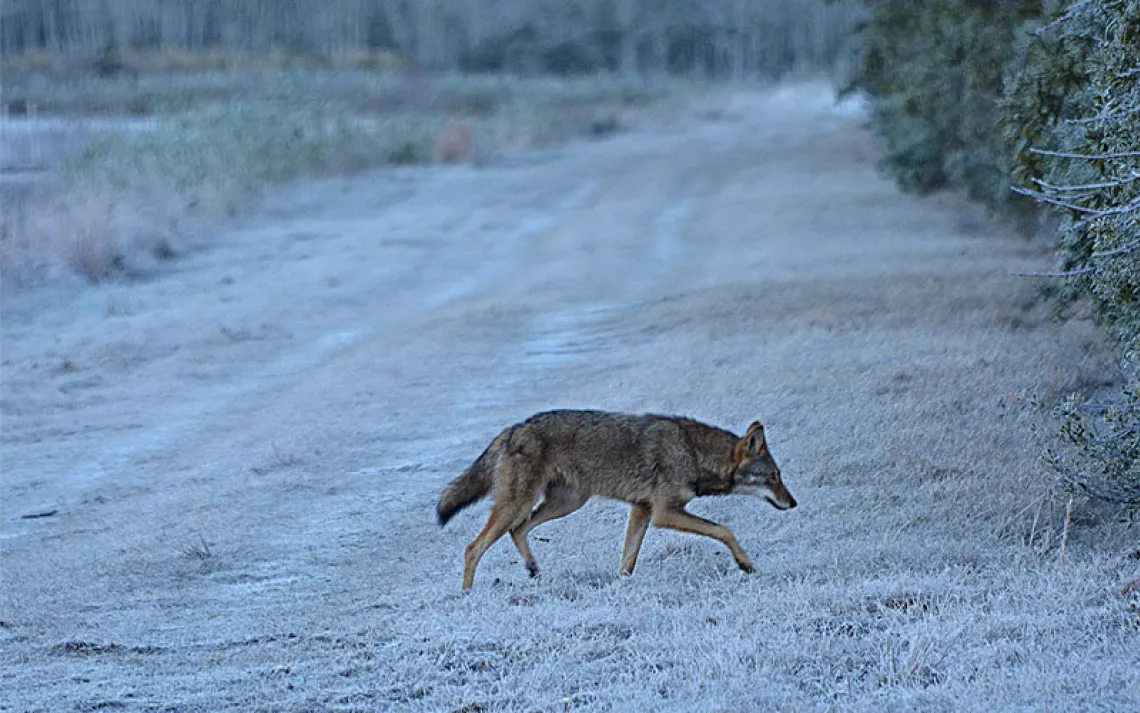
They’re also versatile, as capable of thriving on open prairie as in the mountains. Prior to European colonization, wolves lived in nearly every part of the continental US. By 1974, when gray wolves were first granted ESA protections, fewer than 1,000 remained in just a sliver of Minnesota and Michigan. While wolves now reside across the Upper Midwest and Northern Rockies—as well as in smaller numbers in the Pacific Northwest, Southwest, and Colorado—their range remains just a tenth of its historic peak.
How much former habitat must be regained for an endangered animal to be legally recovered has been debated in court multiple times. Trump’s newest executive order is just the latest in a long line of challenges to wolf protections by an American president.
In 2009, the US Fish and Wildlife Service (USFWS) under President Barack Obama attempted to delist wolves in much of the continental US, only to be blocked in federal court. On November 3, 2020, the same day as that year’s presidential election, the outgoing Trump administration published its own nationwide delisting rule. That one was also turned over by a federal judge, citing a lack of scientific reasoning.
Collette Adkins, director of the Center for Biological Diversity’s Carnivore Conservation program, said these past delisting efforts fell short because they often pointed to specific places where wolf populations were rising without looking at the larger picture. USFWS, she noted, has never even drafted a plan to return wolves to most of their historic range.
“They just keep on banging their head against the wall trying to say, 'We don't need wolves in those places,'” said Adkins. “And the courts time and time again say, ‘Yeah, you do.’"
If the administration delists wolves, Adkins feels confident its new rule would once again be vacated for many of the same reasons past attempts were. But she worries what could happen in between. In Wisconsin’s sole hunting season after 2021, sportsmen killed 218 wolves in just three days, dropping the state’s population by 14 percent.
Both the Republican and Democratic candidates in Wisconsin’s gubernatorial race this year support delisting in their state.
Hope and fear in the Northern Rockies
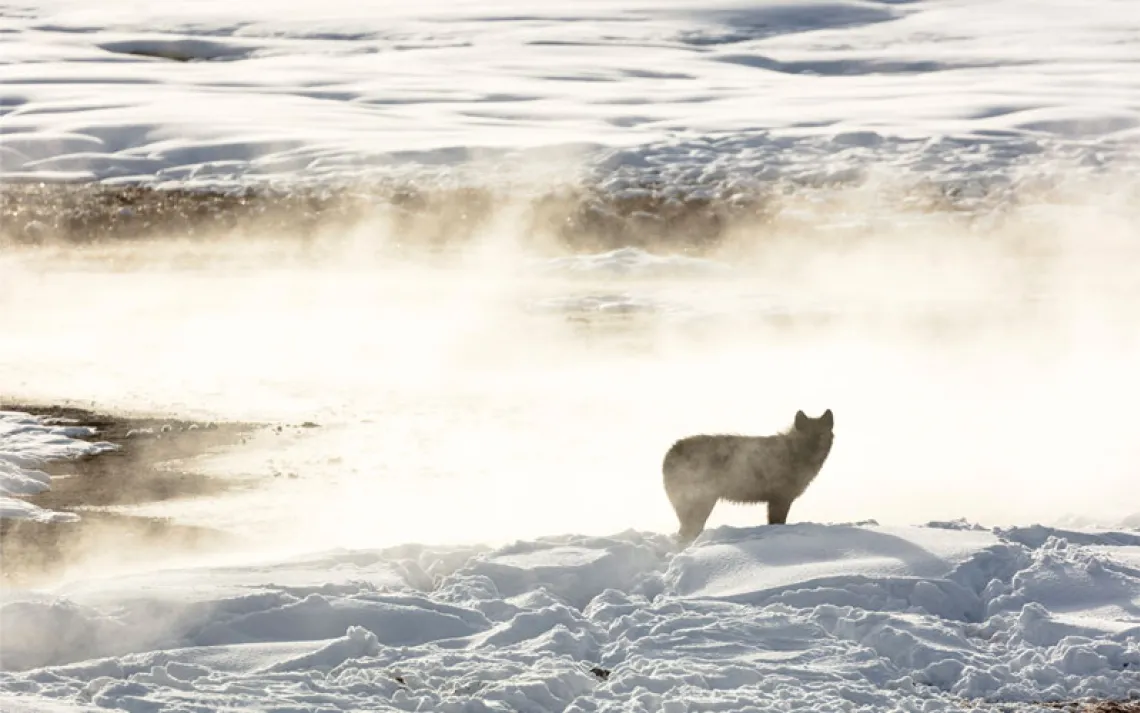
There is already one part of the country where wolves lack federal protections. In 2011, members of Congress from Montana and Idaho attached a last-minute rider to a larger appropriations bill, delisting gray wolves in their respective states, as well as in Wyoming. It was the first, and only, time an animal has been taken off the endangered species list by an act of Congress.
If the Northern Rockies are a harbinger of what a delisted future could look like elsewhere, advocates have found small reasons for hope. But they also see plenty that worries them.
“Idaho is the worst place in the entire world to be a wolf,” said Suzanne Asha Stone, a cofounder of the Wood River Wolf Project. Since 2008, the project has supported sheep ranchers in Idaho’s Sawtooth Mountains who utilize nonlethal techniques to deter wolves from livestock.
The Sawtooths are a key link in what Stone calls the “sheep superhighway” of the American West. They’re also located in a state with no quota for wolf hunting and no restrictions on shooting wolves to protect livestock.
Despite this, Stone and her field team have found success working with ranchers to keep both wolves and livestock alive—using a combination of fladry, range riders, guardian dogs, and motion-sensing lights. A seven-year case study, authored by Stone and published in the Journal of Mammalogy, found that wolf predation in the project area was 3.5 times lower than in a comparable plot of public land not employing nonlethal strategies.
Surrounding communities have bought into wolf coexistence as well. Last year, when a hunting nonprofit petitioned the state to reopen wolf trapping in the Wood River Valley, local officials pushed back. Ultimately, they were successful.
Stone hopes her organization’s work can serve as a demonstration for other communities looking to support ranchers without villainizing wildlife. That doesn’t mean she views it as a substitute for strong federal protections.
“Without having that ESA protection, we know how easy it is for wolves to disappear from the landscape,” says Stone. “Our country has done it before.”