What Comes Next for Salmon in the Pacific Northwest?
Tribes and conservation groups weigh options after Trump withdraws from the Columbia Basin agreement
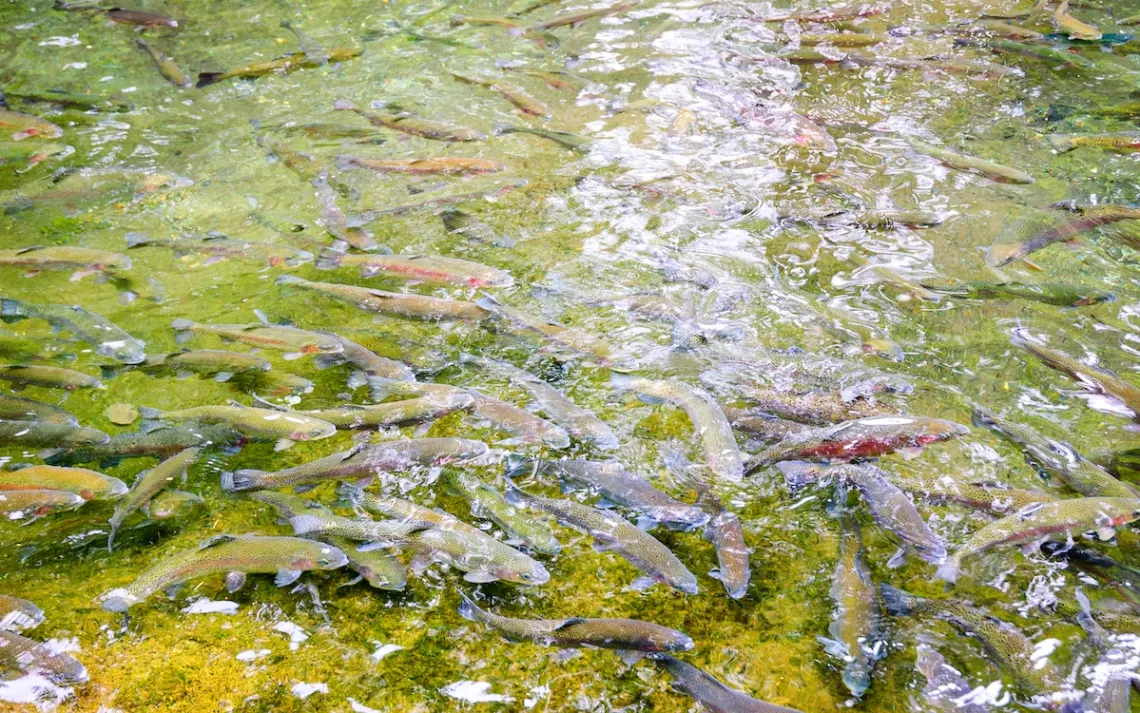
Photo by zrfphoto/iStock
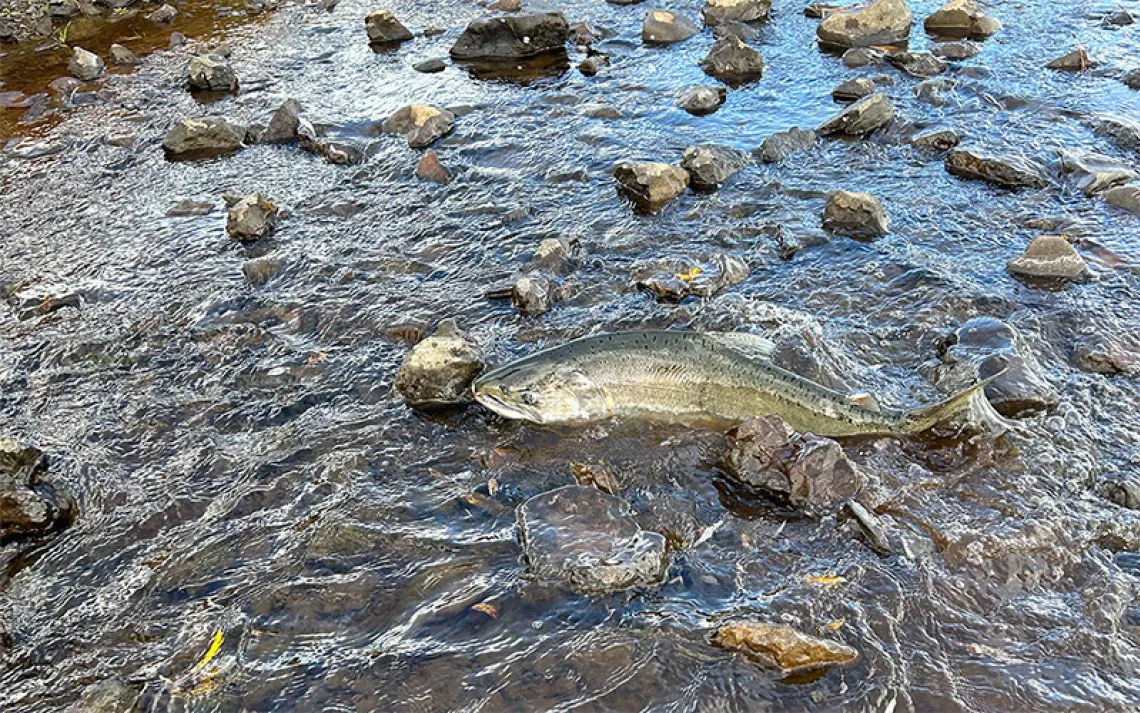
Millions of salmon once migrated up the Snake River to spawn. Today, in some areas, habitat loss, climate change, and overharvesting have led to population crashes of up to 90 percent. At least 13 subspecies of salmon in the Pacific Northwest are federally listed as threatened or endangered.
Beginning in the 1990s, conservation groups waged a years-long campaign to compel federal agencies to bolster conservation efforts, often prevailing through court action. Finally, in December 2023, fish advocates and the Biden administration declared a truce, and the Resilient Columbia Basin Agreement was forged. Conservation groups agreed to stop suing if the federal government committed to salmon recovery, a once-in-a-lifetime pact to save the region's salmon and trout.
On June 12, the Trump administration withdrew from the agreement.
Citing “energy dominance,” the administration ordered federal agencies to abandon promises made under the agreement. President Biden’s memorandum “required the Federal government to spend millions of dollars and comply with 36 pages of onerous commitments to dam operations on the Lower Snake River,” stated a White House press release.
Tribal and state leaders lambasted the decision, calling it an unprecedented reversal of a historic agreement. Under the terms, they would have received $300 million from a federally operated regional power authority to help reduce salmon predation, improve fish passages, habitat, and water quality. The most ambitious goal would have set the stage for removing four dams that block fish from reaching inland breeding grounds, one of the biggest threats to restoring healthy populations. While the agreement didn’t call for the removal of the dams, it required federal analyses of alternative energy that would have rendered them obsolete.
Without it, tribes and states lose the support of at least half a dozen federal agencies. However, that doesn’t mean their work will stop. As the fish disappear, so too does a source of pride, culture, and sustenance for local tribes and the region.
Now, a coalition of groups is hoping to pull on a suite of levers that don’t require long-term federal collaboration. “We invested a huge amount of time and worked diligently over the past three years to be able to get that agreement, and it's just all wiped away with the stroke of a pen,” Donella Miller, a member of the Confederated Tribes and Bands of the Yakama Nation, said. “We don't have the essence of time on our side to be able to implement this work. It's needed now.”
Appropriations committee
Miller said the money from the 2023 agreement was never enough to cover all the costs associated with salmon recovery. Additional money must come from Congress. Washington Democratic Senator Patty Murray, who sits on the Appropriations Committee, signaled her support for extra money immediately after the White House announced its withdrawal from the agreement. “I am going to continue doing everything I can to support the restoration of healthy and abundant salmon runs—including through the annual Appropriations process,” Senator Murray said in a statement. “We must save our salmon.”
Her statement follows a letter from leaders of the four major Columbia Basin tribes and the governors of Oregon and Washington, who requested over $350 million from Congress two months ago. These groups, collectively known as the six sovereigns, are pursuing goals outlined in a previous template called the Columbia Basin Restoration Initiative, a tribal precursor for the Columbia Basin Agreement. The money will help restore fish habitat, repair and build passages, and unclog streams to open up spawning grounds.
Within this request is $34 million to fund salmon hatcheries. Because of the dams, hatcheries are needed to meet federal treaty obligations that ensure tribes have access to fish. Miller, who is also a fishery science manager at the Columbia River Inter-Tribal Fish Commission, said tribes are facing a $2 billion backlog of funding to keep the projects operating at the bare minimum levels.
“$300 million over 10 years is a drop in the bucket in terms of what's needed,” said Amanda Goodin, a senior attorney with Earthjustice, the lead plaintiff in the lawsuit that sparked the agreement. “The impact that these dams have had on salmon across the basin … it's enormous, and it is going to take a lot to bring them back to healthy and abundant levels.”
Reinitiate litigation
Between 1992 and 2021, Earthjustice sued the federal government six times. The defendants include the Army Corps of Engineers, which manages the four dams; the Bonneville Power Administration, which sells the power; and the National Oceanic and Atmospheric Administration (NOAA) Fisheries, tasked with managing threatened and endangered marine species.
For the first two agencies, Earthjustice argued that defendants violated the National Environmental Policy Act by failing to consider a range of alternative dam operating plans and the cumulative impacts on fish recovery. For NOAA, the organization asserted that the agency ran afoul of the Endangered Species Act by relying on a flawed framework called a "biological opinion" that jeopardized salmon recovery. None of the three federal agencies responded to questions by the time this story went to press.
Three successive federal judges ordered the agencies to address the violations. The 2023 agreement was intended to redirect energy and resources toward solutions rather than litigation. With the agreement now moot, legal experts warn that lawsuits are likely. Goodin said her organization's case never ended—it was merely paused. Plaintiffs would only need to file a petition to restart it.
Sara Gonzalez-Rothi, a former Biden-Harris official at the White House Council on Environmental Quality, spent the bulk of her tenure on the other side of the negotiating table. She said mediation took nearly two years and included dozens of stakeholders. As of last year, she cautioned that money was already being sent out the door.
“It's not only bad policy, but it's dumb policy,” Gonzalez-Rothi said of the decision to exit the agreement. "Consistently for decades, the Federal defendants have lost this case, and so by exiting the agreement, the Trump Administration will be in a position of defending the arguably indefensible at the cost to the taxpayer."
States move forward
While the four dams are owned and operated by the federal government, some of what needs to happen to replace them can move forward at the regional level. To do that, Joseph Bogaard, the executive director for the Save Our Wild Salmon Coalition, said states must work with tribes to replace dam power generation, and transportation and irrigation services.
On power generation, several independent analyses completed by the Northwest Energy Coalition found that replacing the dams with wind, solar, and energy storage is possible. In 2022, Senator Murray and former Washington Democratic Governor Jay Inslee issued a report, confirming much of what came out in these earlier analyses. Currently, the state has at least nine solar and wind projects planned for the Columbia Basin, according to the Washington Energy Facility Site Evaluation Council, which reviews renewable energy applications.
For transportation, Inslee included $5 million for the state's Department of Transportation to assess the feasibility of creating alternative barge transportation options. Most close watchers say the state could return to using rail to transport goods. And some, such as Bill Arthur, a Sierra Club volunteer who has led salmon advocacy efforts for the past five decades, added that restoring short rail lines would help fill the gap. This month, the DOT is holding a series of open houses on transportation alternatives to dams.
Like with transportation, irrigation needs could also be met by returning to the previous system, according to a report issued by the Washington Department of Ecology and the US Bureau of Reclamation earlier this year. Drilling existing wells deeper and relocating pumps and intake lines so they can draw water from river level will ensure irrigation needs can continue to be met, Arthur said.
Regional authorities, such as the Northwest Power and Conservation Council, also have a role in advancing the goals outlined in the now-defunct agreement. The council, created by Congress, is composed of delegates from Montana, Oregon, Idaho, and Washington. Representatives forecast energy projections and set recommendations for power providers, including the Bonneville Power Administration, and also develop a fish and wildlife plan for the Columbia Basin. This year, the council is crafting a new five-year plan, which includes increasing wind and solar and restoring salmon habitat.
“The fight is not over. The work does not end, and there will be multiple efforts to continue salmon recovery,” Arthur said. “With the Feds reneging on their part of the agreement … the six sovereigns still are in a strong position to move some of the work forward, with or without the help of the federal government.”