The People Reviving Ancient Salmon Traps—and the Photographer Documenting Them
This river-based method could preserve both salmon populations and local livelihoods
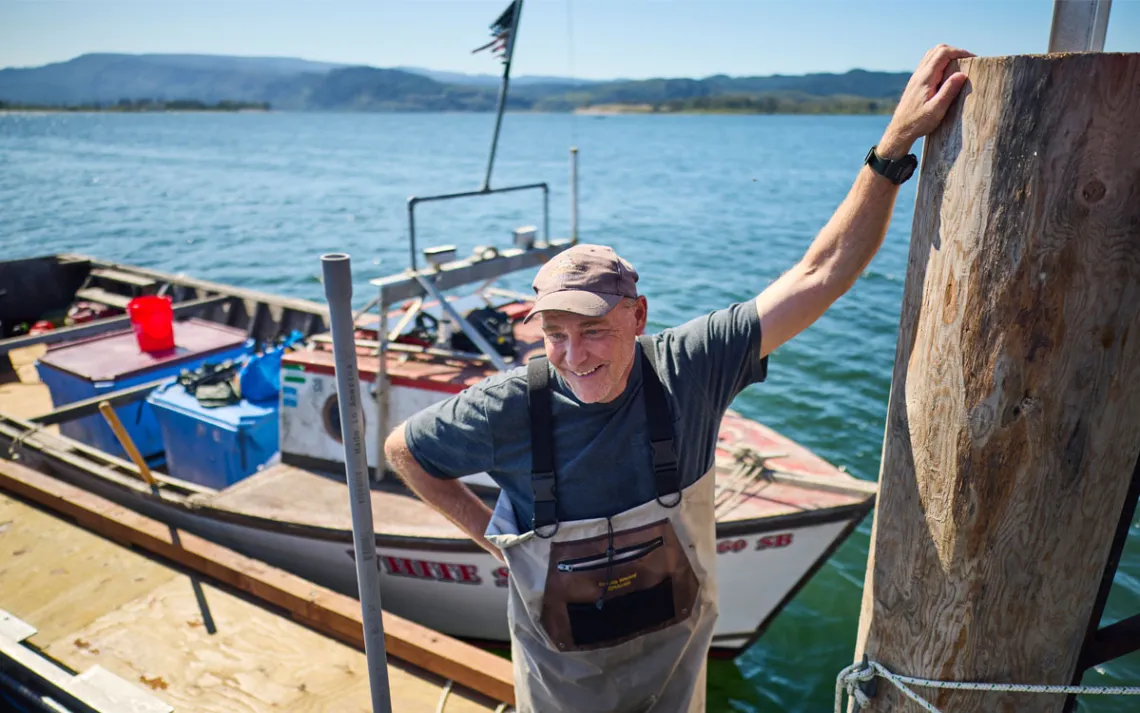
Mike Clark, lead fisherman, waits for the tides to change in the ocean, bringing fish into the Columbia River and the trap.
Along the Columbia River, on the northern side of the Washington-Oregon border, wooden posts and nets rise from the water, forming fish traps that guide salmon upriver. The structures are simple. But the methodology behind these traps is based on Indigenous knowledge, decades of research, and the work of the Wild Fish Conservancy, a nonprofit dedicated to protecting wild fish populations and the ecosystems they depend on.
Despite decades of investment in salmon recovery, populations in the Pacific Northwest continue to decline. The fishing industry still relies on methods that injure fish and intercept them before they can return to their spawning grounds. Gillnets, one of the most common fishing tools throughout the world, indiscriminately capture fish by their gills, which harms the fish and disrupts aquatic ecosystems. Ocean fisheries compound the problem, as they intercept salmon before they reach inland rivers to reproduce.
Since 1989, the Wild Fish Conservancy has researched solutions to dwindling fish populations and the harms done by modern fishing practices. This led them to invest in river-based fish traps, a fishing technology originally developed by Indigenous Americans millennia ago. This style of fishing allows wild salmon to continue their migration while selectively harvesting hatchery fish.
The traps are just one method by which the group targets the overlooked causes of population decline, such as overharvesting and open-ocean fishing.
Those factors are at “the core of the recovery problem” according to Adrian Tuohy, a biologist at the conservancy. “History shows that the current strategy of restoration doesn’t work,” he said. “We need to address harvest and hatchery issues to allow salmon to get back to their spawning grounds.”
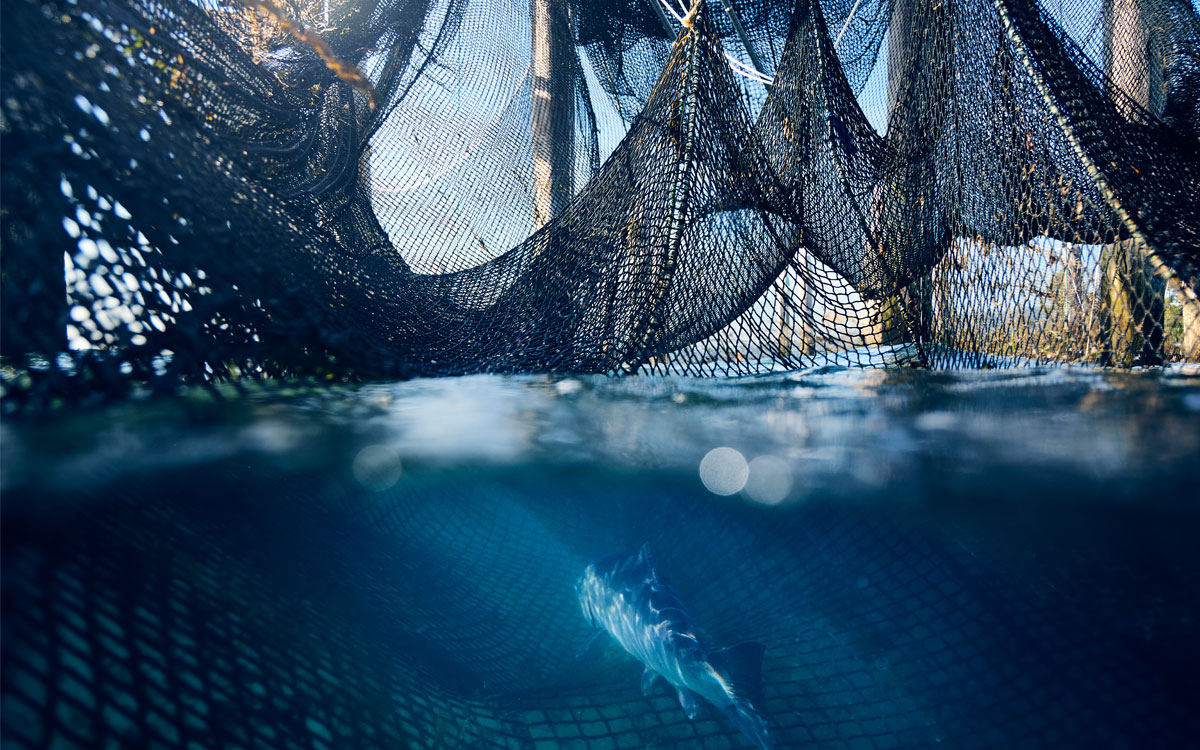
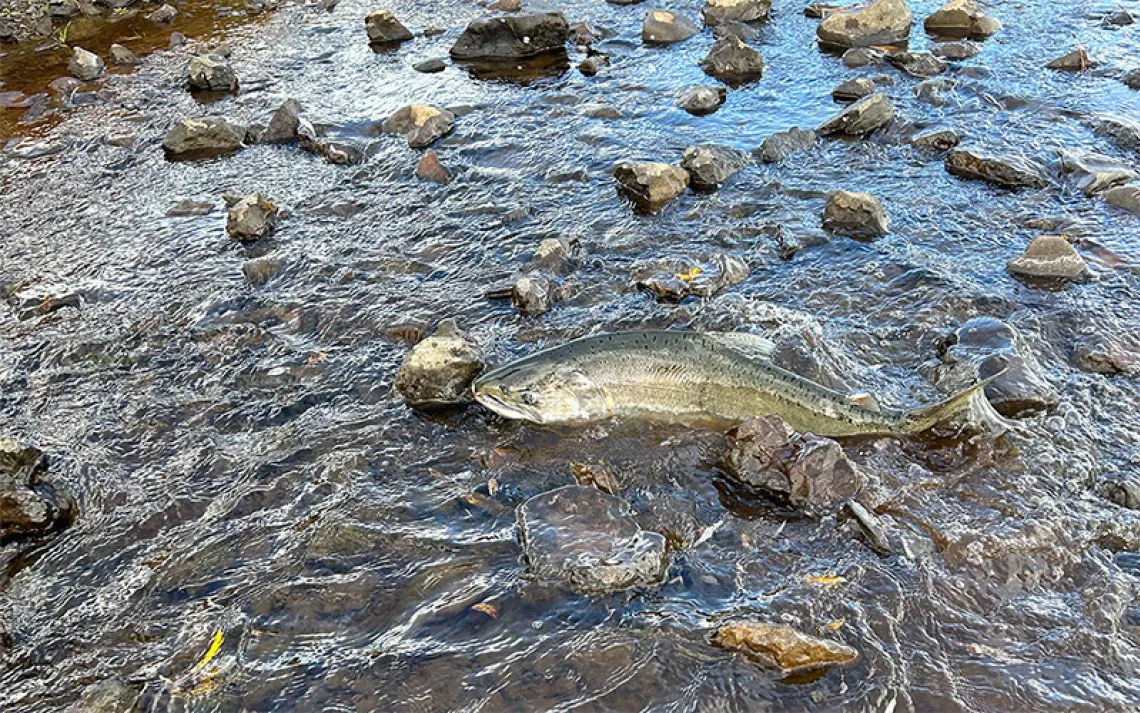
A salmon swims inside the fish trap before going into the live well for inspection.
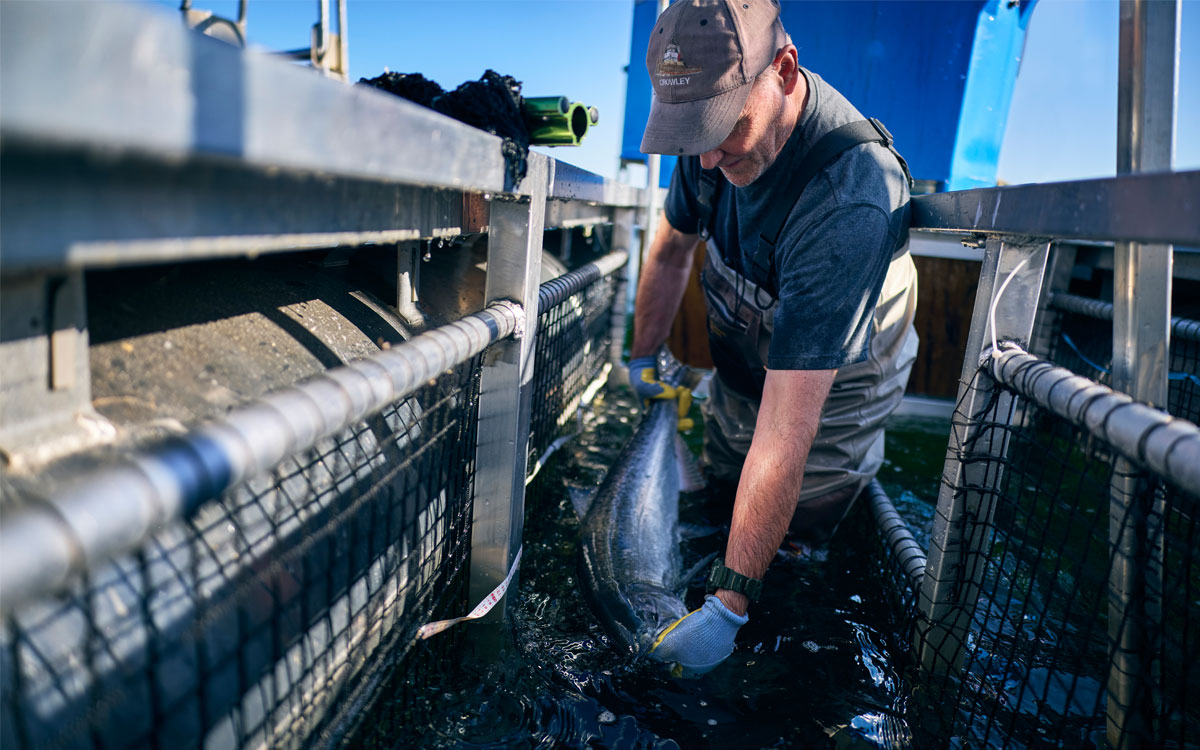
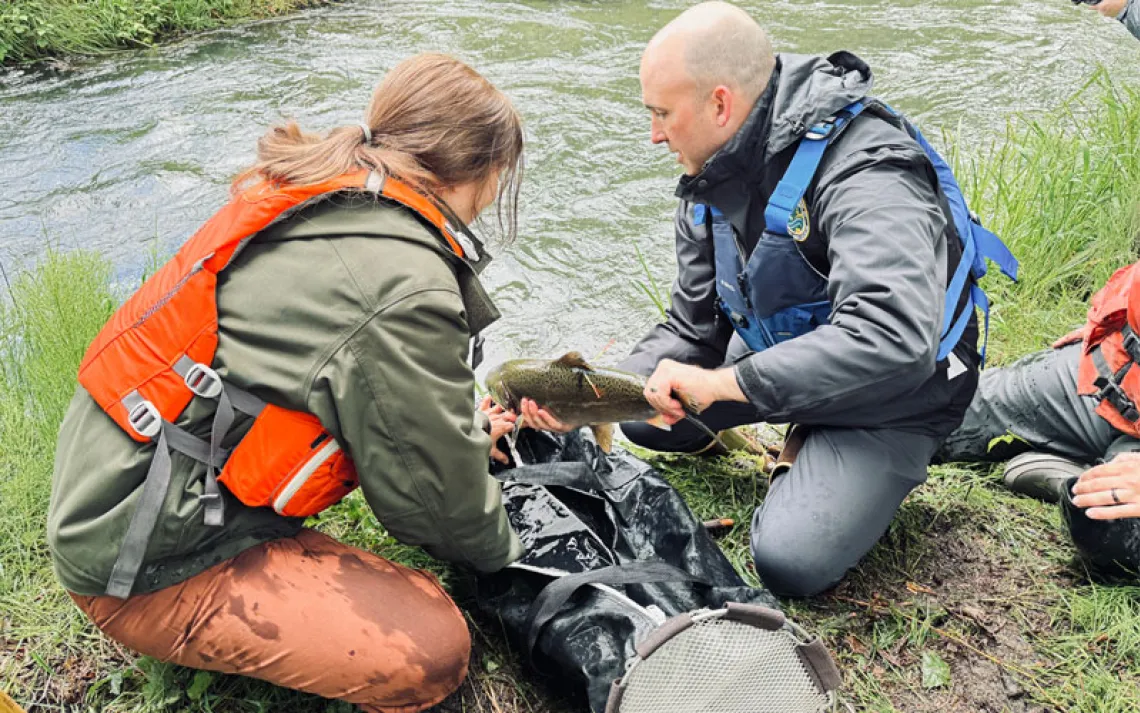
Commercial fisher Mike Clark handles a hatchery Chinook salmon while standing in the trap’s live well, preparing it for harvest.
More than $9 billion has been spent in salmon habitat restoration and management in and around the Columbia River. These efforts, as well as other attempts to recover wild fish populations, have failed to delist any fish registered under the Endangered Species Act. Part of the problem is that hatchery fish overcrowd wild salmon’s spawning grounds and affect their genetics.
Fish traps, however, present a hopeful case for wild salmonid, as they allow for the selective harvest of wild fish as opposed to those born in hatcheries, leaving them unharmed at the end of the process. The method is simple: The traps guide fish safely through a series of compartments, eventually funneling them into a chamber where fishermen and biologists can separate wild salmon from hatchery salmon.
“Wild fish are released back into the river, and hatchery fish can be harvested,” Tuohy said. “The whole time, the fish remain free-swimming, with no exposure to air, no stress, no bruising, and no overcrowding.” Survival rates in research settings range from 94.4 percent to nearly 100 percent, far exceeding typical bycatch survival from other fishing methods.
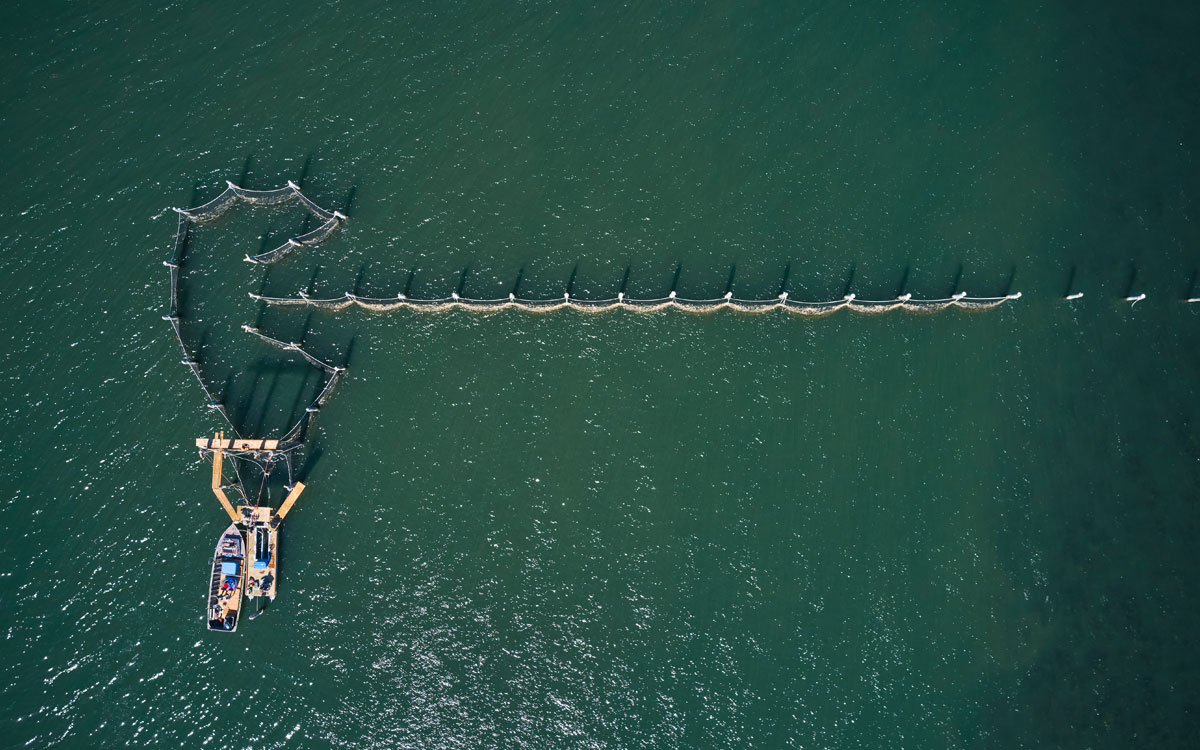
An aerial image of the fish trap displays how fish are guided into the "heart."
The technology is hardly new. Fish traps were used by Indigenous communities for thousands of years, and also by Europeans when they colonized the Americas. However, because salmon trapping was so effective for catching fish, the states of Washington and Oregon banned it in the mid-20th century to increase salmon populations. With ocean harvesting being the next most effective method for salmon harvest, the ban ironically led to the more rapid decline of salmon populations.
Now, the fish traps are being slowly reimplemented in the Pacific Northwest. The conservancy has worked with communities in both the United States and Canada to build sustainable salmon traps, and their revival exemplifies the value of traditional ecological knowledge in modern environmentalism.
“Our focus is on creating opportunities, not demonizing any one fisher’s way of working.”
Emma Helverson, the executive director of Wild Fish Conservancy, emphasized that the organization focuses on offering alternatives to systemic practices like gillnet fishing, not shaming individual fishermen for following those practices. “Our focus is on creating opportunities, not demonizing any one fisher’s way of working,” she said. “It’s not a moral failing to use gillnets—it’s a systemic problem. They’re often just the most accessible method.”
The photographer Mac Holt volunteered time to the conservancy to document the people reviving the fish traps, traveling to Cathlamet, Washington, to photograph a trap on the Columbia River. His work has helped create a record of conservation techniques for others to follow, especially at a time of climate change and species decline. Holt’s images capture fishermen adjusting nets, biologists monitoring tagged salmon, and the movement of fish through the compartments. “My subjects are often people in their working lives,” he said. “So the biggest part of the job is getting to know them—being curious, asking questions, opening people up. My job is to document their process. How they work, how the trap operates, what their day looks like. And I sprinkle in portraits when they feel natural.”
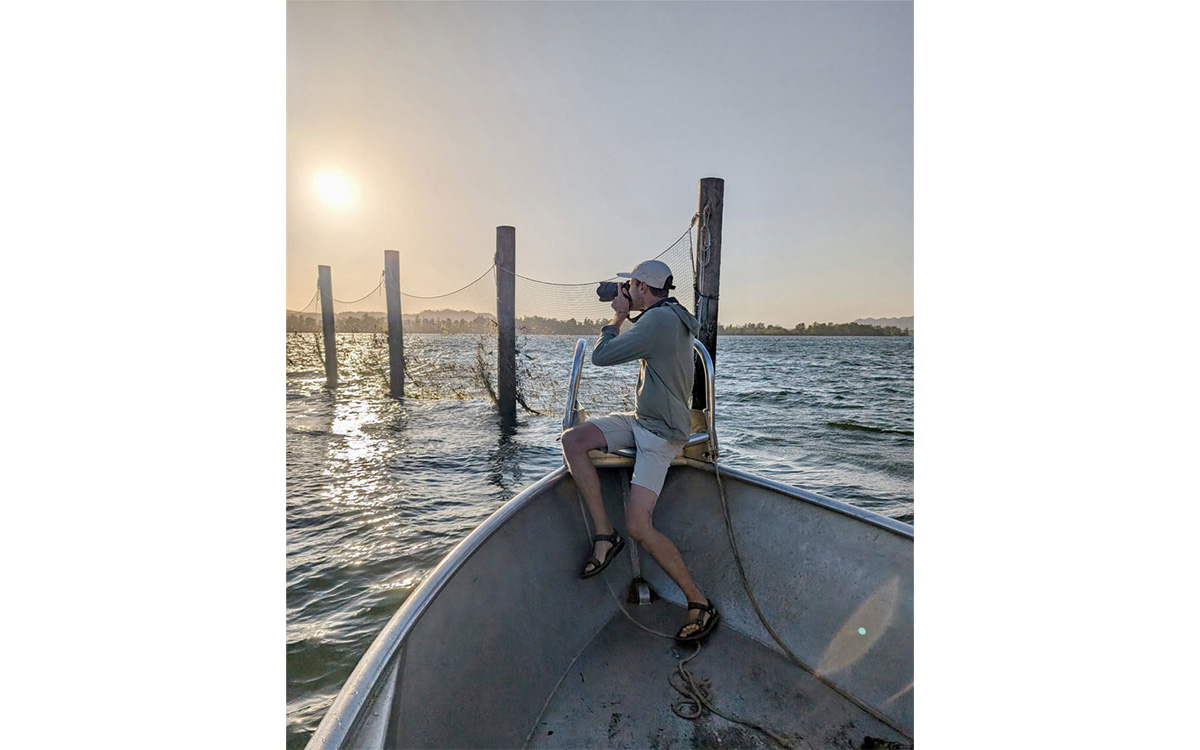
Mac Holt
Holt's approach hinges on respect and developing a rapport with his photographic subjects. “You can’t just walk up and start taking pictures. You have to gain trust, and it has to be genuine,” he said.
For the conservancy, these images are more than art—they’re essential for outreach. “Having someone like Mac volunteer his time to help capture those moments and create those feelings for other people is important,” Helverson said.
Awareness of innovative fishing practices is especially important in the Pacific Northwest, where salmon are a cultural and ecological linchpin. “People in river communities have been making sacrifices, like shutting down fisheries, because there are so few fish returning,” Helverson said. The fish trap project offers a new approach: controlled, selective fishing that protects wild populations while allowing communities to maintain economic and cultural ties to the river.
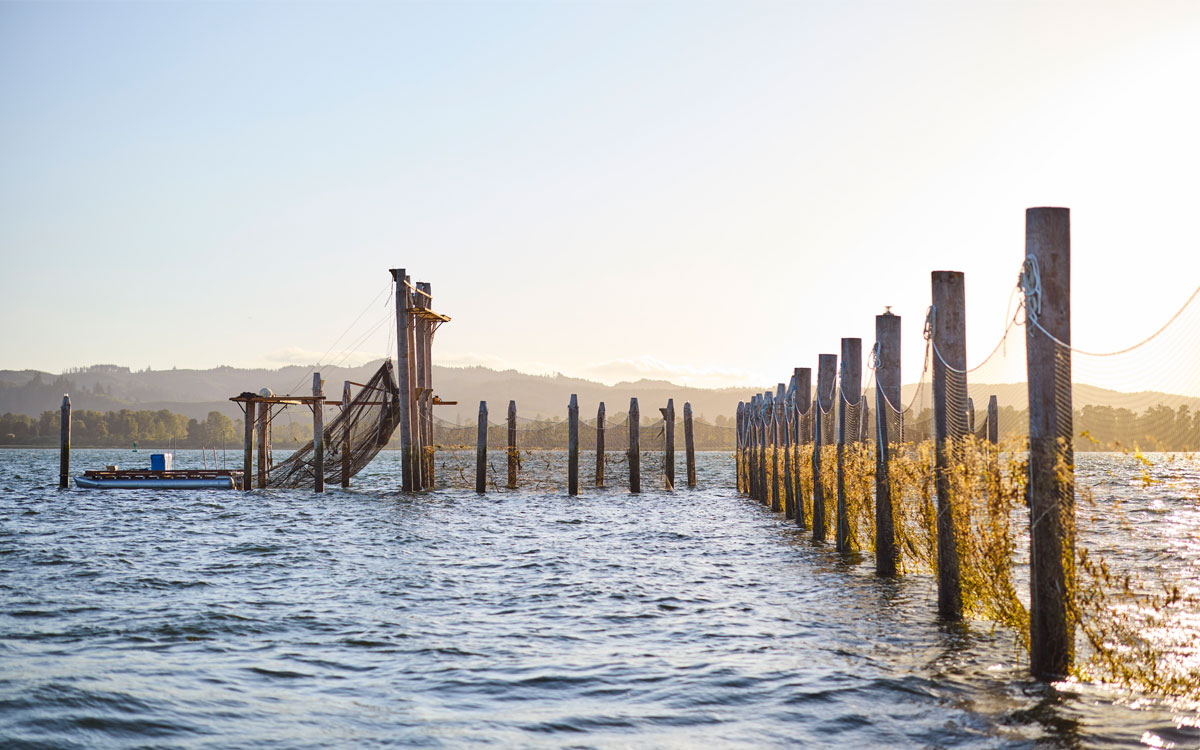
Staring down a series of posts and nets that guide salmon into the "heart" of the trap.
The conservancy’s goal is to reform the way we fish, both commercially and locally. It’s difficult, Helverson said, to undo the paradigm of harvest fishing held in place by federal government agencies beholden to fishing-industry interests. “Management agencies, like the Environmental Protection Agency, receive these mixed mandates where they're told, ‘You are responsible for preserving and protecting these species, but you're also responsible for giving out permits for all of these activities that farm these species.’ And so the agencies are very sympathetic to those industry pressures.”
Ultimately, Tuohy said, the recovery of salmon populations depends on a combination of tactics—not solely on habitat restoration or fishing reform.
“Just look to history. The narrow focus on habitat restoration has led to a lot of money spent and zero progress in delisting these fish populations,” he said. “It's so evident that what we need to do is address harvest and hatchery issues.”