 The Magazine of The Sierra Club
Cute, Cuddly, and Wild: It’s Coyote Puppy Season
And they’re denning in a city near you
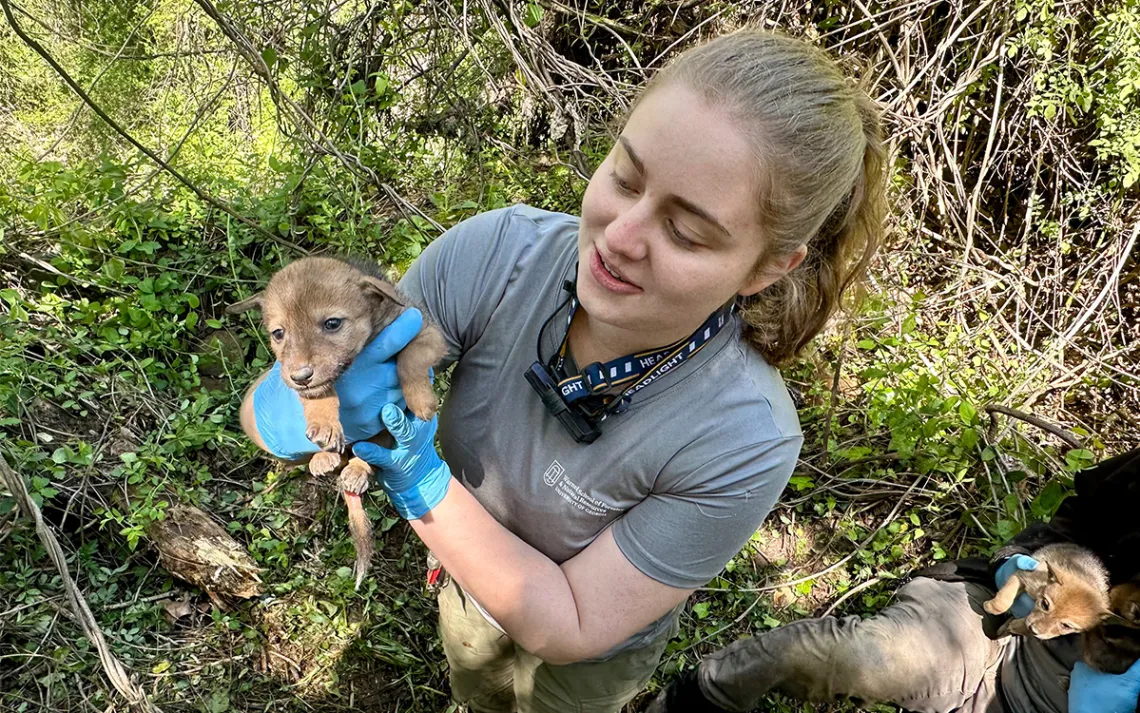
Wildlife Atlanta collects information on coyote distribution, behavior, and health through GPS collars, wildlife cameras, spring den checks, and disease testing. | Photos courtesy of Wildlife Atlanta
Tucked away in abandoned tires, sheds, and ubiquitous holes burrowed into the landscape, coyotes are hard at work propagating their next generation. Smart, shy, and wary of humans, coyotes have the unique ability to survive and thrive without us even knowing they’re close at hand—often in our urban centers.
As spring blossoms into summer, coyote pups are denning in nearly every state in the US with the exception of Hawai'i. The timing differs depending on where you live in the country. In places like Chicago, for example, they might den a bit later in the year, when temperatures heat up. In warmer climates, in and around Atlanta for example, coyotes start to give birth in March on through mid-April.
Hidden in plain sight
A new study published in the journal Ecology and Evolution suggests that coyotes are denning right under our noses. They are denning in all sorts of structures in and around cities including ground burrows, fallen hollowed-out trees, as well as manmade structures like abandoned boats and road culverts.
“Coyotes are super adaptable, and humans pose a lot of risks to them,” says Summer Fink, lead author of the study and a doctoral candidate at the University of Georgia. “Our study shows that coyotes perceive that risk and make reproductive decisions accordingly.”
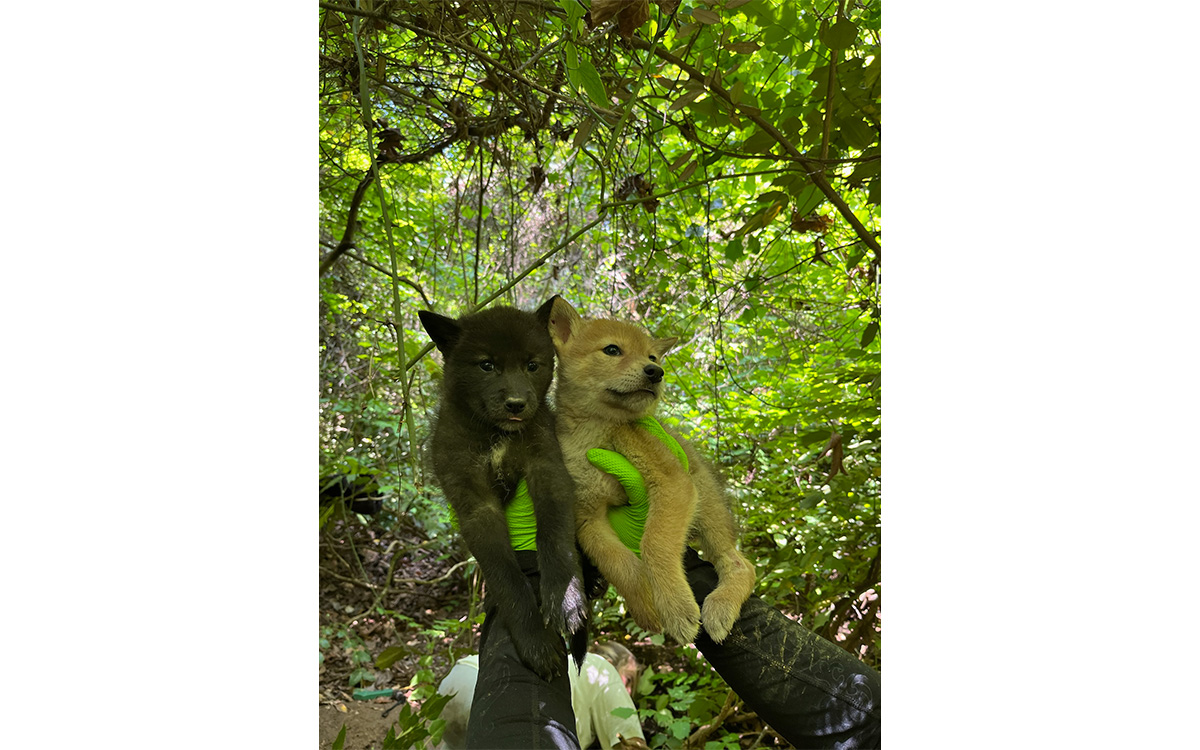
Once mothers give birth, the pups stay in the den for a few months. After about six weeks, the adults split the den up as a survival mechanism, in case one of the dens is discovered by a predator.
“They’re just trying to maximize the likelihood that some of the puppies will survive,” says Michel T. Kohl, study coauthor and associate professor of wildlife management at the University of Georgia.
Coyote parents will move back and forth between the two dens, rotating throughout the night for another few weeks until the cubs become more mobile and start to venture out. At first, coyote pups become more curious about exploring the landscape. Then, in the late summer, they start to leave the den fully and venture out with their parents. They’ll spend the next year tagging along and learning the tricks and tools of their elders before dispersing out to try to find their own home ranges, says Fink.
Human encounters
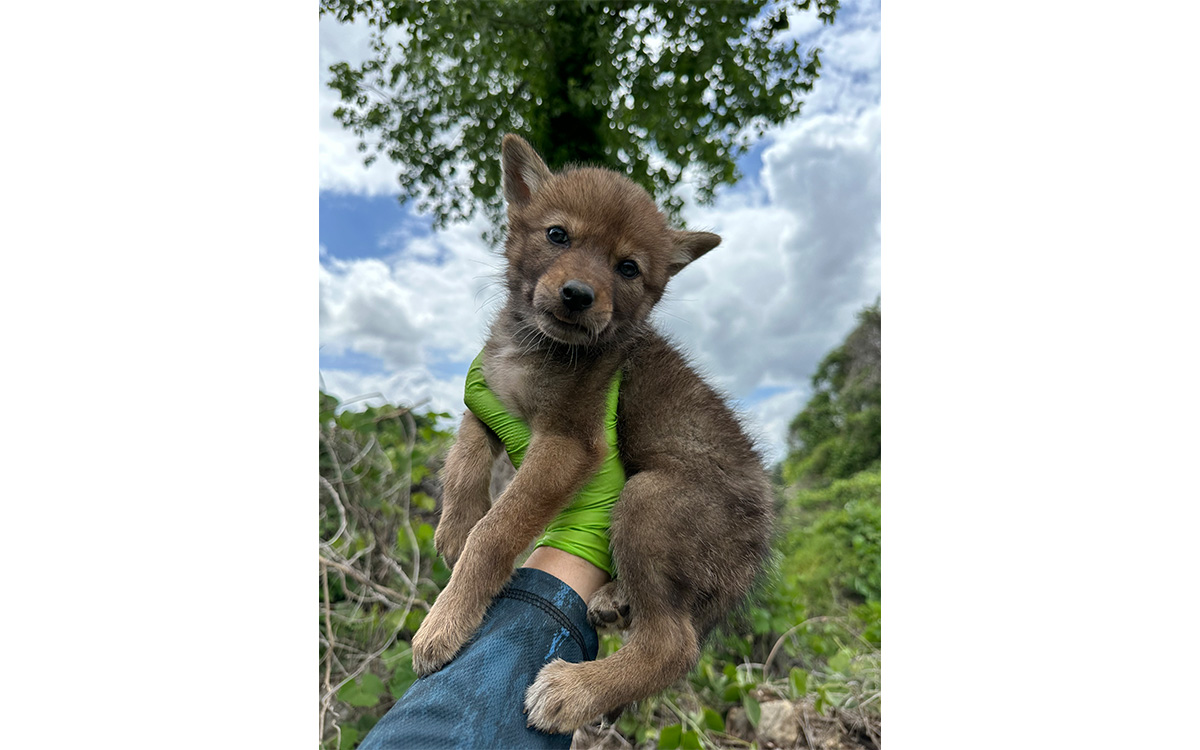
Coyote pups look identical to domestic puppies. It’s easy to confuse one for the other. “Unless you know what you’re looking for, it would be hard to tell them apart,” says Scott Henke, a research scientist and regents professor specializing in coyotes at Texas A&M University-Kingsville, who was not involved in the study.
Dens are usually hidden well away from humans, Hencke says. Humans should never approach one if they do come across it. Dogs are able to smell coyote havens if they get close enough, especially during denning season in the spring and summer, and may end up in an unwelcome encounter, so keeping a dog leashed in areas where there could be coyote dens is important.
Still, these aren’t aggressive animals. In fact, they’re most likely to run into their dens and hide from you. The last thing they want is to deal with a dog or a human, but the adults will defend their pups, says Henke.
Adult coyotes travel in a family unit and are not normally in a larger pack. It’s really the adults that do all the hunting because the pups aren’t yet experienced enough to be successful at it. They’re still learning the ropes. “It’s usually the male and female and then their new offspring that run in the pack,” says Henke.
Coyotes will eat just about anything, including fruit and seeds as well as insects, in addition to the occasional rodent, rabbit, or feline. They don’t usually eat dogs, but they will kill them in some cases to exert dominance over their territory, with the exception of bigger breeds, because they don’t take on larger prey. They only turn to a strict carnivore diet in the winter, when there’s less vegetation available.
The human impact on coyote reproduction
More often than not, humans pose far more risk to coyotes than the other way around. There can be situations where they need to be removed from an area. They can become too bold after being fed by humans and then start to approach more readily.
And there are studies that show that population control can be a good thing. One study published in Ecography suggests that when coyotes are killed and removed from an ecosystem, this increases the coyote population’s reproductive rates overall because more resources are available to those that remain. Another study published in the journal Bulletin, Division of Agricultural Sciences had similar results.
“It’s called competitive breeding relief, with the ones that remain on the landscape being able to have larger litters,” says Kohl. “You end up increasing the population by removing them.”
But in general, it’s best, researchers stress, to keep human intervention in wild coyote populations to a minimum.
As with most things in wild nature, Kohl says, “it’s a balancing act.”