Undercover Tourists Are Saving Sloths in Costa Rica
These activists work to protect the animals and keep them wild and free
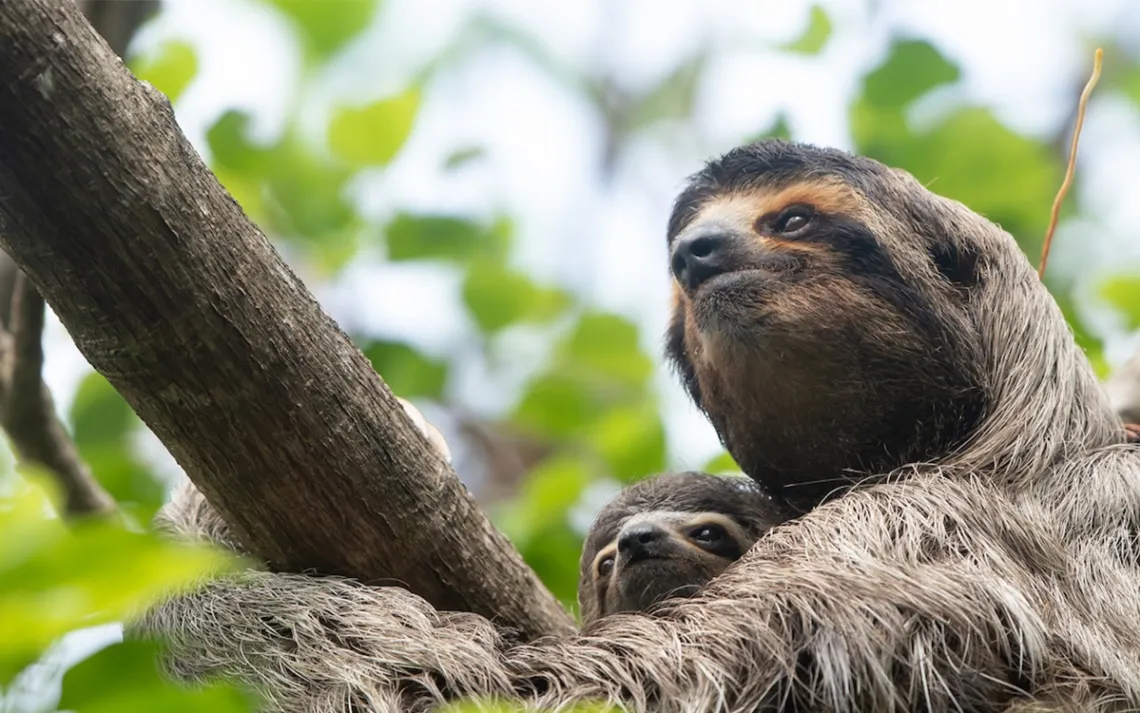
Tilly with her first child, Monty. | Photos courtesy of Sam Trull
Sam Trull got an urgent call from a friend: A baby sloth was being offered up for tourist selfies at the edge of a waterfall hike near Manuel Antonio, Costa Rica. She jumped on the case. Trull, cofounder and executive director of The Sloth Institute Costa Rica, threw on her best tourist garb, grabbed one of her besties, and headed out to track down the stolen sloth.
In Costa Rica, it’s illegal to hold any wildlife in captivity without permits. An unlicensed individual can’t have a sloth for a pet, and they certainly can’t sell selfies with them. Trull needed to meet this sloth, document an illegal theft, and report it to the proper authorities. She needed to do this quickly—sloths don’t survive long in captivity.
An encounter with a stolen sloth
It took everything in Trull not to berate the man who had stolen a baby sloth named Tilly. She was emaciated and wet, and her claws had been painted pink. She had ulcers on her mouth and tongue after being fed bananas, a food that’s deadly because it’s too high in sugar and acidity for a three-fingered sloth. These animals have extremely slow metabolisms. Trull, who is also a photographer, took as many pictures as she could to document Tilly’s capture.
“It was so hard leaving that night. I just wanted to run away with her and save her life,” says Trull.
She sent a full report along with pictures to the Costa Rican government, but it would take another month before they confiscated Tilly. Knowing how hard three-fingered sloths are to maintain in captivity, Trull worried that Tilly wouldn’t make it. Once she was rescued, The Sloth Institute, along with a local zoo, worked day and night to rehabilitate her in the months that followed. Her condition was bleak. She had three different parasites and was starving to death.
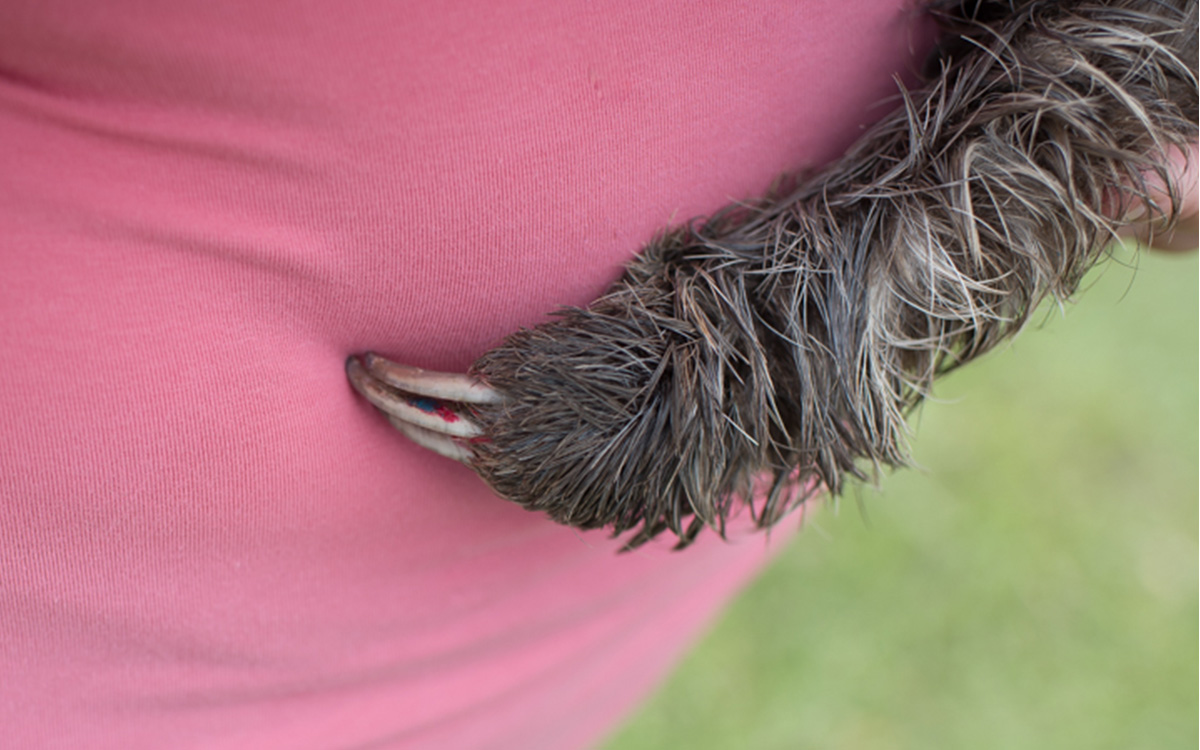
Tilly before rescue, with polish on her claws.
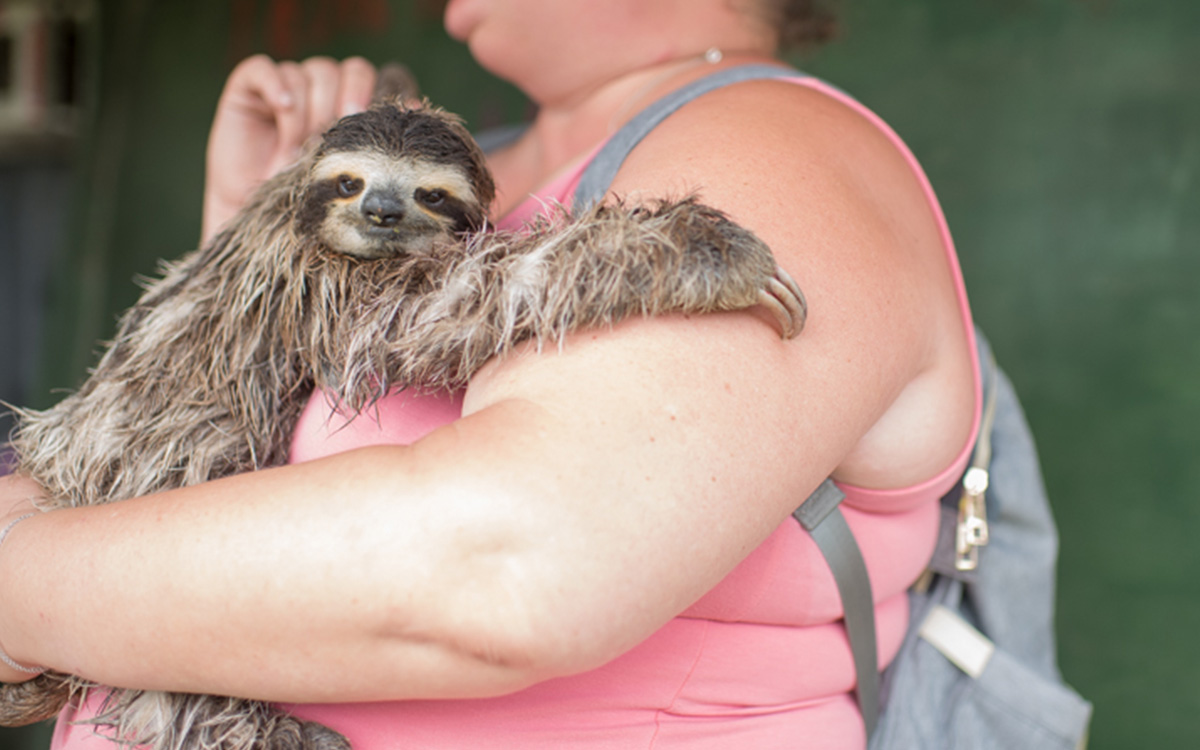
Tilly before rescue.
Snatching sloths from the wild
Each year, over a thousand sloths are kidnapped and illegally used for sloth selfies and encounters, according to a report from The Sloth Institute.
“The impact starts even before the sloth is forced to take selfies with tourists, because most often, when baby sloths are stolen from their mothers, the mothers are killed,” says Nádia Moraes-Barros, a biologist with CIBIO/InBIO, Laboratório Associado in Portugal who specializes in the study of sloths.
Most sloths, especially three-fingered sloths—the slowest species, with three digits on their hind quarters, brown/gray fur, and coloring that makes them appear to have a permanent grin—die in captivity because human contact is so stressful that it increases their blood pressure to dangerous levels. Additionally, their diet is so particular and entirely dependent on native leaves, it makes them vulnerable—their captors almost never feed them the right foods. While two-fingered sloths are more resilient and can be kept in zoos, three-fingered sloths are never found in zoos because they can’t survive.
“These sloths are impossible to breed in captivity, so when you see them, you know for a fact that they were snatched from the wild,” says Cecilia Pamich from The Sloth Conservation Foundation.
Still, three-fingered sloths are more docile than their two-fingered counterparts, who are also quicker to escape with a particularly vicious bite that can cause serious infection. As a result, the sloth that’s most likely to die in captivity is also more likely to be captured, says Pamich.
Sloth encounters and sloth selfies
In selfies widely circulated on social media, sloths appear to almost cuddle with the person holding them. But in truth, they are frozen in fear, says Pamich. These arboreal creatures, who survive tucked high in the tree canopy, thrive in solitude. Sloths don’t even hug each other in the wild with the exception of a baby and its mother. They’re also mostly blind, with a strong sense of smell, making the encounter even more frightening for them.
A study published in the journal Animals showed that sloths used in encounters were frequently exposed to physical manipulation, often petted on the head, which to a sloth feels like a predator encounter. As a result, sloths often display behaviors that are indicators of stress and fear, including limb stretching and freezing. In countries like Honduras, many facilities have agreements with cruise ships where they provide sloth encounters. Passengers can wait in line to hold a sloth and take a selfie.
“The sloth is terrified. It’s not enjoying the encounter in any way, and because they’re so sensitive and difficult to raise in captivity, pretty much any sloth that you see in a selfie isn’t going to survive and then needs to be replaced by a new sloth stolen from the wild,” says Pamich.
Since rescuing Tilly, Trull and her team have dressed up as tourists and documented sloth encounters in other parts of Costa Rica like Bijagua, where those involved in the tourist trade know it’s illegal to capture sloths and keep them captive, so instead they capture them and then pretend that they just appeared in a small strip of forest to show off to tourists.
“They’ll have this tiny patch of forest with an unnatural amount of sloths placed there,” says Trull, who reports what she sees to the Costa Rican Ministry of Environment and Energy (MINAE). Still, it’s obvious that these sloths were illegally captured from the wild.
Pamich says that the more tourists are aware of how cruel these encounters are, the less likely larger operations like cruise ships will continue to allow an activity that they are well aware has a highly detrimental impact on sloths and other wildlife. If you’re a tourist, avoiding such encounters is key.
“I think if people knew what was happening, they would be much less likely to put a sloth through such suffering for a selfie,” says Pamich.
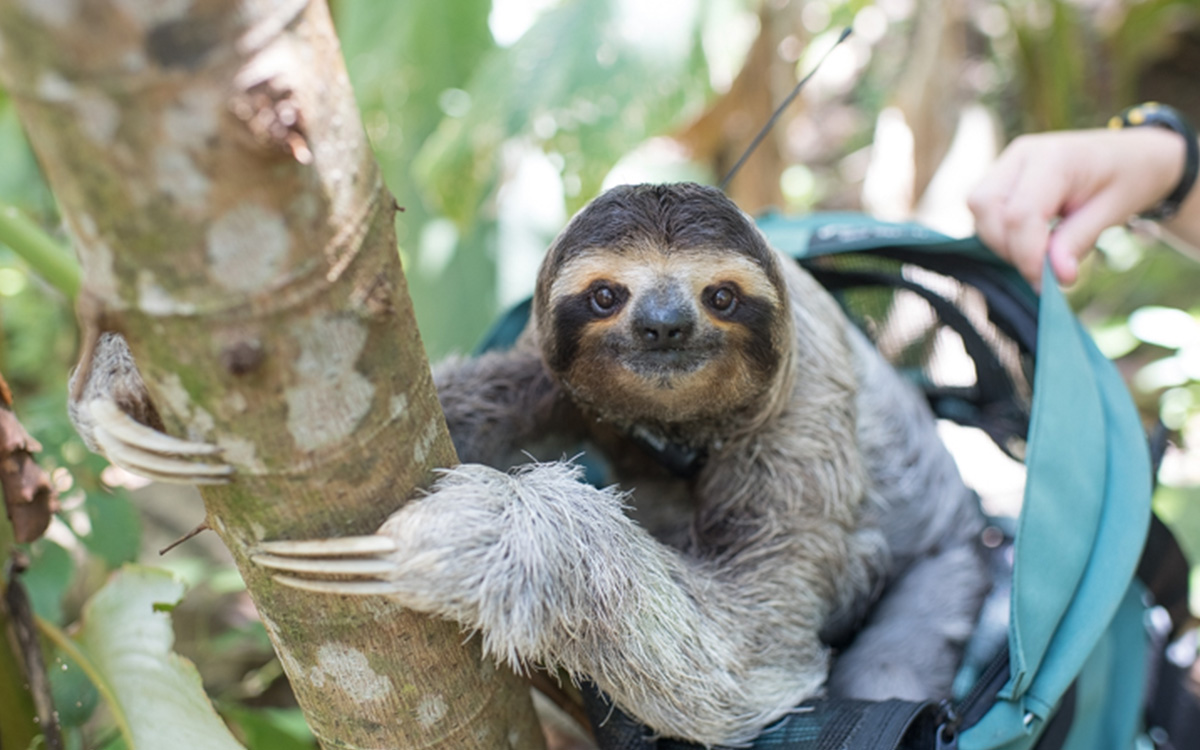
Tilly being released with a collar at TSI field site.
In the case of Tilly, she is one of the lucky cases. After six months of rehab, she was released into the wild. Now, she’s the most prolific mother they’ve seen of the sloths that have been rehabilitated and released. She’s had six healthy babies, a feat that’s hardly ever accomplished by new moms. Her tiny stature, a remnant of when she was almost starved to death, is the only reminder of her illegal captivity.
“She’s such a good mom, and while she remains small, her babies are almost always slightly bigger than average before they’re weaned,” says Trull. It’s an indication that Tilly is particularly aware of that mother-baby connection that she never got to have.