Floridians Offer Everyone a Playbook On Sustaining Environmentalism Against All Odds
Residents of the Sunshine State have pushed back on plans to develop state parks and drill for oil
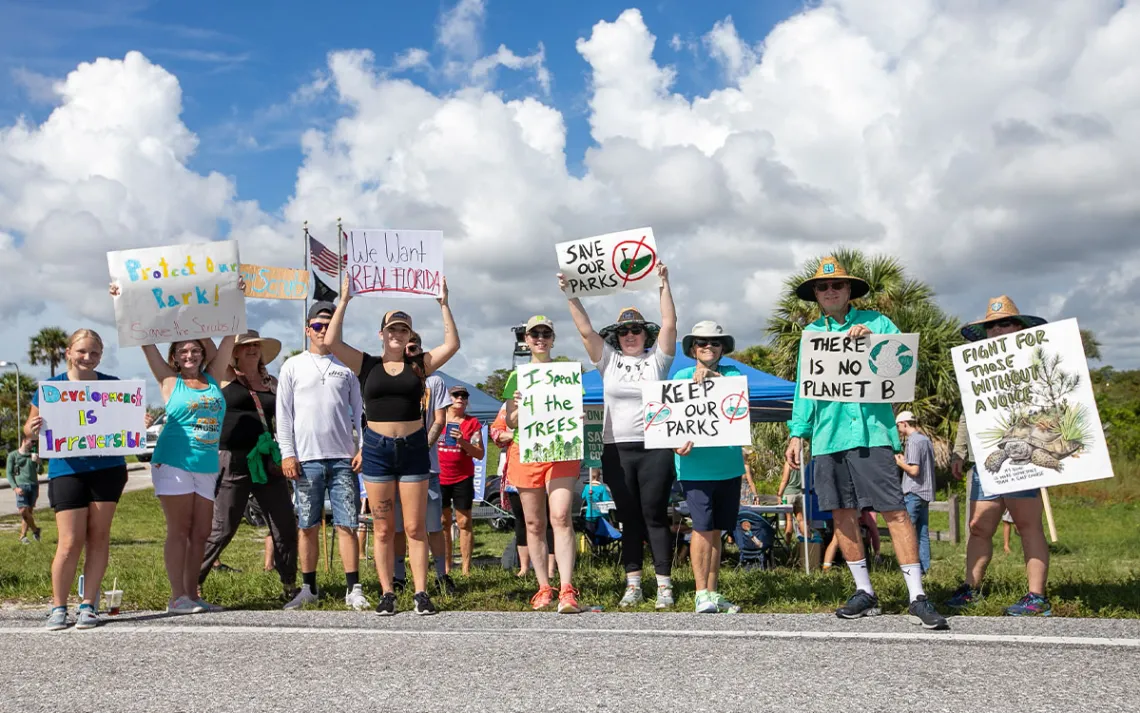
Protesters at Florida's Jonathan Dickinson State Park hold signs, reacting to plans to develop state parks into golf courses, lodges, and pickleball courts. | Photo by Federico Acevedo/FWF
Editor’s Note: This story was updated on May 12, 2025 with news that Florida Governor Ron DeSantis would be signing one of the environmental protection bills on his desk, and to clarify the role that the Florida Chapter of the Sierra Club played in organizing on the ground.
This legislative session, Florida lawmakers unanimously passed two bills driven to their desks by environmental protests too loud and too clear to ignore. One bill to ban drilling in the Apalachicola River basin; the other bill to prevent the development of golf courses, pickleball courts, and other similar facilities on state park land. The final step is for Governor Ron DeSantis to sign; he’s already indicated with a single “yes” that the state parks bill will get his signature. The bills are both safeguards against plans and permits the state Department of Environmental Protection was advancing last year.
“We saw an organic outcry,” said Democratic Florida state representative Allison Tant during a committee meeting for the House version of the bill. “From not just Franklin County but from across this entire region, because as we all know, our waters are all connected, environmentally and economically.”
This kind of broad pushback against a state environmental protection agency doing the opposite of what its name suggests could be a playbook to the national environmental movement. Across the country, the Trump administration is teeing up federal lands as hotbeds of resource extraction, not protected public spaces.
Florida has been governed by Republican majorities in both legislative chambers since 1999 and led a Republican governor for almost as long. The Trump administration’s approach to government has plenty of similarities to Governor Ron DeSantis’s approach to governing Florida for the past six years, including concentrating power in the top office and favoring corporations while using populist rhetoric.
Here’s how Floridians are organizing on behalf of the places they love.
“Protecting a way of life”
“One of the best ways to be effective, if you're going to be an activist, is to create community and solidarity and really build down into the local level,” said Dana Fisher, the director of American University’s Center for Environment, Community, and Equity, whose research focuses on climate activism. She later added that “the movements that are most effective span identities, orientations, and social classes.”
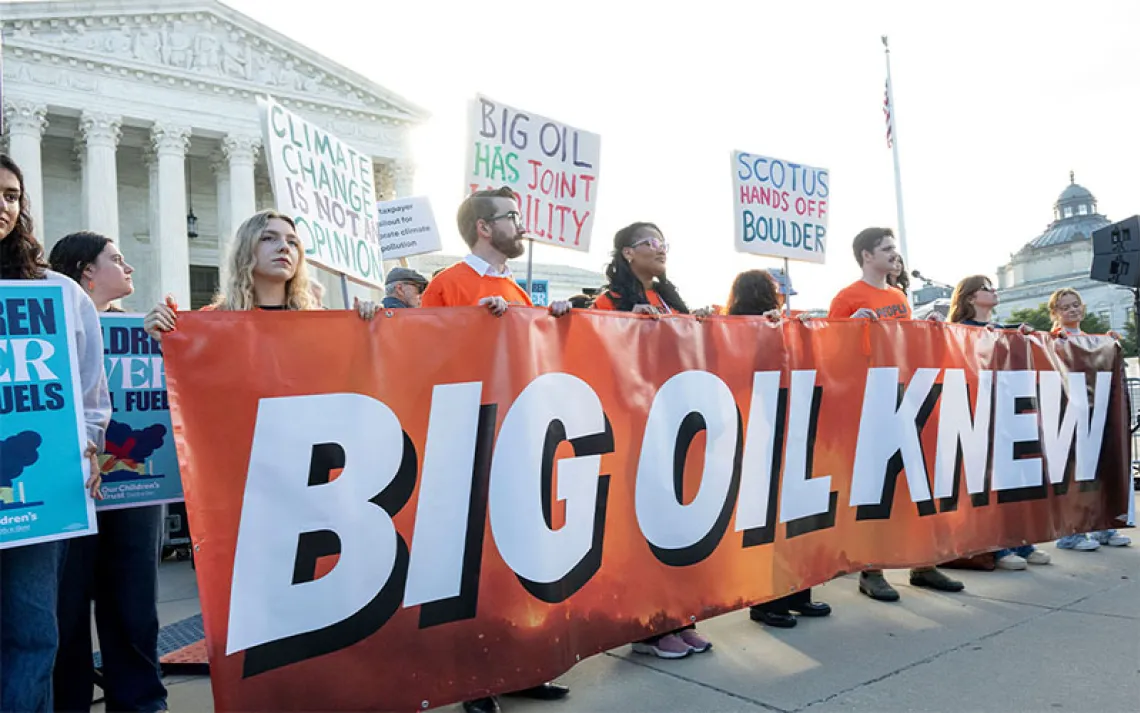
That’s how a December 2024 “Kill the Drill” protest became a turning point in the campaign to stop the proposed drilling in Apalachicola River Basin, said Gil Damon of the nonprofit Downriver Project, part of the coalition that organized the event in front of Florida’s Department of Environmental Protection. The coalition centered its messaging on protecting a way of life around the Apalachicola River, and brought together hundreds of protesters, including hunters, oyster farmers, fishing boat captains, faith leaders, fifth grade students and a longtime environmentalist with his own custom fiberglass red snapper prop at the podium.
“When I spoke to homeowners on St. George Island, seafood workers, restaurant owners in East Point, bartenders in Apalachicola, the folks who clean houses, the folks who own houses — it is unanimous,” said Xochitl Bervera of Water is Life Oysters at the rally. “To drill a few miles up the river from our precious, precious bay is absolute insanity.”
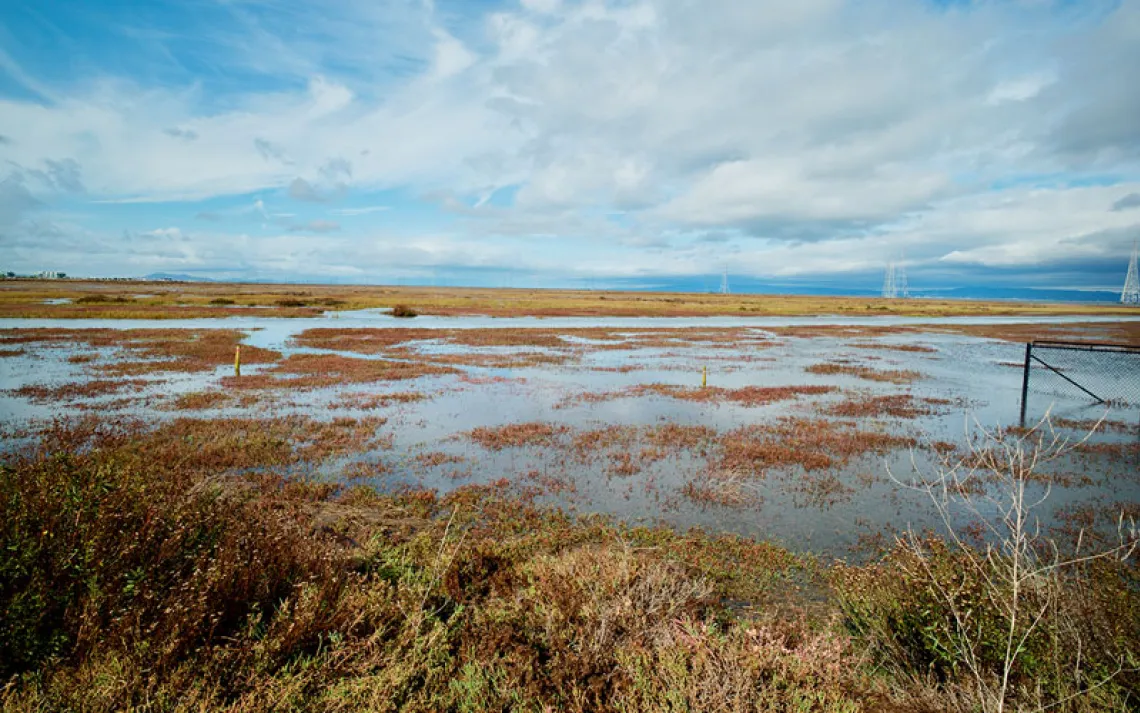
The threat of destroying the Apalachicola and its culture rallied people across the Panhandle, one of the most rural parts of the state, against permits for wildcat drilling—searching for new, unproven sources of fossil fuels—in their local environment. There is also a deep understanding in Florida that healthy water is linked to a healthy economy: the state’s tourism, recreational fishing, and seafood industries all depend on it.
“People have a sense this is all connected,” said Damon. “If you underline those points, folks relate to them.” That includes legislators.
The House version of the bill was co-sponsored by Tant and Republican Florida state representative Jason Shoaf, whose district includes Apalachicola, and whose family business is in the gas industry. Shoaf has emphasized that the bill was “invented from the local level” in response to the groundswell of opposition and that it would lead to permanent protection for the basin. Both legislators and community members in favor of the bill have noted that they aren’t opposed to domestic oil production, but that this waterway shouldn’t be drilled.
Reporting the movement
Last summer, the Tampa Bay Times broke the story that the DeSantis administration was also planning to build developments on nine state parks. Those developments included a golf course, 350-room lodges, and pickleball courts. The reporting, based on a whistleblower leak, set off an outpouring of opposition. Within hours people were at Jonathan Dickinson State Park, waving “stop the golf course” signs. Word spread rapidly through social media groups dedicated to specific parks, environmental organizations sending email blasts, and reporting from other media outlets.
By the weekend, the Florida chapter of the Sierra Club, along with partner organizations, provided a space for people to channel their outrage: protests at every park slated for development. “We have public outrage all the time, but it doesn’t always find a strategic hook," said Susannah Randolph, director of the Sierra Club's Florida Chapter. Like the rally against drilling on the Apalachicola, personal connections to well-loved places brought a diversity of people to the event.
Tampa Bay Times reporters Max Chesnes and Emily Mahoney stayed on the story, including the moment eight days later when DeSantis called the idea of developing the state parks “half-baked” and pulled it back. The ongoing coverage also generated reporting at local outlets across the state about the parks and people’s connections to them.
“The organization of the protests and people that chose to speak out—thousands of people made that happen,” Chesnes said. “But there was a role, I think, to be had in terms of getting the hard details out there on a very complicated, otherwise mysterious thing.”
The success of the state parks protests made stopping the proposed drilling on the Apalachicola seem possible too, said Lilly Anderson-Messec, the director of North Florida Programs for the Florida Native Plant Society, who was involved in organizing around both campaigns.
Building toward a long-term solution
The protests were springboards into the state legislative session, which began in March. Getting to this point has been in no small part because of protests that drew support from people with a direct relationship to the threatened places from across the political spectrum. “Protest is a tactic,” said Fisher. “Movements use a whole range of tactics.” People have remained engaged in the broader civic process around each issue, contacting their representatives before and during the legislative session, including showing up in person to speak at committee meetings. Those “nuts and bolts democratic kind of practices” have historically been effective, Fisher said.
When both bills were stalled in committee, constituents rallied an additional wave of outreach to lawmakers urging them to move forward. The Sierra Club organized an additional “LoveFest” in support of the state parks and the bill to protect them.
“People are experiencing the loss and degradation of places they love,” said Anderson-Messec. “That cuts across political parties.”