EPA Killed the Energy Star
The nation’s environmental watchdog is set to end one of the most popular energy-saving programs
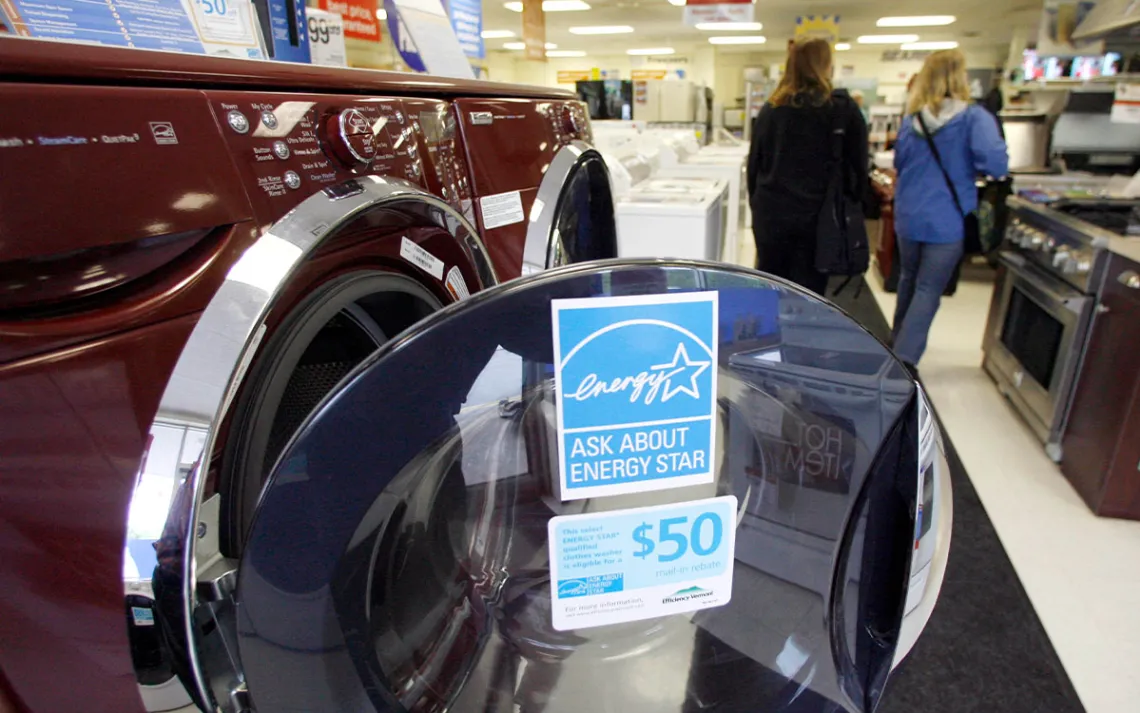
Photo by Toby Talbot/AP
The Environmental Protection Agency is preparing to end the popular Energy Star program—the latest move in the Trump administration’s ongoing effort to roll back energy efficiency standards. Energy Star, a well-known certification for dishwashers, refrigerators, and other home appliances, as well as commercial buildings and homes, has helped consumers cut energy costs for over three decades.
Energy Star started under a Republican president—the George H.W. Bush administration established the program in 1992. Since then, Energy Star has helped American families and businesses save more than $500 billion in energy costs, according to a 2023 EPA report. It has also helped prevent 4 billion metric tons of greenhouse gas emissions from entering the atmosphere, according to that analysis. And the program has high consumer recognition: According to a 2022 EPA report, nearly 90 percent of American households recognize the blue label.
While there has been no official announcement regarding the end of Energy Star, an EPA spokesperson said the agency has announced the next phase of “organizational improvements” to the EPA’s Office of Atmospheric Protection, which manages the Energy Star program. “With this action, EPA is delivering organizational improvements to the personnel structure that will directly benefit the American people and better advance the agency’s core mission, while Powering the Great American Comeback,” the spokesperson said in a statement.
President Trump’s proposed budget for fiscal year 2026 calls for the end of the Office of Atmospheric Protection, labeling it an “overreach of government authority that imposes unnecessary and radical climate change regulations on businesses and stifles economic growth.”
Ted Kelly, director of clean energy at the Environmental Defense Fund, called the move an “irrational attack on anything that is vaguely associated with addressing climate change.” The program has a small budgetary cost but provides big consumer benefits, making it the “perfect program,” he said. Getting rid of Energy Star “will end up making it a lot harder for customers to tell what they should buy if they want an efficient product, and because of that it will really reduce the incentive for manufacturers to make more efficient products and to continue improving efficiency,” Kelly added.
Trump has worked to dismantle energy efficiency efforts for years. Just months after taking office in 2017, his administration sought to axe Energy Star in an effort to decrease regulation and shrink the EPA. Trump renewed the effort to roll back efficiency standards for appliances this April with an executive order to “make America’s showers great again.”
Cuts to Energy Star may disproportionately impact low-income households as they tend to pay the highest percentage of their income in energy bills, Kelly said. A study from the American Council for an Energy-Efficient Economy (ACEEE) found that one in four low-income households in the United States spends more than 15 percent of their income on energy bills. The study also found that Black and Hispanic households face a higher energy burden.
Ending Energy Star will also impact home builders and real estate developers who rely on the program to improve the performance of their buildings, said Ben Evans, federal legislative director at the US Green Building Council. Last year, more than 330,000 buildings, nearly 25 percent of all commercial building floorspace in the United States, used Energy Star to measure and track their energy and water use, according to the EPA.
Evans said that while the Department of Energy sets minimum standards for energy efficiency, Energy Star incentivizes manufacturers and builders to go above those standards. “It really changes the market, because it encourages the manufacturers to do better,” Evans said. “They can get that label, and they know the consumer wants that label.” The Department of Energy’s standards are simply meant to keep the “bad stuff” out of the market, he said.
And there are multiple tax credits that incentivize builders and homeowners to ensure homes are energy efficient that may disappear along with Energy Star, Evans added. One tax credit gives builders $2,500 to build a home certified to meet the energy-saving requirements of Energy Star. In 2024, nearly 350,000 Energy Star–certified homes were built, a significant increase over previous years, according to the ACEEE. These homes cut energy bills by nearly $450 per year.
Another tax credit gives homeowners $1,200 to make home improvements that will boost the energy efficiency of their home. Last year, 2.3 million American families used the tax credit to improve their homes and reduce their energy bills, according to ACEEE. These tax credits help home builders and owners pay for upfront costs that will save them money in the long term, Evans said. Without the credits, “that leaves homeowners with less efficient, less affordable housing,” he said.
The cuts come at a time when the nation’s grid system is under more pressure. “For the first time in a long time, we're seeing growing electricity consumption and demand because of AI and data centers,” Evans said. “We have a very fragile grid.” According to the Department of Energy, data center energy demand more than doubled between 2017 and 2023, largely due to an increase in AI servers.
Jill Notini, a spokesperson for the Association of Home Appliance Manufacturers (AHAM), which represents appliance companies such as GE Appliances and Whirlpool, said AHAM supports the continuation of Energy Star. She suggested that the Department of Energy could take over the program, as it already plays a part in the technical side of the program. “The industry has a public to serve,” she said. “We’re living on that promise, and that’s what we want to continue to do.”