One Year After Trump’s Inauguration, the Damage to Environmental Policy Is Unprecedented
The administration has taken a wrecking ball to everything from clean energy policy to chemical regulations
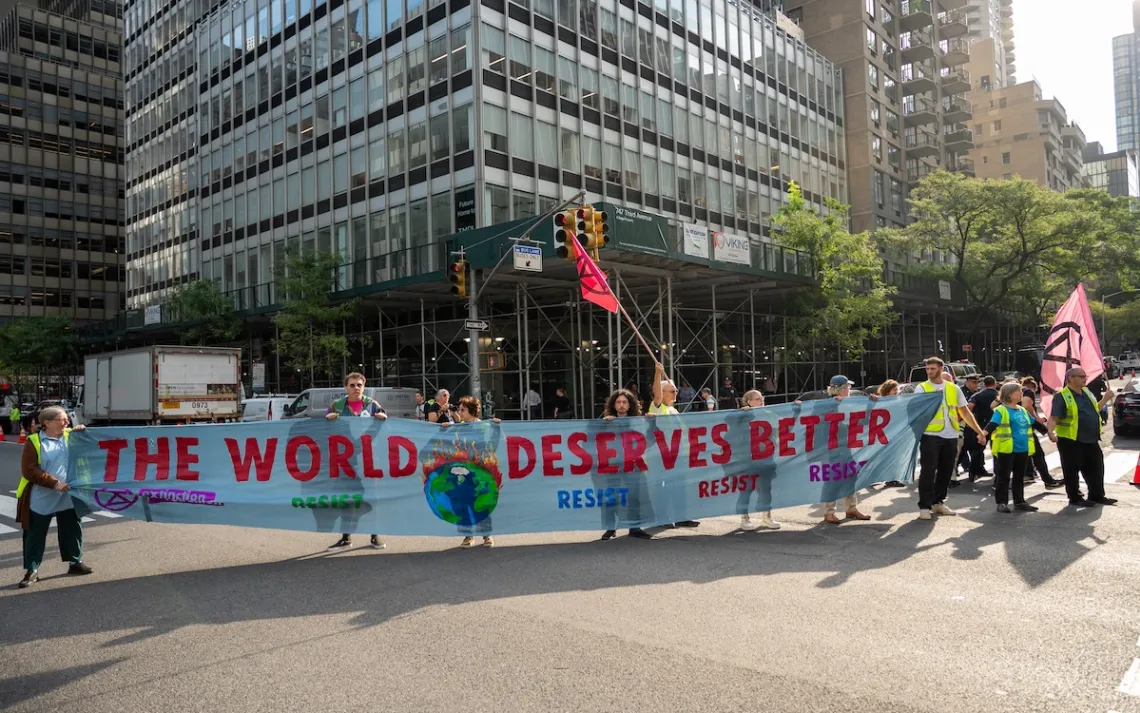
In September, protesters blocked street traffic in Manhattan near the United Nations headquarters to call attention to the Trump administration's elimination of climate regulations. | Photo by Matthew Rodier/Sipa USA via AP
On January 20, 2025, on his first day back in office as president, Donald Trump wasted no time: He attacked clean energy and environmental protections, issuing a flurry of executive orders to “unleash” fossil fuel extraction, remove the United States from the Paris climate agreement, and pause all wind energy permitting and pending environmental regulations.
These moves were just the beginning in what experts and advocates say has become an all-out assault on the environment, climate action, and public health.
Now, one year into Trump’s second presidential term, the scale of the damage and the administration’s governing approach has become clear. “This is an authoritarian administration,” Rachel Cleetus, policy director in the climate and energy program at the Union of Concerned Scientists, told Sierra. “It’s a deeply anti-science administration. And the huge range of destructive actions they’ve taken are a direct threat to our health, our economy.”
“If Trump’s wrecking ball isn’t checked soon, we’ll be a global pariah when it comes to the environment,” said Stephanie Kurose, deputy government affairs director at the Center for Biological Diversity. “Nobody voted to have their water supply poisoned. Nobody voted for more air pollution so the richest corporations can profit even more. The first year of Trump 2.0 was a national nightmare.”
From ordering the shutdown of offshore wind farms already under construction, to opening up millions of acres of public lands to extractive industries, to dismantling federal climate science, here is a look back at some of the major actions the administration has taken on climate and the environment over its first year, and an assessment of where things stand now.
On climate: A sledgehammer to policies and regulations
Speaking on the world stage at the UN General Assembly in New York last September, President Trump doubled down on his climate denialism, calling it “the greatest con job ever perpetrated on the world.” The claim is reckless—it has no basis in reality.
The actions of his administration reflect this climate denialism. In announcing the rollback of dozens of regulations in March, Environmental Protection Agency administrator Lee Zeldin boasted of “driving a dagger straight into the heart of the climate change religion.”
Zeldin has moved to eliminate greenhouse gas controls on power plants and motor vehicles and to revoke California’s Clean Air Act waivers for vehicle standards by submitting them to the Republican-controlled Congress, which voted to yank back the waivers. Zeldin has also proposed ending the EPA’s Greenhouse Gas Reporting Program, and he tried to withhold or claw back billions of dollars in funding for climate and clean energy initiatives under the Greenhouse Gas Reduction Fund.
Perhaps the biggest move Zeldin made in attacking climate action was to rescind the EPA’s 2009 finding that greenhouse gases endanger public health and welfare. This so-called endangerment finding underpins all other regulations on climate pollution under the Clean Air Act, and experts say that repealing it would be a massive blow to efforts to rein in this pollution and slow down planetary heating.
To support the EPA’s proposed rescission of the endangerment finding, Trump’s Department of Energy released a report authored by five climate skeptics that contested mainstream climate science and disputed the consensus around the risks and dangers of a warming planet. The report was widely criticized, including by the National Academies, which issued their own assessment stating that the evidence of harm created by human-caused greenhouse gases is “beyond scientific dispute.”
“As much as they try to bury the evidence on climate change, they can’t change the facts. They can’t change the reality of what people are experiencing around the country with these devastating climate impacts.”
The Trump administration has made many other efforts to suppress climate science and scientific research. Among them: dismantling the US Global Change Research Program and firing all the scientists working on the next National Climate Assessment report while scrubbing the existing reports from government websites; downsizing of the National Oceanic and Atmospheric Administration and ending its reporting on billion-dollar weather disasters; shuttering the EPA’s Office of Research and Development and removing references to human causes of climate change from EPA websites; and the recent announcement of the planned closure of the National Center for Atmospheric Research.
“The administration has been absolutely relentless in the destruction they’ve brought about,” Cleetus said. “But as much as they try to bury the evidence on climate change, they can’t change the facts. They can’t change the reality of what people are experiencing around the country with these devastating climate impacts.”
The administration’s track of shutting down climate change programs and policies and covering up or outright lying about the science seems set to continue.
Earlier this month, on the heels of Trump’s military attack and oil grab in Venezuela, the president announced the US withdrawal from 66 international organizations, treaties, and conventions—including the UN Framework Convention on Climate Change and the Intergovernmental Panel on Climate Change.
Critics say such a move will leave the country more isolated and less safe. “While all other nations are moving forward together, this latest step backward in global leadership, climate cooperation, and science can only harm the US economy, jobs, and living standards as wildfires, floods, megastorms, and droughts rapidly worsen,” UNFCCC executive secretary Simon Stiell said in a statement.
It is unclear what will happen with the next National Climate Assessment. E&E News has reported that the Trump administration sought to have climate deniers, such as the same group of contrarian scientists that authored the controversial DOE report, work on the sixth volume of this national climate report.
“If they do put out a National Climate Assessment, I wouldn’t doubt that they will certainly try to stack the authorship full of people who have made a career out of denying climate science, rather than the experts who have been relied on in the past,” Patrick Drupp, climate policy director at the Sierra Club, told Sierra.
The EPA is now about to finalize its repeal of the endangerment finding. Earlier this month, the agency submitted its proposal to the Office of Management and Budget, and the final rule could come any day. Litigation is sure to follow as environmental groups and others are expected to challenge the rollback. Axing the endangerment finding could also have unintended consequences, such as opening up polluting industries to potentially greater liability risk under federal tort law, as legal experts warn in a recent memo.
“From illegally keeping coal plants online to gutting clean energy manufacturing and canceling offshore wind and solar farm projects, every action they’re taking is raising costs for Americans, while making them less healthy.”
On energy: Boosting fossil fuels while blocking renewables
It was clear from the start that the Trump administration’s energy agenda was all about fossil fuels. Trump issued a day one executive order declaring a national energy emergency that explicitly excluded solar and wind in defining the term energy. The administration has since undertaken numerous actions intended to maximize fossil fuel production and consumption, from reversing the pause on LNG export approvals, to opening up more federal lands and waters to drilling, to illegally propping up aging coal plants that were slated to shut down with emergency orders.
At the same time, the administration has vehemently attacked two of the cleanest, most affordable and readily available forms of energy: solar and wind.
“The degree to which they’ve attacked clean energy over the past year was wild and unprecedented,” Drupp said. “From illegally keeping coal plants online to gutting clean energy manufacturing and canceling offshore wind and solar farm projects, every action they’re taking is raising costs for Americans, while making them less healthy.”
Solar is now the fastest growing, and often cheapest, form of energy. But under Trump, solar energy funding and projects have been threatened or terminated. According to the Solar Energy Industries Association, political attacks are putting more than 500 solar and storage projects at risk. These projects account for more than half of all new power planned to be built in the US through 2030.
Trump has been particularly aggressive in going after wind energy. “On day one, he issued an executive order targeting wind energy broadly and offshore wind specifically,” said Nancy Pyne, senior adviser on offshore wind for the Sierra Club. “And the attacks just kept rolling.”
The day one order halted all leasing, permitting, and approvals of new wind energy projects. In December, a federal court struck down the order, finding it to be arbitrary and capricious and contrary to law.
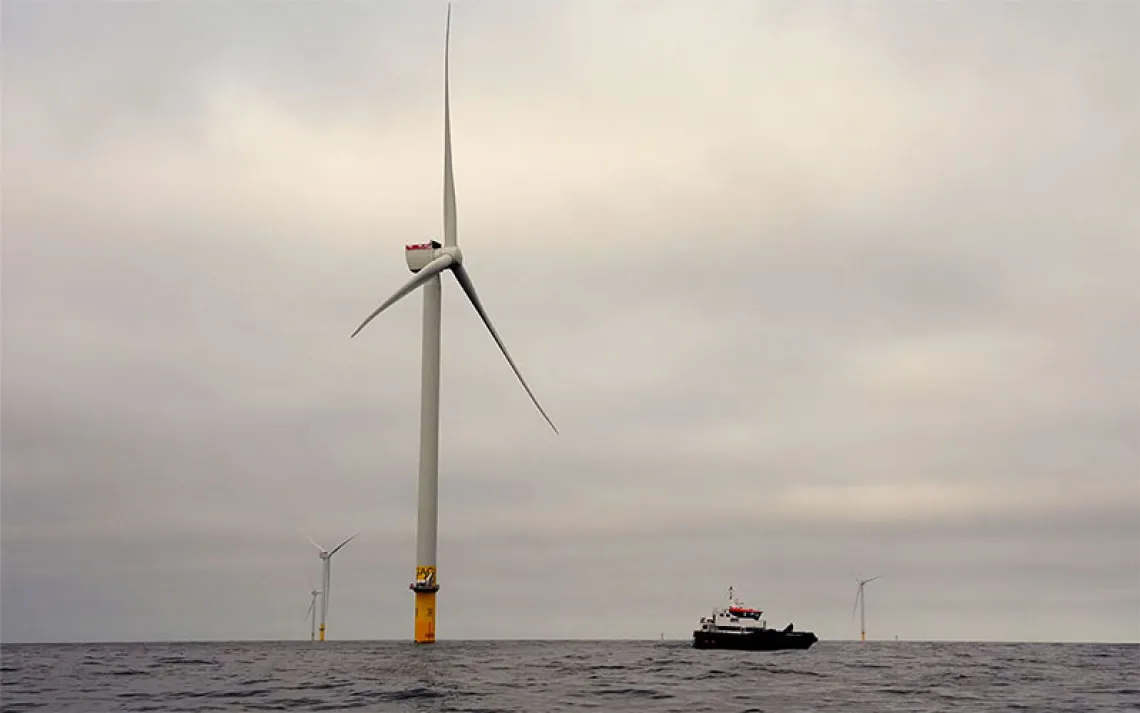
The administration issued several stop-work orders to offshore wind projects that were under construction, and moved to reconsider approvals of other projects that had already been permitted. And in December, just three days before Christmas, the Department of the Interior suspended leases and ordered an immediate halt to construction of all five offshore wind projects currently being built, including several that were nearing completion. Last week, federal courts issued preliminary rulings finding the DOI’s actions to be illegal and allowing construction to continue on several of the projects.
“It’s pretty clear Trump hates offshore wind and is doing everything in his power to stop the US industry from taking off,” Pyne said. “But these five projects are going to get built. And once they do, we’re going to have proof of concept that offshore wind is clean, cheap, and reliable.”
On public lands: Prioritizing extraction and stripping away protections
When it comes to land conservation, the past year has seen a blitz of actions by the administration to strip away critical protections and make it even easier for corporations to profit from public lands.
“It was a tough year for public lands,” Drew McConville, senior fellow in conservation policy at the Center for American Progress, told Sierra. “Trump was already the only president in US history to remove more protections for public lands than he added. And really it’s been clear from the start that conservation, addressing clean water, biodiversity, people’s access to nature, was really nowhere on their priority list, and that it was going to be all about promoting the interests of the oil and gas industry, the mining industry, as we’ve seen.”
According to a CAP analysis, actions undertaken or proposed by the Trump administration would strip protections from 88 million acres of public lands. McConville said this “far surpasses the damage” that Trump was able to inflict on public lands during his entire first term.
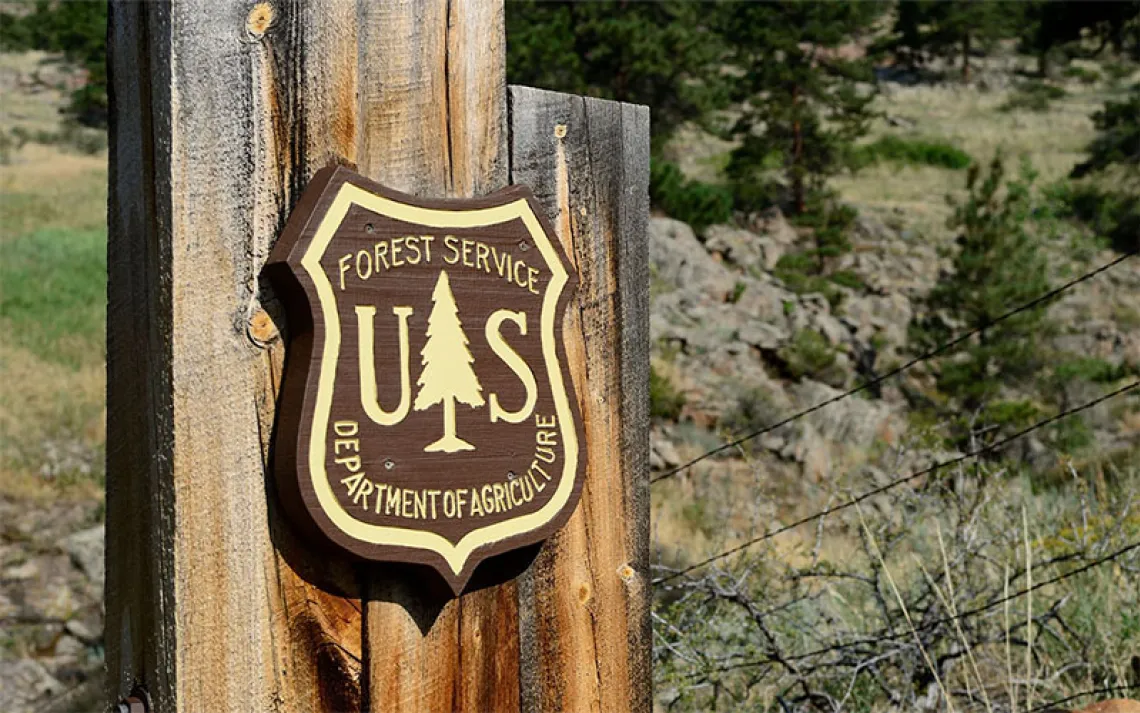
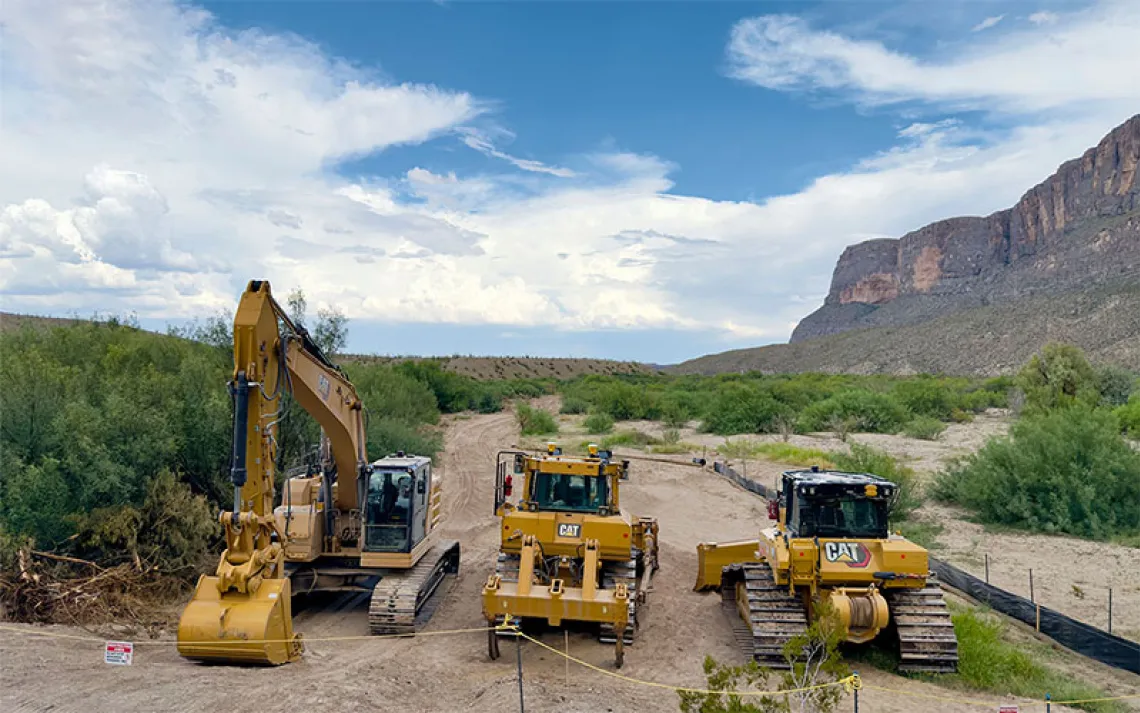
The administration has broadly proposed policies and issued directives to expand logging, mining, and drilling on millions of acres of public lands and has rolled back regulations and expedited permitting to support extractive industries. The Department of the Interior has proposed rescinding the Bureau of Land Management’s Public Lands Rule, for example, a move that would more than likely lead to the return of prioritizing extractive uses over conservation and ecological protection. The Department of Agriculture, meanwhile, is working to roll back the Roadless Rule, which would open up tens of millions of acres of protected national forest land to logging and development.
Utah Senator Mike Lee’s proposed amendment to literally sell off millions of acres of public lands was met with public outcry and did not advance. But the Trump administration’s actions are effectively working toward the same goal of handing off public lands to corporate interests and extractive industries, conservation advocates say.
“I don’t think it’s a stretch to say that President Trump is the most anti-conservation president we’ve seen,” McConville said.
McConville noted that the actions and proposals put forward by Trump and Republicans in Congress on public lands were especially unpopular and were met by notable public opposition. “This opposition had an impact at the end of the day too as we saw with that defeat of [Senator Lee’s] proposal in Congress.”
Still, the attacks on public lands and the stripping away of vital protections seem set to continue. Agencies are operating with diminished staff and budgets. According to the Center for Biological Diversity, 1,817 staff were fired from the US Fish and Wildlife Service in 2025, while the National Park Service lost more than 2,700 staff and over 7,000 workers were let go from the US Forest Service and the Bureau of Land Management. A spending bill that passed the House earlier this month notably cuts the Fish and Wildlife Service’s budget by 44 percent, a cut that CBD warns “will hamstring the program in charge of determining which animals and plants deserve protection under the Endangered Species Act.”
Trump has recently nominated former Republican representative and oilfield services executive Steve Pearce to lead the BLM, a move that has sparked criticism from conservation groups and the hunting and angling community.
“They have nominated an advocate for public lands sell-off to lead the Bureau of Land Management, which is pretty alarming,” McConville said.
“Rescinding the very little progress the Biden administration made on PFAS is dooming us to another generation of carcinogenic chemicals in our water, food, soil, and air.”
On chemicals: An environmental watchdog gone astray
Under Trump’s EPA, restrictions on dangerous chemicals are being loosened and risk assessments are being altered or delayed. Critics say the public will be paying the price with their health.
“EPA no longer cares about human health,” Kyla Bennett, director of science policy at Public Employees for Environmental Responsibility, who previously worked in the EPA’s Region 1 office, told Sierra.
The EPA has proposed a rule, for example, that would weaken its chemical review process under the Toxic Substances Control Act. The rule would also preempt state action to limit or ban chemicals like PFAS, also known as forever chemicals. The EPA has even moved to exempt companies from reporting on their uses of these forever chemicals.
“Rescinding the very little progress the Biden administration made on PFAS is dooming us to another generation of carcinogenic chemicals in our water, food, soil, and air,” Bennett said.
Bennett and other advocates told Sierra that the EPA under Trump has completely abandoned its mission of protecting public health and the environment. “Their mission now is to make money for big corporations like oil and gas and AI,” Bennett said.
As The New York Times recently reported, the EPA is now even ceasing to consider the cost of lives saved in setting air pollution limits and will instead only be considering costs to industry. “It is a shameful abdication of EPA’s responsibility to protect Americans from harm,” Jeremey Symons, senior adviser at the Environmental Protection Network, said in response to what the Times reported. “Under this administration, the Environmental Protection Agency is now the Environmental Pollution Agency, helping polluters at the expense of human health.”
Resistance is mounting
In spite of the setbacks, environmental advocates say resistance is mounting, whether in the streets or in the halls of power and the courts.
“People are fighting back in lots of different ways,” Cleetus said. “I don’t think this is a game-over situation by any means.”