EPA Moves to Roll Back Endangerment Finding, Threatening Climate Action
Scientists and environmental advocates say the move further endangers our planet and clean air
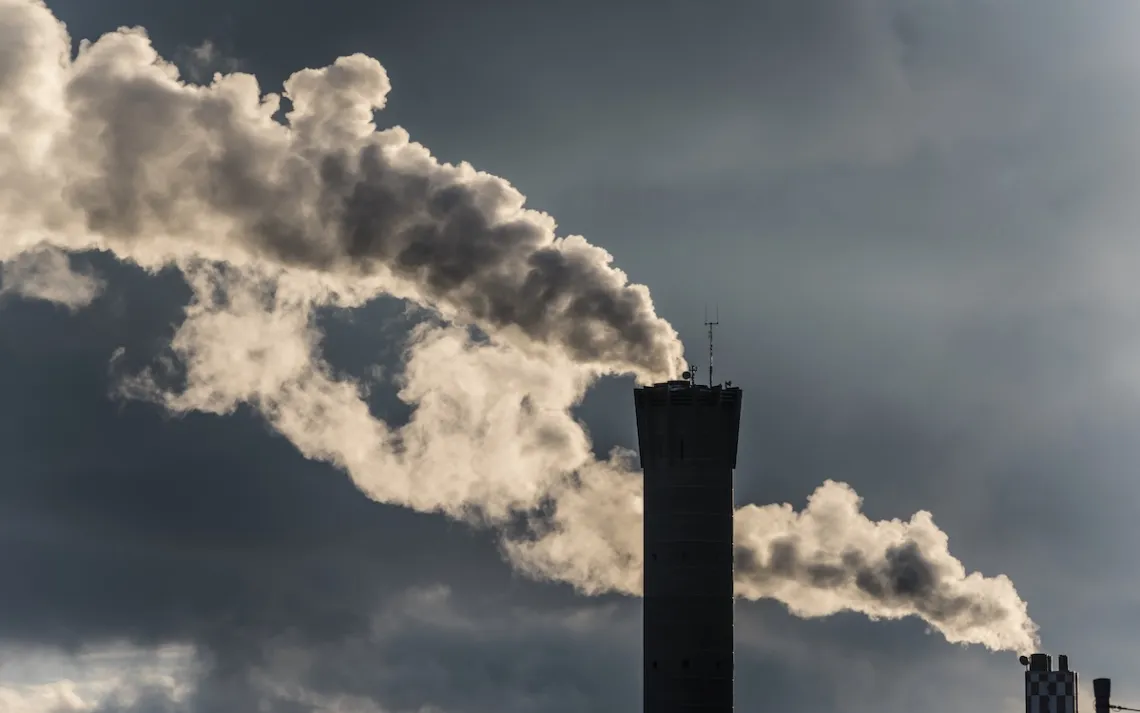
Photo by EThamPhoto/Getty Images
The Environmental Protection Agency under President Donald Trump is following through on a plan that will revoke its primary authority to control the greenhouse gas emissions that endanger human health and welfare. The move, if it succeeds, represents a major blow to the global effort to act on runaway climate change just as rates of extreme weather, biodiversity loss, and glacier melting accelerate.
On July 29, EPA administrator Lee Zeldin announced a formal proposal to rescind the greenhouse gas endangerment finding. Zeldin claimed that measures aimed at curbing emissions are more harmful than the climate change impacts stemming from these emissions. The rollback proposal also cites a new Department of Energy report authored by climate contrarians who question the scientific consensus on the causes and dangers of unchecked global heating.
“As if any doubt remained, the Trump administration has formalized climate denial as the official policy of the United States government,” Sierra Club acting executive director Loren Blackford said in a statement. “If approved, rescinding the endangerment finding would strike a decisive blow to the EPA’s authority to limit deadly greenhouse gas emissions and protect our people and our planet from the very worst of the climate crisis.”
The endangerment finding was issued under the Obama administration in 2009 and serves as the legal underpinning for the EPA’s authority to regulate greenhouse gas emissions such as CO2. In 2007, the Supreme Court ruled in Massachusetts v. EPA that greenhouse gases are pollutants under the Clean Air Act, which then triggered the EPA’s obligation to make a science-based determination as to whether they endanger public health and welfare. The finding was the result of an exhaustive examination of peer-reviewed studies and scientific literature going back decades.
Now, the EPA under Trump is arguing that the finding lacks legal and scientific justification. When the finding was made in 2009, the EPA “unreasonably analyzed the scientific record,” Zeldin’s proposal asserts. It also claims that the EPA does not have the legal authority under the Clean Air Act to regulate greenhouse gas emissions based on concerns about global climate change, arguing that the US contribution to the problem is minimal. The US is currently the world’s second-largest emitter of climate pollution and the largest historical emitter.
Along with rescinding the endangerment finding, the EPA is also proposing to eliminate greenhouse gas emission standards for motor vehicles. The transportation sector is the biggest source of these planet-warming emissions in the US. Last year, the Biden administration finalized the strongest-ever rules to curb climate pollution from vehicles—an action that was expected to slash more than 7 billion tons of carbon emissions by 2055, avoid thousands of premature deaths, and yield nearly $100 billion in annual net benefits through reduced fuel and maintenance costs and public health cost savings.
“If EPA dismantles essential standards to clean up vehicle pollution, the agency is giving its blessing to more pollution that will lead to respiratory illnesses, cardiovascular diseases, and premature deaths that could have been prevented."
Republican politicians and industry critics have characterized the regulations as an electric vehicle mandate, though the rules do not impose technology mandates on any particular vehicle sales. The American Petroleum Institute cheered the agency’s proposal to eliminate vehicle emissions standards, calling the Biden administration’s tailpipe rules “costly and unrealistic.”
But public health and environmental advocates say the rollbacks will sicken and kill more Americans and amount to political favors bestowed upon the oil industry.
“If EPA dismantles essential standards to clean up vehicle pollution, the agency is giving its blessing to more pollution that will lead to respiratory illnesses, cardiovascular diseases, and premature deaths that could have been prevented,” said Harold Wimmer, president and CEO of the American Lung Association.
“This proposal to get rid of all greenhouse gas standards will mean more pollution that Americans experience,” Peter Zalzal, associate vice president for clean air strategies at Environmental Defense Fund, said during a teleconference. An EDF analysis of the impacts of the proposed rollbacks found that it would lead to at least 10 billion tons of additional climate pollution through 2055, at least 12,000 more premature deaths, and 8.5 million more asthma attacks.
Repealing the motor vehicle emissions standards will also cede US leadership in the $10 trillion global clean transportation market and will lead to higher prices for consumers in terms of vehicle fuel costs, experts say. “In the regulatory impact analysis that accompanied the proposal, EPA reveals that their proposal will increase gas prices by nearly 75 cents a gallon,” Josh Berman, a senior attorney with the Sierra Club’s Environmental Law Program, told Sierra.
Back in March, Zeldin announced his intention to rescind the endangerment finding, along with all EPA regulations that have followed from that finding—including limits on greenhouse gas emissions from vehicles and power plants—plus other rules pertaining to air and water pollution. In that announcement, Zeldin said that the EPA will “follow the science, the law, and common sense wherever it leads, and we will do so while advancing our commitment towards helping to deliver cleaner, healthier, and safer air, land, and water.”
Scientific analysis going back decades has unambiguously shown that greenhouse gas emissions from human activity are heating up the earth’s climate systems, resulting in severe and widespread impacts such as more extreme weather disasters, species extinction, adverse health effects, and damage to ecosystems, infrastructure, and properties. The US Fifth National Climate Assessment report states, “Without rapid and deep reductions in global greenhouse gas emissions from human activities, the risks of accelerating sea level rise, intensifying extreme weather, and other harmful climate impacts will continue to grow. Each additional increment of warming is expected to lead to more damage and greater economic losses compared to previous increments of warming, while the risk of catastrophic or unforeseen consequences also increases.”
To help support the EPA’s actions, the Department of Energy issued a report attempting to contest the underlying science of climate change. Energy Secretary Chris Wright handpicked the five scientific and economic experts who authored the report.
“I can’t think of anymore more qualified to present antiscientific climate denial propaganda than these five,” climate scientist Michael Mann, distinguished professor in the Department of Earth and Environmental Science at the University of Pennsylvania, said in a social media post. “And I can't think of anyone more likely to seek out these fossil fuel apologists than Christopher Wright.”
Critics of the EPA’s proposal to revoke the endangerment finding say that the move is completely contrary to science, law, and reality.
“Repealing the endangerment finding is indefensible as a matter of science, as a matter of logic, as a matter of policy,” Christophe Courchesne, director of the Environmental Law Center and Environmental Advocacy Clinic at Vermont Law and Graduate School, told Sierra. “The federal government’s own pronouncements on this in the National Climate Assessments have been unequivocal. You cannot erase that history of the federal government under federal law making those pronouncements.”