These Pacific Northwest Groups Feed the Region When It Needs It Most
How gleaners are reducing food waste and helping families make ends meet
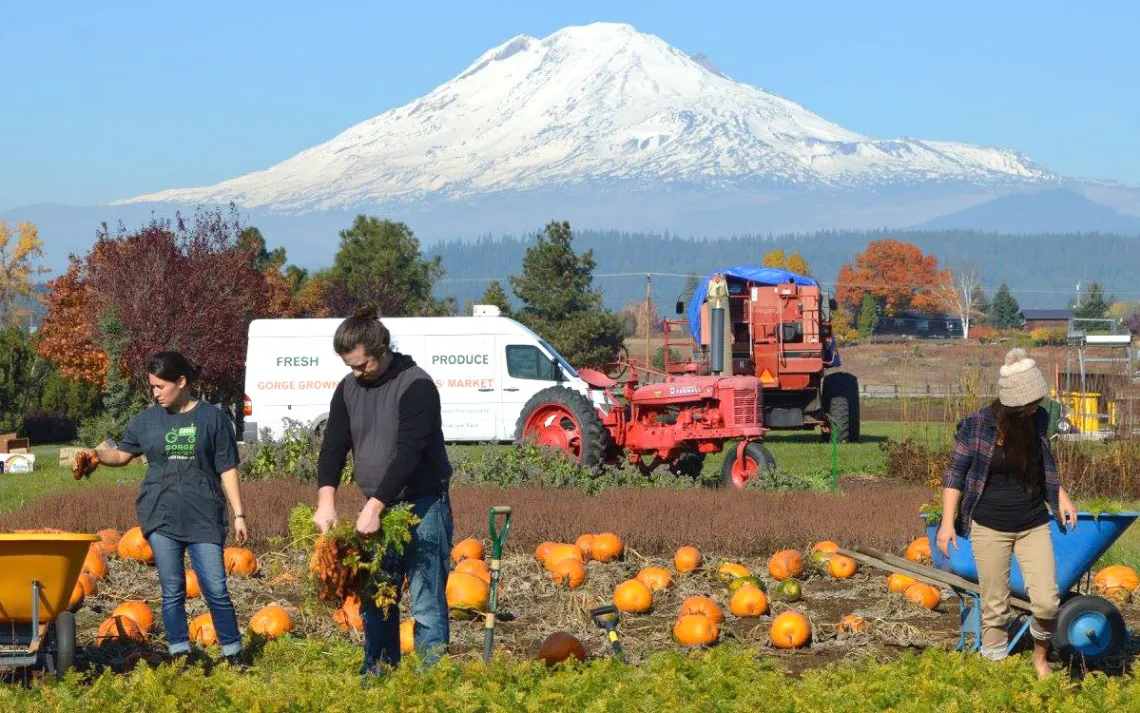
Volunteers help glean produce from a farm in the Columbia River Gorge, which was distributed to food pantries and community organizations. | Courtesy of Gorge Grown/Sarah Sullivan
Along the banks of the Columbia River, farmers in Washington and Oregon harvest millions of pounds of cherries, apples, and pears every summer. But this year, the bumper crop of fruit wasn’t exactly a financial windfall.
As the Trump administration targeted migrant laborers and farmworkers in violent immigration raids, many workers never made the journey from California’s orchards to harvest produce in the Pacific Northwest. Meanwhile, steep tariffs reduced the region’s fruit exports to countries such as India and China—a trade that’s normally worth hundreds of millions of dollars. On top of all that, in August, the food-processing giant Del Monte abruptly closed a canning facility in Washington where workers preserved apples, pears, and cherries from regional growers. The plant had processed about two-thirds of all canned fruit in Washington and Oregon. Farmers were suddenly left without buyers just weeks before harvest season.
“There are always leftovers,” said Sarah Sullivan, the executive director of Gorge Grown Food Network, a nonprofit based in the Columbia River Gorge focused on resilient food systems—last year, there was more than enough to go around. Gorge Grown operates a gleaning program, where volunteers are called in to help collect and redistribute produce that would otherwise go to waste. “We’re often called in when there’s some situation, like a labor shortage or a weather event, that causes minor blemishes on fruit.”
Across the United States, hundreds of these local gleaning organizations work with farmers and food producers, attempting to solve the twin crises of food waste and food insecurity. Nationally, about one-third of all food produced never gets eaten. Some of it simply never makes it off a farm. Along the way to grocery stores and eventually kitchens across the country, more food is thrown into garbage cans, eventually making up nearly 25 percent of all solid waste in the country’s landfills, according to a 2021 report from the Environmental Protection Agency. The greenhouse gas emissions from all that rotting food are tremendous: equivalent to the emissions of 42 coal-fired power plants annually.
Despite this glut of food, an increasing number of Americans face food insecurity—they’re worried or uncertain about how they’ll afford their next meal. In 2023, an estimated 18 million Americans experienced food insecurity at least once, according to data from the Department of Agriculture.
In the five counties that make up the Columbia River Gorge, in both Oregon and Washington, Gorge Grown estimates that one in three households face some level of food insecurity. Last year, Gorge Grown distributed the surplus of fresh fruit from local farms to senior centers, Head Start preschool programs, Indigenous youth camps, and nearly two dozen food pantries in the region. “At a certain point every fall, food banks are like, ‘We’re full of pears and we can’t store any more,’” Sullivan said.
It’s a problem that many gleaning organizations face, particularly with monocropping and industrial agriculture. It takes an immense amount of planning and logistics to make sure that food recovery and donations don’t end up wasted themselves, says Laurie Beyranevand, the director of Vermont Law School’s Center for Agriculture and Food Systems, which runs the National Gleaning Project. “It’s nice to be able to go and glean a bunch of produce, which is expensive and something that’s often difficult to get at food pantries,” she said. “But it can be really challenging—you need tremendous coordination because storing that food might involve cold storage and transportation.” Many gleaning organizations are shoestring operations with limited staff and budget for that level of infrastructure, Beyranevand added.
To that end, Gorge Grown looked outside of its usual networks last season, eventually making its first donation of locally grown fruit to inmates at the Coffee Creek Correctional Facility in Oregon. “The women in that facility rarely get fresh fruit—some of them were in tears because they hadn’t had a pear since last Christmas,” Sullivan said.
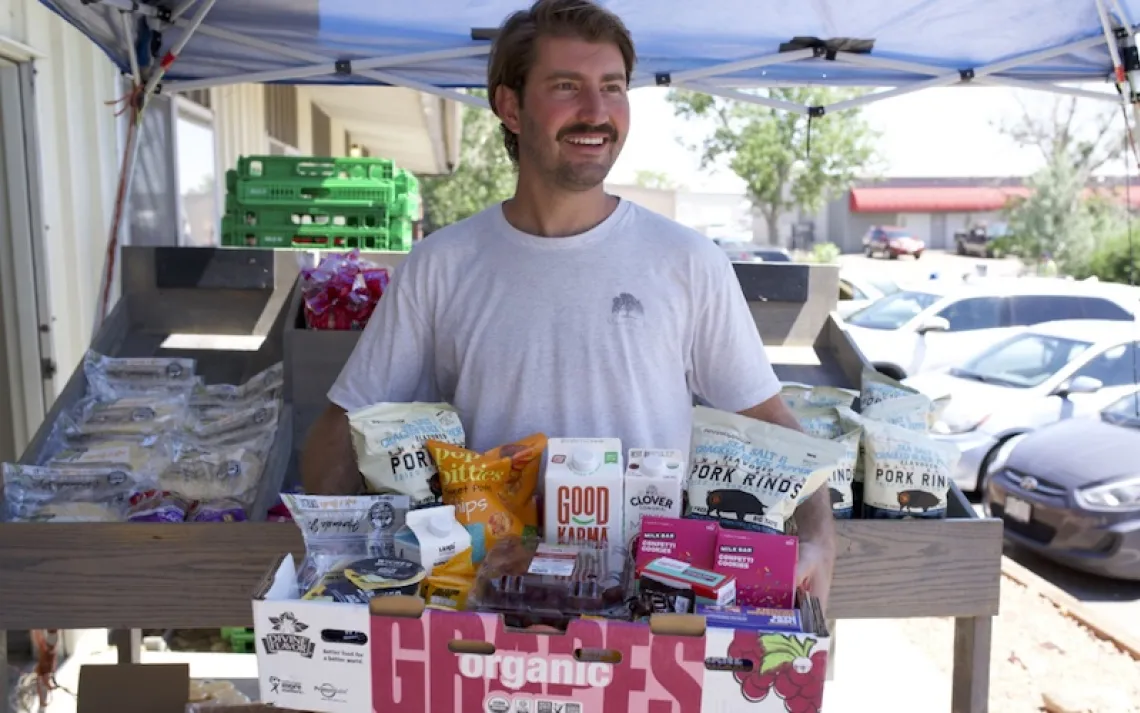
In nearby Portland, Urban Gleaners works with local farms as well as restaurants and grocery stores to save perfectly edible food from being thrown away. The nonprofit then operates dozens of free food markets around the city, and people can pick up what they need, no questions asked.
This past fall, the organization faced a quandary. Local businesses and people were donating more than staff could keep track of, but more families needed help as their food assistance benefits were frozen during the federal government shutdown. “We were inundated with phone calls at the warehouse, of families who didn’t know what to do,” said Katy Hill, Urban Gleaners’ communications director. Hill estimates that in the fall, Urban Gleaners’ markets saw a 25 percent increase in the number of people seeking help.
“It’s like playing a game of Tetris—how are we going to move this food quickly?” The organization’s small warehouse space means that it can only store so much food at one time. Urban Gleaners' small staff has to figure out who else can take donations, and how they can transport pallets of food.
Working with other local community advocates, focused on issues such as housing security, elderly populations, or LGBTQ support, has allowed Urban Gleaners to fill food security gaps more quickly, Hill said. Urban Gleaners was able to open three more free food markets this fall with partner organizations. It now hosts a market every day of the week, in various neighborhoods of Portland and the surrounding suburbs. “We actually had a long waitlist of people wanting to work with us on free food markets, so we were finally able to reach out to those partners.”
While gleaning can be beneficial for communities like Portland and the Columbia River Gorge, stronger state and federal policies could more effectively address both food waste and food insecurity. “The charitable food sector really does play a huge role during these moments, when cuts to SNAP and other food programs are going to have devastating impacts,” Beyranavand said. “But it’s unfortunate that we rely on it to make sure that people have enough food to eat in a country as rich as the United States.”