Talking Trash
Christi Turner tackles a rotten problem in one of America's fastest-growing cities

Photos courtesy of Christi Turner
Christi Turner grew up watching her mother fill the cabinet under the kitchen sink with recyclables until it overflowed. The family, living in subsidized housing in Rhode Island, often had barely enough money to buy gas. Still, once the cabinet was full, they would pile into their car alongside plastic fruit cases, toilet paper rolls, and cardboard boxes and drive to neighboring Massachusetts, which had the closest recycling facilities.
“She always instilled in my brother and me that this is a responsibility and this is a resource. We used it, and we shouldn’t waste it,” says Turner. “To this day, there’s a part of me that is doing what I’m doing to live out the version of my mom’s future that she never could.”
Turner is a die-hard environmentalist. She spent seven years in Madagascar as a Peace Corps volunteer helping to create culturally appropriate sustainability solutions. She was an environmental journalist. Now, living on a small Colorado homestead with two dogs and more than 20 rescue animals, she is a master composter and founder of a successful compost company, Scraps. Today, Scraps has kept more than 7.8 million pounds of organic waste out of landfills and is helping to run a zero-waste pilot program at Denver International Airport.
“Organics diversion connects to all of our lives. No matter your politics, no matter where you come from, this is something everyone can do,” says Turner. “It’s something that has economic, ecological, community benefits for everyone.”
Working in environmental communications after 2010, “at some point, I was shocked awake about the huge climate impact that food waste has, that I just never knew about,” says Turner.
In 2023, 31 percent of the US food supply—the equivalent of 120 billion meals worth of food—went unsold or uneaten, according to the nonprofit ReFED. The majority of that food is sent to landfill; as it slowly decomposes without access to oxygen, it releases methane, a greenhouse gas that is 28 times more potent than carbon dioxide. Food waste is responsible for 14 percent of total US methane emissions, ReFED estimates.
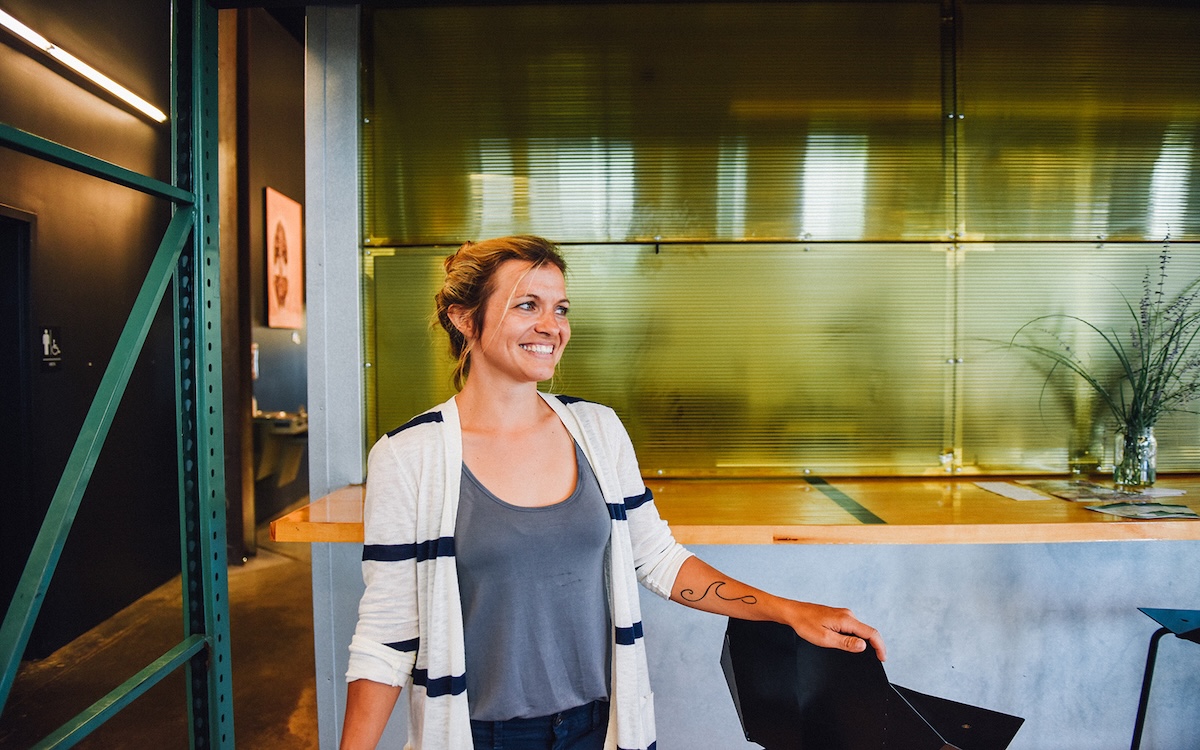
Christi Turner
If diverted to compost, these same materials become a beneficial, nutrient-rich soil amendment, helping farmers and gardeners alike build healthier soil, prevent soil erosion, conserve water, and improve plant growth. With 43 percent of food waste coming from Americans’ homes, Turner saw this as a massive opportunity. “Food waste is not only a climate liability. It’s a valuable resource that could go back into our land, back into our soil,” she says.
But Turner found little to no resources to properly dispose of her coffee grounds and banana peels at her apartment complex in central Denver. “This whole idea of Colorado—and Denver especially—as this green, environmental, outdoorsy place to be . . . therefore we love the environment and really care about it. . . . There was a real disconnect between that ostensible ethic and people’s waste practices and policies around waste practices,” says Turner.
Colorado ranks among the 20 worst states in recycling and composting. Denver had initiated a pilot program for a few thousand single-family homes to pay for composting services in 2010. However, larger multifamily units (MFUs) were considered businesses and fell outside the program's scope. Meanwhile, “droves” of people were moving into new apartment buildings with no options to compost their organic waste, says Turner. Nearly 100,000 new residents moved to Colorado in 2015 alone.
The City of Denver had a small team working on waste reduction, which did not distinguish between types of material waste such as compost or recycling. The city’s goal in 2015 was to reach the national average waste diversion rate of 34 percent by 2020. Turner was appalled. “I found it abhorrent that you could set a goal to be average in five years. That’s not a goal,” says Turner. “We have a problem knocking at our door and there are solutions, and this is not one of them. This is greenwashing, essentially.”
This lit a fire under Turner to pursue Scraps, a dream she had been mulling over for some time. She attended a US Composting Council conference and returned equipped with compost bags and bin donations. She designed a brand and website, raised funds through GoFundMe, hosted a kick-off party, and acquired Scraps’ first compost-hauling trike. A friend introduced her to Scraps’ first customer, Working Class, a local restaurant founded by a six-time James Beard Award nominee. Several other popular restaurants joined shortly after.
Soon, Turner found herself riding a tricycle full of compost up and down one of the busiest commercial streets in Denver. But there were still major gaps to be filled. MFUs were not getting on board.
“Without a mandate and political will, a property management company or homeowner association (HOA) is not going to be interested in charging their homeowners or tenants extra money to set up a system,” Turner explains. “It just wasn’t worth it for them financially.”
It would take several months for Turner to get the HOAs and the property managers to agree to meet, choose a compost pick-up spot, and give Turner building access to park her trike, come inside, and pick up the waste. Soon, though, Scraps caught on through word of mouth and increased public awareness. Denver had set a new, more ambitious goal in 2022: diverting 70 percent of their waste going to landfill by 2032. And voters passed the Waste No More ordinance, which today requires businesses, events, and construction projects to provide recycling and composting services—a boon for businesses like Scraps that offer commercial services.
Expansion has brought more unexpected hurdles for Scraps. Upgrading from tricycle collection to pickup trucks, vans, and full-size haulers comes with a hefty price tag, for example: Not only do hauler trucks cost upwards of $300,000 and can take months to find, but insurance requirements now cost Turner almost $20,000 per month, compared with a few hundred dollars per month to cover tricycle and bicycle hauling. Meanwhile, finding staff to drive the hauler trucks can be challenging—Colorado has seen a historic shortage of drivers with the required commercial driver’s license in the past few years.
But one of the biggest hurdles is education. Denver’s Pay as You Throw program, which promises free recycling and composting for all residents, has faced criticism for its slow rollout. Nancy Kuhn, marketing and communications director at Denver’s Department of Transportation & Infrastructure, says this is necessary for any new composting program to avoid contamination. “One of the challenges in rolling out a city-wide organics program has been balancing residents' excitement for the program with the need to strategically roll the program out to provide the proper education, outreach, and operational support,” says Kuhn. “The organics stream is the most sensitive to contamination, and residents are coming from all different familiarities with composting.”
US composting regulations vary by state and locality. Cities like Seattle and Santa Monica fine homeowners for not properly sorting waste, while others lack a mandate or proper infrastructure to collect and process organics. Denver adds a layer of complexity within the municipality itself: Single-family homes and apartment buildings with fewer than seven units are within the scope of the city’s Pay as You Throw, while larger MFUs and all other commercial buildings including restaurants must contract their own services.
“Different [compost] vendors have different offerings, and the rules may be different depending on where you are,” explains Jerry Tinianow, who served seven years as the first chief sustainability officer of the City and County of Denver. One might visit a restaurant that works with Scraps, for example, and accepts certain Compost Manufacturing Alliance (CMA)-approved compostable forks, knives, and plates. But “then you come home and you throw the same stuff in your compost bin, but now you're contaminating the stream.”
Turner says that moving to a single hauler can help alleviate many of the pressures facing Denver’s waste system. “Your ability to select your trash hauler is interpreted as some a rights and freedom conversation [in Colorado],” Turner explains. But having multiple haulers not only causes confusion among users, “it’s worse for the air; you’re going to pay more to repair the roads with more heavy-duty trucks crisscrossing everywhere; you’re not going to get the best price.”
Turner is hopeful about new regulations allowing companies to partner with farms and build soil health through compost. For example, Colorado’s Solid Waste Regulations were revised in 2024 to address a lack of mid-tier food waste composting options. Now, agriculturally zoned land can have facilities of up to two acres for processing organic waste.
“You can really close the loop a lot more locally and have a facility that does not produce odor, does not produce issues, and is re-establishing the connection between building soil and agriculture,” says Turner. “Making compost on farm makes sense for so many reasons.”