Forced Coal Plant Openings Throw Communities Into Chaos
The federal government is ordering plants to stay open over the objections of locals and plant operators
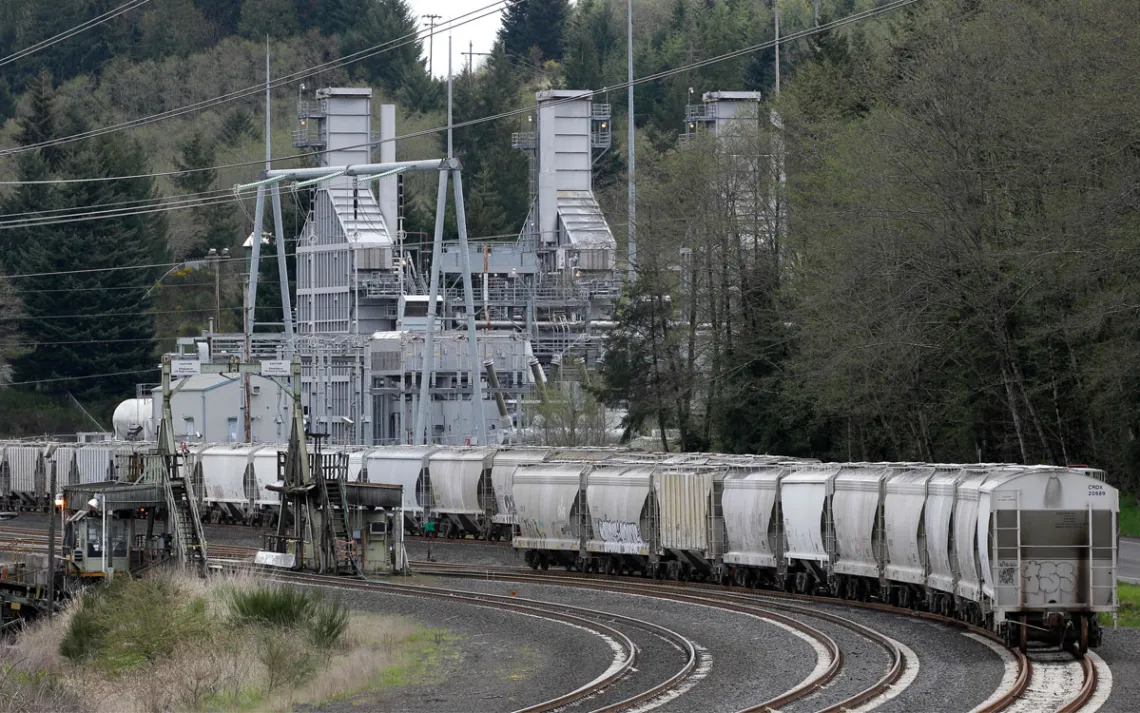
The TransAlta plant near Centralia, Washington. | Photo courtesy of AP Photo/Ted S. Warren
Breck Lebegue remembers stepping outside during cold Illinois winters in the 1960s to fetch coal for the stove that warmed his grandmother’s apartment. “There would be a cloud of smog just hanging over the building,” he recalled.
That pall might not have seemed terribly important then—but later, while working as a doctor for the US Air Force, Lebegue grew concerned about the health impacts from burning fossil fuels. This prompted the now-retired flight surgeon to get involved in the climate work of Washington Physicians for Social Responsibility. The group educates the public about the health hazards of everything from highway diesel fumes to gas pipelines.
One fossil fuel Lebegue didn’t expect to spend much energy on, though, is coal. The only coal plant in his current home state of Washington was already scheduled to shut down by the end of 2025.
“It seemed like one less thing to worry about,” Lebegue said.
That changed just as the plant was supposed to close, when the Trump administration added Washington’s coal-fired Centralia Power Plant to a list of power stations it’s forcing to stay open. The move upends years of careful planning for the facility’s retirement.
In 2011, the Washington legislature codified an agreement between environmental groups and labor representatives. The legislation required Centralia plant’s owner to stop burning coal at the end of last year. It also included a $55 million fund for economic development in the town of Centralia, and has been widely cited as an example of how to phase out coal while protecting workers and the environment.
“We thought this plant was already coming offline in an orderly manner, so we didn’t need to rally people around the health threats it poses,” Lebegue said. “But it seems we’ve got to do exactly that.”
Dethroning coal
The plan to transition Centralia off coal was an early victory for the Sierra Club’s Beyond Coal campaign, which was young in 2011 when the agreement was announced. “Coal was king back then,” said Robin Everett, deputy director for the campaign. “It still generated around half the country’s electricity.”
TransAlta, the Canadian company that runs the Centralia plant, originally operated two coal-fired units at the facility, each with a capacity of about 700 megawatts. The plan enacted by Washington’s legislature required one of these to come offline by 2020, the other in 2025. This two-part phaseout, and the economic development fund included with the legislation, gave the community time and resources to replace coal jobs.
“It was a plan that brought everyone to the table—the utility, regulators, environmentalists, and labor,” Everett said. “To now have it upended at the last minute by people who have no understanding of what we need in the Northwest, it’s just infuriating.”
The years after the Centralia agreement was struck saw a stampede of US coal closure announcements, spurred by grassroots pressure from environmental groups and falling prices for other sources of energy. The trend continued through Donald Trump’s first term as president, as economic factors drove the drift away from coal even amid rollbacks to federal pollution regulations. It’s against this backdrop that, last year, the fossil-fuel-friendly administration began experimenting with a new approach: using the Department of Energy’s emergency authority to order certain coal plants to remain open.
So far, the DOE has targeted five plants that were supposed to close one or more units last year: TransAlta’s Centralia facility; Michigan’s J.H. Campbell Generating Plant; the Craig Generating Station, in Colorado; and the R.M. Schahfer and F.B. Culley plants in Indiana. The Eddystone Generating Station, an oil and gas plant in Pennsylvania, has similarly been ordered not to close.
In communities anticipating relief from toxic pollutants emitted by these plants, the delayed closures come as crushing blows. “For the people of Jasper County, this is a case of death by a thousand cuts,” said Ashley Williams of Just Transition Northwest Indiana, which opposes continued operation of the Schahfer plant. According to the Toll From Coal report produced by the nonprofit Clean Air Task Force, pollution from Schahfer’s multiple units and associated coal ash pond exposes nearby Hoosiers to arsenic, molybdenum, and other toxins. These kinds of health hazards are a paramount concern for Lebegue, who worries about what continued coal use in Centralia would mean.
“We know babies born to families near coal plants have a higher prevalence of birth defects,” Lebegue said. “This connection has been established for at least a decade. There’s really no doubt about the science.”
Researchers at the University of California studied births before and after the closures of California coal plants, and found preterm births dropped 20 to 25 percent after the plants shut down.
While the DOE coal orders specify that affected plants must remain “available to operate,” this hasn’t stopped some from ceasing to actively burn coal. The Centralia plant hasn’t restarted since burning through its last coal load in December, though it remains connected to the grid as per the DOE order. Michigan’s Campbell Plant, by contrast, has been burning coal off and on past its planned closure date since the order came down.
Keeping these aging plants running is expensive, not just from a climate and health standpoint but in economic terms. Some units affected by DOE orders need costly repairs, which their owners chose not to invest in, given their impending retirements. The Craig unit in Colorado, alone, would require millions of dollars in work just to become operational.
It’s also unclear who would buy power from some affected plants, even if they did restart. Centralia is a case in point. The Northwest regional grid already has cleaner, cheaper sources of energy locked in to cover demand.
“The order to keep the Centralia plant open is something no one wanted,” Everett said. “The company that runs it, the state, labor, and environmental groups who agreed on closing it—nobody wants this except the Trump administration.”
Legal challenges
The stated legal basis for the forced opening is section 202(c) of the Federal Power Act, which gives the DOE emergency authority to require energy infrastructure be connected to the grid. However, legal experts question whether simple growth in energy demand, the DOE’s official justification for its recent orders, constitutes an emergency.
Because it’s meant to address short-term crises, orders under section 202(c) can last up to only 90 days. Still, Trump’s DOE has renewed its Campbell coal order multiple times and seems prepared to do the same with other plants.
“This completely deviates from any historical use of the DOE’s authority and clear statutory language about how this authority is to be used,” said Greg Wannier, senior attorney at the Sierra Club. The Sierra Club and Earthjustice are challenging all five coal plant orders in court.
“There are robust legal efforts to stop these unlawful orders,” said Ben Inskeep of Citizens Action Coalition, one of the Indiana-based groups Earthjustice is representing in its challenges to the Schahfer and Culley plants.
The attorneys general for Washington, Colorado, and Michigan have also indicated they will fight the DOE orders in their respective states. Meanwhile, the Trump administration’s professed concern about energy supply doesn’t seem to extend to clean power. The administration has issued stop-work orders for offshore wind projects and canceled grants for clean energy.
In Washington State, this inconsistent approach is putting plans for a coal-free future at least temporarily in doubt, with stark implications for those affected by the Centralia plant’s pollution.
“If this plant reopens, there will be a human cost,” Lebegue said. “Health problems and ER visits for asthma will go back up. The right thing to do is make sure it stays closed.”