Proposed Yosemite Land Swap Is the Latest Attack on Public Lands
The Trump administration has wasted no opportunity to serve up protected places for private interests
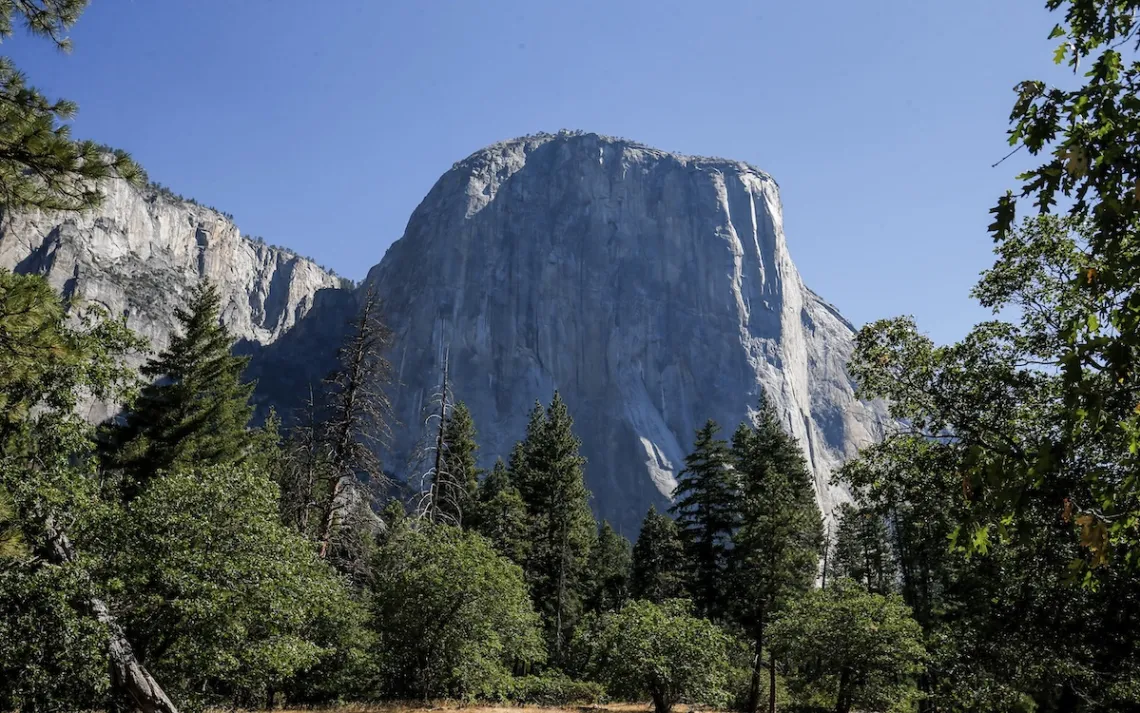
Yosemite National Park. | Photo by Michael Ho Wai Lee/SOPA Images/AP
Last week, the news site NOTUS broke the story that the Trump administration is considering a land exchange in Yosemite National Park with a private developer.
The deal would allow the developer, Nevada-based Kingsbarn Realty Capital, to build a private road through the park for access to a remote 83-acre property it owns on Yosemite’s western border. The proposal reportedly would exchange a strip of federal land inside Yosemite for property of roughly equal value owned by Kingsbarn. No final decision has been made.
The land in question, known as Hazel Green Ranch, has a long history. A developer named Lewis Geyser first acquired it in the late 1990s. In 2007, Geyser sought an easement near the park’s Big Oak Flat entrance to pave two dirt paths, which would provide a major shortcut to the property.
The National Park Service denied Geyser’s request, so he sued. Citing an antiquated statute within the Mining Act of 1866, he claimed that US law granted rights of way through public lands to reach landlocked parcels. An environmental coalition headed by the Sierra Club stepped in, arguing that the property was not, in fact, landlocked—there was already a road, albeit longer and more winding, by which the land could be accessed—and that the county had abandoned all claims to the old roads in the park years before. In 2010, a district court rejected Geyser’s claims, and the Ninth Circuit affirmed it in 2012. Geyser’s right-of-way claim was denied, and the road scheme was seemingly dead.
That is until last month. Kingsbarn, represented by an influential lawyer and lobbyist named Lanny Davis (who has provided legal counsel for Harvey Weinstein and Michael Cohen, among others), now seems to be taking advantage of a federal administration far more willing to sacrifice protected landscapes than its predecessors—and may even be entertaining the notion of selling off portions of public land to wealthy interests.
The move sparked outrage and public denouncements from California politicians and environmental leaders. Senator Alex Padilla declared the Trump administration “the most corrupt administration in history” in a prepared statement. Mark Rose, a program manager for the National Parks Conservation Association called it “a secretive, backroom deal” and “an attack on the American people that own this national park.”
"Nothing dollarable is safe, however guarded,” John Muir wrote. “Thus, the Yosemite Park, the beauty, glory of California and the nation, Nature's own mountain wonderland, has been attacked by spoilers ever since it was established, and this strife, I suppose, must go on as part of the eternal battle between right and wrong.”
In a statement, Sierra Club Executive Director Loren Blackford said, “This secretive deal betrays the purpose of our national parks and the promise our government has kept since Abraham Lincoln to protect Yosemite for the public and for generations to come.”
The Sierra Club was instrumental in protecting Yosemite, which was designated as the country’s third national park in 1890. The organization’s founder, John Muir, wrote to President Theodore Roosevelt in 1908, urging him to intervene in the damming of Yosemite’s Hetch Hetchy Valley. “Nothing dollarable is safe, however guarded,” he wrote. “Thus, the Yosemite Park, the beauty, glory of California and the nation, Nature's own mountain wonderland, has been attacked by spoilers ever since it was established, and this strife, I suppose, must go on as part of the eternal battle between right and wrong.”
Muir’s words were prescient, almost prophetic, in describing the threats faced today by Yosemite and the rest of the country’s national parks.
Indeed, the Yosemite land swap fits neatly into the timeline of the Trump administration’s coordinated, large-scale attack on the entirety of the nation’s federal public lands system. “Many Western lands and habitats largely lack any form of permanent protection,” said Brittany Fallon, policy manager for Boulder-based environmental group Western Resource Advocates. “That means beloved landscapes will slowly be lost to development, severe wildfire, or degradation over our lifetimes. In addition to opposing the sale of our national public lands to the highest bidder, we have to fight for conservation at the state level or risk losing the connected landscapes and natural heritage that make the US and the West beautiful and livable.”
Take, for example, the unsanctioned roadbuilding that took place last month in Big Bend National Park, another crown jewel of the national park system. Before the project was halted by a federal judge, a Texas contractor bulldozed roads deep into Big Bend’s interior, presumably to provide access for the construction of sections of border wall. As Margret Grebowicz reported for Sierra, heavy equipment ran roughshod over the canyon’s riparian ecosystems and landscapes filled with archaeological sites dating back 13,000 years.
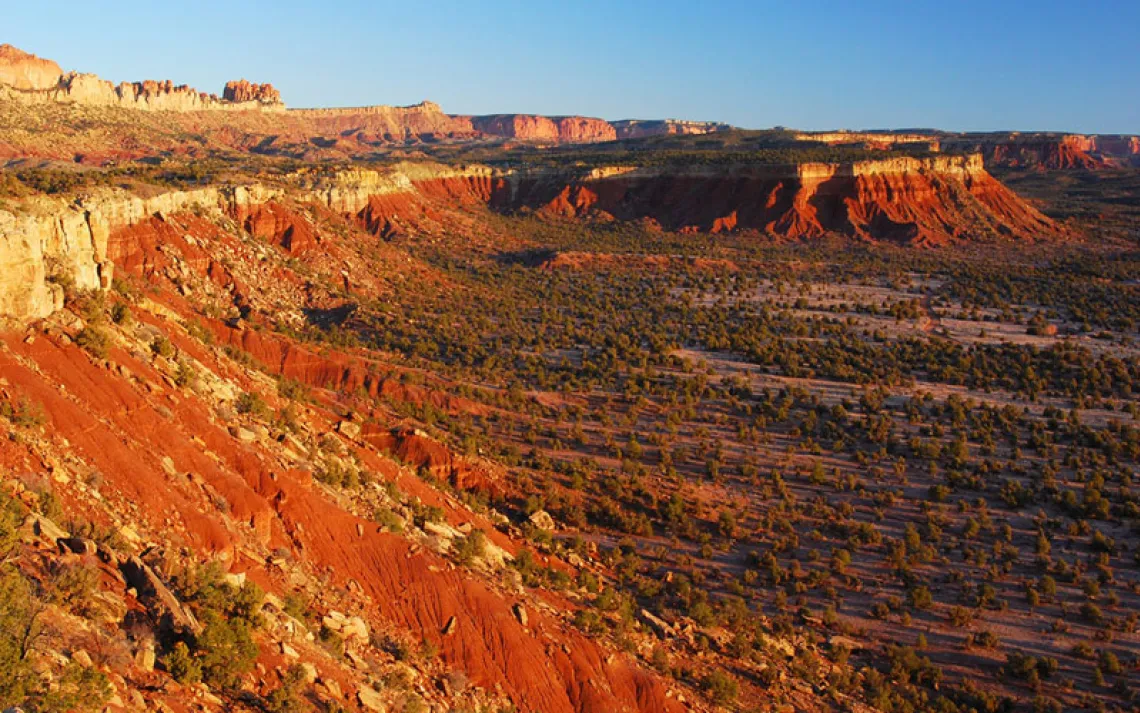
When it’s not carving roads through wilderness, the administration is busy slashing the boundaries of culturally and ecologically sensitive parcels of public lands. In July, the Department of the Interior announced a radical downsizing of Utah’s Bears Ears and Grand Staircase–Escalante National Monuments. This was the second time Trump has slashed their boundaries: Shortly after assuming office in 2017, he unilaterally reduced Bears Ears and Grand Staircase–Escalante by 85 and 50 percent, respectively—a move many in the conservation community viewed as a giveaway to extractive industry, ranchers, and the architect of the “land transfer” movement, Utah Senator Mike Lee. President Biden reinstated the boundaries of Bears Ears and Grand Staircase–Escalante in 2021 before Trump again reduced both monuments in July, this time by roughly 90 percent each.
In May, the Bureau of Land Management transferred 1.4 million acres of land to the state in exchange for pushing forward the Ambler mining road and the Alaska Liquefied Natural Gas project as well as several other fossil fuel initiatives. In a press release, Interior Secretary Doug Burgum said the massive land giveaway would put “Alaska at the forefront of American Energy Dominance.” It would also most certainly fragment critical habitat for some of the last great populations of caribou, grizzly, Dall sheep, Chinook salmon, and moose in North America and impact subsistence users who depend on the area for their way of life.
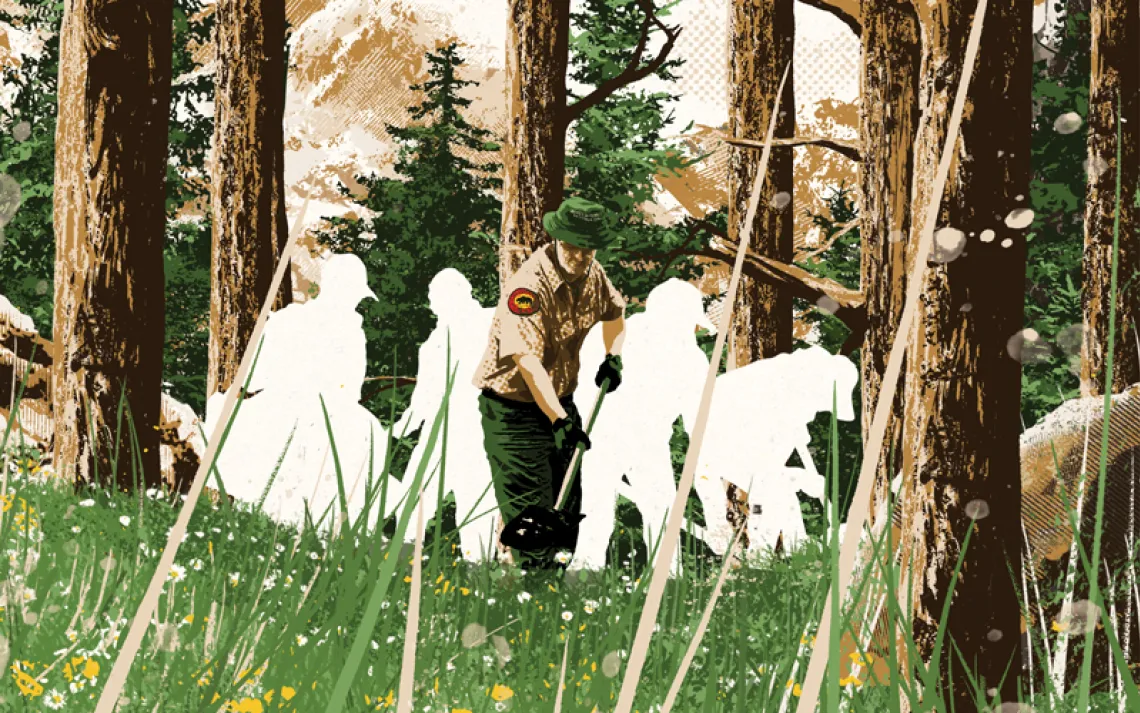
Not coincidentally, last month, Trump’s Forest Service chief and former timber industry executive Tom Schultz pushed for expanded logging in national forests under the guise of managing for fire risk. This administration has a history of promoting commercial logging on public land to satisfy timber interests under the cover of addressing wildfire risk.
These attacks on the country’s national parks, monuments, and national forests have all coincided with the Trump administration’s recent efforts to unravel two key pieces of environmental regulations, the Public Lands Rule and Roadless Rule.
In May, the administration finalized its revocation of the Public Lands Rule, adopted in 2024, which equally weighted the value of conservation with extractive interests. Ninety-eight percent of public commenters urged the rule’s preservation, “including members of Congress, local elected leaders, former Bureau of Land Management officials, tribal representatives, and community voices from across the country,” according to a Sierra Club press release.
The Roadless Rule has been a source of ire for mining and logging interests since it was passed in 2001, during the final days of the Clinton administration. The rule prevents logging and road construction in millions of acres of remote forests to protect watershed health, habitat, and recreation. In mid-August, USDA Secretary Brooke Rollins filed a proposal to rescind the rule, which she called “a one-size-fits-all restriction that has frustrated land managers and served as a barrier to wildfire risk reduction work across large swaths of America’s national forests.”
All of these actions, taken together, demonstrate that Trump has put into place one of the most anti–public lands administrations in modern American history. While its actions are being litigated in court, they point to a federal government far more interested in accommodating business opportunities for the financial elite than in protecting the wild and culturally, as well as historically, significant places that have long defined America—places like Yosemite, Big Bend, Bears Ears, Grand Staircase–Escalante, and many others.
This is not a right or left, Republican or Democrat, issue. The preservation of public lands is a long-standing and historically bipartisan value that is shared among Americans of all political persuasions. At stake is the very notion of why preserving these wild places matters: They have been, and continue to be, an essential part of what defines American life.
On September 5th, Sierra Club volunteers handed out flyers and talked with visitors at three entrances to Yosemite National Park.

The park protectors raised awareness about Interior Secretary Burgum's plan to carve up Yosemite so a private real-estate development can be more profitable. We're even learning that the administration is planning to use public funds to help cover the costs of the exchange, turning money meant to protect public lands into a tool for selling them out.
No national park is more closely connected to Sierra Club's history and identity. Fighting to protect Yosemite National Park helped inspire our organization's founding in 1892.
You can get involved: demand Congress protect Yosemite and stop this deal now.