Maryland's Blue Crabs in the Red
A key source of culture and sustenance in the mid-Atlantic faces threats on multiple fronts
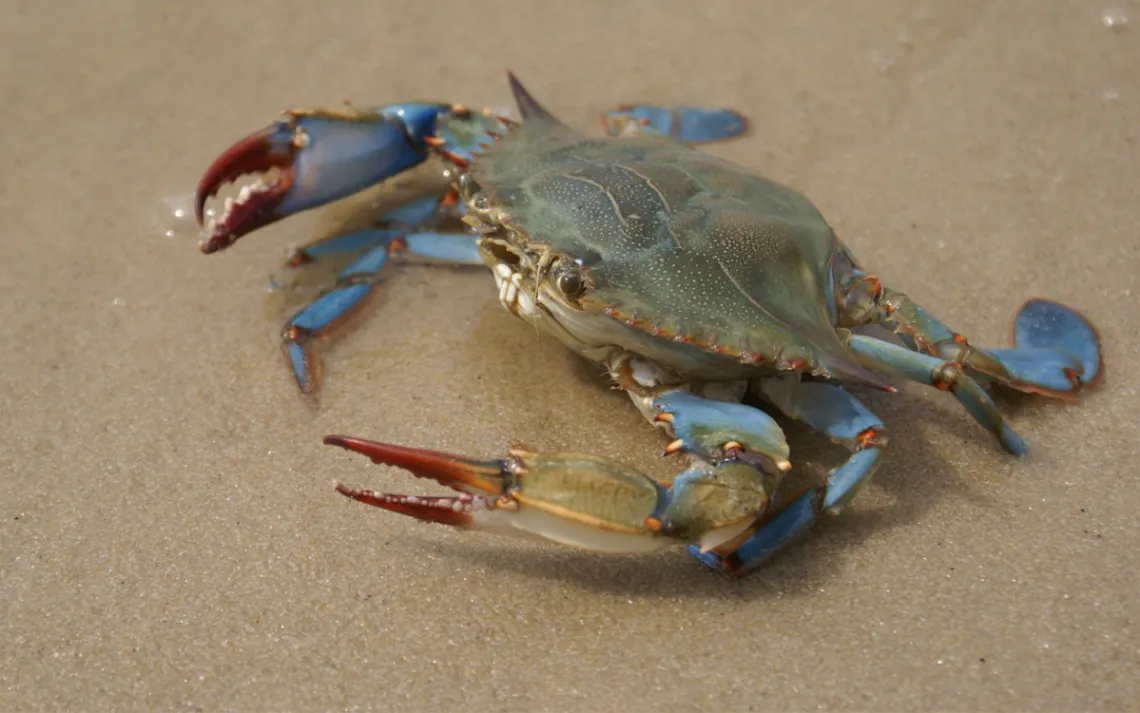
Photo courtesy of molefranz/iStock
Gerald Winegrad has eaten blue crab for as long as he can remember. Growing up in Maryland, the 80-year-old former state senator and environmental activist has been crabbing since he was a child. Many of his fondest memories are being on the water, catching and picking crabs with his loved ones.
“A plate of steamed crabs—it’s like the symbol of Maryland,” he said.
But the blue crab population in the Chesapeake Bay is spiraling. Without widespread environmental action, Winegrad fears, the decline of the iconic crustacean will be detrimental to the region’s culture and environment. “I'm sure, as most Marylanders feel, it shows how sick the system is in the bay,” he said.
In 2025, the number of blue crabs in the Chesapeake Bay was around 238 million, according to the annual blue crab winter dredge survey carried out by Maryland’s Department of Natural Resources and the Virginia Marine Resource Commission. That’s second only to a record-low of 226 million in 2022 since the survey began in the 1990s. With fewer crabs, the price of crab meat has increased drastically in recent years, and the affordable, high-quality seafood that once defined Maryland is now being imported from places like Louisiana, Venezuela, and Vietnam.
It's nearly impossible to know the specific reason for the decline in a particular year, but a number of factors could be to blame, including reproductive issues, predation, overharvesting, and water pollution, said Thomas Miller, a professor at the University of Maryland Center for Environmental Science (UMCES).
“We think one of the reasons for decline in recent years is that reproduction has been less successful than it was in the past. So the average female is producing fewer offspring,” Miller said. Historically, the overharvesting of females, particularly in Virginia—which, unlike Maryland, permits the recreational harvest of female crabs and has less commercial restrictions—has led to population crashes. Now, however, the protection of females at the expense of males could potentially be hurting insemination rates, Miller said.
Predation also impacts the blue crab population, particularly by blue catfish, an invasive species introduced in Virginia in the 1970s.
“We really don’t know what’s going on,” he added. “That's one area where we scientists have got to do a better job: providing more reliable advice to the [fishery] managers over what's causing the current decline and what they can do about it.” Analysis by the Chesapeake Bay Stock Assessment Committee does not identify overharvesting as the reason for the decline in 2025, but Miller stressed that fishery management agencies should “keep their eye on the ball” and remain consistent.
For its part, the state appears to heed this need for caution and hopes the assessment will shed light on the downward trend. “With the results of the stock assessment next year, we hope to have more insight on what could be contributing to the ongoing low juvenile recruitment and what we can do to support the Chesapeake Bay’s blue crabs," Mandy Bromilow, the Maryland Department of Natural Resources’ blue crab program manager, told BayNet this past spring. "Until then, we need to maintain caution in our management approach for blue crabs.”
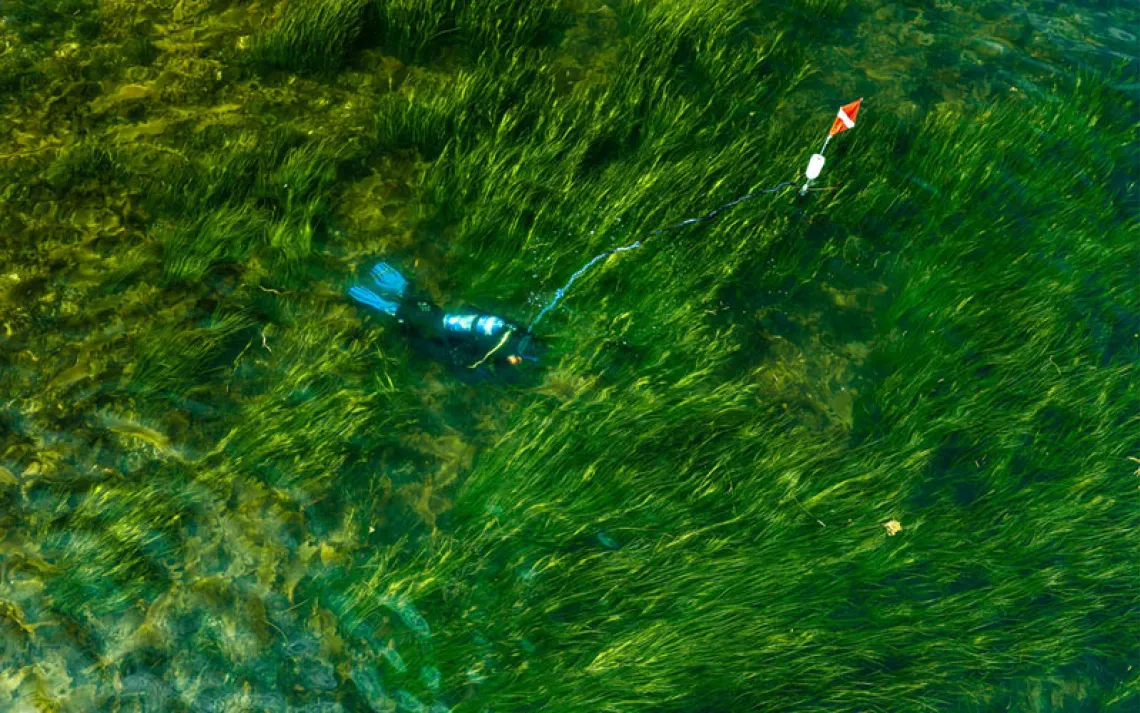
Water pollution is another important factor. According to an annual evaluation produced by UMCES, the bay’s health score dropped from a C+ to a C in 2025, namely due to nitrogen and phosphorus pollution from agricultural runoff. In excess quantities, nitrogen and phosphorus lead to algal blooms that can kill marine life and their habitats. When algae grows on the blades of submerged aquatic vegetation, a crucial refuge for the blue crab, it prevents sunlight from reaching the plants, and they waste away. When the algae eventually dies, it sucks up oxygen from the surrounding water and creates what’s known as a dead zone, which stresses and suffocates aquatic creatures. Dead zones force crabs to migrate to shallower waters, where they become more vulnerable to fishing and other predators. In the extreme, they’ll even walk out of the water entirely in what’s known as a crab jubilee.
Though nitrogen and phosphorus pollution in the bay comes from a number of sources, the primary pollutant is industrial agriculture. The two nutrients are ingredients in chemical fertilizer used by some 5,000 concentrated animal feeding operations (CAFOs) on the Delmarva Peninsula—nearly all of which are poultry farms. That fertilizer ends up in the manure of more than 600 million confined chickens. It’s then spread on nearby fields and runs off into the bay. Industrial poultry houses also release ammonia air pollution, contributing to an estimated 12 million pounds of nitrogen pollution in the bay annually, according to a 2020 study from the Environmental Integrity Project. In total, the study found the poultry industry adds about 24 million pounds of nitrogen pollution to the bay every year—more nitrogen from all the urban and suburban runoff in Maryland and Virginia combined.
“Agriculture is exempted from a lot of our federal environmental laws and a lot of laws generally,” said Evan Isaacson, the director of the Chesapeake Legal Alliance's Environmental Action Center. “So there aren't as many legal tools for regulating any agricultural source of pollution as there would be from … other industrial sources.”
One of the few legal tools that does exist is the Chesapeake Bay total maximum daily load (TMDL), a calculation of the maximum amount of a pollutant allowed to legally enter a waterbody. The Environmental Protection Agency launched the TMDL in 2010 as part of the Chesapeake Bay Agreement, an accord between Maryland, Virginia, West Virginia, Pennsylvania, Delaware, and New York that guides the restoration of the bay. The EPA set the TMDL to specific reduction targets for nitrogen and phosphorus pollution, but states have achieved only 59 percent of their nitrogen reduction targets and about 67 percent of their phosphorus goals as of 2023.
“The problem is, none of the states have ... come up with a good plan and then followed through with the enforcement of that plan,” Isaacson said.
The latest draft of the Chesapeake Bay Agreement was released for public comment in July and has a deadline of September 1. So far, it has faced harsh scrutiny from environmental leaders for its lack of pollution reduction targets and scaled-back conservation goals. “We've seen many, many cleanup efforts come and go. Many, many deadlines come and go. Honestly, this feels like just another one,” Isaacson said. “I hate to say it, but sometimes I'm not even sure I really care, because they're not going to meet whatever they commit to anyway.”
For local environmental advocates like Fred Tutman, who is the CEO at Patuxent Riverkeeper, the unwillingness to hold polluters accountable is incredibly frustrating and a reflection of the poultry industry’s power in the region. “The big chicken lobby on the Delmarva Peninsula is a very well entrenched business with a very strong political lobby,” he said. In 2024, industrial poultry farms on the Delmarva Peninsula raised over 600 million chickens and generated $4.8 billion in sales.
Tutman is the longest-serving riverkeeper in the Chesapeake Bay and the only Black riverkeeper in the United States. He grew up on the shores of the Patuxent River and cares deeply about the watershed and its resources. “I have some spiritual connection to these resources. It's vitally important for both my self-esteem, my identity, and my heritage to save what we can,” he said.
In order to garner mass support for an issue like blue crab decline, Tutman said environmental justice needs to be brought into the conversation. “You change the messaging by appealing to the things that are meaningful,” to surrounding communities, he said. Eating crab is economically unattainable to much of the population along the Patuxent River, but things like clean drinking water and clean air—which are impacted by the same polluters as the blue crab—are important to people’s everyday lives.
“I think a more holistic view of how the society works and how these communities work," Tutman said, "will give you better access to the channels needed in order to get attention paid to an environmental issue.”