A Montana Utility’s Coal Addiction Costs Ratepayers Millions
Energy bills are set to go up because the state wants to keep the Colstrip coal plant running
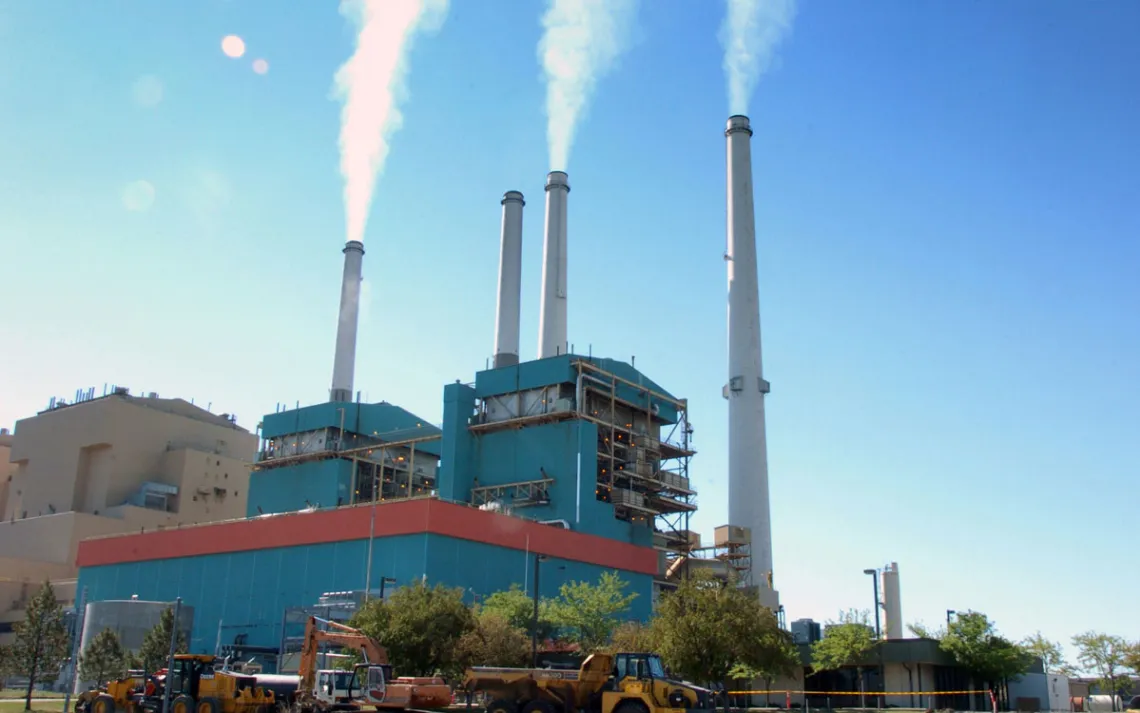
The Colstrip Steam Electric Station, a coal-burning power plant in Colstrip, Montana. | Photo courtesy of AP Photo/Matthew Brown, File
Since the 1970s, a coal-burning power plant called Colstrip has towered over Southeast Montana. At one point, it generated over 2,000 megawatts of electricity for the region. For years, the rationale for Colstrip seemed self-evident. Its power was abundant, reliable, and above all, cheap. However, that narrative has shifted.
Colstrip’s electricity is no longer inexpensive. In fact, it would cost NorthWestern Energy, Montana’s largest utility and the plant’s soon-to-be majority owner, millions to keep the coal plant open. It could cut ratepayer bills by shifting to renewables. Instead, it wants customers to pay for running Colstrip into the 2040s.
“Montana has some of the country’s best wind and solar resources,” said Anne Hedges, executive director of the Montana Environmental Information Center. “There are many ways NorthWestern could replace Colstrip with renewables, but it chooses not to.”
While the coal plant is a losing proposition for ratepayers, keeping it open benefits NorthWestern’s investors. That’s because almost two decades ago, Montana regulators approved a plan essentially letting the utility overcharge customers for Colstrip through 2042. Now, officials at NorthWestern say they want to keep the plant open at least until then.
Elected leaders in Montana, where Republicans control the legislature and every statewide office, have heaped praise on this plan. It still needs approval from the state Public Service Commission and the Federal Energy Regulatory Commission, both of which have pro-fossil fuel majorities.
If it gets the needed permissions, NorthWestern will continue operating one of the country’s biggest, dirtiest coal plants for at least 17 more years. Critics say it looks a lot like state-sponsored socialism for the utility, coming from a state that prides itself on rugged independence from government.
“NorthWestern is desperate to maintain at least the fiction that this plant is used and useful, all so it can recover its investment,” said Hedges. “And it’s ratepayers who get to cover the cost.”
The end of “cheap coal”
How Colstrip went from a source of cheap electricity to an expensive asset is a matter of simple math. Clean energy has grown progressively less expensive, while the costs of running an aging coal plant have piled up. “Colstrip is old and requires constant upkeep,” said Edward Barta, a board member of the Northern Plains Resource Council, a Billings, Montana-based conservation group. “Those costs get passed to ratepayers.”
Ranchers formed the Northern Plains Resource Council in 1972 to mount opposition to a wave of proposed coal plants and mines in Eastern Montana. Locals call it “mine-to-mouth,” describing the direct relationship between plants and mines. Each plant would have burned coal from local deposits, polluting groundwater and industrializing a fertile agricultural region. Community opposition defeated all but one of the plants. That one was Colstrip.
Today, Colstrip is still fed by the nearby Rosebud Mine, but the most accessible coal is long gone. “They’ve cherry-picked the best coal by now and have had to dig deeper,” said Hedges. “That drives up the cost of mining.”
Complying with federal regulations for mercury and other toxic pollutants would be another expense for Colstrip. However, the Trump administration issued it a special exemption from Clean Air Act standards. Republicans and the Trump administration have characterized regulations on pollutants as overly burdensome to industry, but every other major US coal plant using similar technology has already installed pollution controls that Colstrip is being allowed to avoid.
All this makes Colstrip an expensive plant, with more costs on the horizon. Environmental advocates say this feels especially egregious for the public, as ratepayers are already being gouged by energy prices. “Ask Montanans on the street if they’re concerned about their utility bills, and you’ll get a unanimous yes,” said Barta.
Lawmakers at other utilities, who see the writing on the wall, are bailing on Colstrip, which once sent electricity through power lines as far away as Washington and Oregon. Laws designed to phase out coal power in those states have helped spur a Colstrip exodus, and in 2019, two of the plant’s four units went offline.
At the end of this year, Washington utilities Avista and Puget Sound Energy will transfer their Colstrip shares to NorthWestern, giving it a majority stake in the plant. This could have presented an opportunity to phase out Colstrip’s remaining units, which have a combined capacity of 1,480 MW.
Instead, NorthWestern is doubling down on coal.
Fighting the energy transition
In 2008, NorthWestern won a deal from Montana’s Public Service Commission that let it charge customers an inflated price for energy from Colstrip through 2042.
NorthWestern, which had bought a stake in Colstrip for $187 million, wanted to sell that same energy back to ratepayers for a whopping $407 million—more than twice what it paid. The hefty price tag came from an estimate of Colstrip’s market value made during a recent energy crisis, when prices spiked.
“We’re still paying for that decision today,” said Hedges.
NorthWestern has an incentive to keep Colstrip open, and it has nothing to do with securing cheap or reliable energy for Montanans. Only by burning coal until 2042 can the company fully cash in on its lucrative agreement with regulators.
Other companies are so eager to be rid of Colstrip that NorthWestern is acquiring its new stakes for essentially nothing, a fact the utility likes to tout as a good deal for ratepayers. However, the aging plant comes with $18 million in annual maintenance costs.
NorthWestern has employed accounting gymnastics to make it seem like those costs will come from somewhere other than ratepayers’ pocketbooks. The bottom line, though, is that repairs for Colstrip will suck up money that could otherwise go toward savings for ratepayers.
“Colstrip is an old, dirty, expensive plant,” said Hedges. “That’s why other utilities are abandoning it.”
While NorthWestern clings to coal, it is also standing in the way of Montana’s energy transition.
“It would be one thing if they took a neutral stance toward different energy sources,” said Missoula resident Dave Harmon, a member of 350 Montana, a spin-off of Bill McKibben’s 350.org. “But this is a utility going out of its way to stop renewables wherever it can.”
This year, Montana’s Republican governor, Greg Gianforte, killed bipartisan legislation that would have let Montanans subscribe to community solar projects, earning credits to put toward their utility bills. The legislation was opposed by leaders from both NorthWestern and Montana-Dakota Utilities, who convinced Gianforte to veto it.
Because of decisions like this, Montana lags behind other Western states—like Colorado, Washington, and Wyoming—in the race to deploy clean energy. It doesn’t have to be this way, energy experts say. An analysis by the Rocky Mountain Institute concluded that retiring Colstrip and replacing it with renewables could save Montanans up to $1.17 billion over the next 30 years.
Officials at NorthWestern Energy don’t seem interested in that future, however. Neither do Montana elected officials, whose ideological affinity for coal apparently outweighs concern about their constituents subsidizing a piece of aging, dirty infrastructure.
“Colstrip is essentially a bucket of aging bolts, and keeping it open has gotten increasingly expensive,” said Hedges. “But we’re dealing with a utility who doesn’t care, so long as they can pass the cost to ratepayers.”