New Direction in Grizzly Management Could Be a Stepping Stone for Delisting
Federal government hands grizzly bear policy over to states that have been hostile to recovery
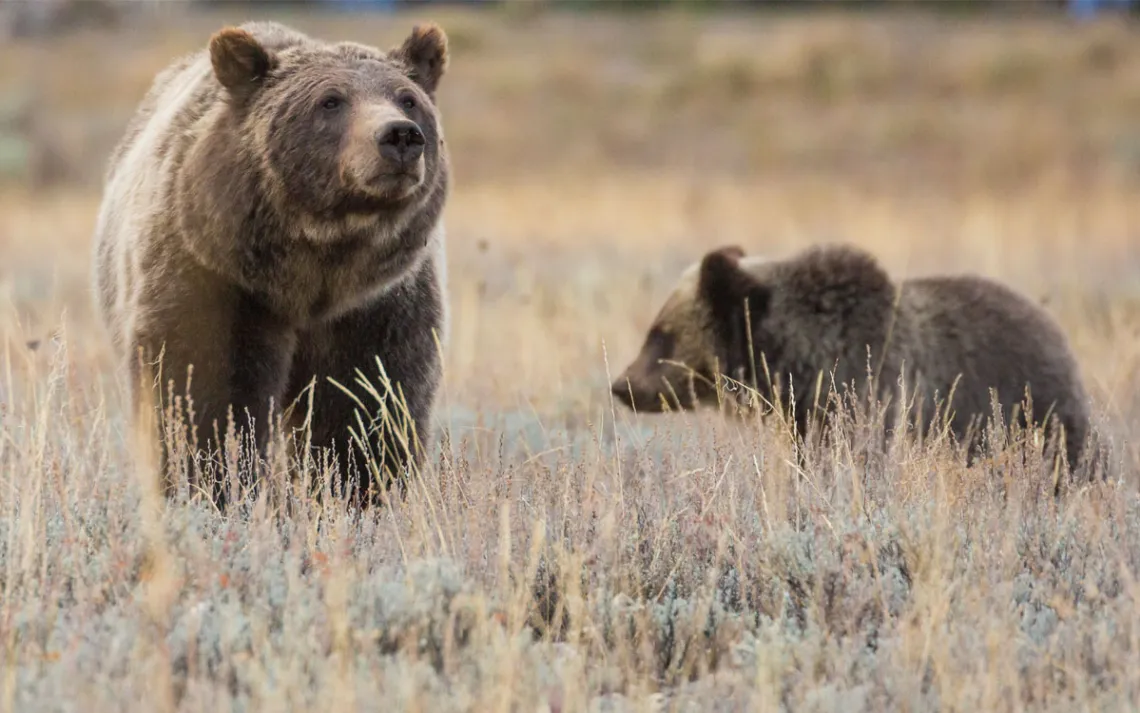
The famous Grizzly Bear 399 and her cubs in Grand Teton National Park, Wyoming. | Photo by BlueBarronPhoto/iStock
Grizzly bears may still be listed under the Endangered Species Act, but a proposal last week could defang many of their federal protections. On Tuesday, July 14, governors from Idaho, Montana, and Wyoming gathered with Interior Secretary Doug Burgum to announce a major change to the way grizzly bears could be managed in the lower 48 states.
Under the proposed rule revision, decision-making for much of bear country would shift from the federal government, which is charged with protecting grizzlies under the Endangered Species Act, to state-level wildlife agencies. While the bears will maintain their ESA protections for now, all four speakers indicated their desire to remove grizzlies from the list of threatened species.
The bears, they said, are no longer at risk of extirpation. Instead, the real danger, they asserted, was to their states’ farmers, ranchers, and recreationalists. “When you have bears showing up in corn mazes, it means [the species] has recovered,” said Wyoming Governor Mark Gordon, speaking at the event.
While the governors touted a conservation success story, often speaking of bear recovery in the past tense, scientists have consistently painted a more complex picture. Bears may be present in some areas, but they occupy only a tiny percentage of their historic range. And those populations remain isolated and disconnected from one another.
“They're focusing on the numbers of bears, but the Endangered Species Act goes beyond just numbers,” said Chris Servheen, former grizzly bear recovery coordinator for the US Fish and Wildlife Service.
When grizzly bears in the Lower 48 were listed under the ESA in 1975, fewer than 800 remained. While their numbers have swelled to more than 2,000 bears, most still reside in either the Greater Yellowstone Ecosystem or the Northern Continental Divide, which includes Glacier National Park.
Four other federally recognized grizzly bear recovery zones have either struggling populations or no resident bears at all. Importantly, says Servheen, the ranges of the Yellowstone and Glacier populations do not overlap, leaving them at risk of genetic bottlenecks.
“We'd like to have them all interconnected, which is going to increase their genetic and climate change resiliency,” said Servheen. “This proposal ignores that altogether.”
Under the newly proposed guidelines, which would revise section 4(d) of the bears’ ESA recovery plan, state wildlife agencies would make decisions about what constitutes a legal “take”—or killing —of bears in areas where population targets have already been met. Guidelines would be set through written memorandum of understanding agreements, which each state would separately enter with the Fish and Wildlife Service.
Angi Bruce, director of Wyoming Fish and Game, said that she and her staff are seeking additional clarification from their federal counterparts on what those agreements would entail. She noted that her team already handles much of the day-to-day work of grizzly bear management, monitoring the state’s population and responding to conflicts between bears and humans. In response to calls from ranchers and other property owners, Wyoming Fish and Game agents captured 46 grizzlies last year, euthanizing 27 of them.
While the specifics remain unclear, Bruce said she supported the governors’ message and any future efforts to delist the bear. “We're over a thousand bears in the Greater Yellowstone Ecosystem,” said Bruce. “That was great to see them acknowledge that recovery.”
In January 2025, the Fish and Wildlife Service rejected a petition from Bruce’s agency to delist grizzly bears in the Greater Yellowstone Area. In its report, the service wrote that it did not view the Yellowstone bears as separate from the overall, threatened population in the Lower 48. A species status report from that year cited a litany of persistent challenges: deaths from poaching; accidental trapping and car collisions; loss of high-calorie food sources due to climate change; and habitat loss.
The newest proposal comes at a tumultuous time for wildlife protection in the United States. Just a week earlier, the Trump administration announced another, broader change to the way it would enforce the Endangered Species Act—altering the definition of illegal “harm” to no longer include the destruction of habitat. Last year, the Forest Service said it intended to rescind the 2001 Roadless Rule, which bars new construction on 45 million acres of federal land—including nearly 10 million acres in Wyoming and Montana.
Lizzy Pennock, carnivore coexistence attorney for the conservation nonprofit WildEarth Guardians, worries that the proposed changes, taken together, could be catastrophic for the West’s burgeoning grizzly population. “Fragmented habitat, roads, logging—all of these things make it very difficult for grizzly bears to survive,” said Pennock. “If we can't protect grizzly bear habitat, it's going to be very hard to protect grizzly bears at all.”
The proposed revision to rule 4(d) of the ESA management plan for grizzly bears is open to comments from the public until August 17.