One Year After Helene, Conservation Meets Recovery in North Carolina
The nonprofit MountainTrue is prioritizing river cleanup strategies that protect sensitive habitats

Workers with MountainTrue use their rafting skills to help remove debris like PVC pipe from western North Carolina's rivers without further disturbing the environment. | Photo courtesy of MountainTrue
Tractor trailer tires. Halloween candy wrappers. Sheet metal roofing. Ceramic dinner plates. Car parts. Shoes—a lot of shoes.
“I have a little trouble sometimes when I pick up the shoes,” admits Zack Davis as he rattles off the trash he’s been encountering in the Swannanoa River near Asheville, North Carolina. “Did those belong to somebody who was swept down the river, and did they make it out or not? It just leads the mind to wander on those things.”
Davis leads the Swannanoa River cleanup team for the Asheville-based conservation nonprofit MountainTrue. Although a year has passed since Hurricane Helene devastated western North Carolina—the storm made landfill in Florida on September 26, 2024, and tore through the Carolinas a day later—the region is still grappling with much of the physical and emotional wreckage left behind. That’s especially true along the Swannanoa and other waterways, which flooded to record levels and destroyed almost 1,000 homes.
The Federal Emergency Management Agency (FEMA) is almost ready to declare its own cleanup complete. The US Army Corps of Engineers and its contractors, responsible for federally funded debris removal in North Carolina’s waterways, estimate they’ve completed 99 percent of their work, having hauled off nearly 6.6 million cubic yards of material. Yet while those efforts cleared major rivers like the French Broad, many smaller tributaries, creeks, and streams—critical for both the environment and the region’s outdoor recreation industry—weren’t part of the mission.
As federal officials step out, Davis and his colleagues are stepping up. With the support of $10 million from the North Carolina Department of Environmental Quality, MountainTrue has launched a new initiative to restore local waterways. Through next December, the effort will support about 80 people cleaning up overlooked areas across 25 western North Carolina counties.
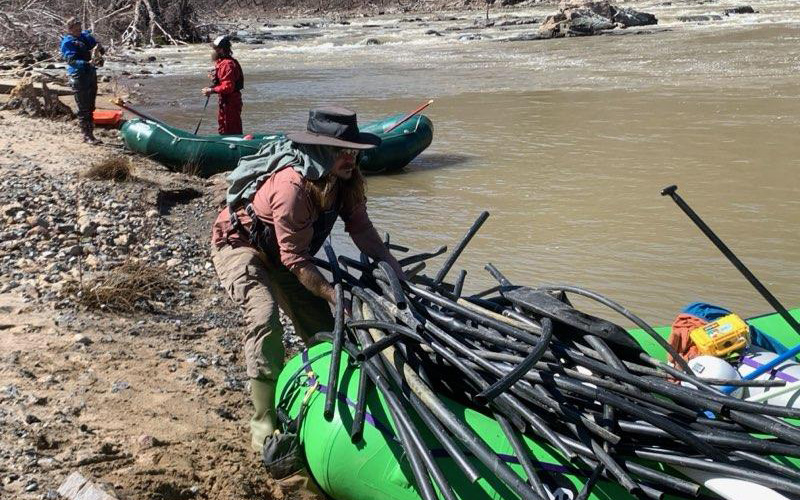
Photo courtesy of MountainTrue
Key to MountainTrue’s approach, says Jon Stamper, is harnessing local knowledge and ecological concern. A longtime outdoor guide who ran an outfitter before Helene, he’s now the nonprofit’s river cleanup operations manager. Many of those he’s hired, including Davis, are fellow rafting or fishing guides who lost their livelihoods due to the storm. (Full-time cleanup crew members receive a minimum hourly rate of $22.50 plus benefits, close to the living wage for Asheville calculated by the nonprofit Living Wage Institute.)
His team’s deep experience has helped Stamper prioritize cleanups around areas previously used for fishing and kayaking in an effort to get the outdoor recreation industry restarted more quickly. And as the effort moves into less accessible places, he says, former guides are well-suited to treating vulnerable ecosystems with an appropriately light touch.
“We are a scalpel, where [the Army Corps] might have been a chainsaw. We are on the ground, walking in the rivers, hand-picking all this to bring in trash.”
He recalls one instance where a crew encountered an intractable nest of black PVC irrigation line tangled around trees on a river island. Where less skilled contractors may have brought in an excavator and uprooted the whole mess, trees and all, the MountainTrue team used swift-water rescue techniques to set up a kayak relay system with pulleys. Workers could then cut away the plastic and send it to the riverbank by boat while saving the vegetation.
“We are a scalpel, where [the Army Corps] might have been a chainsaw. We are on the ground, walking in the rivers, hand-picking all this to bring in trash,” Stamper explains. “Our main goal here is to approach this in an ecologically sound way, to protect the rivers and not create any more damage.”
Stamper and his colleagues say they’re particularly careful about how they work given the issues they observed with the federal cleanup. The Army Corps assigned much of North Carolina’s debris removal to AshBritt, a Florida-based company, with payment determined by volume of material. That arrangement incentivized the contractor to harvest live trees and other plants from riverbanks, along with fallen logs and other organic debris that would’ve decomposed naturally and created wildlife habitat.
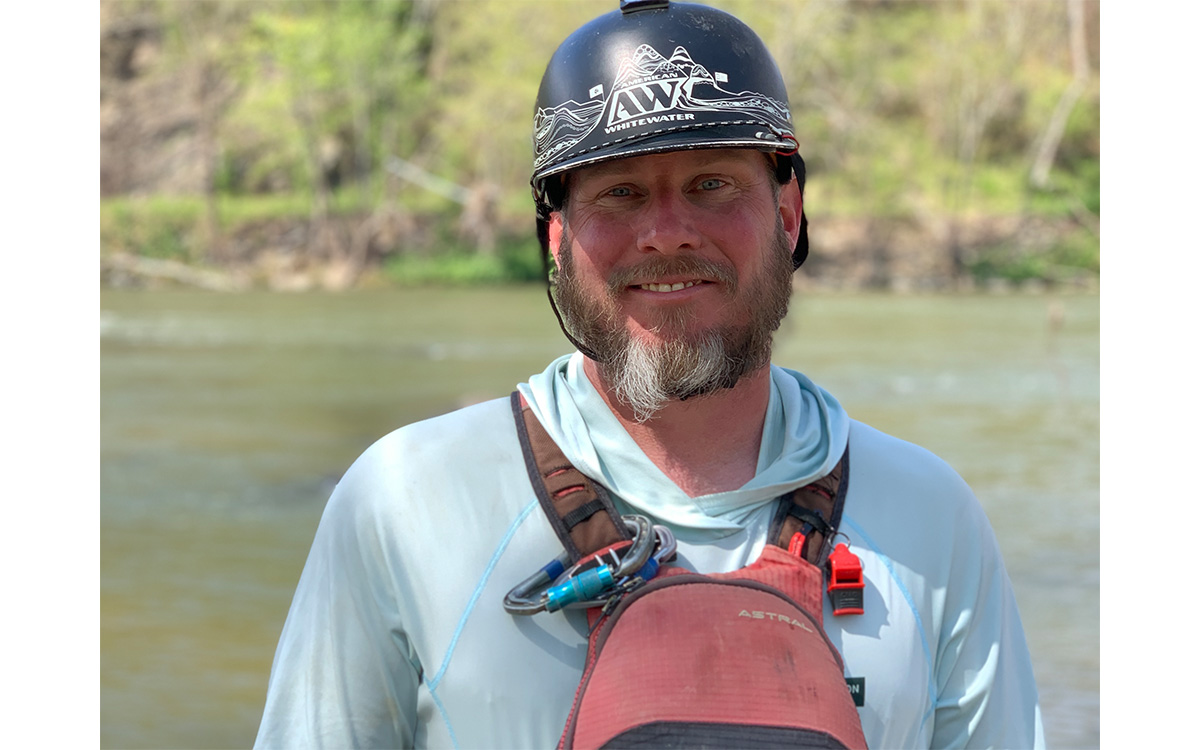
Jon Stamper, river cleanup operations manager with MountainTrue. | Photo courtesy of MountainTrue
Will Harlan, the Asheville-based Southeast director and senior scientist with the national nonprofit Center for Biological Diversity, says that the contractors’ practices also damaged rare species such as the federally endangered Appalachian elktoe mussel. He recalls standing in front of heavy machinery in the French Broad River on Memorial Day to stop workers from smashing one of the state’s biggest populations of hellbender salamanders.
“The hellbenders and mussels hung on through Helene. They’ve been living with floods and extreme weather for millions of years, and they know how to withstand even catastrophic events,” says Harlan, who isn’t affiliated with the MountainTrue cleanup. “What they can’t survive are bulldozers, backhoes, and dump trucks going up and down rivers that are being used as highways 30 times a day, crushing all the animals and habitat in their path. You can’t adapt to that.”
That Memorial Day showdown sparked a meeting between concerned residents and Chuck Edwards, the area’s representative in Congress. The Republican subsequently called the debris removal “improper” and demanded greater federal oversight.
Asked for comment on these criticisms, Army Corps spokesperson Nikki Nobles thanked residents for holding workers accountable and outlined a dedication to protecting the environment.
“Debris removal missions are often challenging due to the large quantities and various types of debris that storms can leave behind, as well as the vast geographic areas where cleanup can be needed, but USACE, operating under FEMA’s Public Assistance Program guidelines, is committed to conducting our debris removal missions within strict environmental safeguards,” Nobles wrote in a statement. “Our contractors are trained and required to minimize disturbances to streambeds, avoid reshaping natural waterway contours, and follow best management practices to prevent harm to wildlife.”
Federal contractors, Harlan adds, often didn’t consult with local landowners before starting their work. To avoid those tensions, the MountainTrue effort is putting in extensive groundwork to connect with residents and gain access to cleanup sites.
“Imagine your friend comes over and offers to mow your lawn. There’s just a weight lifted off your shoulders. But then imagine that tenfold, where somebody offers to clean all this trash from your devastated home. Maybe it feels a little better in your backyard. It gives you a little more hope.”
Cleanup team leader Donovan Green, for example, started attending meetings in the small community of Bat Cave weeks before putting her boots in the water. Although the area had become a target for online misinformation about storm response in the weeks following Helene, she says she was warmly welcomed after shaking hands in person and sharing her desire to help.
“They’ve already treated us like community, like family,” she says. “The very first day my team was out here, the sheriff and the chief of the fire department came over and said, ‘Hey, we have this homemade peach cobbler for y’all—please eat it!’”
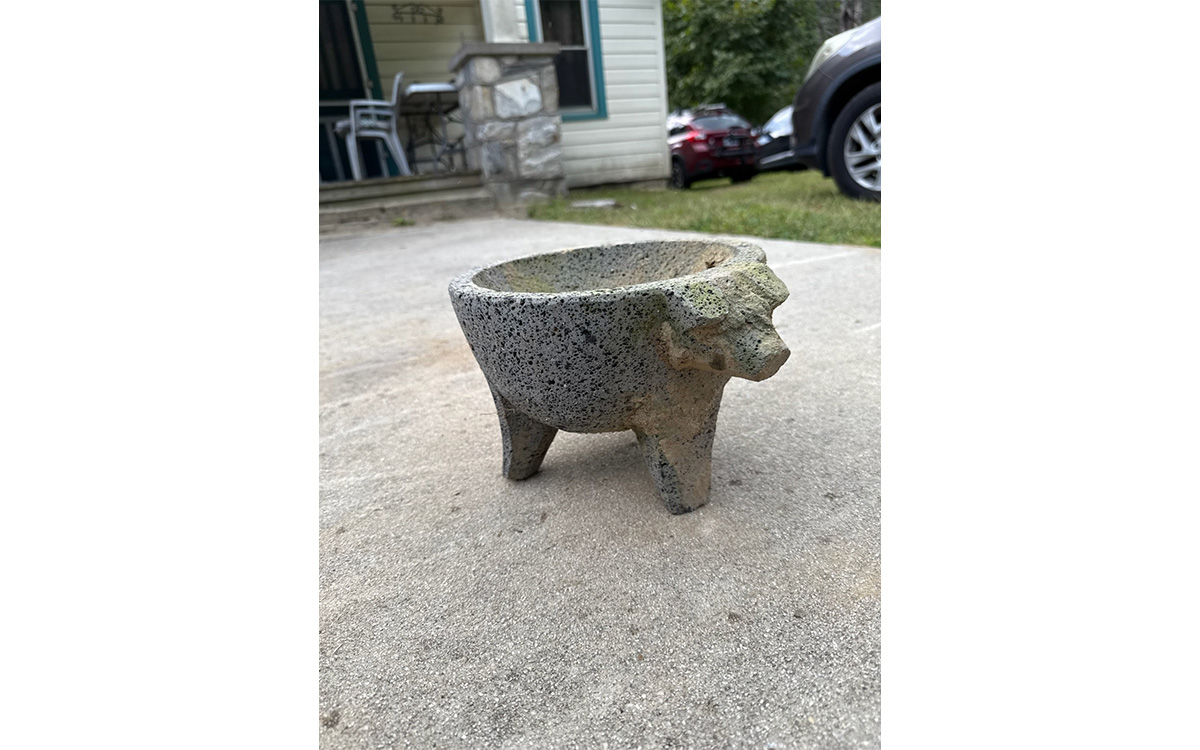
Donovan Green, South river cleanup team leader for MountainTrue, was able to reunite this stone bowl her team found during a cleanup with its owner, who'd lost it during Hurricane Helene nearly a year before. | Photo courtesy of Donovan Green
Picking up trash supports the environment, Green continues, but it’s also a deeply meaningful gesture for people who are still rebuilding their lives. In some cases, crews can find personal items that victims of Helene thought were gone forever, like a pig-faced molcajete stone bowl Green recently reunited with a family who lost their house to floodwaters. In others, simply clearing clutter can be the support someone needs to carry on.
“Imagine your friend comes over and offers to mow your lawn. There’s just a weight lifted off your shoulders,” Green says. “But then imagine that tenfold, where somebody offers to clean all this trash from your devastated home. Maybe it feels a little better in your backyard. It gives you a little more hope.”