The Magazine of The Sierra Club
As the Worm Turns, So Do We
Climate change is shuffling the worms beneath our feet
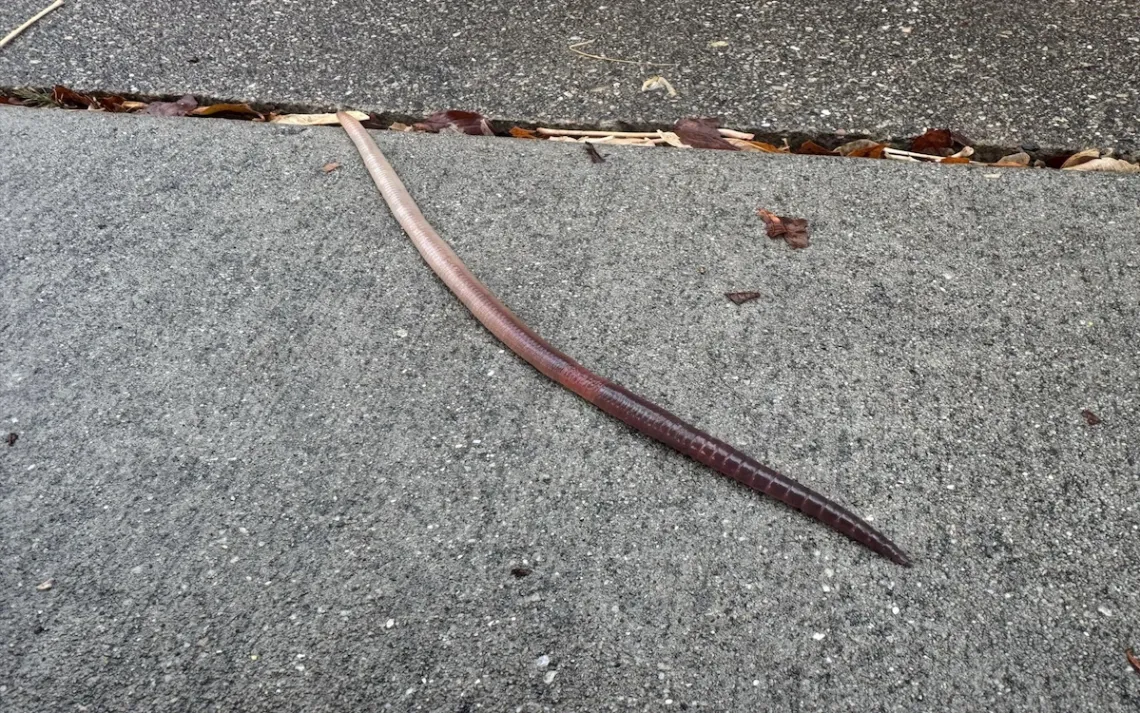
Photo by Riley Black
Imagine you’re a worm. Not one of the three-foot-long giants from Australia, or a fried egg worm living in a tropical forest, but one of the many pale-red night crawlers that anonymously tunnel through the soil beneath yards and parks. At such a size, not much more than half a foot from tip to tip, think of how large even a single raindrop might be. If you are nothing more than a living thread squiggling in the dirt, even a small change can be momentous.
That’s why researchers are concerned that human-caused climate change is putting these essential ecosystem engineers at risk.
Worms lack the celebrity of charismatic megafauna, which is why they are understudied. It’s also easy to ignore worms because they are largely invisible to us, wriggling in the ground beneath our feet. A square foot of soil holds anywhere from a handful of earthworms to thousands depending on the particulars of the habitat. Many of us encounter the creatures only when they are evicted by saturated soils that flood their tunnels—a potentially deadly situation for animals that breathe through their skin.
Researchers have found that the changes we’re making to the planet are changing worm habitats. Climate change creates extreme events by changing rainfall, in turn causing flooding more frequently and in places that haven’t flooded before, putting pressure on the worms.
Earlier this year, University of York geochemist Mark Hodson and colleagues examined several common earthworm species to see how they respond to conditions created by increased flooding—especially lower oxygen levels in worm burrows that a sudden influx of water can cause. The adult animals were able to survive only about 22 hours in the doused conditions. When floodwaters stay for more than a day, worms got washed up.
Worm cocoons might make the difference. Worm eggs are held safe until hatching inside a lemon-shaped cocoon. In a second experiment, Hodson and coauthors exposed the worm cocoons of several test species to 90 hours of flood conditions. The night crawlers didn’t do well with the dousing, but some of the eggs of two other common species, grey worms and compost worms, were still able to hatch. Being so waterlogged wasn’t ideal, the eggs were not unaffected, but some eggs from these two species were still able to hatch. That means that some species may persist in a wetter climate while others will not.
Why should we care about the plight of the seemingly lowly worm?
Stable and thriving worm habitats are key to human sustenance. Worms matter big to keeping ecosystems healthy and the soil they depend on rich and full of nutrients. Worm are constantly tilling and enriching the soil in ways that much of our food and agriculture system depends on. Shifting out one worm species for another is not a neutral change.
To create climate conditions that favor one species of worm over another risks the potential for unintended consequences. One worm species is not the same as another. The invertebrates grow to different sizes, so smaller worms will aerate soil differently than others and will leave behind differing volumes of excreta that nourish life in the soil. The preferred food of worms will also change how decomposition plays out in the ground.
The shifts can happen suddenly. Another study published last year by Nanking University of Information and Technology ecologist Qun Liu found that earthworms are more vulnerable to extreme climate shifts than the overall trend toward warmer temperatures. Rather than hitting a tipping point where earthworms will struggle, the floods, fires, and other harsh climate events that are ramping up around us can swiftly change worm populations and, as a result, the nature of the soil that anchors so much life on this planet.
But there are places where worms can still thrive. The same study from Liu and colleagues found that earthworms are more abundant and diverse in wild grassland habitats compared with tilled croplands. Worms that live on farms are constantly having their habitat disturbed and torn up, the worms themselves often exposed by tilling and vulnerable to hungry birds. But worms in grasslands aren’t disturbed in the same way; the worms were more resilient to changes in temperature and rainfall that hit cropland worms harder. For the earthworms so many of us are used to, grasslands buffer the big environmental shakeups that worms on farmland and other human-disturbed soils are more vulnerable to.
We should know more about the worms than we do. Life in the sea can seem exotic and mysterious, and it’s easy to envy the birds and bees that so effortlessly move through the air. Look down between our toes and the ground seems plain, impenetrable, and mundane. It’s entirely opaque, ever-changing on scales that are both too small and too large to fully grasp. But worms know. Out of sight, in a world where everything comes down to granular detail, they move and change, forming the world we know.
As the worm turns, so do we.