 The Magazine of The Sierra Club
Sierra Club and Partners Sue Trump Administration Over EV Funding Freeze
The administration acted in violation of “bedrock principles of American law,” according to the suit
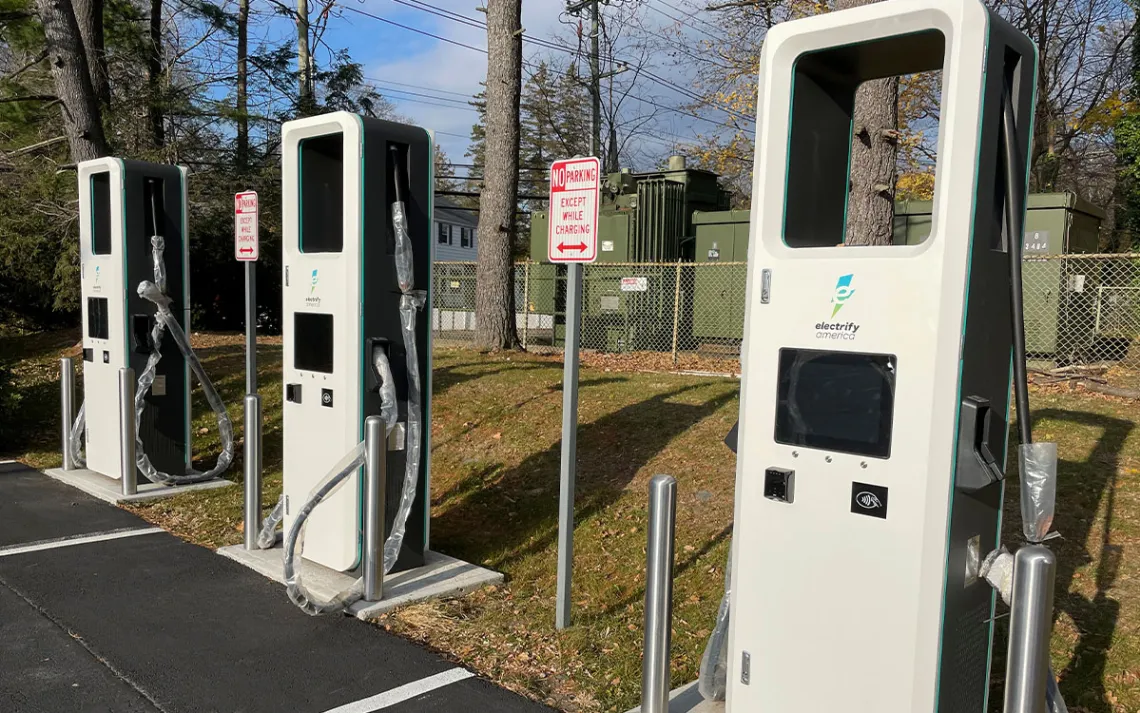
Photo by STRF/STAR MAX/IPx via AP
On Thursday, the Sierra Club and a coalition of nonprofits joined 16 states and the District of Columbia in a lawsuit against the Trump administration for its freeze in funding for a nationwide electric vehicle charging network.
The National Electric Vehicle Infrastructure (NEVI) program was established in 2021 under the Biden administration’s bipartisan Infrastructure Investment and Jobs Act, which allocated $5 billion for building up a network of highways with EV charging stations every 50 miles.
The Trump administration paused funding for the program in February. A memo released by the Federal Highway Administration said that the program will be under review and that the administration was “immediately suspending the approval of all State Electric Vehicle Infrastructure Deployment plans.” As of January, all 50 states, the District of Columbia, and Puerto Rico had submitted and received approval for their EV infrastructure plans.
The purpose of the NEVI program is to “enable freedom of movement,” said Joe Halso, a senior attorney at the Sierra Club’s Environmental Law Program and lead counsel for the coalition of nonprofits. NEVI is designed for “the real people and communities that benefit from these investments, from the jobs they create, from the equity they promote, from the emissions they reduce,” he said. “We're seeing Trump attacks on a clean energy economy and on electric vehicles in particular. The Sierra Club is fighting back against that at every turn.”
The lawsuit seeks to restore the congressionally approved funding. The states also filed a motion for preliminary injunction, which could potentially provide some temporary relief that would make the NEVI funds flow again, said Josh Berman, a senior attorney at the Sierra Club. But the exact timing of that relief is uncertain, he added.
The administration acted in violation of “bedrock principles of American law” when it suspended the federal funding, said Atid Kimelman, clean vehicles attorney at NRDC, one of the organizations joining the lawsuit. The administration was acting on “political whim,” which is not an adequate reason to freeze billions of dollars of funding that are mandated to go to the states by law, he said. “This is part and parcel with their general attempt to take hold of the power of the purse, which is Congress's, and arrogate that power to the executive branch without following the law.”
We’re ready to take this fight to court
We need your support to protect the future of clean transportation.
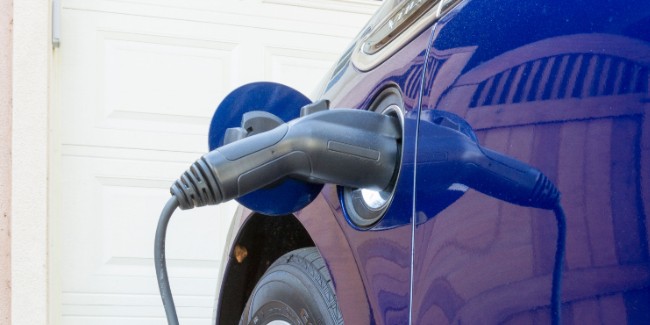
The freeze comes as more Americans are buying electric vehicles due to lower maintenance and fuel costs compared with gas-powered vehicles. In 2024, Americans bought 1.3 million electric vehicles, a roughly 7 percent jump from the previous year, according to Cox Automotive’s Kelley Blue Book. Over the past few years, the upfront costs of electric vehicles have gone down while performance has gone up. Buying an electric vehicle can save owners thousands of dollars, according to a study from Atlas Public Policy.
While electric vehicle sales are growing in the US, many Americans are still left behind due to unequal access to charging stations. The NEVI program was intended to fill “critical gaps” in the nation’s charging infrastructure, Kimelman said. It will play a crucial role in the transition to electric vehicles and functions as an “'equity program” by ensuring funding reaches all 50 states, he said.
“This is about more than road trips. It's about equity. It's about pollution reduction. It's about climate resilience.”
There are roughly 77,000 publicly accessible EV charging stations in the United States, according to the Joint Office of Energy and Transportation. But access to these stations varies greatly by location and socioeconomic status. A joint study by the US Department of Energy and Boston University found that charging stations are unequally distributed across cities and states, and the income gap in access to EV chargers is three times that of gas stations.
Some communities that lack access to EV charging stations are already overburdened with air pollution from transportation, said Halso. Slowing the transition to electric vehicles will prolong the harm that these communities are facing, he said. “This is about more than road trips. It's about equity. It's about pollution reduction. It's about climate resilience.”
Low-income communities of color face disproportionate exposure to air pollution caused by the burning of fossil fuels, studies have found. A 2023 Northwestern University study found that people of color in the US are more likely than white Americans to die prematurely due to exposure to nitrogen dioxide—a harmful pollutant released mainly by cars, trucks, and power plants burning fossil fuels.
A nationwide shift to zero-emission vehicles would improve air quality and the health of all Americans, according to a report by the American Lung Association. The report found that a large-scale transition to electric vehicles could produce $1.2 trillion in health benefits and result in 110,000 avoided deaths.
Reliable access to a strong network of EV charging stations is also a matter of public safety, Berman said. In coastal areas, where hurricanes and other natural disasters can force sudden evacuations, electric vehicle owners rely on a network of dependable charging stations to get out safely. Without reliable access to charging, evacuating long distances becomes far more difficult, he said. “It’s potentially life and death.”
Thomas Caffery, a resident of Orlando, Florida, who owns an electric Nissan Leaf, wrote in a declaration filed with the lawsuit that he and his wife have had a “few close calls” when it comes to traveling with their electric vehicle. Last June, before the hurricane season, Caffery’s wife insisted they invest in a second, gas-powered car for safety reasons.
“If Orlando were projected to take a significant hit, we’d want to leave,” he wrote. “We’d be concerned that the few charging stations would be swamped by a large number of EV owners leaving at the same time. But with the Leaf’s limited range and the lack of fast chargers along evacuation routes, we couldn’t safely count on it.”
Caffery said the NEVI program would help the US cut transportation emissions and reduce the climate risks that threaten his family. “We needed to start the transition to electric vehicles decades ago,” he wrote. “We can't afford to wait any longer.”