 The Magazine of The Sierra Club
While Extreme Heat Bakes the US, Utah Moves to Protect the Fossil Fuel Industry
A new law shields polluters from accountability for planet-warming emissions
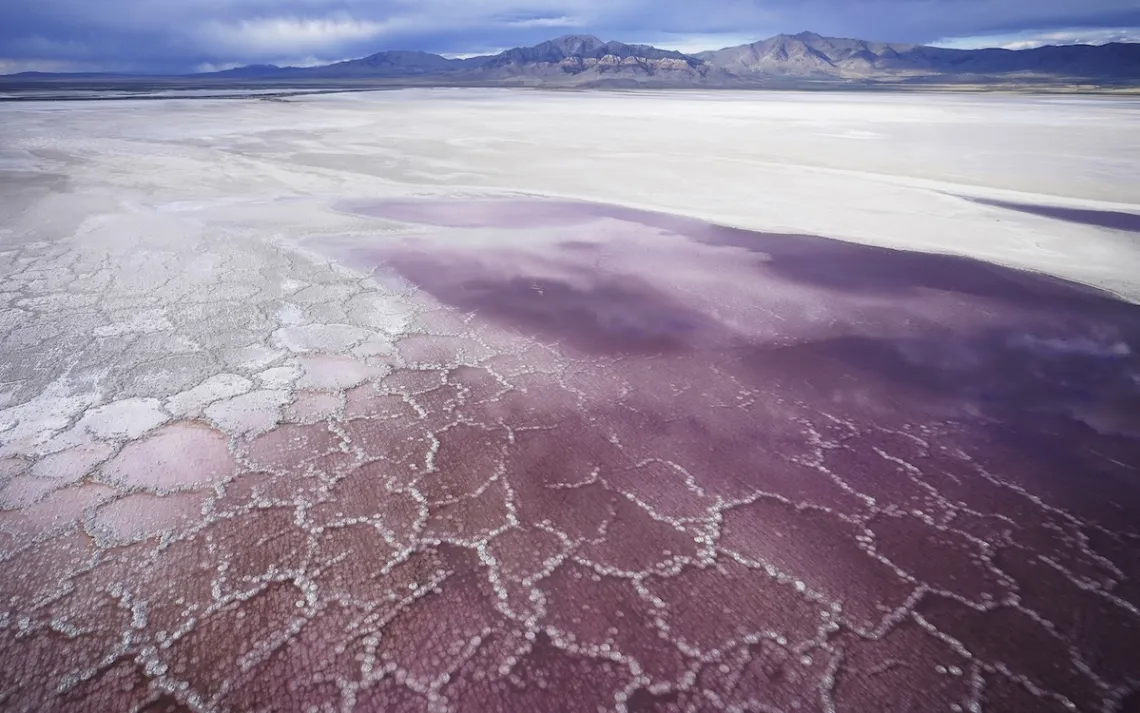
The Great Salt Lake during a drought in 2021. The lake has been shrinking for years. | Photo by Rick Bowmer/AP
In March, much of the southwestern United States sweltered under a record-shattering heat wave. Scientists determined that the extreme climate event would have been “virtually impossible” in a world without human-caused climate change.
That same month, the State of Utah passed a law that shields polluters from accountability for contributing to the planet-warming emissions that are driving more deadly and dangerous heat waves, wildfires, storms, flooding, and other climate impacts.
Utah is the first state to enact such a law, but others are looking to follow suit. Similar legislation is advancing in several other states as part of a larger, coordinated effort—backed by right-wing interests—to block attempts to make polluters pay for mounting climate damages.
Utah’s bill (HB 222), signed into law by Republican Governor Spencer Cox on March 23, prohibits civil or criminal liability for climate-change-related harms stemming from greenhouse gas emissions. It forecloses litigation against emitters with only very narrow exceptions, including express permit or statutory violations for specific greenhouse gases. The policy “blocks most climate accountability lawsuits in the state,” according to the Union of Concerned Scientists.
“What it does is it grants fossil fuel companies and other greenhouse gas emitters special protection from legal accountability,” Cassidy DiPaola, communications director for the Make Polluters Pay campaign, explained. Utah currently does not have any climate lawsuits pending against oil companies, but the law does block the possibility of any future suits. “It bars the ability for future claims to be brought or for future accountability mechanisms like climate superfunds,” DiPaola added.
Other states have taken a completely different approach to the climate crisis. Vermont and New York have adopted so-called climate superfund laws that hold major fossil fuel producers liable for their carbon pollution and require them to help foot the bill for climate-adaptation costs. Nearly a dozen other states have seen similar bills introduced. At the same time, some states and municipalities have sued oil and gas companies over climate damages and alleged deception, and several of those cases are inching closer to trial.
But over the past year, emboldened by the second Trump administration, the fossil fuel industry and its political allies have dramatically escalated their attacks against these state climate laws and lawsuits. Following an executive order from President Trump directing the attorney general to put a stop to them, the Department of Justice sued four states in an attempt to block their climate superfund laws or anticipated lawsuits against Big Oil. Last June, a group of Republican attorneys general wrote to then–attorney general Pam Bondi recommending further steps to implement Trump’s order, including endorsing liability shield legislation modeled after the 2005 law that granted legal immunity to gun manufacturers. And in February, Representative Harriet Hageman (R-Wyo.) said during a House Judiciary oversight hearing that she is working with colleagues on crafting such legislation.
Now, bills immunizing big polluters from legal liability for climate change harms are becoming law at the state level, starting with Utah and with several other states poised to follow.
“We just had our warmest winter on record, threatening the snow-sports industry, threatening even our summer outdoor recreation industry. More heat waves and wildfires could be on the way.”
Nate Blouin, a Democratic state senator in Utah and a clean energy and climate advocate, said that the state’s new climate liability shield law moves Utah in “the absolutely wrong direction.”
“We should be following states like New York and Vermont and not reacting with backlash to what they are doing,” he told Sierra. “Because it’s going to end up leaving us saddled with an unbelievable amount of costs and damage to our public health and our environment, which I frankly don’t think the Republicans who are passing these things care about or understand.”
Blouin and other critics of Utah’s law say the state is already experiencing devastating climate change impacts, which makes the action of restricting accountability for these harms especially dangerous.
“The Great Salt Lake is dying, partially because of climate change. We just had our warmest winter on record, threatening the snow-sports industry, threatening even our summer outdoor recreation industry. More heat waves and wildfires could be on the way,” Nathan Hole, an environmental advocate who lives just north of Salt Lake City, told Sierra. “The house is quite literally on fire, and we just extended immunity to the arsonists.”
Hole testified against the bill during a legislative committee hearing in late January, saying that it “shuts the door on Utahans who are harmed by [climate] impacts.”
“It makes it nearly impossible for any climate-related claim to be heard, even when the harm is real and the evidence is strong,” Hole said.
State Representative Carl Albrecht, a recipient of campaign funding from fossil fuel interests and a retired executive of an energy utility that operates coal plants, was the lead sponsor of HB 222. He and other proponents argued that the bill would help keep energy prices stable and affordable by putting an end to liability risk and “frivolous lawsuits” against energy providers.
Hole pointed out that utilities and other costs in Utah are already increasing, not because of climate lawsuits, but in part because of climate change impacts. “Those costs are being passed onto us, whether it’s through our utility bills or whether it’s through grocery prices,” Hole told Sierra.
“It’s crazy to think about how we are protecting the ones causing these issues, and to be the first state to do that is not a great precedent,” Hole added.
Delta Merner, lead scientist for the climate accountability campaign at the Union of Concerned Scientists, said Utah’s liability shield law is a “surrender to wealthy special interests and an affront to the public good.”
“By letting polluters off the hook for the damage their actions have caused, the legislature has chosen corporate impunity over public health, science, and justice,” Merner said in a statement.
Utah is not alone, as Republican lawmakers in a handful of other states are passing similar bills to effectively ban liability for climate change damage, even as these damages and their associated costs continue to mount. Liability shield bills are advancing in Oklahoma and Louisiana, for example. And similar proposals in Tennessee and Iowa have passed through the legislature and could be signed into law any day now. Other states are adopting or considering bills that broadly limit public nuisance claims brought against big polluters or corporations. A recent ProPublica investigation revealed that many of these bills are part of a coordinated campaign originating with groups that have funding or staff ties to the right-wing activist Leonard Leo.
Consumers’ Defense, the policy advocacy arm of one of these Leo-linked groups called Consumers’ Research, has a model climate liability shield bill posted on its website. Titled the “Energy Freedom Act,” it prohibits imposing liability for greenhouse gas emissions from fossil fuel activities, and it creates a “right to engage in activities related to coal, oil, and natural gas.”
The bill that is about to be enacted into law in Tennessee is nearly word-for-word identical to that model bill. The bill’s Republican lead sponsor, Tennessee state representative Chris Todd, espoused climate-denial talking points during a March committee hearing, claiming that the established science that burning fossil fuels causes an increase in the Earth’s temperature is “not a proven thing.”
This type of thinking and rhetoric is pervasive among Republican politicians today, Brian Moench, president of Utah Physicians for a Healthy Environment, told Sierra.
“The Republican party has gone into a complete climate denial operational mode,” he said. “It’s a wholesale abandonment of scientific evidence in public policy. That’s why I call it science derangement syndrome.”