7 Great EVs That Are as Good as (or Better Than) Teslas
Electric vehicles have come a long way. Here are some of the best.

Photo by Artur Widak/NurPhoto via AP
It’s a wild time, to say the least, for electric vehicles. For years, the EV market and its charging infrastructure were dominated by Tesla. Now CEO Elon Musk has thrown the brand into disarray with his recent actions on behalf of the Trump administration, compelling many owners of the car to register their displeasure with everything from “debadging”—taking off all its brand identifiers—to trading in altogether.
The good news is you have options. Plenty of them. In recent years, competitors have been rolling out great models of electric vehicles that are more affordable and have longer range. Here are seven of them. (Remember that, thanks to the Biden administration’s Inflation Reduction Act, a $7,500 federal income tax rebate is still available for certain models, and in some cases, you can combine it with state and local/utility-level credits, depending on where you are buying the car.)
Hyundai Ioniq 5 and 6
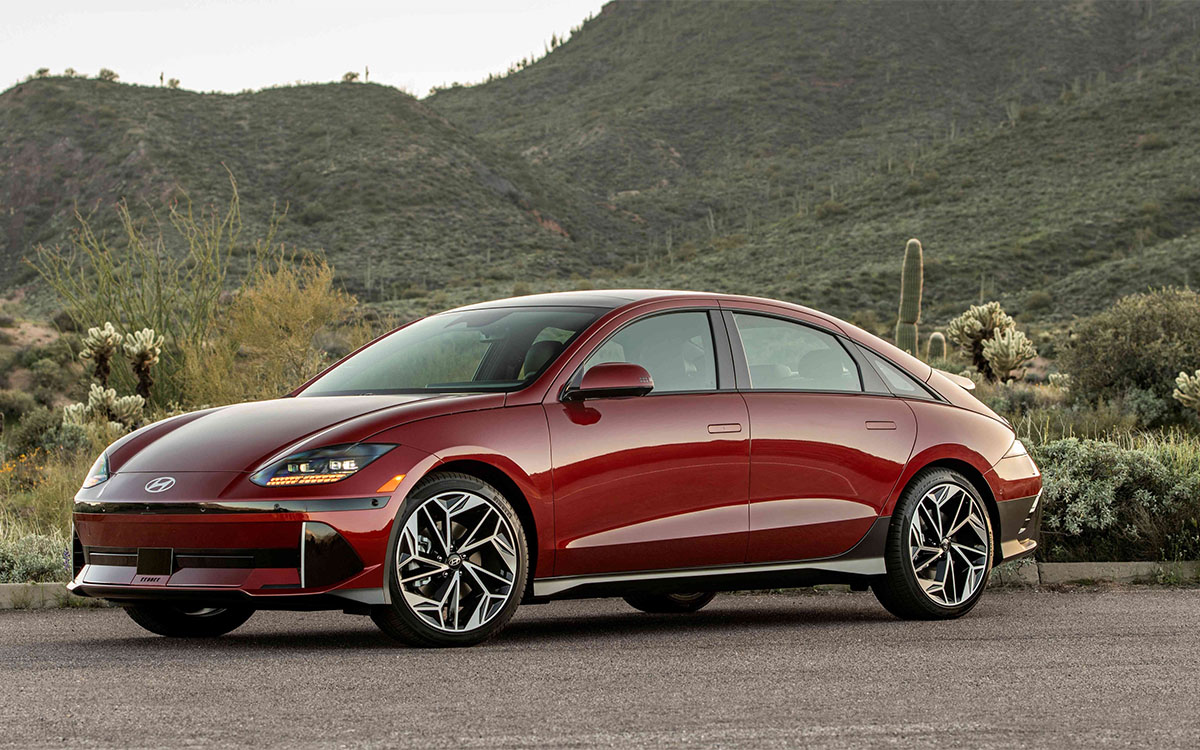
Photo courtesy of Hyundai
The 5 SUV ($44,075) and the 6 sedan ($39,045) are cutting-edge EVs with range and reasonable prices that have endeared them to auto writers. Says Car and Driver, “The Ioniq 5 is one of those rare automobiles that fulfills its mission comprehensively, delivering a wealth of strengths but no significant weaknesses.” The 5 is the more practical model, and the 6 the better looking. The platforms and specs are similar, with quite a bit of owner options. Choose one or two motors on the 5 and power ratings of 168 to 641 horsepower (in the performance 5N). Sometimes one motor is enough for the 5—it’s cheaper and delivers the best range with 318 miles on a charge. The most-efficient 225-horsepower 6 can do 342 miles with the available long-range battery pack. The 5 is built in Georgia, the 6 in Korea and Singapore.
Chevrolet Bolt
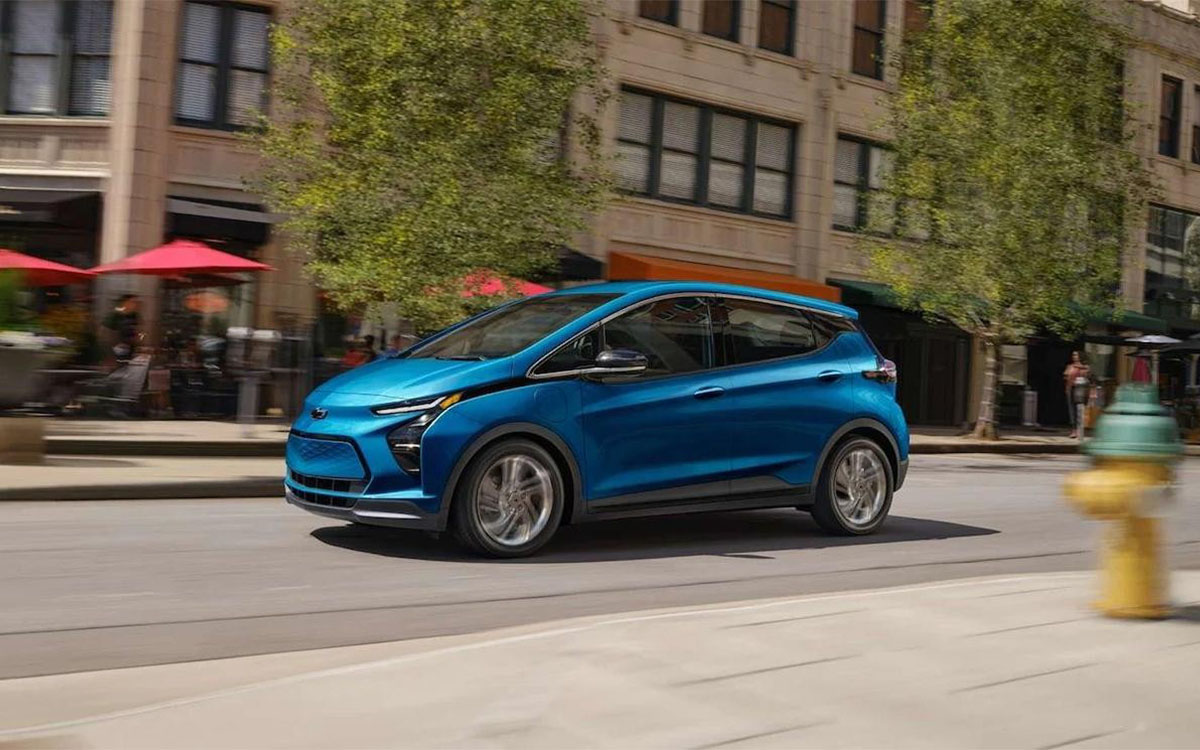
Photo courtesy of Chevrolet
There are several EV options to choose from if you are looking for a Chevrolet, including the Equinox. My favorite is the Bolt EV, which was introduced in 2017 and proved popular for its combination of cute hatchback looks, low price ($27,495 in its last model year) and peppy performance. But Chevy inexplicably canceled the Bolt in 2023, only to change course and announce a new model, to be delivered late this year as a 2026 model. “When the Bolt EV returns, it will have the same great formula that our customers love: affordability, range, and technology,” said Chevrolet spokesman Cody Williams. The redesigned Bolt, reportedly offered only in crossover form (the company calls it an “EUV”), will host GM’s Ultium batteries and should deliver at least 300 miles on a charge. It’s expected to cost around $30,000. You can also peruse the healthy market for used Bolts in the meantime (click here for my guide on what to look for when buying a used EV). The Bolt will be built at GM’s Fairfax Assembly plant in Kansas City.
Ford F-150 Lightning
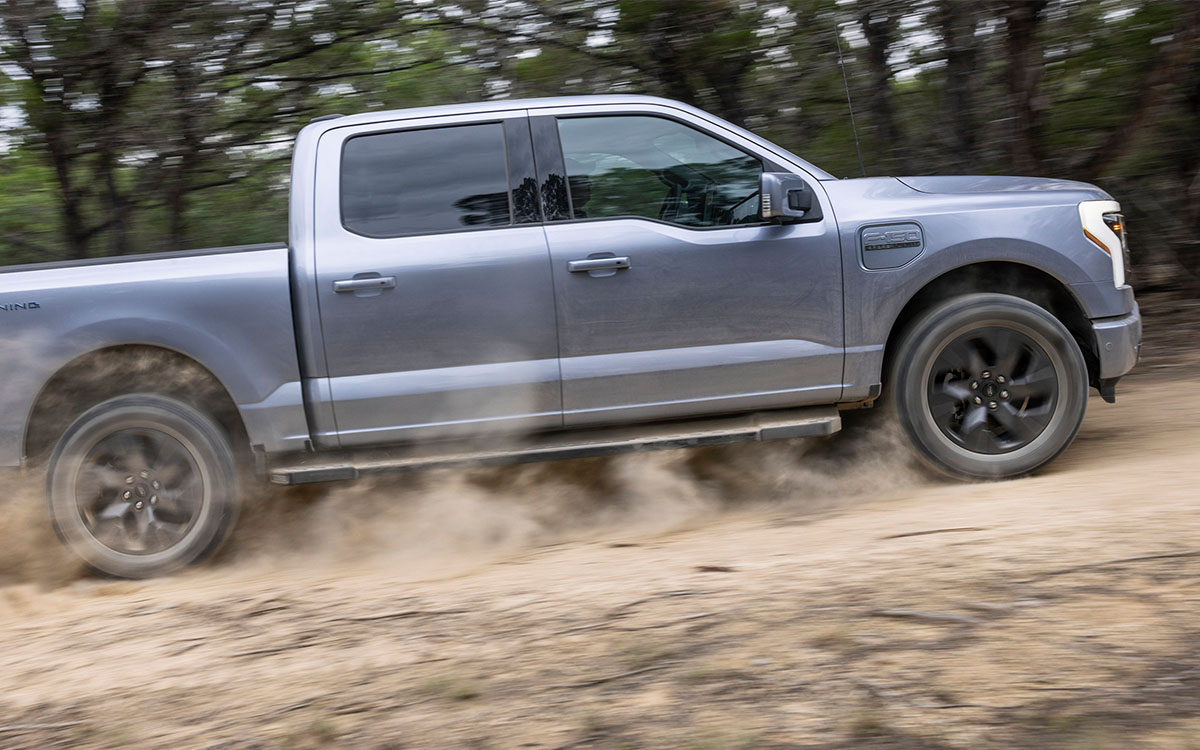
Photo courtesy of Ford
The dual-motor Lightning has been on the market since 2022, an EV truck trailblazer that can deliver up to 320 miles on a charge. It’s powerful too, with 452 horsepower on tap in the standard model and 580 in the model with an extended range 131-kilowatt-hour battery. Prices start at $49,975. You can tow with the Lightning (up to 10,000 pounds if you order the available package). That answers a major demand from the truck-buying public, but if you do a lot of hauling cars, boats, or “toys,” range will be eviscerated. Two motors and a big pack mean this 6,855-pound vehicle can reach 60 mph in as little as four seconds. The Lightning is built at the Rouge Electric Vehicle Center in Dearborn, Michigan.
Rivian R1S/Lucid Gravity
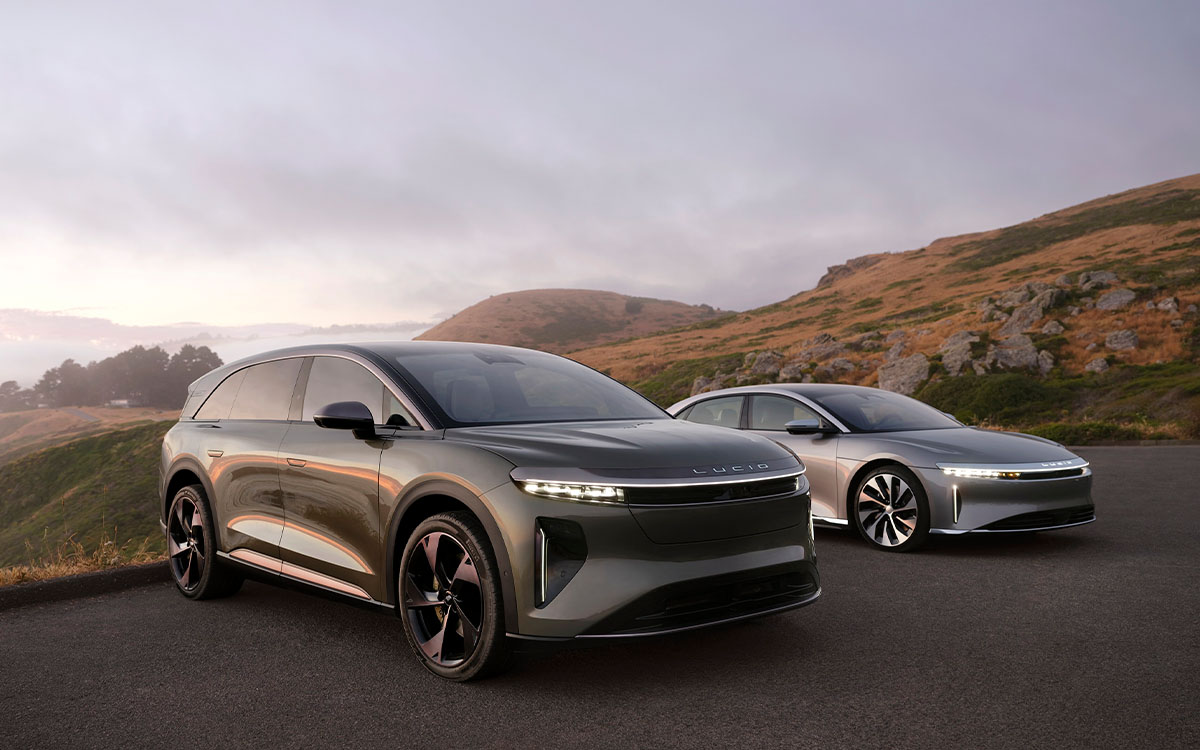
Photo courtesy of Lucid
If you need a three-row SUV, the EV lineup includes the formidable Kia EV9, the Volvo EX90, and these two American entries. There are two-, three- and even quad-motor versions of the R1S with a whopping 1,050 horsepower. Rivian likes the outdoor life, and the R1S has 15-inch ground clearance, not to mention a very luxurious high-tech interior and as much as 410 miles of range. The dual-motor Adventure starts at $77,700, but R1S prices go well over $100,000. If you can wait, Rivian is taking deposits on the smaller R2 SUV, which is due in the latter part of 2026 with a price tag around $45,000.
The Lucid Gravity SUV is new but based on the architecture of the astonishing Air sedan. The two-motor, all-wheel-drive Gravity is available now (initially just the Grand Touring version) and isn’t cheap—prices start at $79,900 for the 620-horsepower Touring model, and $94,900 for the Grand Touring—but it will deliver as much as 450-mile range. It’s a fast charger, with up to 200 miles of range in about 11 minutes. The Lucid is built in Arizona, the Rivian in Illinois.
BMW i4
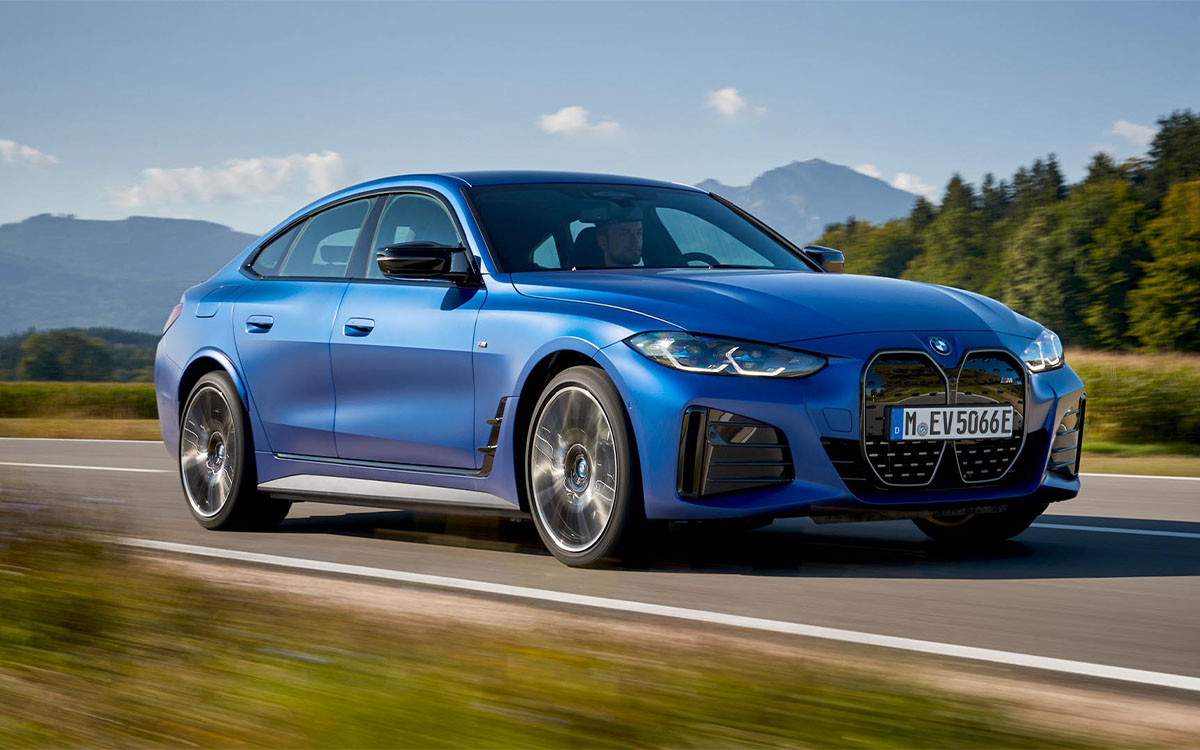
Photo courtesy of BMW
The Bavarian automaker has gone all-in on EVs, and the i4 electric sedan comes in four flavors, with up to 536 horsepower (the AWD M50). Pricing starts at $53,975 for the 282-horsepower, single-motor eDrive35 and climbs to $71,875 for the aforementioned M50. The automaker’s legendary performance image isn’t compromised; the i4 can reach 60 mph in 3.3 seconds (the M50 again). The i4 looks like a regular sedan, but its hatchback is a big help in loading cargo. The i4 is built in Munich, Germany.
*
Pricing is, to put it mildly, in flux for all these cars. Automakers lacking US production have been considering how much of the 25 percent tariff to pass on to consumers, and Ferrari, for one, announced price hikes of up to 10 percent. Both Jaguar Land Rover and Audi shut down US deliveries temporarily while they think about this new development. Hyundai could start building the Ioniq 6 at that large plant in Georgia, and BMW could move the i4 to its Spartanburg plant in South Carolina (the company’s largest), which is currently churning out SUVs. But finding additional manufacturing capacity will be tough.
On April 9, the Trump administration announced a 90-day suspension of its retaliatory tariffs, but it is apparently keeping the 25 percent tariffs on imported autos and auto parts—though many details remain unclear. As things stand (don’t discount further major changes), automakers building vehicles abroad must either take a hit on profits or pass the burden on to consumers in the form of costlier cars.
With EVs, manufacturers will try to hold the line on prices as much as they can—spreading these new costs across their entire lineup rather than simply imposing them on models made elsewhere. It’s complicated, because global automakers make cars—and parts—all over the world.