Trump Administration Moves to End Major Conservation Rule
Feds scuttle the Public Lands Rule, meant to even the playing field between conservation and industry
Photo by Matthew Brown/AP File
The Trump administration is set to reverse a sweeping conservation rule for public lands managed by the Bureau of Land Management (BLM), the latest in a series of actions to reverse Biden-era environmental protections. Announced without much public fanfare in early April, the sudden reversal of the rule, which sought to put conservation on an equal playing field with industrial activities, is a blow to conservation efforts, said environmental groups.
“This expected rescission is not just a bureaucratic rollback but a fundamental rejection of the idea that our public lands should serve all people, not just the extractive industry," Beau Kiklis, the associate director of energy and landscape conservation at the National Parks Conservation Association, said in a press statement.
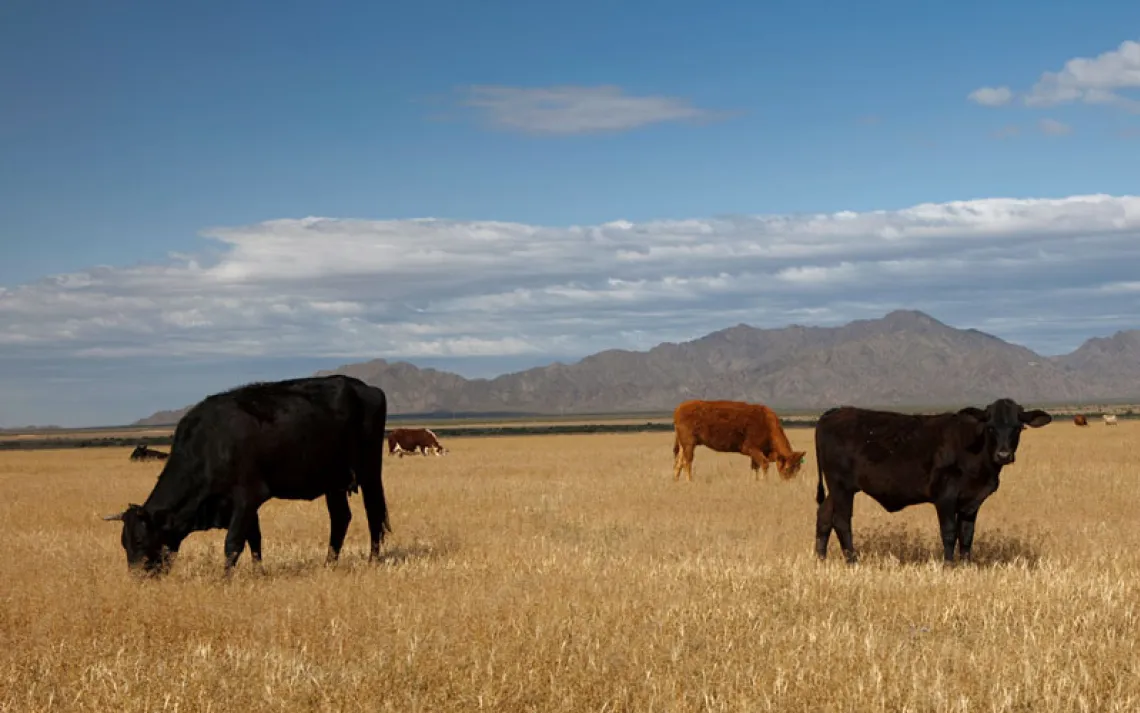
The BLM manages over 240 million acres of land, more than any other federal agency. If BLM land was a state, it would be second in area only to Alaska. Only about 10 percent of this land is specifically managed for conservation, while much of the rest is available for a range of uses like recreation, livestock grazing, oil and gas drilling, and other industries. In June 2024, President Biden published the Conservation and Landscape Health Rule, also known as the Public Lands Rule. For some, the move was seen as a monumental shift for an agency that one previous interior secretary derisively called the Bureau of Livestock and Mining. For others, it was a reaffirmation of the multiuse ethos that was supposed to be the guiding principle of the agency all along.
When the rule was made public, Sierra Club Executive Director Ben Jealous was hopeful that, “from now on, public lands will be managed for public benefit, not just for the profits of the oil and gas industry.” Meanwhile, Utah Governor Spencer Cox denounced it as “a classic example of a solution looking for a problem,” and Wyoming Senator John Barasso called it a “radical rule that threatens our Wyoming way of life.” Industry groups like the National Cattlemen’s Beef Association and American Forest Research Council quickly filed lawsuits challenging the rule.
But the American public came down strongly in favor of the rule from the time it was first proposed. A 2023 analysis of submitted public comments during the drafting phase found 92 percent of Americans were in support of the rule, with only 4.5 percent opposing.
Many observers expected the Public Lands Rule to be an early target of the second Trump administration. Though it does not make specific reference to the rule, the BLM is mentioned several times in Project 2025, the Heritage Foundation’s plans for the Trump administration. The document’s section on the Department of the Interior (BLM’s parent agency) was written by William Perry Pendley, Trump’s acting director of the BLM from 2019 to 2021 and a longtime advocate of selling off public lands.
“Unfortunately, Biden’s DOI is at war with the department’s mission, not only when it comes to DOI’s obligation to develop the vast oil and gas and coal resources for which it is responsible,” wrote Pendley in the Project 2025 document. “Instead, Biden’s DOI believes most BLM land should be placed off-limits to all economic and most recreational uses.”
The most famous and controversial section of the Conservation and Landscape Health Rule is the one concerning conservation leases. The 1976 Federal Land Policy and Management Act is the main piece of federal law governing how the BLM manages public land. The act gives the BLM the ability to issue leases for the public—including individuals, organizations, tribal groups, and corporations—to “use, occupy, and develop public lands.” Under the Public Land Rule, these leases would be expanded to include two new types: mitigation to limit environmental threats and habitat restoration. For the first time, a qualified person or group would have been able to lease public land for the sole purpose of turning the land back to nature, or fixing damage done by a previous use, the same way an oil or logging company could lease it for profit.
The lease process is long and slow to start, with leases usually lasting for 10 years. Reversing the rule now, less than a year after it was published, effectively stops these leases before they even had a chance to start.
But the Public Land Rule is more than just conservation leases. Another important section relates to areas of critical environmental concern (ACEC). This designation dates back to the original 1976 act and allows specific pieces of BLM land to be set aside for special protection. They include not only ecological conservation, but also cultural protection, and that has made ACECs especially important to Indigenous peoples in Alaska and the West.
The rule explicitly directed the BLM to consult with tribes and Alaska Native Corporations and standardized a way for Indigenous partners to submit areas for ACEC designation. Biden’s Interior Secretary Deb Haaland, an enrolled member of the Laguna Pueblo Tribe, helped craft this section of the rule to address concerns from Indigenous people that their input was often ignored in the ACEC process. Just one example: In 2021, Alaska tribes nominated 14 ACECs to protect hunting and fishing grounds. The Trump administration rejected them all, opening land and water specifically important to Indigenous people to more oil and gas exploitation.
The Bering Sea–Interior Tribal Commission was an early supporter of the rule, citing the increased Indigenous input to the ACEC process. In a statement, they said “The Tribal Commission was encouraged to see several provisions in the proposed Public Lands Rule that would further the fulfillment of the Bureau’s trust obligation and provide a meaningful role for Tribes in the management of public lands.” The BLM manages over 26 million acres of the traditional homeland of commission member tribes.
Because of the sheer size of BLM land, the stakes of any bureau-wide policy change are huge for environmentalists, Indigenous people, and the public as well as for the industries that extract vast profits from these public lands. According to the bureau’s 2023 economic impact report, leases and activities on BLM land produced $152 billion in total economic output. The oil and gas industry represents over $100 billion of that, two of every three dollars. Outdoor recreation, often highlighted by opponents of the rule, accounts for about $7.8 billion, or 5 percent of the total.
The rescission of the Public Lands Rule is just one front of a larger Trump administration effort to slash environmental protections. The outright sale of public lands, a longtime conservative talking point but rarely discussed by previous administrations, is now being openly considered as a way to pay for the Trump agenda. Cuts at agencies like the EPA and the Department of Agriculture threaten vital conservation and human health protections.
Compared to other parts of the Trump administration's environmental agenda, though, public lands have more significant bipartisan support. Hunting and fishing advocates like Backcountry Hunters and Anglers have publicly supported the rule, showing the mix of opinions among rural voters. Republicans in Congress, even Trump allies like Montana Representative Ryan Zinke, have pushed back on the idea of selling public land. Still, the threat is very real, and House Republicans this week added a provision to their tax cut package, allowing hundreds of thousands of acres of public land to be sold. Conservation groups worry that these acres could be just the beginning.
“This is not policy—it’s a blatant giveaway to industry that threatens to dismantle decades of conservation progress, shut down public access, harm wildlife, and accelerate the reckless sell-off of our natural resources,” Alison Flint, senior legal director at the Wilderness Society, said in a press statement a week after the Trump administration announced it was seeking to revoke the rule. “Public lands belong to all of us, and they should not be cast off to the highest bidder.”