 The Magazine of The Sierra Club
The Trump Administration Is Trying to Build Data Centers on Public Lands
The latest was supposed to be a solar project. Now, in a “bait and switch,” it’s set to power AI.
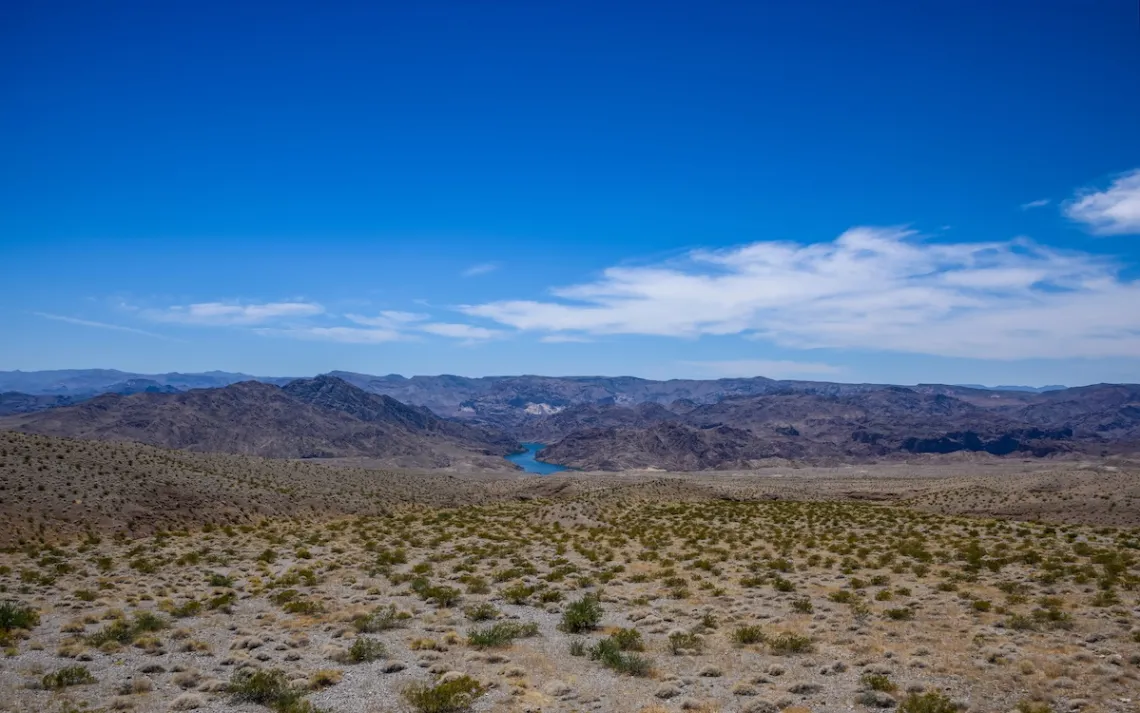
Blue sky over Boulder City, Nevada. | Photo by Judit Dombovari/Getty
Since returning to power, the Trump administration has stripped away land conservation rules, rolled back environmental protections in favor of extractive industries, and reduced the size of public lands and monuments. Now, the administration is trying to leverage public lands for another of its key priorities: the buildout of AI infrastructure and massive data centers.
In June, the Bureau of Land Management quietly approved the Townsite Data Center project in Nevada, located on 88.5 acres of public land in Boulder City, roughly 25 miles southeast of Las Vegas. It marks the first data center approval on public lands so far. The approval went through without any updated environmental review or public input for a project that was initially pitched and permitted to be a solar and battery storage facility.
“[BLM] basically converted the solar approval into a data center approval with no new environmental assessment of the impacts, no public comment or review,” Patrick Donnelly, Great Basin director at the Center for Biological Diversity, told Sierra. “They just issued the approval on June 26 and didn’t even tell anyone about it.”
A little more than three weeks after the approval, on July 20, the BLM posted an announcement of the decision on its website.
“This project reflects the growing role of public lands in supporting the infrastructure needed to power innovation, advanced technology, and the nation's future economic growth, while advancing the Bureau's commitment to responsible stewardship and sustainable use of public lands for current and future generations,” the agency said. It argued that the approval “supports federal efforts to accelerate permitting for data center infrastructure,” citing an executive order signed by President Donald Trump last year.
That order outlines instructions to accelerate federal permitting of data centers, including on federally managed and public lands.
“My administration will utilize federally owned land and resources for the expeditious and orderly development of data centers,” the order states. It aims to allow large data center projects (over 100 megawatts) to bypass environmental reviews, and it directs the Department of the Interior and the Department of Energy to “offer appropriate authorizations” to these projects at applicable sites under federal control.
The DOE announced in April 2025 that it had identified 16 federal sites, many of them at national department-operated labs, for potential AI infrastructure and data center development. In July 2025, the agency announced it had selected four of these sites for the development of AI data centers. Just last week, the DOE unveiled plans for a $100 billion, 1.8-gigawatt AI data center campus at its Paducah site located in western Kentucky.
“The US government is leveraging its assets—like our federal lands—to add power generation, create jobs, and ensure the United States wins the AI race,” Secretary of Energy Chris Wright said in a statement announcing the new project.
“A very clear bait and switch”
The Townsite project in Nevada, situated in the arid Mojave Desert, was originally proposed to be developed as a 19-megawatt solar energy generator, equipped with up to 35 megawatts of battery storage. An environmental assessment was completed in 2023.
But late last year, the developer submitted a proposal to amend the right-of-way and convert the project from a solar farm to a 167-megawatt data center powered by gas plants. Since the developer and site were the same, the BLM determined that an updated environmental assessment was not necessary, claiming that the two projects were “substantially the same.”
Olivia Tanager, director of the Sierra Club’s Toiyabe Chapter, said this project conversion and subsequent approval was “a very clear bait and switch.”
“From a transparency and democracy standpoint, it’s very concerning,” she said. Tanager noted that the solar project would have generated clean electricity and contributed to the state’s renewable energy development and goals.
Other potential impacts of the data center project that environmental advocates said were concerning include air pollution, destruction of wildlife habitat, and water usage in a highly water-stressed area.
“We’re talking about one of the driest regions of the country, sitting right on the banks of the Colorado River that is seemingly dying because of lack of water availability,” Tanager said. “Water that the energy generation is going to require, and even the water that a closed-loop system requires, really strains existing water availability in the region.”
“Trump is sidestepping the law and shutting the public out of decisions about our public lands. By cutting the public out of the process, they’re trying to hand over Nevada’s desert to billion-dollar tech companies without anyone getting a say."
Challenging the BLM’s approval
The BLM’s approval of the Townsite Data Center project is now facing legal challenges. CBD and the Sierra Club Toiyabe Chapter have filed an administrative appeal, arguing that the approval violates several federal statutes including the National Environmental Policy Act, the Federal Lands Management Policy Act, and the Endangered Species Act. Boulder City is also lodging a separate appeal contesting BLM’s decision.
“Trump is sidestepping the law and shutting the public out of decisions about our public lands. By cutting the public out of the process, they’re trying to hand over Nevada’s desert to billion-dollar tech companies without anyone getting a say,” Tanager said in a statement.
While the process used in the approval is key to the legal challenge, Donnelly said the appeal is ultimately about stopping what would be the first data center built on public land in the US.
As part of their legal challenge, CBD and the Sierra Club have requested a stay or a pause on construction until their appeal is resolved. “We’ll continue to fight this project every step of the way,” Tanager told Sierra.
She and other environmental advocates warn that if the BLM’s decision stands, it would set a dangerous precedent.
“If this isn’t challenged, it won’t stop in Boulder City—it will become the blueprint for data centers across public lands in the West,” Tanager said.
According to Donnelly, there is a “dire risk” of more data centers cropping up on public lands. He said that other developers have floated similar proposals to convert solar projects into data centers. In April, for example, a developer wrote to the BLM saying it was planning to drop its proposed solar facility in western Nevada’s Amargosa Valley and replace it with a data center and natural gas facility. The developer said the change would “better align with the goals of our Administration.”
“Our corrupt, AI-addicted president cannot be allowed to sacrifice our federal lands so that Big Tech oligarchs can get richer. I will continue to push back against harmful AI data centers alongside our residents to protect our public lands, health, and environment,” Representative Rashida Tlaib said in a statement.
At a time of mounting public backlash to data centers, pushing back against moves to turn federal and public lands over to AI developers is critical, Donnelly said.
“We are seeing attacks on our public lands from all sides,” he said.