Wildfire Blame Game
How logging groups weaponized the Grasshopper Fire against old growth

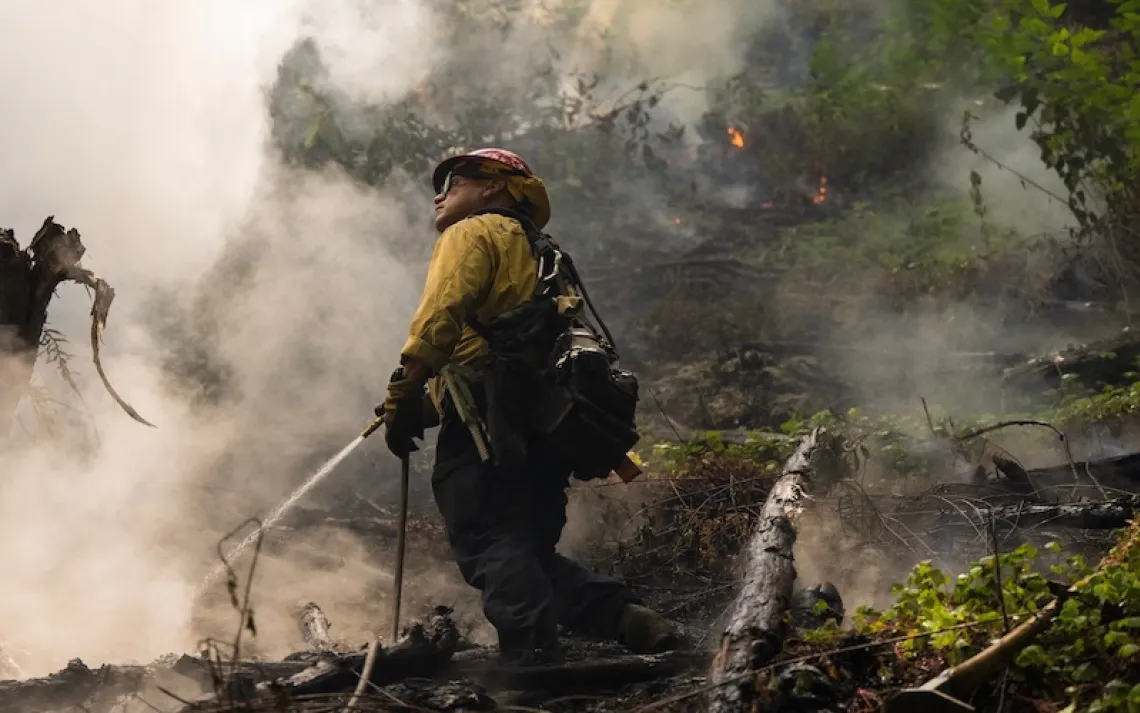
Firefighters from New Zealand and Australia rush to put our wildfire within the Grasshopper complex. | Photo courtesy of the US Forest Service.
Before this year’s record-breaking wildfire season took hold, Ralph Bloemers spent a few weeks clearing brush and fallen trees from his property in Oregon’s Hood River Valley. It’s part of an annual undertaking to make his home more wildfire resistant. With land that backs up to the Mount Hood National Forest, Bloemers recognizes that large burns are likely.
"Trying to make the forest system less burnable is like trying to take a cup and make the ocean less wet," Bloemers joked drily. Even in a good year—with more spring rains and snowmelt trickling down the mountains—leafy plants dry out and act like kindling come summer. "There is not much I can do to change that it will burn, so I focus on five to ten feet from our house."
Bloemers, a self-described "fire-nerd" and former environmental lawyer, is also the founder of a nonprofit focused on wildfire safety and ecology called Green Oregon. He knows what’s at stake intimately: just a few years ago, he produced a documentary called Elemental, following the stories of families who survived the devastating Paradise, California, fires in 2018.
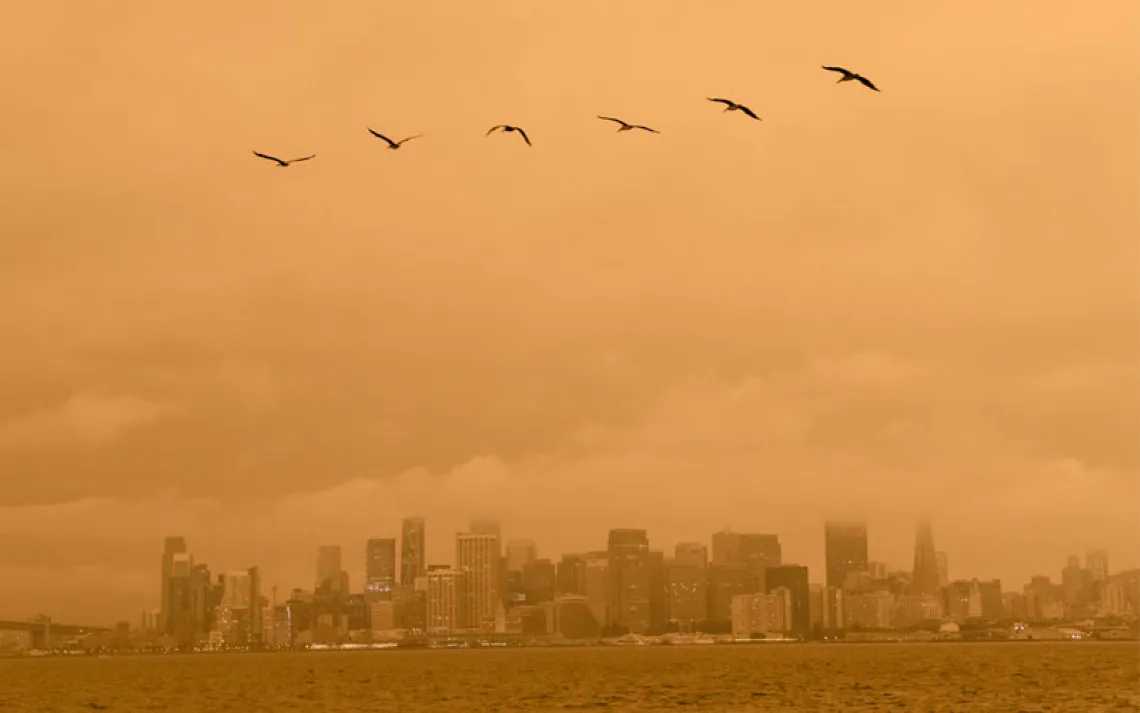
In July of this year, a fire struck close to Bloemers’s home. A lighting storm over Mount Hood ignited the Grasshopper Fire, which eventually grew to 90,000 acres on the mountain’s east side by September. Statewide, nearly 2 million acres had gone up in flames. In an increasingly hot, dry world brought on by climate change, Bloemers hopes his advocacy can convince others that learning to live with wildfires can be safe for both communities and the health of the forest itself.
But there’s a growing wave of disinformation getting in the way. As smoke wafted over the city of Portland nearly an hour away, the state’s timber industry started blaming conservation groups for the fire’s spread. According to the American Forestry Resources Council, when Oregon Wild, an environmental watchdog, sued the Forest Service 18 months ago to prevent the logging of old-growth trees, it slowed important fire suppression tactics in the Grasshopper Complex. This, the council argued, prevents thinning and fuel removal from the forest.
"When litigation overrides the judgment of professional foresters, scientists, land managers, and local collaboratives charged with stewarding our public lands ... We all lose, including our forests," AFRC said in a press release, which was widely circulated in social media posts.
But that outcry ignores several key facts, conservationists warn. Chief among them is that Oregon Wild and other environmental advocates hadn’t opposed the Grasshopper sale outright. "We have worked on timber sales for about 50 years now—and we generally don't challenge or repeal most of them,” Steve Pedry, Oregon Wild’s conservation director, said.
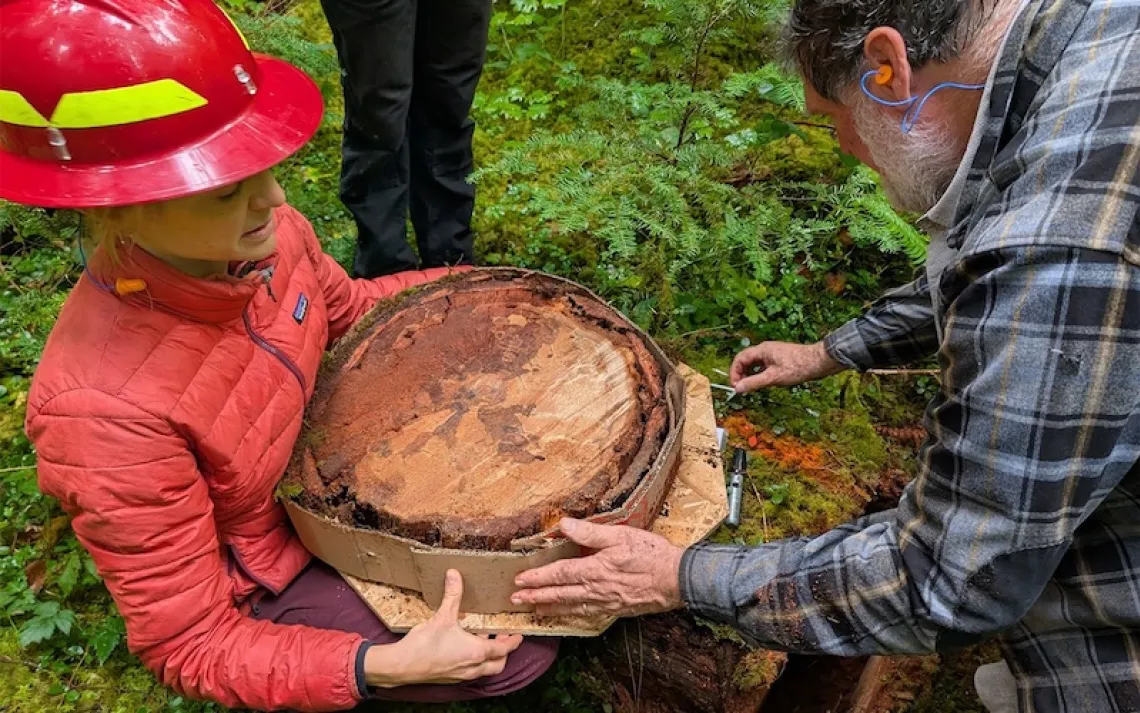
The only red flag in the Grasshopper sale, Pedry said, was the fact that the Forest Service had offered up stands of older, larger trees for logging. While these trees are a more profitable commodity for paper or lumber mills, Pedry said they provide vital ecosystem services, including carbon sequestration and habitats for endangered species. And importantly, research shows that mature and old-growth trees are more fire-resilient, with thicker barks; they often shed their most fire-prone lower branches and leaves as they stretch toward the sky–which would prevent fires from rapidly spreading through the forest’s canopy.
"It's tricky to grapple with—fire is not only a disaster, but it's also a valuable ecological process," said Meg Krawchuck, a professor at Oregon State University's College of Forestry. Historically, much of Mount Hood would have burned naturally with fires repeating every so often. This year’s weather and climate conditions were so severely dry and hot that almost no amount of preparation could have fully prevented the Grasshopper Fire, she said.
Nonetheless, a barrage of content blaming conservationists soon swept through social media. A former wildland firefighter's post echoing the trade group’s talking points received thousands of likes and reposts, with comments urging more logging on public lands.
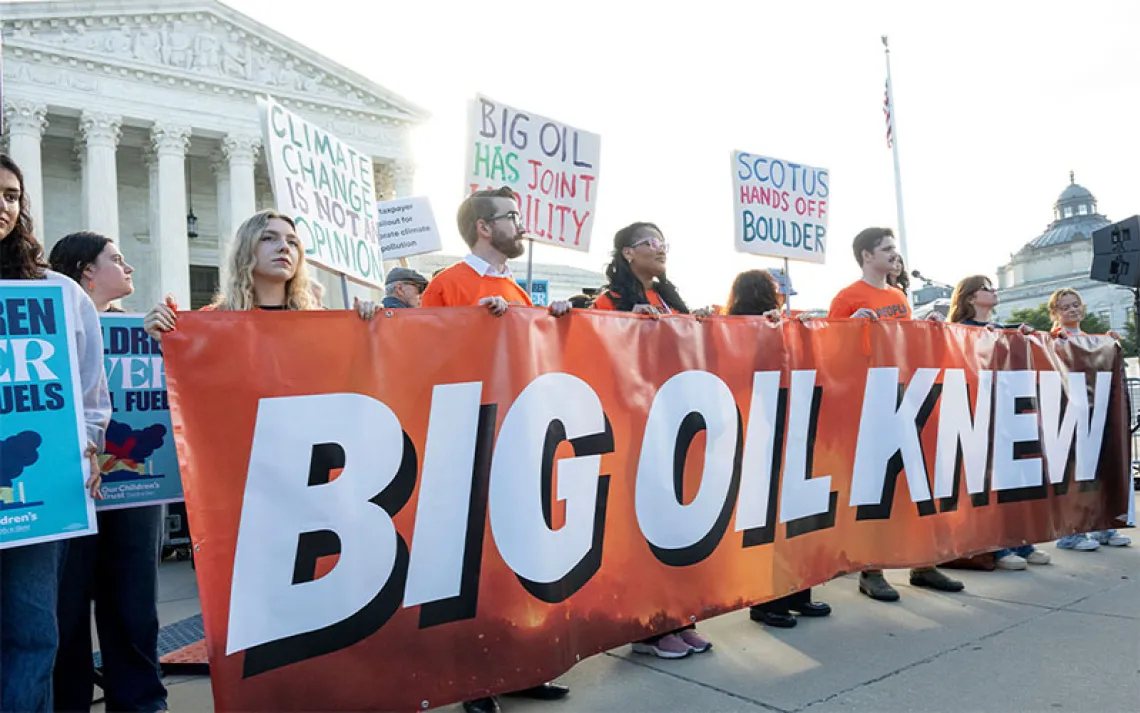
The Blue Ribbon Coalition, a pro-motorized vehicle recreation lobbying group, jumped on the bandwagon, creating a tracker called "NEPA Jail," which shows hundreds of lawsuits filed through the National Environmental Policy Act against the Forest Service. Arguing that these interventions slow fire suppression, the group called on its tens of thousands of followers to pressure conservation groups, like Oregon Wild, to get out of the timber industry's way.
In Pedry's memory, this past season marks the first time that pro-logging groups have tried to demonize conservation groups so explicitly. "We have different perspectives, but there was always room for conversations." Now, he said, "It's just scorched earth."
The industry has, it seems, been buoyed by the Trump administration's promises to expand logging on public lands. Prior to this summer’s wildfire season, the Forest Service, though it is strapped for cash and staff, also managed to clear out much of the debris and brush that could pose a fire hazard. That’s a fact that the timber industry has left out of its own narrative around the Grasshopper Fire. The idea that logging would have prevented fires may have gained traction because forest ecology is far more complex. And when people's homes and livelihoods can suddenly go up in flames, emotions can be fraught.
Krawchuck describes it as a Goldilocks problem: there's a right place and time for fires, ecologically speaking, she said. The ashes of burned plant material return nutrients to the soil and clear the way for more biodiversity, as some species only release seeds after fires. Once a patch of forest burns, it is also less likely to burn at the same severity again. But centuries of fire suppression policies, including the forced displacement of Indigenous people who practiced cultural burns has upset that balance.
As the Grasshopper Fire has died down, it's left behind a mosaic-like burn pattern: some of the forest remains relatively unscathed, while other stretches seem to have burned more severely. That's in line with Krawchuck's research on fire refugia: patches of forest that have built up resilience and can even help stop the spread of a runaway fire by keeping a fire burning low to the ground, instead of in the tree canopy.
"Letting some fire burn through on its own, knowing it's not going to gain intensity and energy, can [secondarily] let the ecological value of big old trees be prioritized,” Krawchuck said.
But these scientific signposts might not mean much to the average person tracking the progress of a fire that's getting uncomfortably close to their hometown, she acknowledged. All they may see is a red circle, indicating a no-go zone. That misunderstanding makes it more challenging for ecologists to let fires mimic natural patterns – and easier for misinformation to catch hold.
Oregon hasn't adopted strict wildfire building codes–unlike neighboring California, which has adopted them with a proven, if limited, record of successfully protecting neighborhoods from runaway fires. Newly adopted codes only apply to new buildings, while older buildings may need substantial investments to retrofit them. But driving around the Hood River Valley, Bloemers said that he can spot progress with signs, including new roofs and yard management in some communities.
"Those homes can passively resist embers," he said. "Certain people—the elderly, or those who don't have resources—they need support for this,” Bloemers said. “And we should view it as a climate mitigation project no different than energy retrofits."
Blomers has, of course, seen the logging industry’s misinformation online. But conservation groups haven't been effective at messaging, either, he said, and don't always emphasize solutions for people who are afraid of what wildfires will mean for their families.
"We have to rise above these tired old debates," he said. "We can send thoughts and prayers to firefighters, but we can also actually prepare our communities and homes."