This article was written as a collaborative effort by long-time Sierra Club Members and wilderness advocates, Dick Fiddler, Don Parks, and Margie Van Cleave.
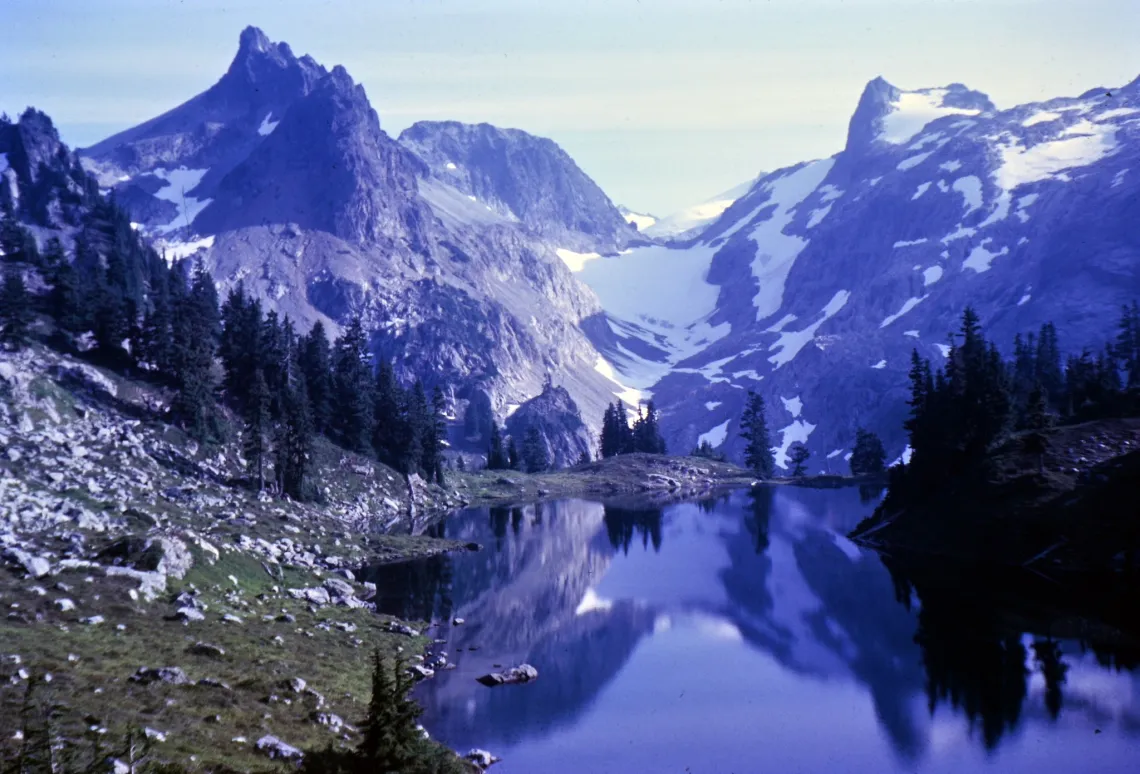
On July 12, 1976, President Gerald Ford signed the Alpine Lakes Area Management Act into law, ending a nearly decade-long campaign to preserve nearly 400,000 acres of this magnificent place, essentially Seattle’s backyard, as Wilderness. When the newspapers wrote about the Alpine Lakes, the stories tended to focus on the spectacular mountain scenery of the Enchantment Lakes or the big glaciated peaks in the Central Cascades like Mount Daniel or Mount Hinman. But those places were always going to be protected as their rocks and ice have no loggable trees.
When one thinks about the treasures that environmental advocates fought to protect, the deep forests of Icicle and Deception Creeks and the Cooper River valley come to mind. So too do the multitude of smaller, but no less important, places—such as Tunnel Creek and East Fork Miller—that were added around the Enchantment Lakes.
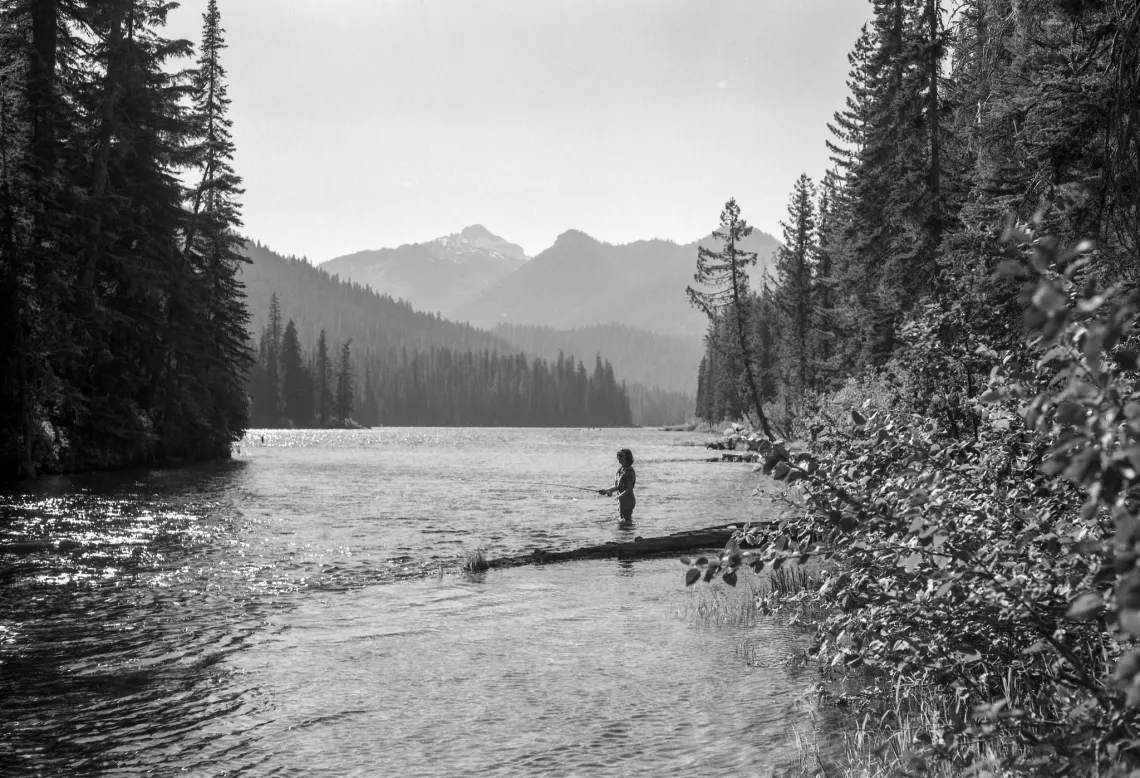
Then there are places like Snow Lake, once considered too popular to merit Wilderness designation. Ultimately, the creation of the Alpine Lakes Wilderness marked a shift toward new legislative approaches that enabled conservationists to overcome the checkerboard ownership pattern created by the massive railroad land grants of the mid-19th century, bringing fragmented landscapes under lasting protection.
The Sierra Club was joined in the Alpine Lakes Wilderness campaign by several major groups, including the North Cascades Conservation Council, the Alpine Lakes Preservation Society, the Mountaineers, and by strong community advocates on the east side in Wenatchee and Ellensburg, and several civic groups throughout the region. And were it not for this strong grassroots coalition, these enduring protections may have never been implemented.
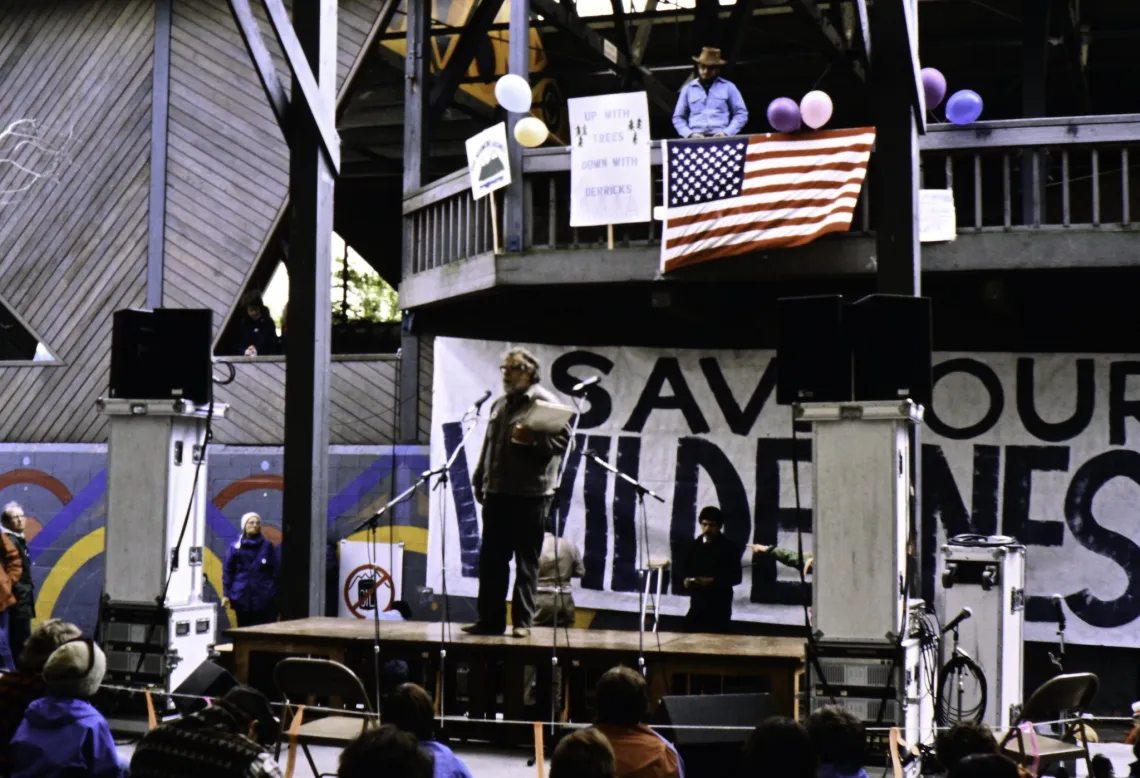
The campaign to protect the Alpine Lakes emerged from the long battle over North Cascades National Park. When Congress established the park in 1968, it resolved the future of the wild lands north of the Glacier Peak Wilderness, and committed the equally wild country to the south to future Wilderness studies.
The North Cascades fight shaped the politics of the Alpine Lakes from the start. The Forest Service was reluctant to lose more land after nearly a million acres were transferred to the National Park Service. The timber industry feared that restricting logging in the Alpine Lakes would set a precedent with national implications. Meanwhile, Northwest lawmakers had learned how deeply divided and invested the public had become on wilderness issues. Wilderness advocates, too, emerged from the North Cascades campaign with new political and legislative skills with the arrival of Doug Scott as the Sierra Club's Northwest representative.
In the early phases of the campaign, the Forest Service’s preferred option was for two separate Wilderness areas: one encompassing the high central peaks of the Cascade Crest, and the second extending across the Stuart Range and the Enchantments, with the forested valleys between them left open to logging. As the debate evolved, wilderness advocates largely won that argument. A single Wilderness area, connected by protected valleys, became the starting point for negotiations.
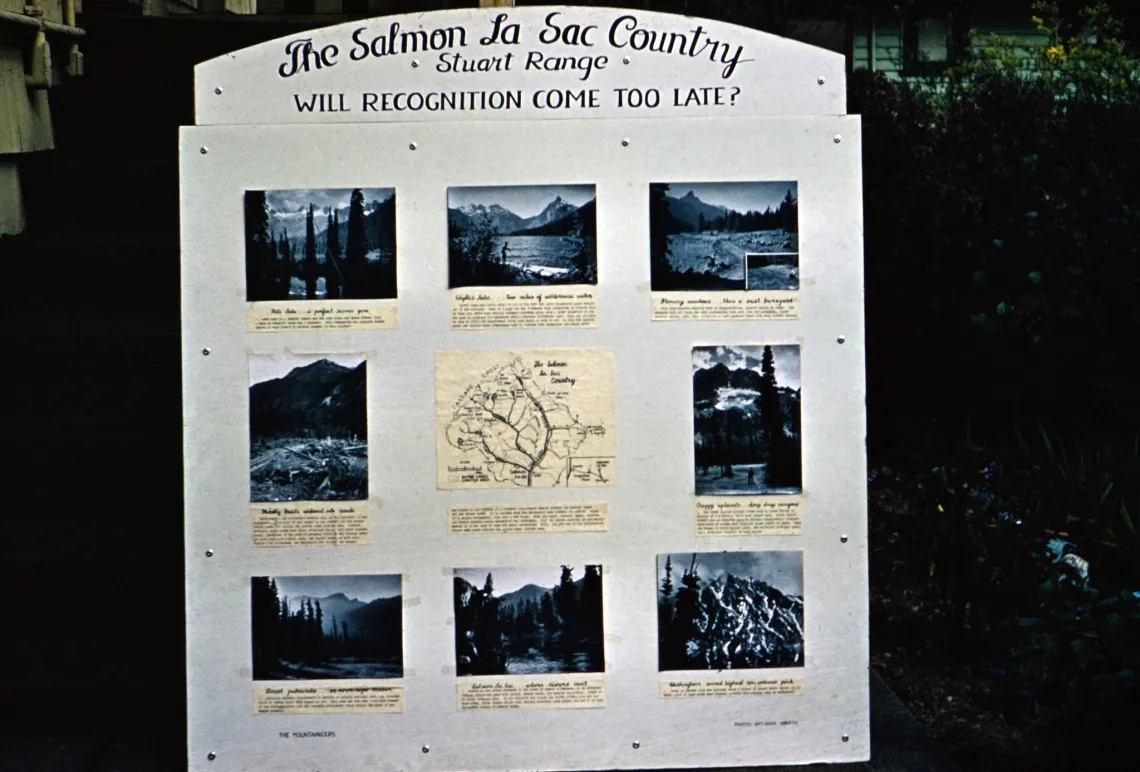
From there, the campaign focused on expanding the proposed Wilderness by demonstrating the ecological and recreational value of lands outside the core proposal. After more than five years of public outreach and advocacy in Congress, attention turned to saving the remaining contested valleys—such as Deception Creek and the Miller River—adding important parcels along the forested edges, and finding a way to protect lands caught in the checkerboard ownership pattern.
View a map of the 1976 Alpine Lakes Wilderness designation, including "instant" and "intended" areas
The final legislation established 393,000 acres as the Alpine Lakes Wilderness. It was not everything advocates sought, but it was a remarkable achievement and a powerful demonstration that citizens could organize, speak up for wild places, and prevail. In addition, Congress also directed the preparation of a single management plan to address the recreation and timber values of the lands adjacent to the new Wilderness. When completed, this new plan increased protections for many areas left out of the Wilderness and set the stage for 50 more years of conservation.
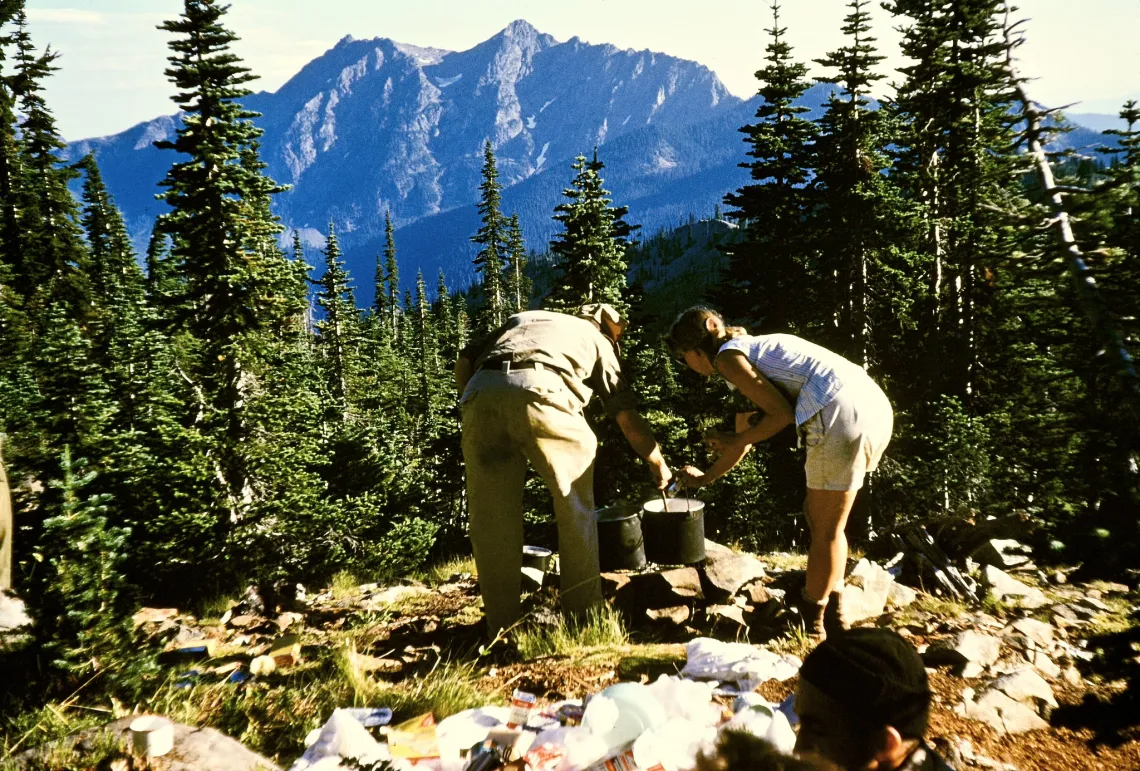
A special thank you to Rick McGuire and the Alpine Lakes Protection Society (ALPS) for sharing their collection of photos from John Warth. Warth was a photographer, writer, and early advocate for protection of the Alpine Lakes region, starting the process that eventually led to the formation of ALPS.