By Marc Sullivan, co-chair of the Sierra Club's Washington Chapter Conservation Committee
Back in 1983, when the Northwest Power and Conservation Council adopted its first-ever 20-year regional electric power plan, the result was a vindication and triumph for the Sierra Club and allies. The plan prioritized energy conservation as a resource, over new power plant construction. The Council’s least-cost integrated resource planning approach became the model for utility planning across the Northwest. And the plan recognized uncertainties about future loads and resources and proposed strategies to deal with uncertainty. All of this was in line with what the Sierra Club, and allies, had long argued for.
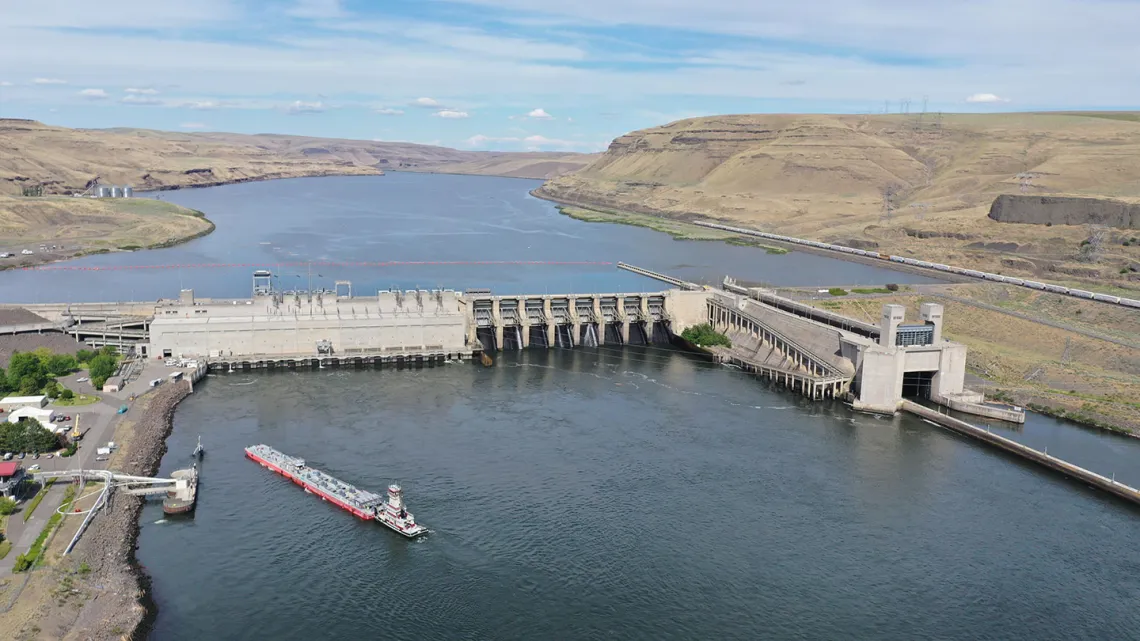
Taken together with the program the Council had previously adopted to “protect, mitigate, and enhance” fish and wildlife populations harmed by hydropower dams in the Columbia River Basin, the power plan constituted a revolution in planning and operation of the region’s electric power system.
The Council’s Ninth power plan, now under development, promises to be the most consequential since the first.
Before getting into why that’s true, let’s step back for a reminder of what the Council is and where it came from. The Northwest Power and Conservation Council is an interstate compact authorized and directed by Congress in the 1980 Pacific Northwest Electric Power Planning and Conservation Act. The governors of the four Northwest states—Washington, Idaho, Montana, and Oregon—each appoint two members to the Council. Congress tasked the Council with two key responsibilities: 1) To adopt and periodically update a Fish and Wildlife Program, designed to “protect, mitigate, and enhance” fish and wildlife populations impacted by Columbia Basin dams, and 2) To adopt and periodically update a 20-year Regional Electric Power Plan, including demand forecasts, a regional resource strategy, and recommendations for model conservation standards and other specific measures and actions.
Importantly, the Bonneville Power Administration’s resource acquisitions and its fish and wildlife investments and actions were required to be consistent with the Council’s power plan and fish and wildlife program.
With that background established, why do we say the Ninth power plan is the most “consequential” since the first? Because demand for electricity—which has remained fairly flat over the last two decades, largely thanks to conservation efforts—is projected to surge over the next two decades.
Right now, the Pacific Northwest currently uses 22,000 average megawatts of electricity each year. For comparison, Seattle City Light's customers use roughly 1,100 average megawatts. The Northwest Power and Conservation Council projects that regional electricity demand could rise to between 30,000 and 40,000 average megawatts by 2046—an increase of about 50% to 100%. This increase will be driven by demand from data centers and by building and transportation electrification.
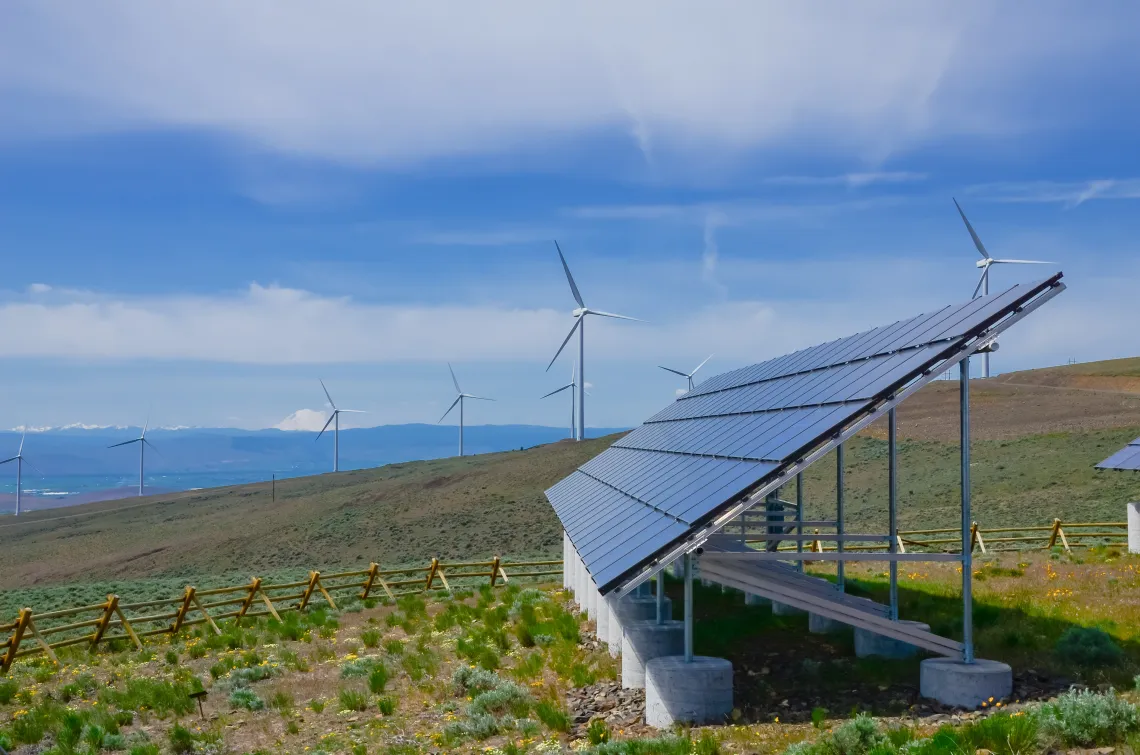
Where will that additional power come from? While the Council has yet to release a draft power plan, modeling runs already released give us a pretty clear picture. The good news is that new renewable energy—wind, solar, and battery storage of renewable energy—will provide most of the needed new energy. Conservation will add another piece.
The less good news is that the Council staff projects a lot of new gas-fired combustion turbines to meet peak loads and a very limited amount of demand response such as time-of-use rates and other tools to reduce peak demand rather than build new resources to meet it.
Three disappointing results reflect some specific flawed assumptions. First, it appears that the staff seriously underestimates the cost of new gas-fire turbines, probably by as much as half. Second, the models they use give preference to resources like gas turbines, that can provide energy and meet peak demands, while disfavoring resources, like demand repose, that serve only to reduce peak demand. Council staff like to say that their model “prefers” resources that can theoretically provide firm energy, as if the model has volition. No, it was programmed that way, even if the gas turbines will, in reality, operate only 10-20% of the time specifically to meet peak demands. Finally, the staff analysis underestimates another means of meeting peak demand: power imports from outside the region, especially from California. The models artificially limit the amount of imports to well below the capacity of the California/Pacific Northwest Intertie.
The public, including Sierra Club Members, will have an opportunity to weigh in on the power plan. The Council plans to release a draft plan on July 21 and launch a 60-day comment period, ending approximately September 18. We will be asking for an extension of that timeline, given that the planned comment period will occur during the busy summer holiday season. The Council provided a 75 day comment period on their draft Fish and Wildlife Program. Given the importance of the power plan, a similar extended comment period seems appropriate.
We will follow up with an updated alert when the draft plan is released.