By: Bill Arthur, Chair Sierra Club Snake/Columbia River Salmon Campaign
One of the keys to survival for salmon is the “Five C’s” of habitat—cold, clean, and clear water flowing through connected, complex waterways. Envision a river whose headwaters are fed by icy snowmelt from mountain peaks, meandering through forests and diverse landscapes toward the ocean; clear enough to see the gravel bed below, with deep pools to rest, gentle riffles that keep oxygen abundant, and woody debris for hiding and hunting. This is what our local salmonids (salmon, steelhead, and bull trout) deserve, and need, to survive and thrive.
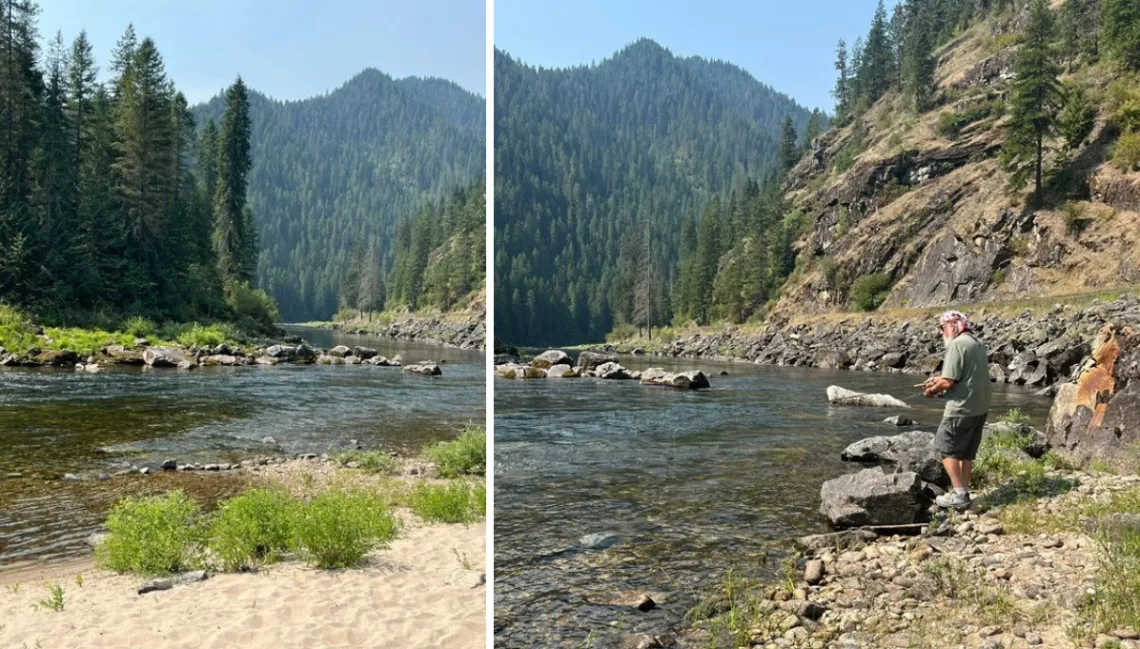
But in the lower Snake and Columbia river basin, fish now face eight towering dams that have created a deadly gauntlet of hot, stagnant water that prevents them from ever making it back to the still pristine cold-water spawning grounds farther upstream. Scientists predict that heat pollution is contributing to the extinction of Snake River sockeye and other salmon runs. Addressing the hot water caused by these dams and reservoirs along the Columbia and Snake rivers is essential.
To highlight this ongoing crisis, the Sierra Club is again partnering with the Save Our Wild Salmon Coalition in producing the annual Hot Water Report.
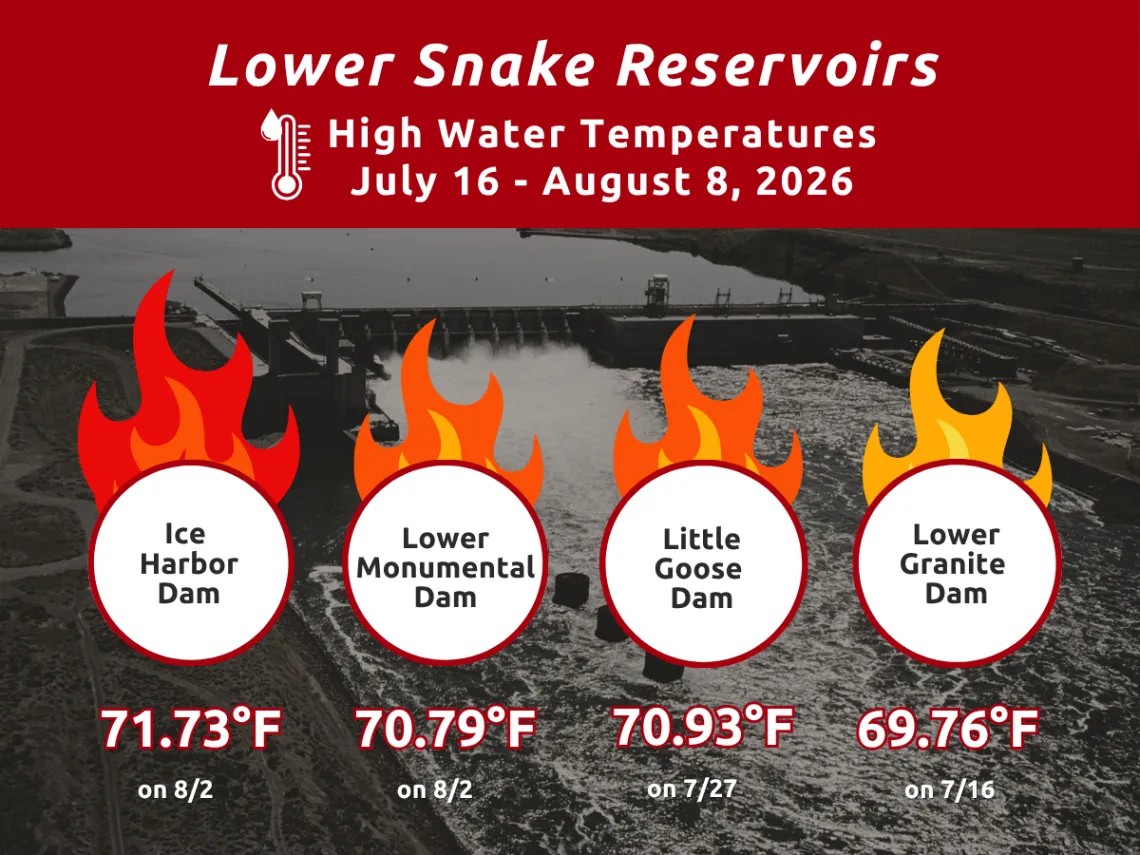
Warm water makes nearly every challenge salmon face a little harder. Once temperatures climb above 68°F, every additional degree—and every day spent in that heat—adds to the toll. Increased water temperatures speed up their metabolism, using up precious energy they need for migration. At the same time, salmon become weaker swimmers in warmer water, making them more vulnerable to predators, disease, and toxins. And finally, warm water contains less oxygen. For salmon already expending massive amounts of energy to swim hundreds of miles upstream that lack of oxygen can be suffocating, and ultimately, even deadly.
The impact of the four lower Snake River dams on wild salmon and steelhead populations was dramatic, with populations plummeting more than 90% in the years immediately following their construction. Now climate change is making the already dangerously warm conditions behind the dams increasingly lethal. Sierra Club has long supported breaching the four lower Snake River dams to restore the river and support healthy salmon populations at every stage of their life cycle. Removing these four dams enables more juvenile salmon to reach the ocean to grow big and strong, while restoring access to thousands of miles of high-quality, cold-water habitat in Central Idaho, southeast Washington’s Blue Mountains, and northeast Oregon when they return to spawn. A salmon’s journey to spawn the next generation is grueling enough without adding deadly heat. Free-flowing, cold water is essential to keeping that cycle alive.
To remove the dams, we need to replace the limited services they currently provide. The dams generate about 700 average megawatts of power—just 2% of the region’s energy—and that generation is declining as climate change reduces snowpack. A mix of solar, wind, and battery storage can replace that power while better matching the region’s late-summer and winter peaks. And these are not hypothetical solutions waiting to be invented. We already have the tools to build a reliable, clean energy system without sacrificing the future of wild salmon.
Right now, the Northwest is deciding what that energy future looks like. The Ninth Power Plan will help guide how the region meets growing electricity demand in the decades ahead. It is an opportunity to invest in the clean energy, efficiency, and storage solutions we already have, and move away from the lower Snake River dams and their decreasing benefits. Stay tuned for guidance on how to join our advocacy efforts in the coming weeks!
We have choices when it comes to energy. Salmon don’t have choices when it comes to finding cold, clean water. For wild salmon and steelhead, there is no substitute for a free-flowing, healthy river. We have the tools to meet our energy needs and restore the rivers salmon depend on. Now we need the grassroots advocacy and political will to choose that path.