Salmon on the Snake River Essential to Orca whales and more
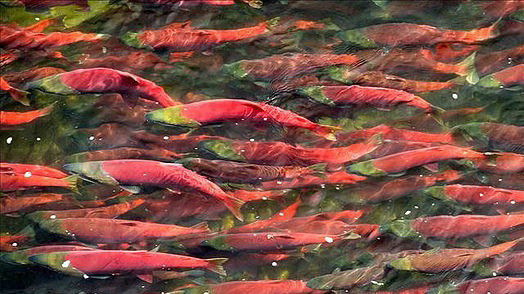
The Columbia and Snake Rivers were once the greatest salmon rivers in the world until four dams were built on the lower Snake River. Wild salmon bring nutrients from the briny ocean back to the high mountain streams. They create an environment that help steelhead, pacific lamprey and other fish thrive. They are also a critical food source for endangered orcas. However dams block salmon from returning to their birthplace to spawn, reproduce and thrive.
Controversy heats up over removal of Lower Snake River dams as orcas suffer losses
Orca champions have joined forces with dam busters, bringing new energy to an old fight to take down the Lower Snake River dams.
By Lynda V. Mapes , Seattle Times environment reporter. . .
"Those dams have long been a target because of the challenge they pose to fish. Shipping also has been in a steady decline on the waterway, and the dams provide only about 5 percent of the region’s power, which today is easily replaced, if it’s needed at all. The dams provide no flood control and irrigation takes place only at Ice Harbor dam, nearest the Columbia.
The issue, initially regarded as a long shot for zealots, is gaining traction among a wide range of citizens and scientists as a sound business decision and necessary ecological choice to help save the orcas and the salmon they depend on — and even help shore up BPA."
Related from the Seattle Times
TODAY IN HISTORY [17 Sept 2018] |
The beginning of the Elwha Dam removal is marked by a 2011 ceremony featuring Lower Elwha Klallam tribal leaders and other officials near Port Angeles. The takedowns of the Elwha Dam and Glines Canyon Dam on the Olympia Peninsula are the largest dam removals in North America. It takes more than three decades for the tribe and environmental groups to win approval and funding for the river-restoration project. Elwha Dam disappears within six months and Glines Canyon is removed by September 2014. The river ecosystem begins to rapidly recover, with increasing numbers of salmon appearing soon above each former dam.
Snake River protest
4th Annual Free the Snake Flotilla
Alex Craven, Sierra Club Organizer: National Forests and Wildlands
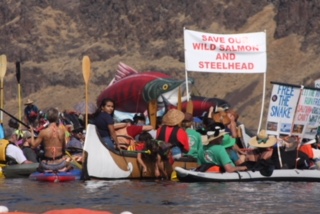
On Sept. 8, for the 4th year in a row, activists gathered at Chief Timothy park in Clarkston, WA to advocate for removing the four lower Snake River dams and restoring a free flowing river.

More than 600 turn out for Snake River protest Saturday
Sun., Sept. 9, 2018
The Spokesman-Review published this article on the Snake River Protest Flotilla. Click here to read the article.

###
The orca mother mourns, and we mourn with her
“We mourn. But we are not helpless. We are women. We are mothers. We are matriarchs.” writes Lucinda George Simpson in her Op/Ed to the Seattle Times. A descendant of the Chief Joseph Wallowa band of Nez Perce, Simpson though retired is committed to her community on the Nez Perce Reservation in Idaho. Read her compelling letter by clicking on the link below. She presents a compelling job of linking us all to each and particularly mothers...of all species.
Click here to link to Simpson's Op/Ed.

Courtesy of Columbia Institute for Water Policy
Save Our Wild Salmon issues seventh of Summers Hot Water Report
Hot Water Report 2018 - August 24
Even though temperatures in the region have moderated some in the past week reservoirs remain killer warm. Lower water levels combine with previously over heated reservoirs to maintain water that can be lethal.
Click here to read Hot Water Report #7.
The tragic death of the new born orca calf and it's mother (J-35) carrying it's body for over two weeks as the pod plied the waters of the waters of Salish Sea garnered international attention to the plight of our orca and that they are literally starving to death. Endangered Southern Resident Orcas rely on chinook for 80% of their diet, but the decline of chinook have left them starving and swimming at the brink of extinction. Snake River Spring/Summer Chinook and Snake River Fall Chinook are both ranked in the top 10 most important stocks for orca recovery. Deaths of orca calves are extremely significant as the reproductive window of the surviving orcas is only another five years. With this in mind, this week we take a look at historic chinook runs to understand just how much has been lost. Historically the Snake River provided over 50% of the salmon that came out of the Columbia Basin and remains the best place where we can store salmon abundance due to the substantial amount of excellent habitat upstream habitat. But we need to get more salmon back to this mother lode of habitat. Removing the four lower Snake River dams is an essential action for making this happen.
Click here to read Hot Water Report #6 in pdf format.
Click here to read and download Hot Water Report Week Five in pdf format.
Click here to read and download Hot Water Report Week Four in pdf format.
In 2015 over 300,000 salmon were killed by hot water in the Lower Snake River as they were trapped in lethal temperatures during the migration. Water temperature's that exceed 68 degrees for any length of time are deadly for salmon and steelhead (and trout as well). The Lower Snake River reservoirs in addition to creating passage problems for salmon migrating to the ocean create a lethal gauntlet of dams with increasingly warm water that also foster more diseases. Global warming is making this bad situation worse. The poor salmon and steelhead returns of the past two years continue to demonstrate that these dams are putting our fish at risk of extinction. The Hot Water Report is being shared with reporters and public officials to continue to educate about the risk of dam and the hot water reservoirs bring to our salmon and steelhead and the need for important interim actions like spill and the need to remove these four dams to protect and then our restore our wild salmon.
Sockeye salmon enter the Columbia and Snake Rivers including those bound for Redfish Lake high in the Sawtooth Mountains of Central Idaho. This highly endangered population of salmon have to run the full gauntlet of 8 dams for their stunning journey of over 900 miles and 6500 feet of elevation gain to spawn in their natal waters. Sockeye also return to Lake Wenatchee and up the Okanagan River in Washington.
Click here to read Save Our Salmon's third week report or download pdf here: Week Three Hot Water Report
Click here to read and download Week Two Hot Water Report
Click here to read and download Save Our Wild Salmon first Hot Water Report
Fishing halted in Tri-City area due to hot river waters
Article posted in Lewiston Tribune Sunday, July 8
This article is comprehensive and very detailed, including energy issues and how dam removal could benefit BPA during this period where they have rising costs and other power costs are declining.
BPA at a crossroads
Battling growing competition and looking at costly upgrades, Northwest power agency is trying to right its ship. Could dam breaching be a solution?
The Bonneville Power Administration is one of a few self-funded federal agencies that operates like a private concern, but difficult market conditions are eroding the business model it's depended on for decades and threatening to upend its future.
Lewiston Morning Tribune July 8, 2018
To read the full article Click here
More “spill” for salmon. . . and orcas
Small, out-migrating salmon will get a little help this year as they make their way through Snake and Columbia River dams out to the ocean. Federal and state agencies have agreed to modestly increase “spill” – water over dams’ spillways – which will help more salmon survive, ultimately boosting food for orcas, too.
To read the rest of this article by Bill Arthur, click here.

Business Sign-On Letter opposing HR 3144
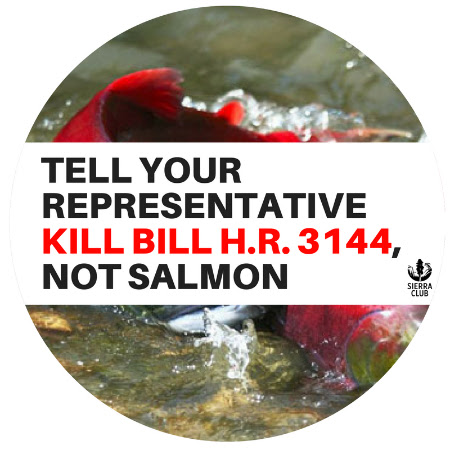
opposing H.R. 3144. The House will vote on H.R. 3144 Wednesday. You are encouraged to use and send the letter.
Click here to read the Business Sign-On Letter Opposing 3144.
Op Ed
Defenders of Snake River dams are ignoring facts
Margie Van Cleve Apr 13, 2018
Problem solving is the essence of what leaders are supposed to do. Sen. Jim Honeyford’s April 8 guest editorial, however, misses that mark. Restoring Snake River salmon and steelhead will require innovation, communication and open-mindedness. Instead, we just get more of the “same old, same old.” Sen. Honeyford is also missing something more important in his guest opinion: data and facts.
To read the full Op Ed, click here
New Study
Please read the introduction of a press release that went out April 4, 2018 from the Northwest Energy Coalition on the recently completed evaluation on replacing the power from the LSRD's. The analysis and report was prepared by Energy Strategies based out of Salt Lake City, Utah which has considerable experience in energy and reliability analysis work. Links are provided for the fact sheet and full report below.
The report shows that we can replace the power from the four lower Snake River dams at very affordable cost (about $1 per month on an average residential bill) and maintain or even exceed current system reliability standards. And, demonstrates there is no need for any new gas plants as part of the replacement process. This can be accomplished with little to no increase in GHG emissions.
This analysis refutes the arguments from some quarters that removing the dams would harm system reliability, be extrremely expensive and require new gas plants.
This is a big step forward in showing we can remove the dams which is the single most important action for protecting and restoring the wild salmon and steelhead from the Columbia Basin. Restoring the salmon benefits sport, commercial and tribal fishing and our endangered orca. This provides important information that needs to be incorporated into the NEPA process and inform regional conversations about how to responsibly recover salmon and keep our communities and energy system whole. Bill Arthur
Renewables and energy efficiency can reliably replace power from lower Snake River dams
Affordable, clean energy solution offers hope for restoring salmon
SEATTLE, WA -- (April 4, 2018) -- The Northwest region can remove four lower Snake River dams and replace the power and energy services they provide with a portfolio of demand side and renewable energy resources while maintaining grid and transmission reliability at levels equal to or better than the current system and with little or decreased greenhouse gas emissions.
To read the full press release, click on here.
To read the 4-page overview of the study, click here.
To read the fact sheet, click here.
Poll
2018 Salmon Poll Regarding Wild Salmon and the Lower Snake River Dams
Read the Press Release:
Washington Voters Value Wild Salmon Over Lower Snake River Dams
Below are two related articles that ran over the weekend:
Spokesman-Review:
Poll shows Washington voters choose salmon over dams
Sat., March 31, 2018, 4:39 p.m.
The Lewiston-Tribune
Washingtonians say they'd take salmon over the dams, poll finds
- By ERIC BARKER of the Tribune Sat., March 31, 2018
Environmental impact of salmon decline: This isn’t just about fish
Originally published January 26, 2018 at 11:14 am
More than 135 other fish and wildlife populations benefit from the presence of wild salmon and steelhead.
An important win for fish and the people, Communities and cultures who rely on them
This is an important win for fish and the people, Communities and cultures who rely on them. It also will benefit Puget Sound Orca by helping with salmon recovery including their preferred food base - Chinook. This is the result of the court injunction from Match 2017 and provides an important step and measure starting this year for a Snake/Columbia salmon and steelhead. Sierra Club was one of the plaintiffs. And we had excellent legal work as usual from Earth Justice. And strong ongoing work and legal engagement from the State of Oregon and Nez Perce Tribe. Removal of the four lower Snake River dams is still the necessary long-term action that is needed to get real recovery for Snake River Salmon and for food (chinook salmon) for the Orca. But is a very useful and important interim measure until we get dam removal.
This is about the best spill regime we could get for this year under current standards. Modifying standards to be able to get higher spill levels starting in 2019 remains very important.
But this was a good day for the fish and those who rely on them, benefit from them, or enjoy them.
Judge OKs plan for Snake, Columbia river dams
Order will allow more spill water in the spring to help juvenile salmon, steelhead
By ERIC BARKER of the Tribune
A federal judge approved a plan Tuesday that will spill more water at Snake and Columbia river dams this spring to help juvenile salmon and steelhead reach the ocean.
Connelly: Orca whales need Chinook salmon, losing same
Published 11:25 AM, Friday, November 3, 2017
The Southern Resident Orca whale population, beloved by ferry and tour boat passengers, is in a decline that can be reversed only if its endangered food source—Chinook salmon—is put on a path to recovery.
Time to breach?
Diminishing fish returns on the Snake-Columbia river systems are sparking renewed calls for taking out the dams
By ERIC BARKER of the Tribune October 22, 2017
More than a decade ago, the looming effects of climate change convinced one of the most respected salmon biologists in the Pacific Northwest to change his position on dam breaching.
Don Chapman, who had taught many of the fisheries biologists in the region as a professor at the University of Idaho, ruffled fins when he took a job consulting for the hydropower industry and staunchly backed keeping the lower Snake River dams.
Read the full article by clicking HERE.
If you're unable to access the Lewiston Tribune, click HERE for the pdf version of Time to Breach?.
H.R.3144
"The Sierra Club strongly opposes [H.R. 3144]. . . "
Dan Ritzman, Director of Lands, Water and Wildlife
Congressional title: H.R.3144 - To provide for operations of the Federal Columbia River Power System pursuant to a certain operation plan for a specified period of time, and for other purposes.
To read about the legislation and its text in full, go to https://www.congress.gov/bill/115th-congress/house-bill/3144.Idaho Statesman:
Acidic oceans and warm rivers that kill Idaho’s salmon might be norm in 50 years
By Rocky Barker
October 07, 2017
STANLEY, ID
What is the future of the Columbia River and its salmon? Look to 2015.
That year’s extraordinary combination of overheated river water and low flows killed hundreds of thousands of returning sockeye salmon, devastating a run that had rebounded from near-extinction.
Millions of new sockeye and steelhead smolts migrating the opposite way, to the Pacific, died throughout the river system; only 157 endangered sockeye made it back to the Sawtooth Valley this year.
READ THE FULL STORY here: http://www.idahostatesman.com/news/local/environment/article177709666.html
Don’t blame ‘the blob.’ Even with good ocean conditions, salmon face hostile rivers.
Over 150 "boats" and 400 people in Snake River Flotilla
On the weekend of Sept. 9 hundreds of activists gathered at Chief Timothy Park in Clarkston, WA for the 3rd annual Free the Snake Flotilla and the return of free flowing Snake River. The Snake River is thee major tributary to the Columbia, and four dams along the river obstruct passage of wild salmon and steelhead from to their native headwaters in Central Idaho, SE Washington, and NE Oregon. Removal of the dams would constitute what is likely to be the largest fisheries restoration project in human history.
Fish and dam removal advocates began to gather for the exciting event on Friday evening, and over a hundred boats took to the water the next day to say with one voice: it is time to Free the Snake River and remove the deadbeat dams! Participants made the trip from around the Northwest with representation from Oregon, Idaho, and Washington. Tribes from around the region spoke of the need to restore the river, fish habitat, and the imperiled populations of salmon and steelhead that are trending towards extinction. Environmental groups, fish advocates, and local businesses echoed the importance of removing these dams.
The flotilla received media attention across state lines:
http://www.idahostatesman.com/news/local/environment/article172516346.html
http://www.spokesman.com/stories/2017/sep/10/salmon-advocates-take-to-the-water-to-call-for-dam/
https://dailyevergreen.com/15093/news/jf-local-environmental-groups-want-to-ditch-deadbeat-dams/
A special thanks to Sam Mace (Save Our Wild Salmon) who has led the organizing for this event each year and the Nimiipuii (Nez Perce Tribe) for their leadership and keeping this effort grounded in our connection to the water, earth, and fish and wildlife it supports. And, a shout out to Casey Mattoon, Zack Waterman and Edwina Allen from Idaho's Chapter of Sierra Club, who play a pivotal role in helping to boost participation from their state. Alex Craven and Bill Arthur provided leadership from the Washington Chapter. Rhett Lawrence informed and encouraged Oregon Sierra Club member to attend.
Bill Arthur and Alex Craven
Steelhead struggling home in record low numbers
Originally published August 18, 2017 at 6:00 am Updated August 18, 2017 at 1:16 pm
Warm-water conditions in the Columbia and Snake Rivers are challenging cold water salmon and steelhead — and the problem is likely to get worse because of climate change.
Seattle Times environment reporter
Salmon and steelhead are in hot water — a problem scientists warn is going to get worse because of climate change.
Go to The Seattle Times to read the full article.
Find article pdf HERE.
A changing electrical grid may make Snake River dams expendable — and help save salmon
BY ROCKY BARKER
AUGUST 04, 2017 11:43 AM
PASCO, WASH.
Editor’s note: The Northwest has yet to figure out a sustainable plan to save imperiled Columbia salmon. This is part two of a series exploring whether salmon can ultimately survive.
Decision Be Dammed
Congressional reps want to sidestep ruling on lower Snake dams; enviro groups say salmon a priority
By Samantha Wohlfeil
from the Inlander, July 13, 2017
Read the full article HERE.
Fate of Pacific Northwest orcas tied to ... Salmon
By Rocky Barker and Brittany Peterson
rbarker@idahostatesman.com bpeterson@mcclatchy.com
FRIDAY HARBOR, Wash.
Editor’s note: Research, tenacious advocates and $16 billion have lifted Columbia salmon from the brink of extinction. But the Northwest has yet to figure out a sustainable long-term plan to save the fish that provide spiritual sustenance for tribes, food for the table, and hundreds of millions of dollars in business and ecological benefits. This is part of a special series of reports exploring whether salmon can ultimately survive.
Read the full article HERE.
Congressional bill would prevent breaching of 4 Snake River
Updated on July 5, 2017 at 9:50 AM
BY THE ASSOCIATED PRESS
A bipartisan bill has been introduced in Congress that seeks to prevent
the breaching of the four Snake River dams in eastern Washington state.
Read the full article HERE.
Massive Public Response on Plans for Snake River Dams:
Sierra Club Members Make their Position Clear
By Bill Arthur, Chair, Columbia-Snake River Salmon Recovery Campaign
Sierra Club members spoke loud and clear to the question of what should be included in the Environmental Impact Statement (EIS) for the court ordered revision to the federal agency salmon plan. The comment period, of January 17 reported in the Winter issue of the Crest got extended to February 7 allowing us to generate even more comments.
Read more about Sierra Club and the public response . . .

Following the Endangered Salmon
Saving Idaho’s salmon
The first story of the series about endangered salmon from the Pacific to Idaho spawning streams in The Idaho Statesman by Rocky Barker
by clicking HERE.
The Snake and salmon: People are feeling the pain of a river lost By David A. Cannamela
Unless you grew up on or near saltwater, you’re probably not so keen to notice the changing of the tides. It’s a fairly subtle thing, but the more you’ve experienced it, the more noticeable, expected and obvious it becomes. You notice the tug on the anchor rope, the fly line or the lobster (or crab) pot buoy begin to weaken. And soon you notice no tug at all.
Read the article by clicking HERE
News
Seattle Times: Epic snow and rain help salmon now, but conflicts with hydropower lie ahead on Columbia River
This year’s strong spring flows through the Columbia River come amid a high-stakes conflict over how much water should be used to help salmon migrate over the dams rather than run through hydroelectric turbines.
By Hal Bernton
Seattle Times staff reporter
CASCADE LOCKS, Oregon — In this year of epic snow and rain, the Columbia River is a formidable sight, thundering over spillways at Bonneville Dam to form a turbulent stretch of white water that courses toward the sea.
Read the full Seattle Time article Access article pdf HERE.
Conservation Groups Ask To Stop Barging Sockeye Around Dams
Courtney Flatt | NWPR/EarthFix | April 19, 2017
Helping juvenile salmon migrate out to sea has long been difficult and controversial. Barging is a common way to get the fish around dams.
Read the full article HERE.
Horseback Treks for Salmon
Idaho horseback riders on salmon trek pass through Portland
The Oregonian/OregonLive, Andrew Theen — updated April 24, 2017 at 4:12 PM
Three women rode horses through downtown Portland on Monday, part of a
900-mile journey to raise awareness about the plight of endangered Idaho
salmon. . . .
"The Columbia produces an amazing amount of salmon, and the ones that
make it to our home swim 900 miles inland and 6,500 feet in elevation,"
Cannell said as she plodded along the roadway. Each rider had a pack
horse alongside them.
Read the full article HERE.
Check out this article from the Tri-City Herald regarding the above mentioned horse trek:
3 horseback riders stop in Kennewick on journey to save salmon
BY CAMERON PROBERT
Letters by Sierra Club Members and Partners
Who is McMorris Rodgers looking after?
(link to pdf version above)
Lewiston Tribune, July 10, 2017
(link directly to Tribune above)
Seeking immediate action to help Idaho’s endangered Snake River sockeye salmon from NOAA and the U.S. Army Corps of Engineers
Press Releases
Press Release, April 4, 2018: New Study: Renewables and energy efficiency can reliably replace power from lower Snake River dams
Press Release: March 29, 2018: Washington Voters Value Wild Salmon Over Lower Snake River Dams
Press Release: November 2, 2017: Call on Governor Inslee to act quickly to help critically endangered Columbia Basin salmon and Southern Resident killer whales.
Press Release: House Bill June 30, 2017